'%3e%3cpath%20d='M34.1406%205.85938C30.3906%202.10547%2025.3047%200%2020%200C14.6953%200%209.60938%202.10547%205.85938%205.85938C2.10938%209.61328%200%2014.6953%200%2020C0%2025.3047%202.10547%2030.3906%205.85938%2034.1406C9.61328%2037.8906%2014.6953%2040%2020%2040C25.3047%2040%2030.3906%2037.8945%2034.1406%2034.1406C37.8906%2030.3906%2040%2025.3047%2040%2020C40%2014.6953%2037.8945%209.60938%2034.1406%205.85938ZM37.0117%2023.543H31.1602V13.5391H27.6328V19.9414C28.1211%2020.6914%2028.3711%2021.582%2028.3711%2022.5625V22.625C28.3711%2023.668%2028.1172%2024.6055%2027.6328%2025.4297V26.6094H36.082C33.4883%2032.9375%2027.2891%2037.3789%2020.0039%2037.3789C10.3711%2037.3789%202.62109%2029.6289%202.62109%2020C2.62109%2010.3711%2010.3711%202.62109%2020%202.62109C29.6289%202.62109%2037.3789%2010.3711%2037.3789%2020C37.3789%2021.1484%2037.2617%2022.2656%2037.0508%2023.3477C37.0391%2023.4141%2037.0234%2023.4766%2037.0117%2023.543Z'%20fill='white'/%3e%3cpath%20d='M22.3086%2018.5352C20.4336%2018.125%2019.9531%2017.8398%2019.9766%2017.1836V17.1406C19.9766%2016.6992%2020.3477%2016.2148%2021.4023%2016.2148C22.582%2016.2148%2023.8867%2016.6797%2025.0781%2017.4766L26.8516%2015.0195C25.4453%2013.8906%2023.707%2013.3398%2021.5547%2013.3398C18.5195%2013.3398%2016.4375%2015%2016.4063%2017.4766V17.5352C16.3633%2020.2617%2018.5859%2020.9805%2021.293%2021.6016C23.0391%2021.9766%2023.5703%2022.3164%2023.5703%2022.9609L23.5469%2022.9766C23.5469%2023.3906%2023.2578%2023.7031%2022.7852%2023.8359C22.5742%2023.9062%2022.1289%2023.9727%2021.5156%2023.9727C20.7617%2023.9727%2019.7539%2023.8633%2018.6328%2023.4844C18.0898%2023.2891%2017.4727%2023.0039%2016.8047%2022.6133L20.1406%2026.625C20.2813%2026.6602%2021.0977%2026.8516%2021.7734%2026.8516C25.0039%2026.8516%2027.0859%2025.2461%2027.1094%2022.6328V22.5703C27.1602%2020.1133%2025.2148%2019.1719%2022.3086%2018.5352Z'%20fill='white'/%3e%3cpath%20d='M5.24219%2013.5664V26.6133H8.75391V23.7578L10.2969%2021.9531L14.2031%2026.6133H18.3867L12.3555%2019.5195L17.4023%2013.5664H13.4531L8.75391%2019.0586V13.5664H5.24219Z'%20fill='white'/%3e%3c/g%3e%3cdefs%3e%3cclipPath%20id='clip0_97_2430'%3e%3crect%20width='40'%20height='40'%20fill='white'/%3e%3c/clipPath%3e%3c/defs%3e%3c/svg%3e)


Estimated read time: 5-6 minutes
From shoes to pets to life, your floors take a lot in stride.
But keeping your floors clean is one of the simplest ways to preserve your home's appearance, prevent wear and even maintain indoor air quality.
Of course, not all flooring is created equal. From plush carpet to durable luxury vinyl plank (LVP), each material requires specific care.
And for additional information, check out Giant Carpet One's First Aid for Stains page which offers additional noteworthy advice.
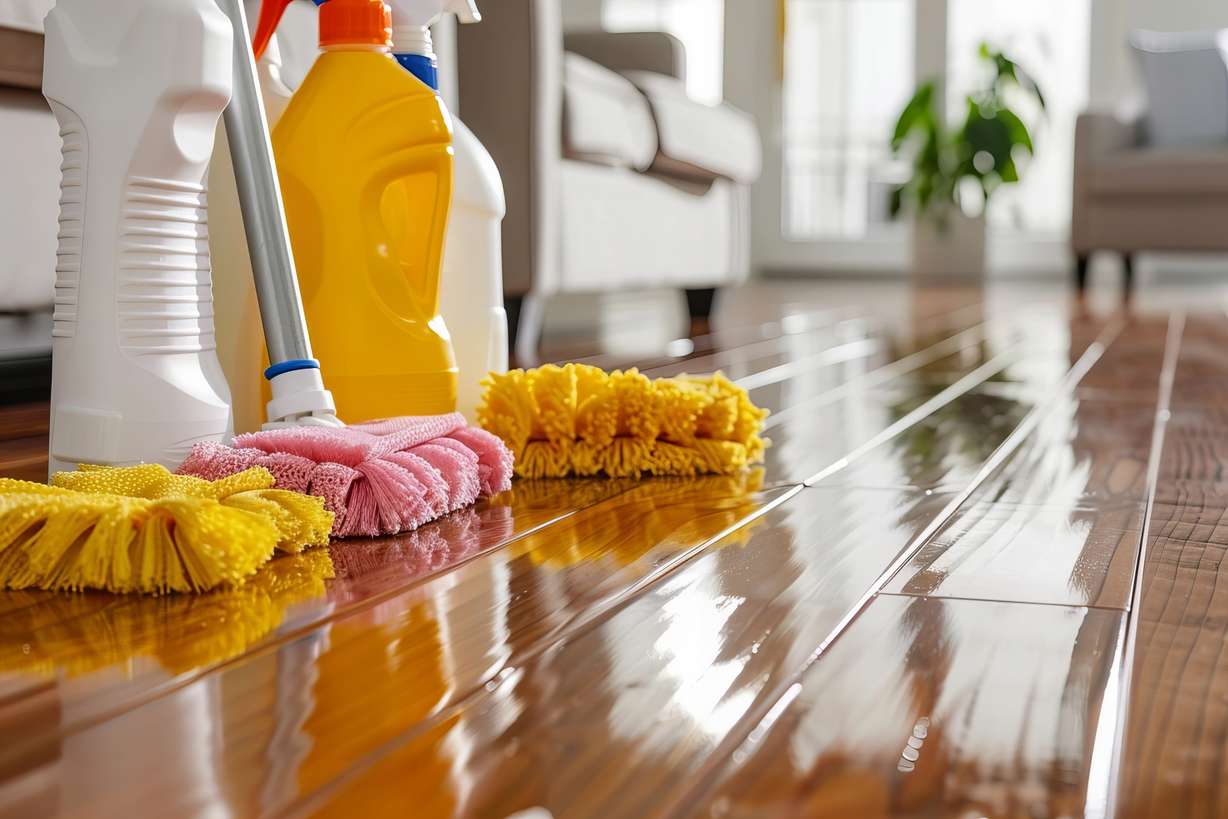
Here are the best ways to clean the most common types of residential flooring.
Carpet
Carpet attracts dirt, dust and allergens, making regular maintenance essential. Start with weekly vacuuming using a machine with a HEPA filter to trap fine particles. For high-traffic areas, consider vacuuming more frequently.
For spot cleaning, blot spills immediately using a clean cloth and a solution of warm water and mild dish soap.
Avoid rubbing, which can push stains deeper into the fibers. For deep cleaning, most manufacturers recommend a professional steam cleaning every 12 to 18 months.
Hardwood
Genuine hardwood floors add timeless charm, but they require gentle care to avoid damage.
Dust daily or as needed using a microfiber mop or soft broom. Weekly, use a slightly damp mop with a wood floor cleaner labeled safe for polyurethane finishes.
Avoid water pooling, as excess moisture can warp the wood. According to National Wood Flooring Association, you should never use steam mops or vinegar-based solutions, which can dull or erode the finish.
Additionally, protect floors with furniture pads and rugs in high-traffic areas.
Engineered hardwood
Engineered hardwood is more moisture-resistant than solid wood but still needs proper care. Regular dusting with a microfiber mop and occasional damp mopping with a pH-neutral cleaner is best.
When cleaning, always avoid abrasive tools and never saturate the surface with water.
If the floor has a factory finish, stick to manufacturer-approved products. Keep in mind that refinishing is sometimes possible, depending on the thickness of the top veneer.
Luxury vinyl plank (LVP)
LVP flooring is known for being both durable and low maintenance. Sweep or vacuum regularly to prevent grit from scratching the surface.
Use a damp mop with a mild, non-abrasive cleaner for routine cleaning.
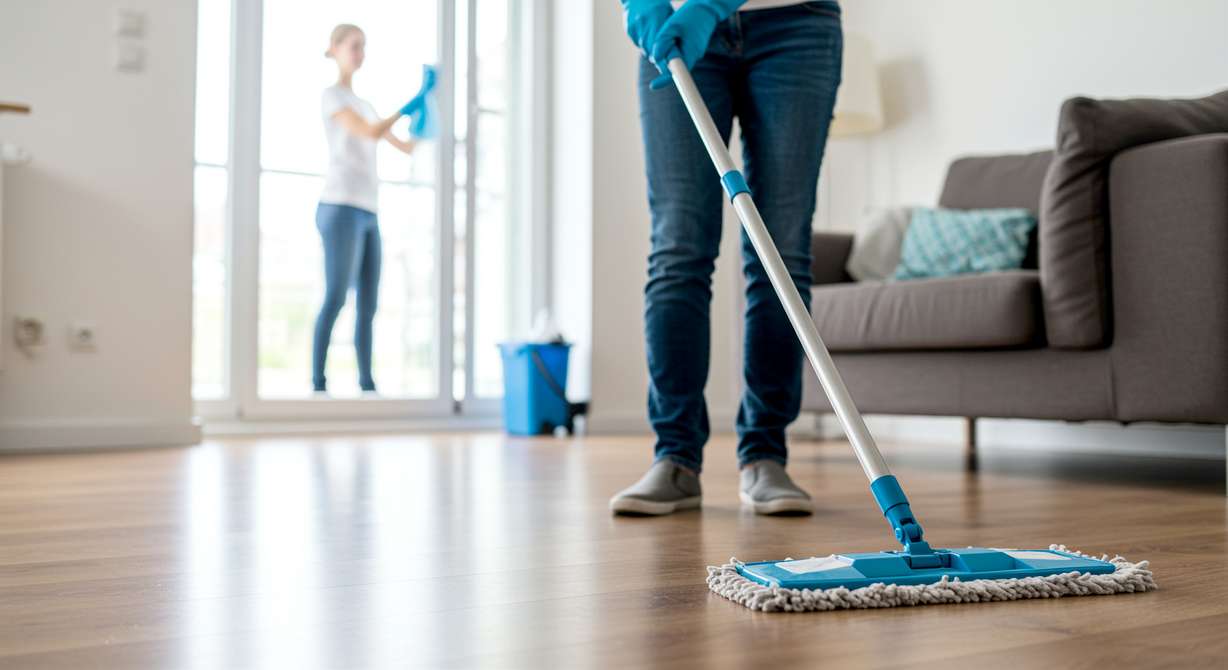
Avoid waxes and steam mops, which can damage the wear layer. Though waterproof, spills should still be cleaned promptly to prevent mold or staining along seams.
Laminate
Laminate floors mimic wood or tile at a lower price point—but are vulnerable to moisture.
Dry sweeping or vacuuming with a soft-brush attachment is one recommended method for cleaning. Use a lightly damp microfiber mop with a cleaner specifically designed for laminate.
Avoid using water buckets, steam cleaners or oil-based products. Wipe spills immediately and place mats near sinks to catch excess water.
Ceramic and porcelain tile
Tile is one of the easiest flooring types to clean. Sweep or vacuum regularly to remove debris, then mop with a solution of warm water and a few drops of dish soap.
For grout lines, use a baking soda paste or a commercial grout cleaner with a small brush.
Avoid oil-based or wax-based cleaners, which can leave a slippery residue. Additionally, sealing grout every one to two years can help prevent staining.
Natural stone (marble, slate, travertine, etc.)
Stone flooring adds a luxurious feel but requires special care. Sweep your stone regularly with a soft broom and mop with a pH-neutral cleaner designed for stone surfaces. The Spruce recommends avoiding acidic or abrasive cleaners, as these can etch or scratch the stone.
Always blot spills quickly and reseal the stone as recommended—usually every one to three years—depending on the type and location.
Bamboo
Bamboo flooring, though sustainable and stylish, behaves similarly to hardwood. Sweep or dust mop daily, and clean weekly with a bamboo-safe floor cleaner.
Avoid excess water, vinegar, and steam mops. To prevent fading, use blinds or curtains to block direct sunlight and rotate rugs periodically.
Cork
Cork is a softer material prone to scratches and moisture absorption. Clean by sweeping or vacuuming with a soft attachment and mop with a damp (not wet) microfiber mop using a gentle, pH-neutral cleaner.
Avoid harsh chemicals or abrasive pads. Like stone and wood, cork benefits from periodic resealing to maintain its protective finish.
Concrete
With its stylish, industrial look, sealed concrete floors are also durable and easy to clean. Dust mop regularly and use a damp mop with a mild detergent for deeper cleaning.
Avoid ammonia, bleach or acidic cleaners, which can damage the sealant. Re-sealing every few years will help maintain luster and stain resistance.
Cleaning tips to remember
Always check your manufacturer's care guidelines. Using improper products can void your warranty.
Test new cleaners in an inconspicuous area first.
Use area rugs and mats in entryways and under furniture to extend the life of your floors.

Trust the experts
Different flooring types require different care, but with the right routine, you can keep every surface in your home looking its best.
For more expert advice on maintaining your flooring—or if you're ready for a new look—the team at Giant Carpet One is always ready to help. Their experts can guide you to the right materials for your lifestyle and ensure your floors stay beautiful for years to come.