Estimated read time: 6-7 minutes
This archived news story is available only for your personal, non-commercial use. Information in the story may be outdated or superseded by additional information. Reading or replaying the story in its archived form does not constitute a republication of the story.
Let's get the obvious out of the way: the Mazda CX-70 is a CX-90 without the third row and with a bench seat instead of captain's chairs in the second row. The dimensions are exactly the same as its sibling, even down to cargo space and second-row legroom.
So what gives? Why not make the bench-seat-two-row-only mode just a trim level or option on the CX-90? Why bother making an entirely new "model" if it is just a mild reconfiguration of an existing model?
For the first day or two behind the wheel of the CX-70, I didn't have an answer. But then it clicked for me, and I understood why Car and Driver gave it a 9/10 rating: The CX-70 feels different than the CX-90. It's a whole different vibe than its three-row fraternal twin.
Aside from the tweaked front-end styling — which looks better than the CX-90 — the absence of the third row and having a large bench seat gives this machine a whole different emotion and attitude than something more attuned to luxury family hauling. And in the end, the CX-70 makes more sense for more people. Here are just a few reasons why.
Incredible cargo space
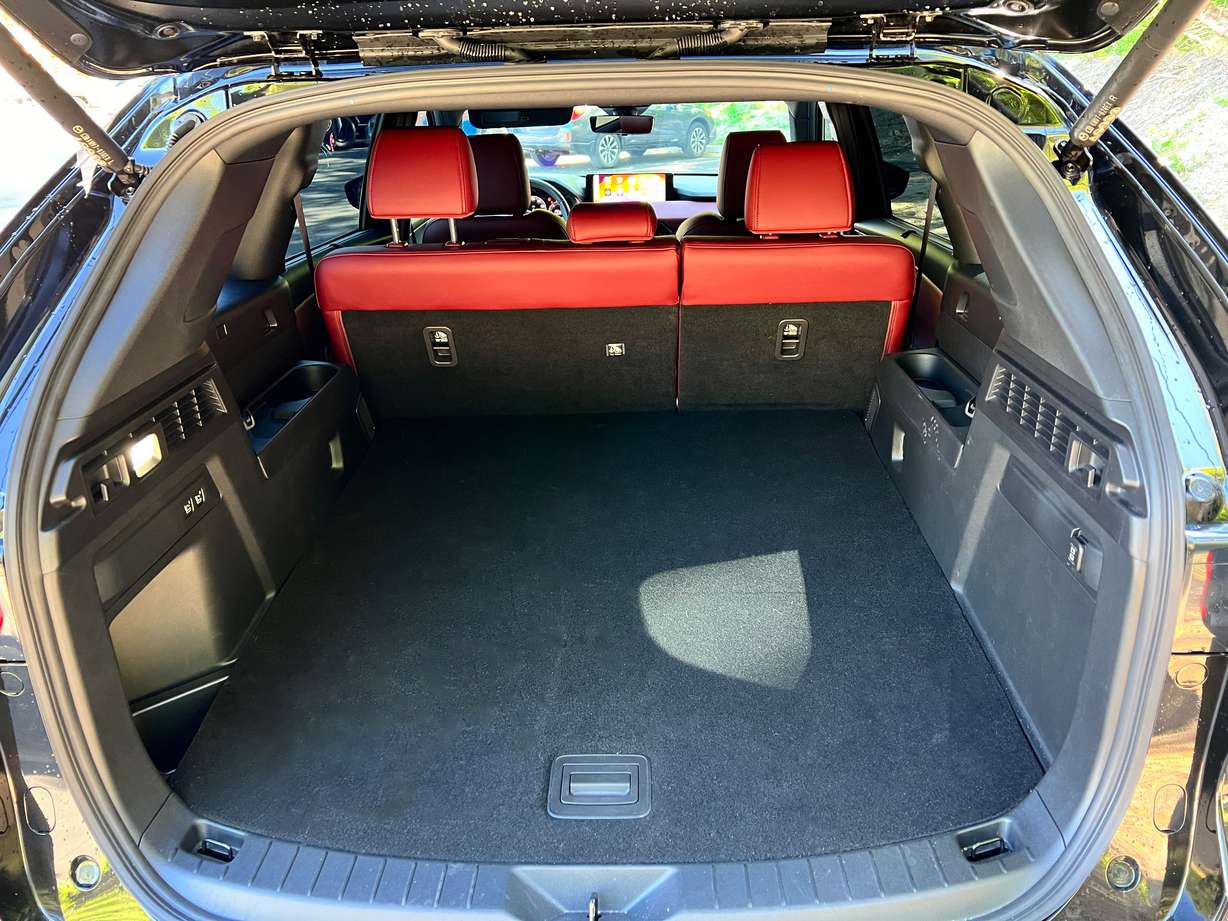
A lot of cars come through my driveway, which naturally piques the curiosity of friends and neighbors. While showing one of my friends around the car, I opened the rear hatch to show off the cargo area, to which he exclaimed, "Holy crap!" And it's true. The cargo space in the CX-70 is seriously impressive.
Yes, it's the same amount as you get in the CX-90 with the third row folded flat, but that's just it — with the third row folded flat. There's something confidence-inspiring about opening the hatch and immediately seeing over 40 cubic feet of cargo space ahead of you. It creates a feeling of usefulness and freedom that's hard to replicate with a third row constantly staring you in the face.
My jaw honestly dropped when I saw how much space the CX-70 offers. Having immediate access to it without the fuss of having to lower a third row made it all the more appealing and easy to use.
The bench seat is usable
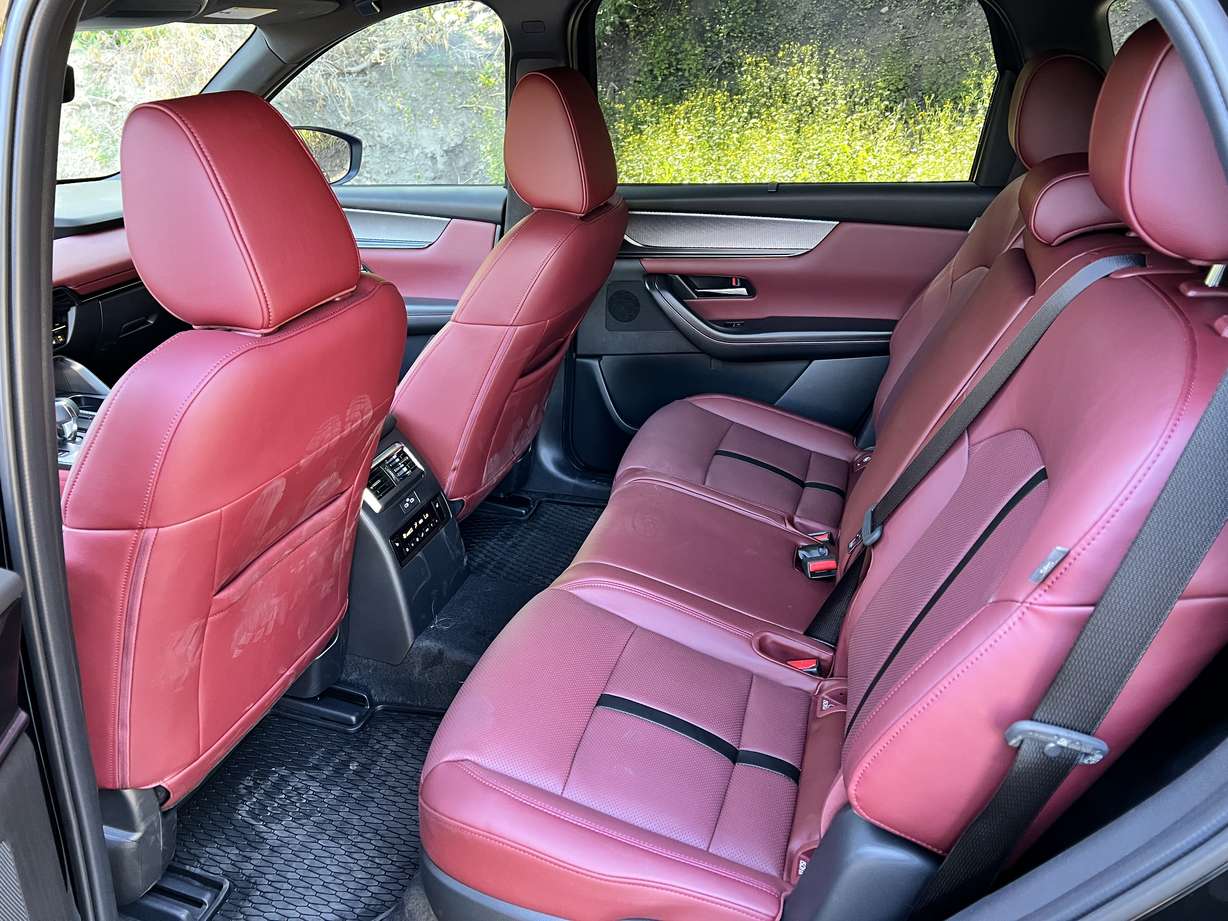
In the CX-90, you're treated to captain's chairs in the second row and two small seats in the third row. While the captain's chairs are certainly comfortable for adults, the third row really is best suited for smaller children — rendering the CX-90 more of a four-seater than anything else.
The CX-70, however, tosses out the Mighty Mouse-sized third row in favor of a spacious bench seat — and it's all the better for it. You still have a small hump in the floor that the middle passenger's feet will have to straddle somewhat, but as a whole, the CX-70 counterintuitively feels more usable, accessible and comfortable than the CX-90. Sure, it only seats five, but those five passengers might very well have greater comfort — and more cargo space — than they would in the three-row CX-90.
For younger families with small children, empty nesters or people carrying a ton of gear, the CX-70 performs very well in its passenger comfort and cargo space departments.
It feels more expensive than it is
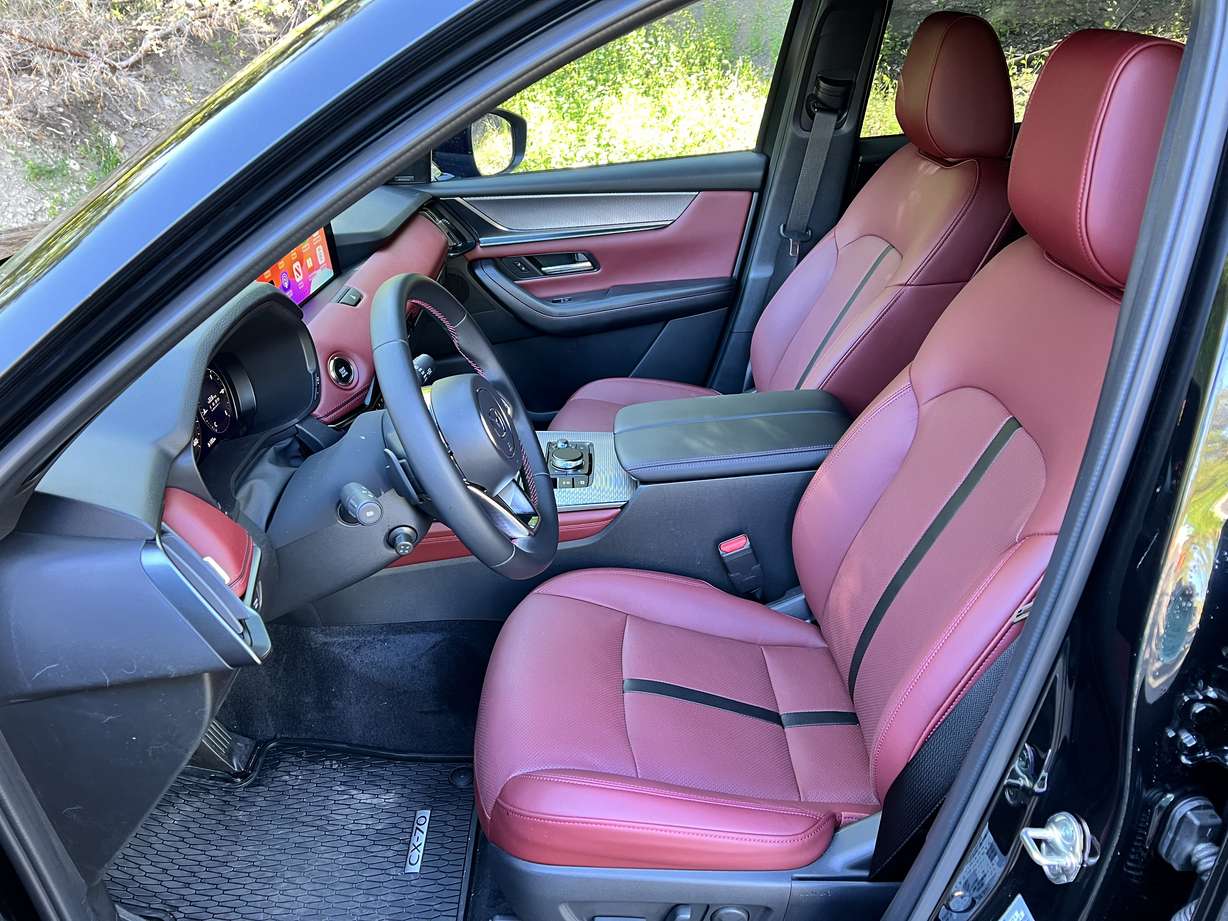
For this test, Mazda put me up in the CX-70's nicest trim, the 3.3 Turbo S Premium. Springing for this top trim brings features like a heated steering wheel, heated and ventilated front seats, heated second-row seats, Nappa leather, a 12-speaker Bose stereo, a 360-degree camera and much more. The total cost was $54,705.
Considering that Kelley Blue Book reports the average new car price is near $48,000, the loaded-up CX-70 feels like a relative bargain, especially considering its luxury trappings, standard all-wheel-drive system and its powerful, turbocharged inline six-cylinder engine.
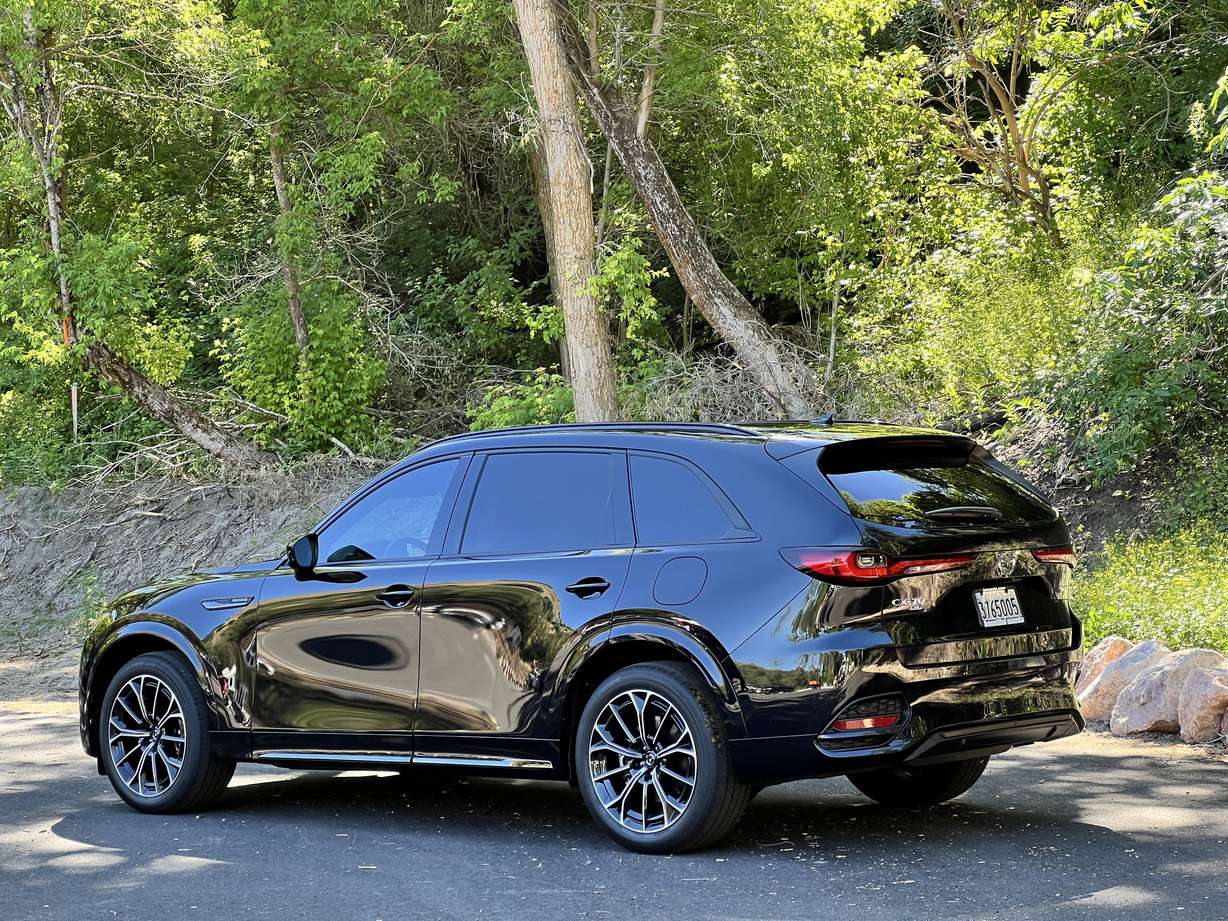
The most obvious comparison that came to mind during my time with the CX-70 was the BMW X5. The X5 is similarly sized, and offers a similar engine and luxury features — but its pricing starts at nearly $14,000 more than the loaded Mazda — before options. So for nearly $20,000 less than a similarly equipped X5 the CX-70 3.3 Turbo S Premium Plus is a pretty compelling option.
Everything from the leather to the buttons to the metals and other interior bits looks, feels and even smells top quality. I owned a 2022 Mazda3 for a couple of years and can attest that Mazda does not skimp on its interiors, and they hold up very well over time. My black tester with its red leather looked especially sharp, although I'm sure the Terracotta interior would look equally svelte.
A driver's SUV
Remember the old Mazda "zoom-zoom" commercials? Well, as much as they've sought to embrace upscale luxury, the brand has been wise to remember its roots in cars that extract the joy of driving. The MX-5 Miata is the best example (of which I've owned two). While I wouldn't go as far as to say the CX-70 is a Miata in SUV form, it's probably the most driver-centric SUV in its price range, mostly due to its handling and power.
As further evidence of the brand's desire to level up, Mazda in-house developed a turbocharged inline six-cylinder engine for these models. Inline six-cylinders have a reputation for reliability and for smooth and balanced power delivery. I've been waiting patiently to experience this new motor — especially after driving the lackluster plug-in hybrid setup in a CX-90 a few months back.
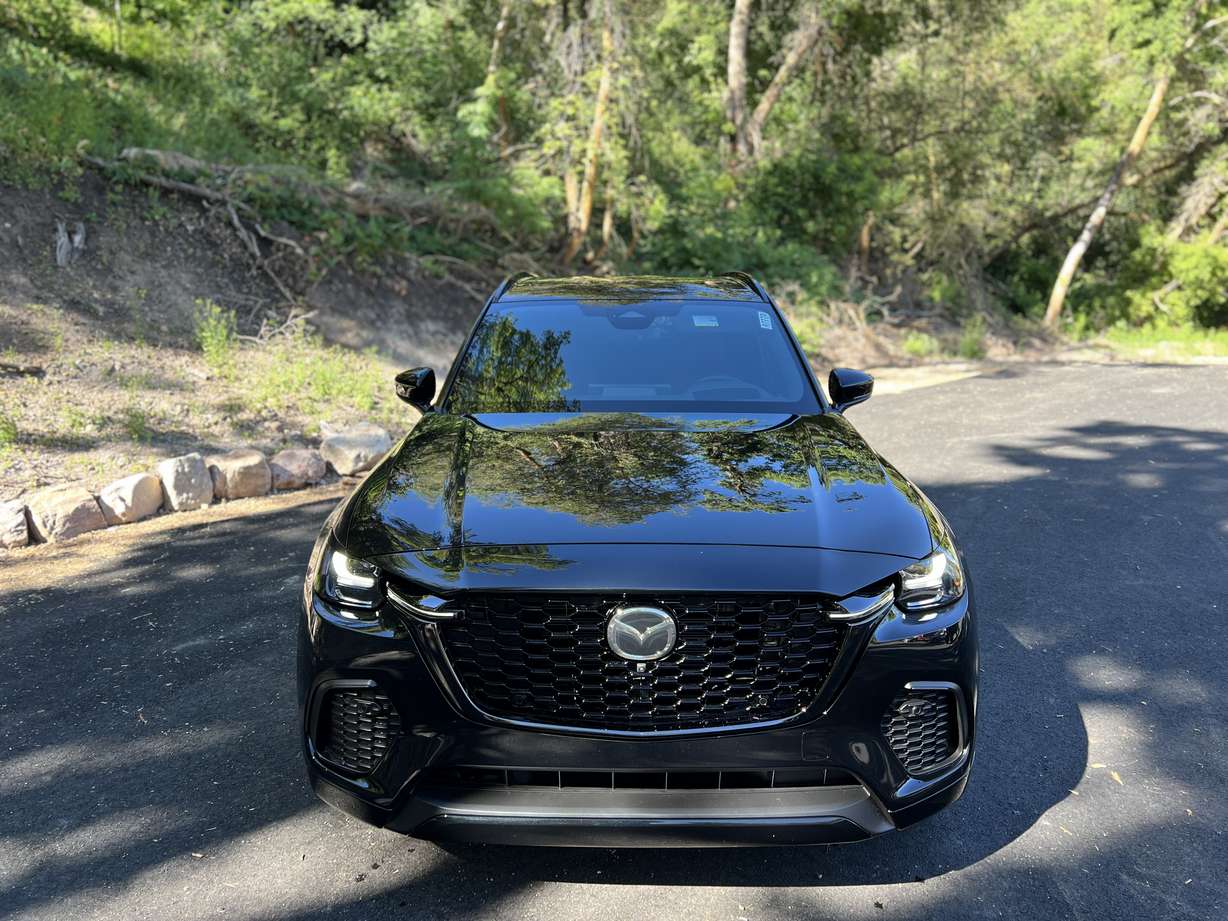
Spoiler alert: the inline-six is the engine you want.
It produces 340 horsepower and 369 pound-feet of torque and in Sport mode, you feel it — and it's great. Acceleration is brisk and assured, again, especially in Sport mode. In short, for the money, this is an excellent enthusiast SUV.
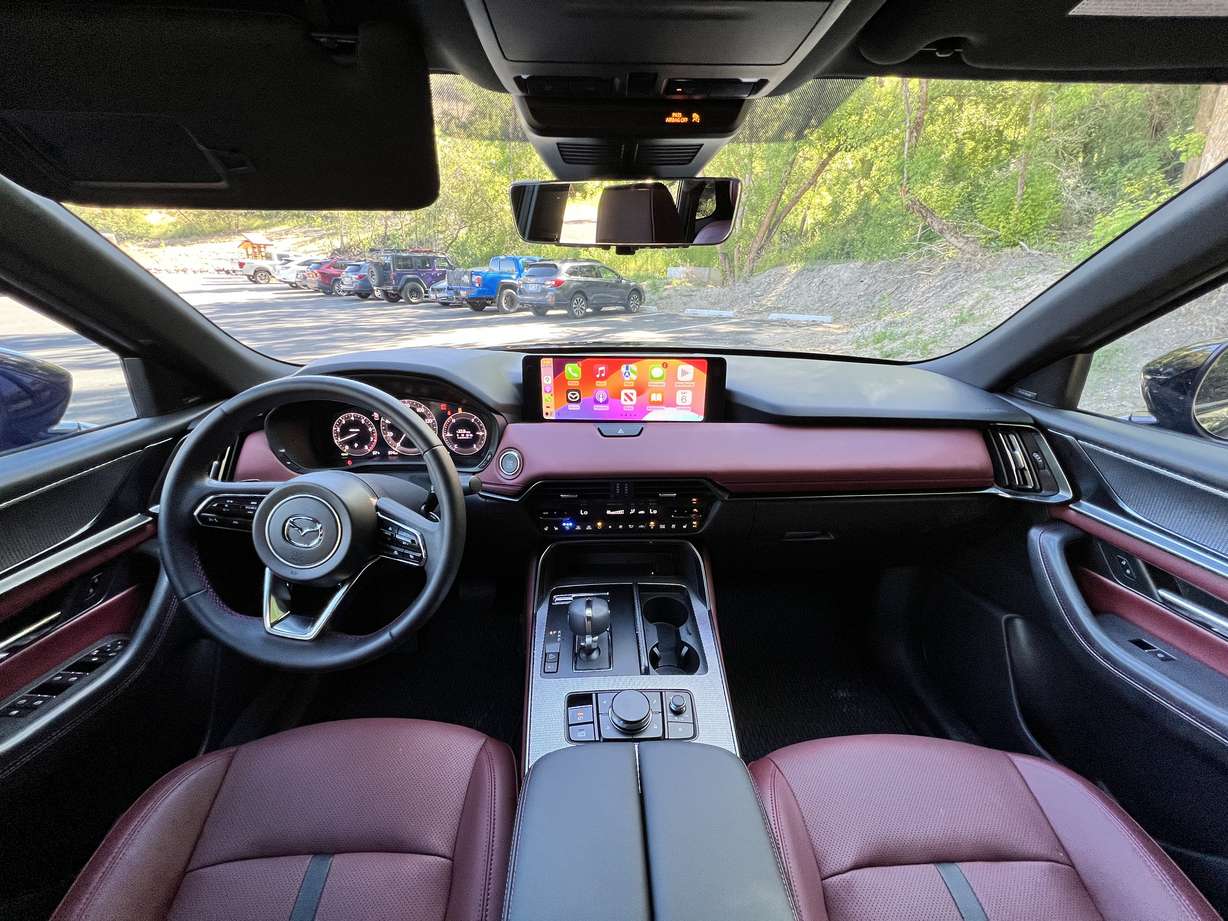
Final thoughts
The luxury and performance SUV spaces are tough segments to compete in. But what Mazda has done here with the versatile CX-70 is impressive. It's luxurious and sporty and undercuts its closest luxury competitors by at least $14,000.
And while you could just get a CX-90 and leave the rear seat folded flat until you need it, the CX-70 makes a compelling case for a simpler approach to practicality. Personally, I prefer the bench seat and immediately available cavern of cargo space in the CX-70. The car feels more practical and spacious in terms of passenger and cargo room than its sibling.
In the end, I agree with Motor Trend's Bob Hernandez when he said, "If you like your midsize SUV to offer you an engaging drive, the 2025 Mazda CX-70 should be on your shortlist, even if the more expensive BMW X5 feels like it drives a little smaller. The CX-70's weight is difficult to hide here, but it also works to keep the ride composed and the cabin quiet.Because of its roomy cabin, the 2025 Mazda CX-70 might be a better midsize two-row SUV than the CX-90 is at being a three-row. It doesn't happen often, but sometimes spin offs can be better than the original."
More photos below: