Estimated read time: 5-6 minutes
This archived news story is available only for your personal, non-commercial use. Information in the story may be outdated or superseded by additional information. Reading or replaying the story in its archived form does not constitute a republication of the story.
Whether it's called "grand," "the Stars and Stripes" or "Old Glory," the American flag has always been an iconic symbol of freedom and democracy and national pride. As happens with many meaningful symbols, myths and misconceptions surround the use and display of the American flag.
To better dispel these myths, it's important to understand there are distinct differences between civilian guidelines and military protocols. For these purposes, The Flag Code (Title 4 USC CH 1 §§1-10) can help clear up any further questions on the correct civilian use and display of the flag.
DeVaughn Simper, vexillologist with Colonial Flag has a few myths to bust about Old Glory.
Myth 1: If your flag touches the ground, you have to burn it
You've probably heard this one since grammar school and likely think it again any time your flag brushes the floor. But burning the flag after it touches ground isn't necessarily required. If the flag touches the ground accidentally and remains in good condition, it does not need to be destroyed.
However, if the flag is damaged, stained, or otherwise unserviceable, it is appropriate to retire it respectfully, which may include burning.
"If the flag is dirty, you can wash it," DeVaughn Simper says. "Use cold water and a gentle cycle with mild detergent, extra rinse cycle. If you're concerned about the colors bleeding into the white stripes, add a cup of vinegar to the wash. Frayed flags can be trimmed and re-hemmed to prolong their use."
Myth 2: All flags no longer fit to fly must be destroyed
Hanging on to a worn flag isn't necessarily a faux pas. Flags with significant historical or familial value do not need to be disposed of, which is why some tattered and worn versions are kept in museums. If you're keeping a flag, be sure to preserve them in an appropriate case and document their history for future generations. This approach respects the flag's symbolic value while maintaining its legacy.
If your flag is no longer fit to fly or cannot be stored, you can discreetly burn the flag, shred it (until it is unrecognizable), or bury it out of respect. The American Legion hosts the Ceremony for Disposal of Unserviceable Flags every year on Flag Day, June 14. You can find a local chapter online to bring your worn or damaged flags for proper flag retirement.
Additionally, Colonial Flag in Sandy will destroy flags no longer acceptable to fly. If you don't live near the store, you can also mail your flag.
Myth 3: The U.S. flag must always fly higher than any other flag
This myth is only partially true. According to 4 U.S. Code § 7c, no other flag or pennant should be placed above or to the right (the viewer's left) of the American flag when displayed on the same level.
It is also inappropriate to fly other countries' flags on the same pole. Instead, they should be on separate poles of equal height, and the flags should be as similar in size as possible, as specified in § 7g of The Flag Code.
Myth 4: When the flag Is worn on the right shoulder, the Union should face forward
This myth involves a common misunderstanding. The Flag Code, based on the rules of heraldry, dictates that the union (the blue field with stars) should always be in the position of honor, which is the upper left from the viewer's perspective. When displayed horizontally or vertically against a wall, the union should be at the top and to the flag's own right.
The flag on the right shoulder of a military uniform is a special case; it appears reversed, with the union to the observer's right, to symbolize the flag flying as the wearer moves forward.
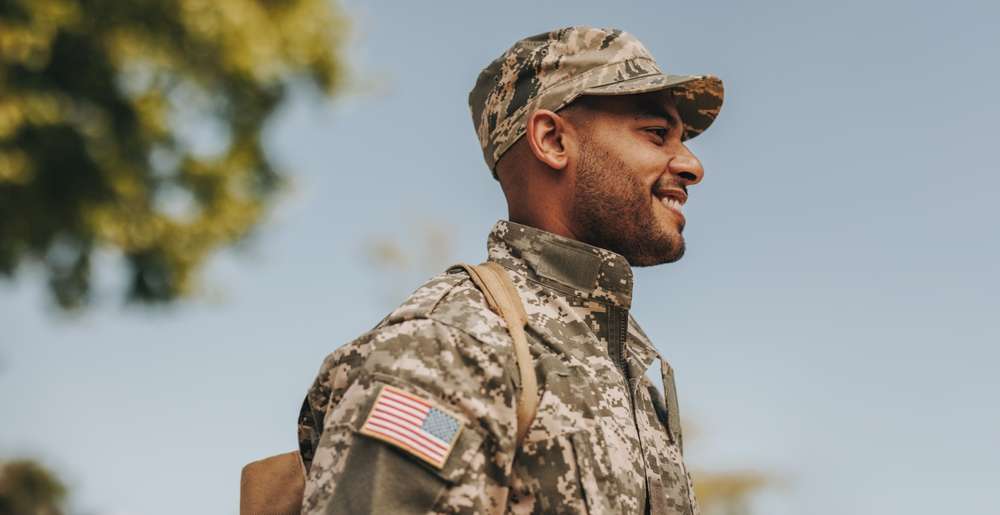
The Stratford Veterans Museum says in earlier wars "calvary and infantry units would designate a standard bearer who carried the flag into battle. As this standard bearer charged, his[or her] forward momentum caused the flag to stream back."
The idea is to make it appear as the soldier is holding the flag on a staff, which, as he/she runs forward, blows in the wind and appears backward. Because soldiers no longer carry flags on poles into battle, the soldier becomes the symbolic staff, which is why the flag on the sleeve is seen symbolically flying backward.
Myth 5: The fringe on the flag indicates martial law
Another widespread myth is that fringe on the flag signifies military status or martial law. This is incorrect, according to Simper.
"The fringe is purely decorative. Different branches of the military have varied traditions regarding the fringe: the Army, Air Force and Space Force require it, while the Navy, Marines and Coast Guard do not."
Simper adds that some historians believe fringe was added to flags to keep dust and soot off when displayed indoors.
Fly the flag with honor
With Flag Day and the nation's birthday around the corner, brushing up on flag etiquette is never a bad idea! By following the U.S. Flag Code — not common myths — you can keep Old Glory waving honorably.
Find the right American flag for your office, home or event at Utah's Colonial Flag. You'll find a wide selection of flags in both polyester and nylon in sizes ranging only 2 feet to 60 feet. Visit online or in person to find your flag.