'%3e%3cpath%20d='M34.1406%205.85938C30.3906%202.10547%2025.3047%200%2020%200C14.6953%200%209.60938%202.10547%205.85938%205.85938C2.10938%209.61328%200%2014.6953%200%2020C0%2025.3047%202.10547%2030.3906%205.85938%2034.1406C9.61328%2037.8906%2014.6953%2040%2020%2040C25.3047%2040%2030.3906%2037.8945%2034.1406%2034.1406C37.8906%2030.3906%2040%2025.3047%2040%2020C40%2014.6953%2037.8945%209.60938%2034.1406%205.85938ZM37.0117%2023.543H31.1602V13.5391H27.6328V19.9414C28.1211%2020.6914%2028.3711%2021.582%2028.3711%2022.5625V22.625C28.3711%2023.668%2028.1172%2024.6055%2027.6328%2025.4297V26.6094H36.082C33.4883%2032.9375%2027.2891%2037.3789%2020.0039%2037.3789C10.3711%2037.3789%202.62109%2029.6289%202.62109%2020C2.62109%2010.3711%2010.3711%202.62109%2020%202.62109C29.6289%202.62109%2037.3789%2010.3711%2037.3789%2020C37.3789%2021.1484%2037.2617%2022.2656%2037.0508%2023.3477C37.0391%2023.4141%2037.0234%2023.4766%2037.0117%2023.543Z'%20fill='white'/%3e%3cpath%20d='M22.3086%2018.5352C20.4336%2018.125%2019.9531%2017.8398%2019.9766%2017.1836V17.1406C19.9766%2016.6992%2020.3477%2016.2148%2021.4023%2016.2148C22.582%2016.2148%2023.8867%2016.6797%2025.0781%2017.4766L26.8516%2015.0195C25.4453%2013.8906%2023.707%2013.3398%2021.5547%2013.3398C18.5195%2013.3398%2016.4375%2015%2016.4063%2017.4766V17.5352C16.3633%2020.2617%2018.5859%2020.9805%2021.293%2021.6016C23.0391%2021.9766%2023.5703%2022.3164%2023.5703%2022.9609L23.5469%2022.9766C23.5469%2023.3906%2023.2578%2023.7031%2022.7852%2023.8359C22.5742%2023.9062%2022.1289%2023.9727%2021.5156%2023.9727C20.7617%2023.9727%2019.7539%2023.8633%2018.6328%2023.4844C18.0898%2023.2891%2017.4727%2023.0039%2016.8047%2022.6133L20.1406%2026.625C20.2813%2026.6602%2021.0977%2026.8516%2021.7734%2026.8516C25.0039%2026.8516%2027.0859%2025.2461%2027.1094%2022.6328V22.5703C27.1602%2020.1133%2025.2148%2019.1719%2022.3086%2018.5352Z'%20fill='white'/%3e%3cpath%20d='M5.24219%2013.5664V26.6133H8.75391V23.7578L10.2969%2021.9531L14.2031%2026.6133H18.3867L12.3555%2019.5195L17.4023%2013.5664H13.4531L8.75391%2019.0586V13.5664H5.24219Z'%20fill='white'/%3e%3c/g%3e%3cdefs%3e%3cclipPath%20id='clip0_97_2430'%3e%3crect%20width='40'%20height='40'%20fill='white'/%3e%3c/clipPath%3e%3c/defs%3e%3c/svg%3e)


Estimated read time: 4-5 minutes
This archived news story is available only for your personal, non-commercial use. Information in the story may be outdated or superseded by additional information. Reading or replaying the story in its archived form does not constitute a republication of the story.
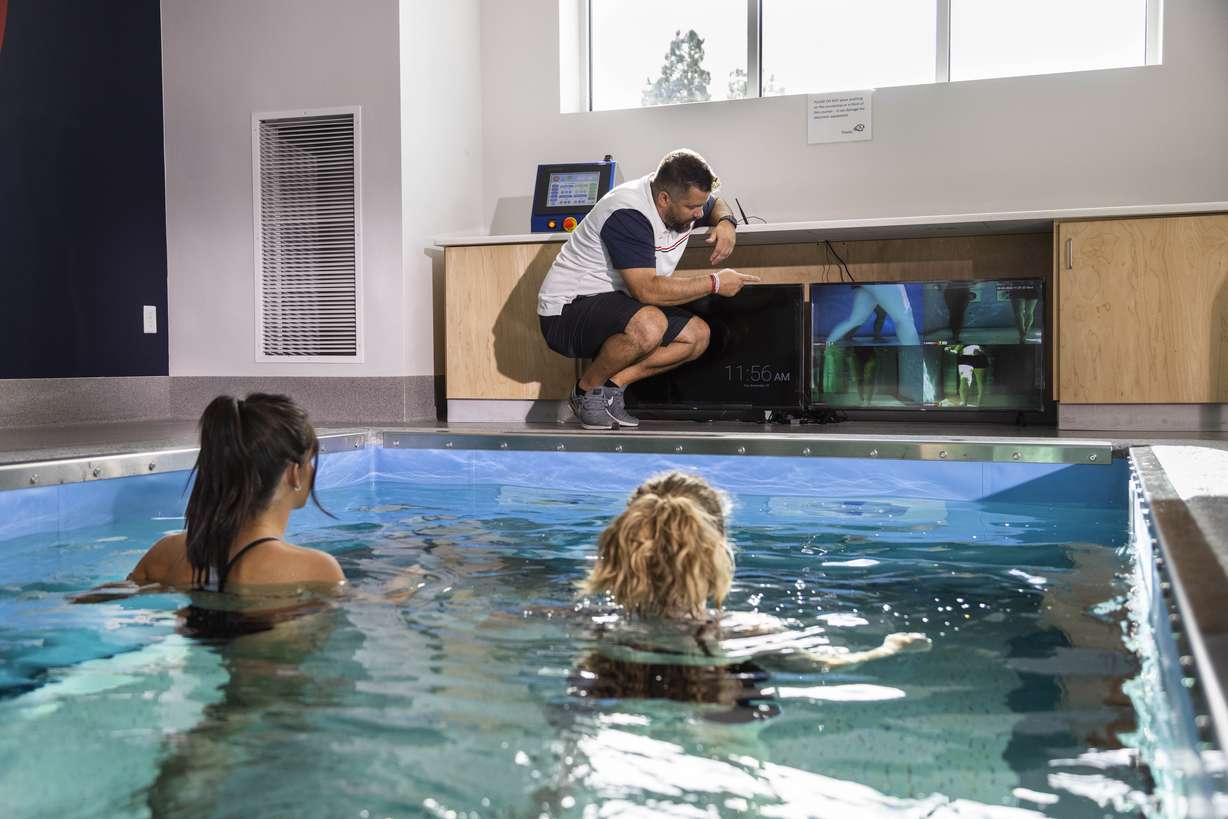
Even before they graduate, students in Utah Tech University's Master of Athletic Training program are leaving their mark on healthcare in Southern Utah. Thanks to a partnership between the university and Family Healthcare, students help treat underserved residents in the St. George clinic every week.
The partnership started as a way for students to gain hands-on learning while practicing their craft and serving the community. Using their skillset that focuses on injury prevention and treating the entire musculoskeletal system of athletes, Utah Tech students are reaching the clinic's patients, 97% of whom are low-income.
Experiences like serving patients at Family Healthcare are preparing Utah Tech graduates to enter the workforce as athletic trainers, something the nation will increasingly need over the next decade. In fact, the U.S. Bureau of Labor Statistics reports the demand for certified athletic trainers will grow by 14% between 2022 and 2032.
Traditionally employed by professional or collegiate teams or sports medicine clinics, athletic training is expanding with career opportunities in secondary and intermediate schools, military programs and clinics like Family Healthcare.
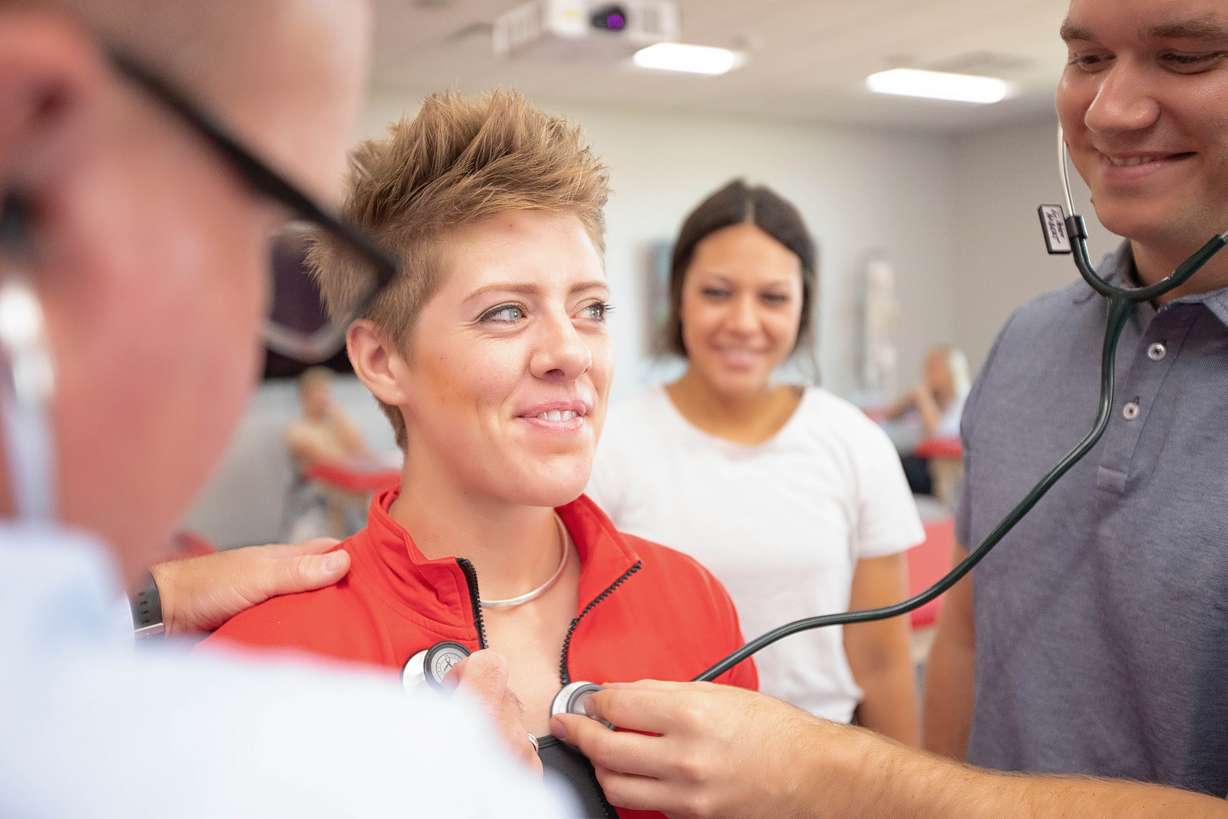
"After being in AT education for over 25 years, I can say with confidence that our program has the best resources, the broadest support, amazing facilities, and some of the finest, most experienced preceptors I've ever seen," Dr. Peter Neibert, director of Utah Tech's Master of Athletic Training program, said.
As part of providing athletic training students hands-on experience, Utah Tech's program maintains a 1-to-1 ratio between students and preceptors in clinical placements, meaning each student has the full attention of the certified, practicing athletic trainer mentoring them in local schools, university sports medicine settings and clinics.
"Utah Tech has such a great culture of hands-on learning that really pushes the students to become confident with themselves going into their career as ATs," Tatum Evans, who is set to graduate from the program this year, said. "Our preceptors are amazing and show us different and new ways to learn for us to become the best healthcare providers we can be."
While the Commission on Accreditation of Athletic Training Education requires a minimum of four weeks of immersion as an athletic trainer, Utah Tech students spend 18 weeks immersed in full-time athletic training practice, rotating through both traditional and nontraditional settings.
Additionally, Utah Tech's Athletic Training program has a dedicated lab where simulations, which help students synthesize classroom learning with critical thinking and physical skills, take place.
"We use real cases and have over 80 simulations for students to practice. We even train students as actors and use makeup to create trauma situations in order to be as realistic as possible," Neibert said. "Students need to know how to respond in all situations — how to activate EMS, provide acute care and do a good patient handoff."
This model of preparing students has proven effective. Graduates of the program have landed in a range of positions, such as providing preventative musculoskeletal care for Delta Airline employees, helping student athletes in local high schools, working for Intermountain Health, teaching at dance academies and opening their own businesses. In fact, two current students have internships with NFL teams lined up.
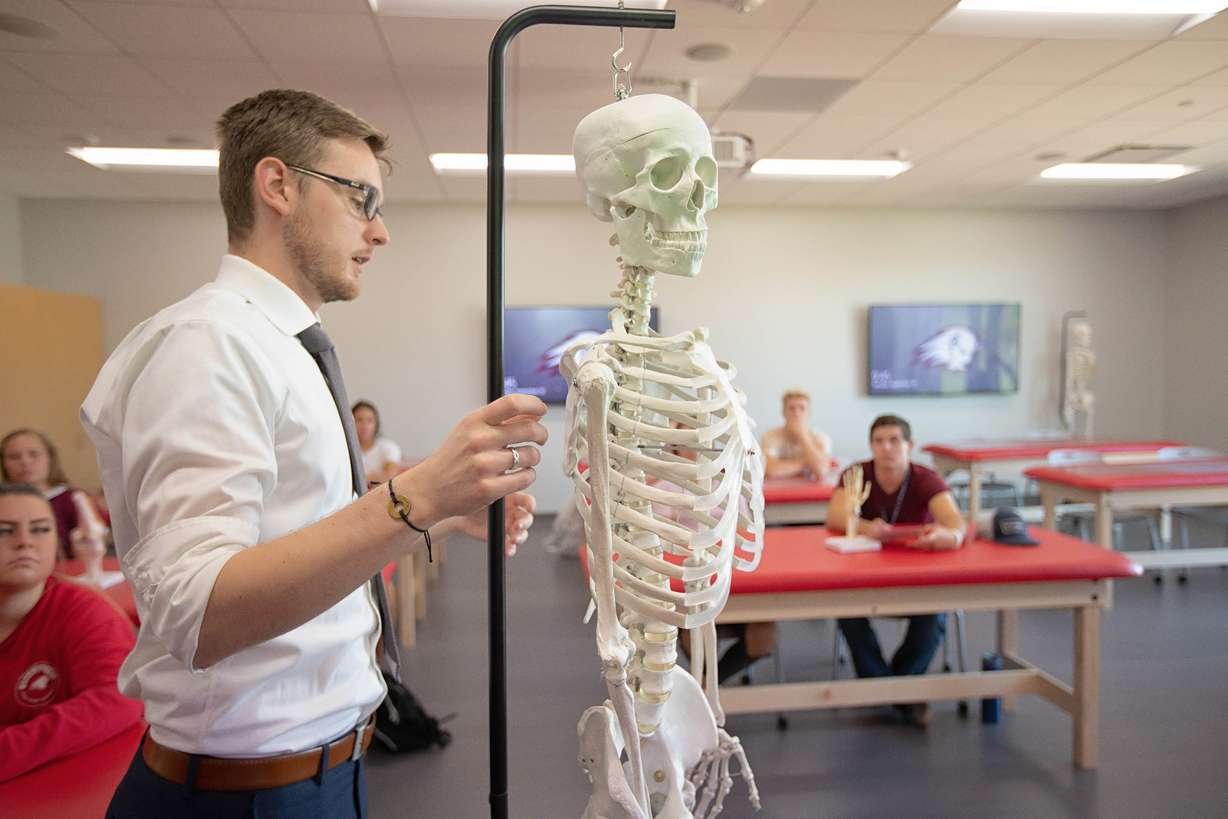
"Without this program, I wouldn't have the opportunities that I have now to allow me to be the best athletic trainer possible," Bausten Rasmussen, who will graduate in 2025, said. "This program has been instrumental in preparing for my upcoming NFL internship with the Miami Dolphins."
Utah Tech University's Master of Athletic Training program is a two-year, 60-credit residential program culminating with a non-thesis research project. The degree is only $350 per credit for resident students and is a full-time, cohort-based program that prepares graduates to take the Board of Certification exam. However, Neibert said potential students should not be intimidated by the demands of the MAT program.
"The only predictor of success I've seen in my 25 years in this field is passion," Neibert said. "Some of our students were on the borderline with undergraduate grades or were coming from backgrounds that had very little to do with athletic training and they ended up being absolute rockstars. It's because they found their passion. They know what they want to do, and they're here to do it."
Learn more about Utah Tech University's Master of Athletic Training program at health.utahtech.edu/master-of-athletic-training, by following the program on Instagram or Facebook, or by reaching out to program director Dr.Peter Neibert at (435) 879-4735 or peter.neibert@utahtech.edu.