'%3e%3cpath%20d='M34.1406%205.85938C30.3906%202.10547%2025.3047%200%2020%200C14.6953%200%209.60938%202.10547%205.85938%205.85938C2.10938%209.61328%200%2014.6953%200%2020C0%2025.3047%202.10547%2030.3906%205.85938%2034.1406C9.61328%2037.8906%2014.6953%2040%2020%2040C25.3047%2040%2030.3906%2037.8945%2034.1406%2034.1406C37.8906%2030.3906%2040%2025.3047%2040%2020C40%2014.6953%2037.8945%209.60938%2034.1406%205.85938ZM37.0117%2023.543H31.1602V13.5391H27.6328V19.9414C28.1211%2020.6914%2028.3711%2021.582%2028.3711%2022.5625V22.625C28.3711%2023.668%2028.1172%2024.6055%2027.6328%2025.4297V26.6094H36.082C33.4883%2032.9375%2027.2891%2037.3789%2020.0039%2037.3789C10.3711%2037.3789%202.62109%2029.6289%202.62109%2020C2.62109%2010.3711%2010.3711%202.62109%2020%202.62109C29.6289%202.62109%2037.3789%2010.3711%2037.3789%2020C37.3789%2021.1484%2037.2617%2022.2656%2037.0508%2023.3477C37.0391%2023.4141%2037.0234%2023.4766%2037.0117%2023.543Z'%20fill='white'/%3e%3cpath%20d='M22.3086%2018.5352C20.4336%2018.125%2019.9531%2017.8398%2019.9766%2017.1836V17.1406C19.9766%2016.6992%2020.3477%2016.2148%2021.4023%2016.2148C22.582%2016.2148%2023.8867%2016.6797%2025.0781%2017.4766L26.8516%2015.0195C25.4453%2013.8906%2023.707%2013.3398%2021.5547%2013.3398C18.5195%2013.3398%2016.4375%2015%2016.4063%2017.4766V17.5352C16.3633%2020.2617%2018.5859%2020.9805%2021.293%2021.6016C23.0391%2021.9766%2023.5703%2022.3164%2023.5703%2022.9609L23.5469%2022.9766C23.5469%2023.3906%2023.2578%2023.7031%2022.7852%2023.8359C22.5742%2023.9062%2022.1289%2023.9727%2021.5156%2023.9727C20.7617%2023.9727%2019.7539%2023.8633%2018.6328%2023.4844C18.0898%2023.2891%2017.4727%2023.0039%2016.8047%2022.6133L20.1406%2026.625C20.2813%2026.6602%2021.0977%2026.8516%2021.7734%2026.8516C25.0039%2026.8516%2027.0859%2025.2461%2027.1094%2022.6328V22.5703C27.1602%2020.1133%2025.2148%2019.1719%2022.3086%2018.5352Z'%20fill='white'/%3e%3cpath%20d='M5.24219%2013.5664V26.6133H8.75391V23.7578L10.2969%2021.9531L14.2031%2026.6133H18.3867L12.3555%2019.5195L17.4023%2013.5664H13.4531L8.75391%2019.0586V13.5664H5.24219Z'%20fill='white'/%3e%3c/g%3e%3cdefs%3e%3cclipPath%20id='clip0_97_2430'%3e%3crect%20width='40'%20height='40'%20fill='white'/%3e%3c/clipPath%3e%3c/defs%3e%3c/svg%3e)


Estimated read time: 3-4 minutes
This archived news story is available only for your personal, non-commercial use. Information in the story may be outdated or superseded by additional information. Reading or replaying the story in its archived form does not constitute a republication of the story.
SALT LAKE CITY — A month after a roller coaster Friday in early August that signaled the end of a 108-year old conference, Big 12 commissioner Brett Yormark sat in the press box of McLane Stadium in Waco, Texas, looking on at two teams — Baylor and Utah — who would soon become conference opponents in 2024.
When the contract was signed in May 2015 as part of a home-and-home series, it was a way for Utah to bolster its nonconference schedule. Eight years later, after a wild and tumultuous round of conference realignment, Utah accepted an invitation with Arizona, Arizona State and Colorado to join the Big 12 Conference.
The game was now a quasi conference game.
For Yormark, the heavy lifting was done and he could rest easy after a nearly year-long effort to bring the so-called Four Corner schools into the Big 12's fold. On Saturday, it was an opportunity to see the fruit of his labors take shape.
"It was the dream scenario for us when we're thinking about expansion," Yormark told KSL.com in a brief interview before the game. "And thankfully, it all came together for us."
Yormark helped salvage a sinking ship of a Big 12 that was worried about its future with the loss of Oklahoma and Texas, and went to work to bolster its membership with the addition of eight teams when it was all said and done. The plan worked and the Big 12 found stable ground.
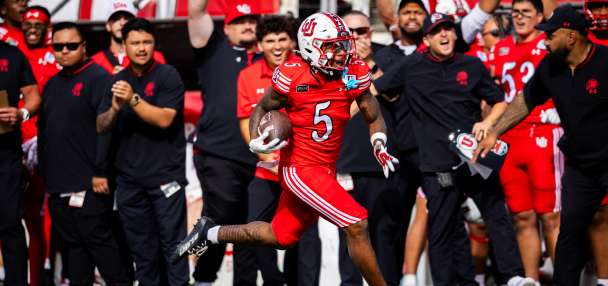
On Saturday, Utah got the upper hand on Baylor in come-from-behind fashion, and began what will likely be an entertaining series between the two schools, to say nothing of the new matchups that will soon be played between current Big 12 members and the Four Corner schools — Oklahoma State also beat Arizona State later that evening.
At the forefront of the new Big 12 will be a renewed rivalry series between BYU, which started to compete in the Big 12 this season, and Utah in a conference matchup again. The rivalry itself was a major selling point to the Big 12 and its TV partners, Yormark said.
"We consider lots of different factors, but I think the rivalry between BYU and Utah is fantastic, and I think it's gonna play out nationally," Yorkmark said. "Our TV partners love it, and I think it's very additive to the conference and the makeup of our football programs."
It's an opportunity to market one of, arguably, the best rivalries in the sport in the same conference again. But none of that was possible if Utah — as well as the other three Four Corner school — hadn't been an attractive suitor.
"What they've done athletically and academically — premier institution — the rivalry that they bring with BYU, I think, was something that was something exciting for not only us but our TV partners," Yormark said. "But I think for me, it was not one school in particular, I think it was the combination of the four schools and what they could bring and the value they bring to the conference, which I think is tremendous.
"I'm so excited to have Utah, their fans join the Big 12," he added. "I met with the head football coach today, he seems to be very excited as well. Mark Harlan, the AD has been fantastic, he's already been integrated into our conference and attending meetings, so we're off to a great start. I've had some opportunities to meet with the president as well, so I think the culture fit just based on the people I've met, I think is going to be fantastic. And I think it's going to be a great fit for the Big 12 and Utah."
There's still a lot of heavy lifting for Yormark and the soon-to-be 16 members of the Big 12 left to do — that includes how the scheduling will take shape, among many other important factors — but Saturday was at least a temporary reprieve from the chaos of an ever-evolving landscape in collegiate sports, and a nod to what the future could look like under a new Big 12.