'%3e%3cpath%20d='M34.1406%205.85938C30.3906%202.10547%2025.3047%200%2020%200C14.6953%200%209.60938%202.10547%205.85938%205.85938C2.10938%209.61328%200%2014.6953%200%2020C0%2025.3047%202.10547%2030.3906%205.85938%2034.1406C9.61328%2037.8906%2014.6953%2040%2020%2040C25.3047%2040%2030.3906%2037.8945%2034.1406%2034.1406C37.8906%2030.3906%2040%2025.3047%2040%2020C40%2014.6953%2037.8945%209.60938%2034.1406%205.85938ZM37.0117%2023.543H31.1602V13.5391H27.6328V19.9414C28.1211%2020.6914%2028.3711%2021.582%2028.3711%2022.5625V22.625C28.3711%2023.668%2028.1172%2024.6055%2027.6328%2025.4297V26.6094H36.082C33.4883%2032.9375%2027.2891%2037.3789%2020.0039%2037.3789C10.3711%2037.3789%202.62109%2029.6289%202.62109%2020C2.62109%2010.3711%2010.3711%202.62109%2020%202.62109C29.6289%202.62109%2037.3789%2010.3711%2037.3789%2020C37.3789%2021.1484%2037.2617%2022.2656%2037.0508%2023.3477C37.0391%2023.4141%2037.0234%2023.4766%2037.0117%2023.543Z'%20fill='white'/%3e%3cpath%20d='M22.3086%2018.5352C20.4336%2018.125%2019.9531%2017.8398%2019.9766%2017.1836V17.1406C19.9766%2016.6992%2020.3477%2016.2148%2021.4023%2016.2148C22.582%2016.2148%2023.8867%2016.6797%2025.0781%2017.4766L26.8516%2015.0195C25.4453%2013.8906%2023.707%2013.3398%2021.5547%2013.3398C18.5195%2013.3398%2016.4375%2015%2016.4063%2017.4766V17.5352C16.3633%2020.2617%2018.5859%2020.9805%2021.293%2021.6016C23.0391%2021.9766%2023.5703%2022.3164%2023.5703%2022.9609L23.5469%2022.9766C23.5469%2023.3906%2023.2578%2023.7031%2022.7852%2023.8359C22.5742%2023.9062%2022.1289%2023.9727%2021.5156%2023.9727C20.7617%2023.9727%2019.7539%2023.8633%2018.6328%2023.4844C18.0898%2023.2891%2017.4727%2023.0039%2016.8047%2022.6133L20.1406%2026.625C20.2813%2026.6602%2021.0977%2026.8516%2021.7734%2026.8516C25.0039%2026.8516%2027.0859%2025.2461%2027.1094%2022.6328V22.5703C27.1602%2020.1133%2025.2148%2019.1719%2022.3086%2018.5352Z'%20fill='white'/%3e%3cpath%20d='M5.24219%2013.5664V26.6133H8.75391V23.7578L10.2969%2021.9531L14.2031%2026.6133H18.3867L12.3555%2019.5195L17.4023%2013.5664H13.4531L8.75391%2019.0586V13.5664H5.24219Z'%20fill='white'/%3e%3c/g%3e%3cdefs%3e%3cclipPath%20id='clip0_97_2430'%3e%3crect%20width='40'%20height='40'%20fill='white'/%3e%3c/clipPath%3e%3c/defs%3e%3c/svg%3e)


Estimated read time: 5-6 minutes
This archived news story is available only for your personal, non-commercial use. Information in the story may be outdated or superseded by additional information. Reading or replaying the story in its archived form does not constitute a republication of the story.
BLUFFDALE — When soccer coach Eric Adams meets with his players, they come prepared. They've watched videos of their performances, analyzing their technique and their position on the field.
Oh, and they're all between the ages of 9 and 10.
Copper Mountain Soccer Club, based out of Bluffdale, Herriman, Riverton and South Jordan, has been using Trace technology for a little over a year to level up its players.
Trace is at the forefront of new artificial intelligence video technology that films games and then culls each player's performance into a highlight reel. Instead of rewatching an entire 90-minute soccer game, players and coaches can study the few minutes that are relevant to each player's development in the sport.
"You want to celebrate your wins with your kids. You want to learn together from the losses. And Trace fixes that by automatically editing highlights for you," said David Lokshin, Trace founder and CEO. "So instead of having to rewatch the full game … you just binge on the content."
It may seem surprising that such young athletes are already using AI technology to improve their game. Lokshin said 45% of the coaches who signed up for Trace in April lead teams ages 11 or younger, some as young as 4 years old.
But Adams said using AI in his coaching has been instrumental in helping his players learn the structure of the game, see the progress they're making and visualize their position on the field. Drone footage allows players to see where they fit on the team and solve problems with spacing and movement.
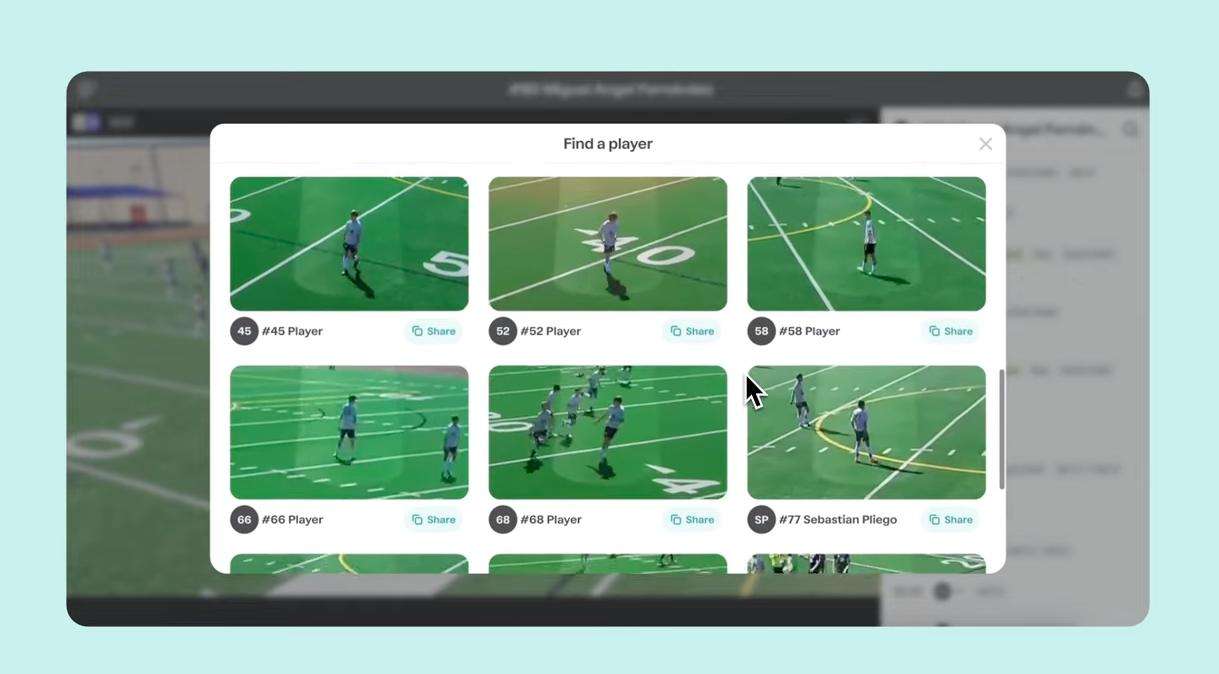
Renata Lawson, coaching director at Copper Mountain, said she loves how using AI in sports allows players to do more self-teaching.
"The older they get, the more they understand and the more they can learn on their own," said Lawson, who coaches youth athletes ages 13 and older. "But they have to have the proper tools, and Trace makes it possible for them to do that."
In one-on-one training sessions, Adams shows his players footage to put them back in the moment of the game. He then asks them what their thought process was and to analyze how their decisions affected the rest of the game.
"A lot of it is player-driven. It's getting them to actually have a little bit of reflection time as to how they played, rather than just that immediate feeling," Adams said. "It allows that dialogue to occur in a much more structured environment that's actually fun for them. That's where the learning really happens."
Adams said his athletes can't wait to watch their footage after each game, which keeps them engaged in the learning process involved in becoming better soccer players. They watch their highlight reels and come to him with specific questions and insights based on their performances.
Lawson also noted how much better a player's comprehension of his/her strengths and weaknesses becomes after watching their own performance.
"When they're watching those moments back-to-back, they start to recognize their own patterns," Lawson said. "It becomes more apparent to them without any instruction involved at all."
Tracing it back
Lokshin never meant for his technology to evolve into a company. He started using code in 2010 to edit GoPro footage taken while skiing and surfing.
"Once you have your own GoPro footage edited for you, you realize, 'Oh my gosh, what if my entire life was like this?'" Lokshin said. "And that was really the genesis of Trace."
The tech company, based in Austin, Texas, started around four years after Lokshin first started editing his own video footage. Trace now offers video editing for soccer, baseball and softball, with technology to incorporate additional sports in development.
Lokshin's video technology originally used sensors attached to each player to help AI figure out how to distinguish between teammates. Now, it uses a form of AI called computer vision, that helps the program identify and differentiate between individuals on its own.
'A really exciting time'
Lawson thinks the way teams recruit players will change as AI begins to play a larger role in sports. Instead of traveling to get exposure to national teams, or making sure college scouts are present during important games, players can now clip highlights to send to recruiters.
Adams believes AI will also be crucial for players who get injured but still want to keep up with the cognitive aspects of their sport. Virtual reality drills and exercises, even just done for a few minutes a day, can keep them from falling behind.
Once you have your own GoPro footage edited for you, you realize, 'Oh my gosh, what if my entire life was like this?
– David Lokshin, Trace founder
AI will also help coaches continue to track metrics and measure how many of their goals they are meeting on a regular basis, Adams said.
"Kids and parents typically see wins and losses as the only metric, and there's so much more to it than that in sports," Adams said.
Lokshin sees only positives when it comes to the future of AI in sports. He pointed out that most concerns with the development of AI come down to the generative aspect of it, whereas using video in sports is about mining data, not creating it.
"What I think that the future holds is that you don't have to do any of that editing. You don't even have to do any of that filming. The content just reaches you," Lokshin said.
A 2023 survey by Trace found that 61% of clubs plan to use more video next season. Additionally, 50% of club directors say that all clubs will be filming their games by 2025 and 38% of clubs expect even noncompetitive youth teams to use video.
"We're at this breaking point where AI is going to make getting the highlights that you care about really, really easy, and that's going to be a watershed moment for people," Lokshin said. "It's a really exciting time."