'%3e%3cpath%20d='M34.1406%205.85938C30.3906%202.10547%2025.3047%200%2020%200C14.6953%200%209.60938%202.10547%205.85938%205.85938C2.10938%209.61328%200%2014.6953%200%2020C0%2025.3047%202.10547%2030.3906%205.85938%2034.1406C9.61328%2037.8906%2014.6953%2040%2020%2040C25.3047%2040%2030.3906%2037.8945%2034.1406%2034.1406C37.8906%2030.3906%2040%2025.3047%2040%2020C40%2014.6953%2037.8945%209.60938%2034.1406%205.85938ZM37.0117%2023.543H31.1602V13.5391H27.6328V19.9414C28.1211%2020.6914%2028.3711%2021.582%2028.3711%2022.5625V22.625C28.3711%2023.668%2028.1172%2024.6055%2027.6328%2025.4297V26.6094H36.082C33.4883%2032.9375%2027.2891%2037.3789%2020.0039%2037.3789C10.3711%2037.3789%202.62109%2029.6289%202.62109%2020C2.62109%2010.3711%2010.3711%202.62109%2020%202.62109C29.6289%202.62109%2037.3789%2010.3711%2037.3789%2020C37.3789%2021.1484%2037.2617%2022.2656%2037.0508%2023.3477C37.0391%2023.4141%2037.0234%2023.4766%2037.0117%2023.543Z'%20fill='white'/%3e%3cpath%20d='M22.3086%2018.5352C20.4336%2018.125%2019.9531%2017.8398%2019.9766%2017.1836V17.1406C19.9766%2016.6992%2020.3477%2016.2148%2021.4023%2016.2148C22.582%2016.2148%2023.8867%2016.6797%2025.0781%2017.4766L26.8516%2015.0195C25.4453%2013.8906%2023.707%2013.3398%2021.5547%2013.3398C18.5195%2013.3398%2016.4375%2015%2016.4063%2017.4766V17.5352C16.3633%2020.2617%2018.5859%2020.9805%2021.293%2021.6016C23.0391%2021.9766%2023.5703%2022.3164%2023.5703%2022.9609L23.5469%2022.9766C23.5469%2023.3906%2023.2578%2023.7031%2022.7852%2023.8359C22.5742%2023.9062%2022.1289%2023.9727%2021.5156%2023.9727C20.7617%2023.9727%2019.7539%2023.8633%2018.6328%2023.4844C18.0898%2023.2891%2017.4727%2023.0039%2016.8047%2022.6133L20.1406%2026.625C20.2813%2026.6602%2021.0977%2026.8516%2021.7734%2026.8516C25.0039%2026.8516%2027.0859%2025.2461%2027.1094%2022.6328V22.5703C27.1602%2020.1133%2025.2148%2019.1719%2022.3086%2018.5352Z'%20fill='white'/%3e%3cpath%20d='M5.24219%2013.5664V26.6133H8.75391V23.7578L10.2969%2021.9531L14.2031%2026.6133H18.3867L12.3555%2019.5195L17.4023%2013.5664H13.4531L8.75391%2019.0586V13.5664H5.24219Z'%20fill='white'/%3e%3c/g%3e%3cdefs%3e%3cclipPath%20id='clip0_97_2430'%3e%3crect%20width='40'%20height='40'%20fill='white'/%3e%3c/clipPath%3e%3c/defs%3e%3c/svg%3e)


Estimated read time: 4-5 minutes
This archived news story is available only for your personal, non-commercial use. Information in the story may be outdated or superseded by additional information. Reading or replaying the story in its archived form does not constitute a republication of the story.
SALT LAKE CITY — The Utah Jazz front office didn't let an easy excuse cloud their judgment.
Yes, Mike Conley has missed significant time with two hamstring injuries, clearly weakening the already suspect depth of the team. It forced the starters to play heavier minutes and put players on the court in different roles. But Dennis Lindsey, Justin Zanik and the rest of the Utah Jazz brass had already seen enough.
With or without Conley, their bench was struggling — and that's putting it lightly. Scoring-wise, the Jazz have the 28th worst bench in the league. Change needed to happen.
“It's an incomplete evaluation, just with not having a big part of our team healthy right now, but still doesn't change the fact that the bench needed to up the production, and we needed to see if there were other avenues to address that,” said Zanik, the team's general manager.
They found an avenue. The Jazz traded Dante Exum for Jordan Clarkson and then released Jeff Green to sign G League standout Rayjon Tucker.
In Clarkson, they got a player that has spent his career anchoring bench units. In Tucker, they got an intriguing athlete who Lindsey, Utah's executive vice president of basketball operations, said was being pursued by six teams before the Jazz’s offer won out.
There was a trade-off this summer when the Jazz brought in Conley and Bojan Bogdanovic. It meant the Jazz were heavy on top talent but low on reserves. Jae Cowder and Derrick Favors wouldn’t be returning, and the Jazz also lost Kyle Korver and Raul Neto.
The Jazz pinned their bench hopes on aging veterans (Green and Ed Davis), young players that hadn’t panned out elsewhere (Emmanuel Mudiay), and Exum hopefully being able to make it back. When his rehab took longer than expected, it put the Jazz in a tough spot.
Head coach Quin Snyder doesn’t hold much value in starting over not starting, but there is value in being a productive player. And for most of the season, the Jazz have consistently only had six of those: Bogdanovic, Conley, Royce O’Neale, Joe Ingles, Rudy Gobert and Donovan Mitchell.
That fact has put a heavy load on those six guys — especially once Conley started missing games.
“We can tell that Donovan was getting stretched, Bojan was getting stretched,” Lindsey said. “I think Quin's done a really good job of using the starters to help the bench along, and that got even more compromised with Mike's hamstring injuries.”
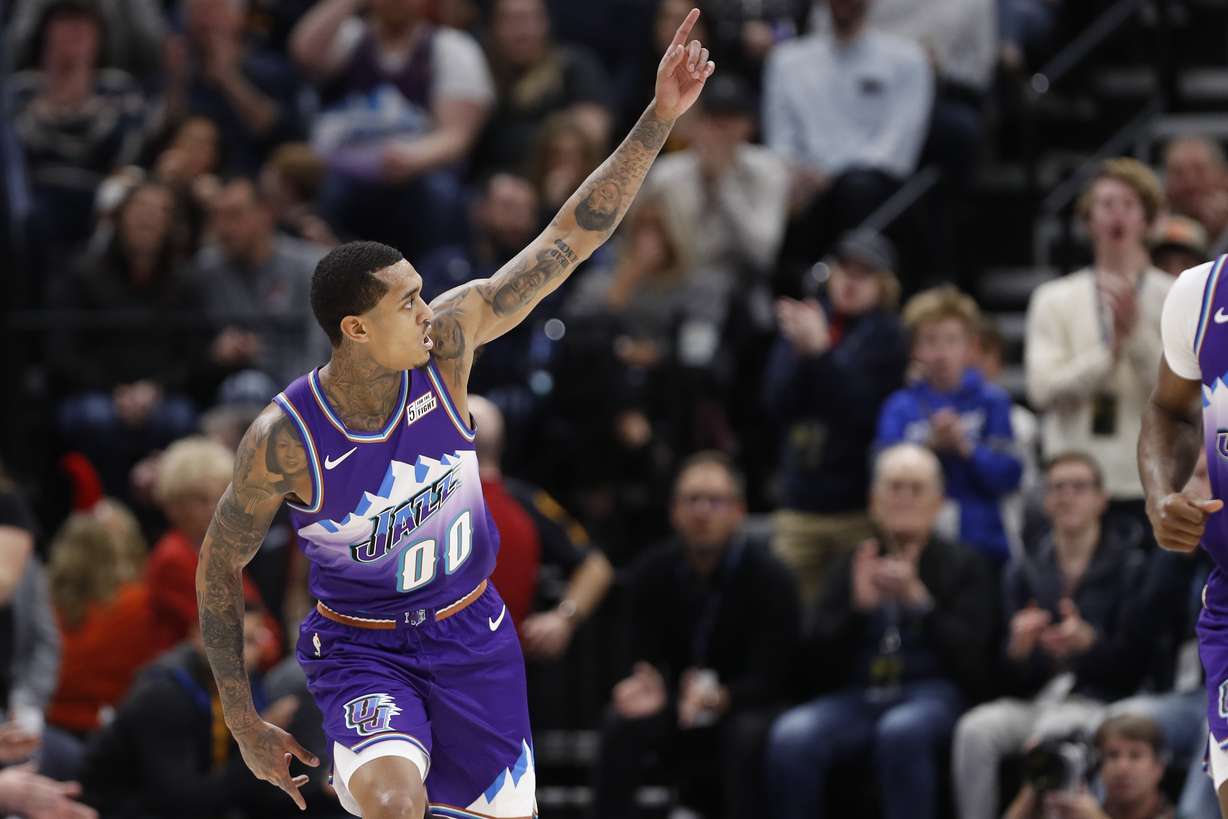
Clarkson was brought in to help lighten that load. Lindsey said that he was a player that Snyder and Lindsey had talked about over the summer, so it wasn’t the first time the idea to bring him to Utah had come up. The Jazz also liked how he has changed his shot distribution this season in a way that fits more with Utah’s offensive philosophy.
“I think we were looking at any player that can be an offensive substitute that we could play through, that would allow us to appropriately rest Donovan and Bojan, in particular,” Lindsey said. “We tried some units with Joe Ingles with the second unit, and it just didn't work out real well."
Conley’s injuries have also helped cast a light on where the Jazz should be playing certain players — namely Ingles.
Conley has played in just one game since Dec. 2; and since Conley’s initial injury, Ingles has averaged 15.6 points and 5.6 assists per game in 10 games. He’s been being used as a secondary playmaker — and at times, the primary one — and it seems to have kickstarted his season.
Zanik and Lindsey said this week’s moves weren’t just about bringing in new players, but also giving opportunities for those already on the roster.
They mentioned that Georges Niang has been used mostly as a wing player, but that the Jazz see him providing more value as a stretch four. Niang has shot 41% from 3-point range over the last two seasons, and with Green gone he can slide into the main stretch-four role off the bench.
“He's versatile and smart and skilled enough to play a little bit of both in an emergency, but we've always viewed him more as a skill mobile four rather than a big three, if you will,” Lindsey said. “So, it gives Georges and a few others the first bite of the apple.”
In the end, Lindsey wanted to make it known that the moves were less about the players leaving and more about the ones coming in.
The Jazz still believe that Exum can be a good player, but it was time to give him a fresh start somewhere else. Lindsey also said waiving Green was less about how he was playing and more about the potential of Tucker.
But in the end, the Jazz needed to make a change.
“I think we just got to a point where we had seen enough that this current mix just wasn't working,” Lindsey said.
Will the moves they made work? Lindsey and Zanik are as eager to find out as anyone else.

Related stories
Most recent Utah Jazz stories
Related topics
 Ryan Miller