Estimated read time: 2-3 minutes
This archived news story is available only for your personal, non-commercial use. Information in the story may be outdated or superseded by additional information. Reading or replaying the story in its archived form does not constitute a republication of the story.
The following is taken from the Oregon State University Extension Service, Plant Disease Handbook available at http://plant-disease.ippc.orst.edu/disease.cfm?RecordID=661
Necrotic Ringspot Hosts: Kentucky bluegrass and fine fescue.
Cause: The fungus Ophiosphaerella korrae (formerly Leptosphaeria korrae) infects roots, rhizomes, and shoot bases, where it forms dark strands of mycelium that run parallel to the root axis. It overwinters in infected plant material.
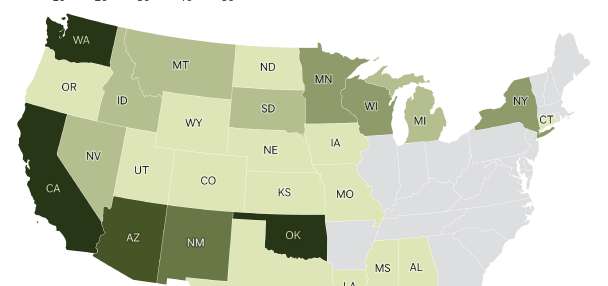
It has become a common problem in eastern and western Washington and in central and eastern Oregon, Idaho, Nevada, Utah and Colorado particularly on 2- to 5-year-old Kentucky bluegrass turf established from sod. Turf established from seed also has shown the disease but much less frequently.
Symptoms: Dead circles and arcs ranging from several inches to several feet in diameter are most obvious during late summer, fall, and early spring. When the disease is active, the affected areas' margin is reddish brown.
Short-necked, black pseudothecia sometimes are found on infected crowns and roots. Weeds or resistant grass species often invade the dead turf area. Necrotic ringspot can be confused with yellowpatch and Fusarium patch because the diseases have similar foliar symptoms and occur in autumn and spring.
Unlike the latter two diseases, whose symptoms usually subside in late spring, necrotic ringspot can occur throughout the growing season and is characterized by a blackening of roots and rhizomes and by dark brown ectotrophic hyphae on dying roots, rhizomes, and crowns. In the later stages of infection, black fruiting bodies (pseudothecia) occasionally are on these tissues.
Cultural control: Use mixtures of two or more grass species and two or more resistant cultivars to reduce the possibility of disease.
No Kentucky bluegrass cultivar is immune to this disease; however, cultivars differ in susceptibility. 'Alpine', 'NE80-88', 'Princeton-104', 'Mystic', 'Joy', and 'I-13' consistently have less disease than 'HV-97 (Cocktail)', 'Annika', 'Amazon', 'Opal', 'Trampas', and 'Sydsport'. Avoid the latter cultivars.
Maintain good growing conditions for turf by proper fertilizing, watering, core aerating, and vertical mowing.
Avoid high-nitrogen and quick-release fertilizers.
Avoid over-watering turf especially when using automatic sprinkle systems that come on every day using the same amount of water.
Sulfur applications are ineffective in controlling necrotic ringspot on bluegrass; however, a balanced fertilizer that includes sulfur helps turf recover.