- UTA's Midvalley Express bus service is now operational, addressing a transit gap in Salt Lake County.
- The service offers faster, cost-effective transit between Murray and West Valley City.
- Federal funds make it free for three years, with construction wrapping up under budget.
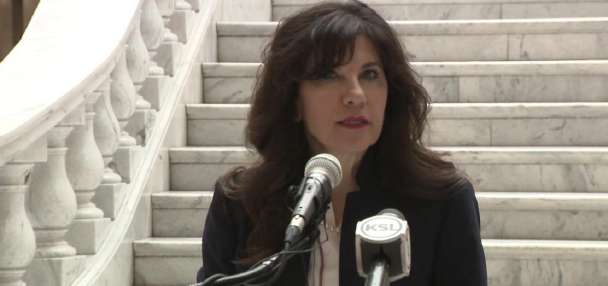
MURRAY — While Utah Transit Authority has strong north-south routes in FrontRunner and TRAX, there aren't many fast-service east-west public transit options in Salt Lake County, says Holly Pearson, director of regional planning and transportation for Utah's most populous county.
"We have an exceptional transit network ... but, until now, we've had a gap in the system," she said, pointing to a lack of lines between West Valley City and South Jordan, where the green and red TRAX lights move westward. That's left the western edge of the middle of the valley without much transit connection.
That's why she's excited for UTA's newest service, Midvalley Express, or MVX, a bus rapid transit system that uses high frequency and priority lanes to offer faster service than traditional bus routes, while costing a fraction of the cost of building out a new light-rail line.
The 15-minute bus service officially launched earlier this month, offering new services running between Murray Central Station to West Valley Central Station via Salt Lake Community College in Taylorsville. It's free to ride through its first three years because of a stipulation in federal funds the project received.
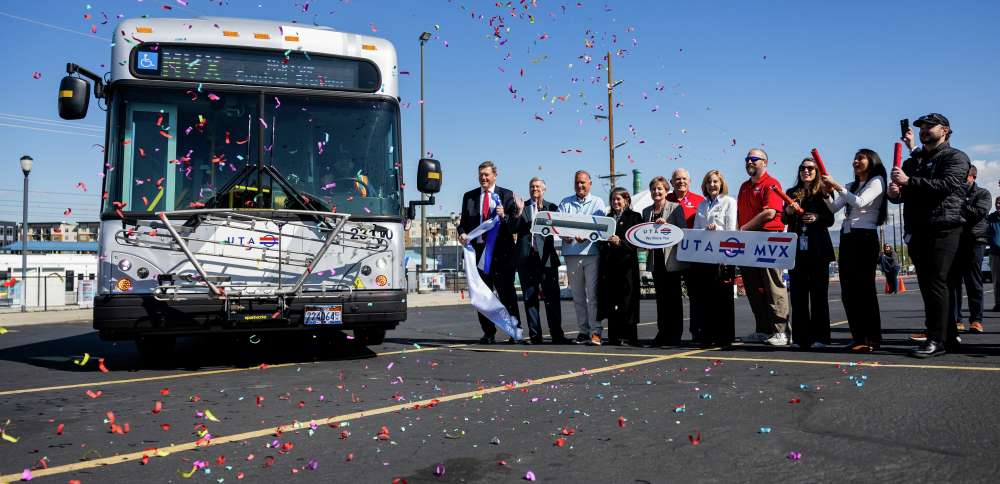
Pearson joined state transportation leaders and representatives of the three cities, who gathered at its eastern terminus on Tuesday to celebrate the new service. It ended in traditional UTA fashion, as an MVX driver snapped a ribbon by slowly driving through it, before dignitaries popped confetti.
"The MVX line fills that gap," she said. "(It) provides fast and efficient service to major regional destinations in the Salt Lake Valley, and connects the FrontRunner with communities further west."
Getting to this point took a "long and arduous route," nearly decades in the making, as the project's scope went through various adjustments, said Sen. Wayne Harper, R-Taylorsville.
Utah has long sought a better transit connection in the heart of Salt Lake County, as officials know that building more roads or expanding existing ones won't fix traffic problems as the county grows, Pearson explained. It creates induced demand, a phenomenon in which more roads lead to higher traffic demand, thereby not solving traffic congestion.
Moving people through alternative modes, however, can ease the strain, especially if that service is convenient, fast and cost-effective, she said.
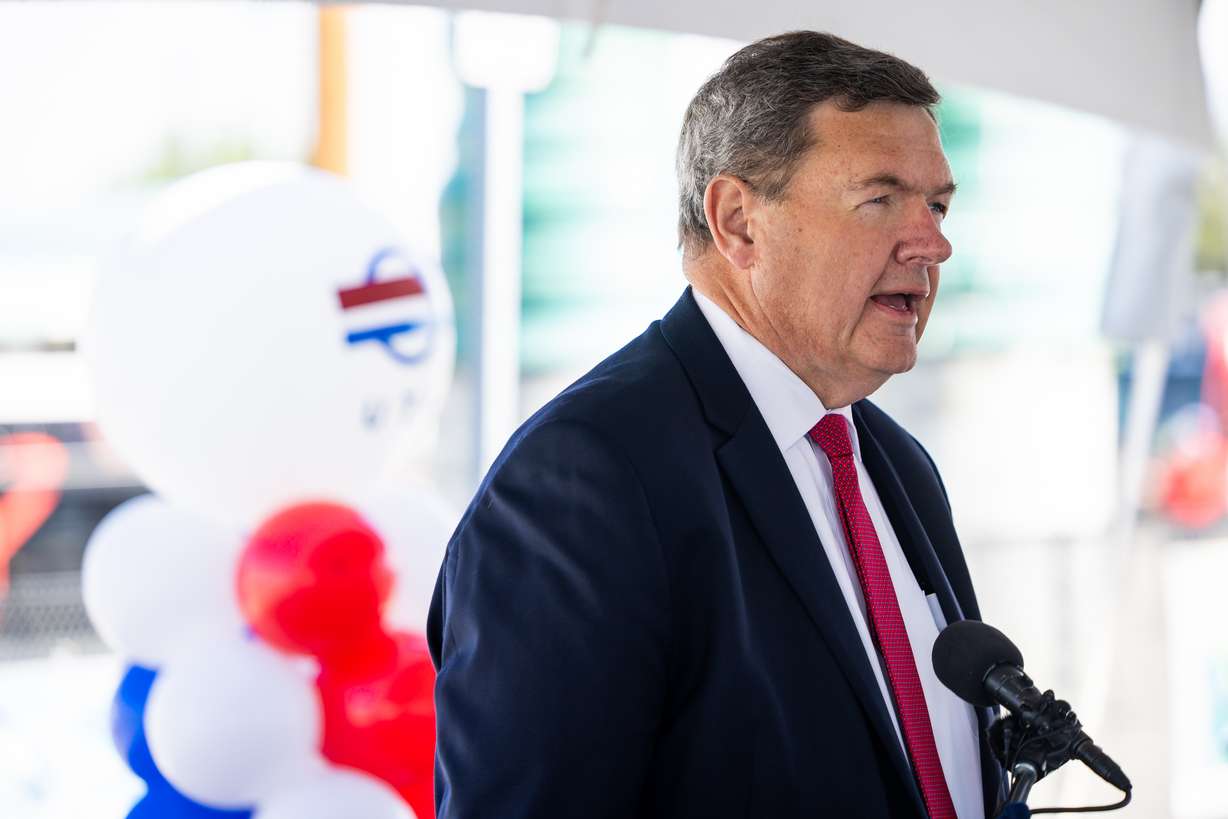
Construction began two years ago and wrapped up a few months early and under budget, said UTA Director Jay Fox. It ultimately cost a little more than $109.6 million, when accounting for building the route, its stops and adding an all-electric bus fleet, as well as land donations.
Federal funds accounted for a little more than half of the total, while various state sources covered another third. West Valley City, Salt Lake Community College and the Utah Department of Transportation's land donations covered the rest of the project costs.
It's approximately one-fifth of the cost of building light-rail service, said Carlton Christriansen, chairman of the UTA board of trustees, adding that it's still expected to deliver the economic benefits of other transit projects.
The new service is the first of its kind in Salt Lake County and the third in UTA's jurisdiction, joining the Utah Valley Express (UVX) and Ogden Express (OVX). Its older siblings have been successful so far, and Fox said he expects the same of MVX.
"It does such a nice job of connecting (cities), so we're really, really excited," he told KSL.
It also won't be the last. UTA is currently waiting to hear back from the federal government regarding its funding request for another route between Salt Lake City and Farmington, mostly along U.S. 89.
That's not to say UTA is abandoning light-rail expansions, as it's still exploring a fourth line for Salt Lake City, while potentially extending the blue line farther into Salt Lake County. The agency is also expecting to hear soon about federal funding to help expand FrontRunner service, Fox added.