'%3e%3cpath%20d='M34.1406%205.85938C30.3906%202.10547%2025.3047%200%2020%200C14.6953%200%209.60938%202.10547%205.85938%205.85938C2.10938%209.61328%200%2014.6953%200%2020C0%2025.3047%202.10547%2030.3906%205.85938%2034.1406C9.61328%2037.8906%2014.6953%2040%2020%2040C25.3047%2040%2030.3906%2037.8945%2034.1406%2034.1406C37.8906%2030.3906%2040%2025.3047%2040%2020C40%2014.6953%2037.8945%209.60938%2034.1406%205.85938ZM37.0117%2023.543H31.1602V13.5391H27.6328V19.9414C28.1211%2020.6914%2028.3711%2021.582%2028.3711%2022.5625V22.625C28.3711%2023.668%2028.1172%2024.6055%2027.6328%2025.4297V26.6094H36.082C33.4883%2032.9375%2027.2891%2037.3789%2020.0039%2037.3789C10.3711%2037.3789%202.62109%2029.6289%202.62109%2020C2.62109%2010.3711%2010.3711%202.62109%2020%202.62109C29.6289%202.62109%2037.3789%2010.3711%2037.3789%2020C37.3789%2021.1484%2037.2617%2022.2656%2037.0508%2023.3477C37.0391%2023.4141%2037.0234%2023.4766%2037.0117%2023.543Z'%20fill='white'/%3e%3cpath%20d='M22.3086%2018.5352C20.4336%2018.125%2019.9531%2017.8398%2019.9766%2017.1836V17.1406C19.9766%2016.6992%2020.3477%2016.2148%2021.4023%2016.2148C22.582%2016.2148%2023.8867%2016.6797%2025.0781%2017.4766L26.8516%2015.0195C25.4453%2013.8906%2023.707%2013.3398%2021.5547%2013.3398C18.5195%2013.3398%2016.4375%2015%2016.4063%2017.4766V17.5352C16.3633%2020.2617%2018.5859%2020.9805%2021.293%2021.6016C23.0391%2021.9766%2023.5703%2022.3164%2023.5703%2022.9609L23.5469%2022.9766C23.5469%2023.3906%2023.2578%2023.7031%2022.7852%2023.8359C22.5742%2023.9062%2022.1289%2023.9727%2021.5156%2023.9727C20.7617%2023.9727%2019.7539%2023.8633%2018.6328%2023.4844C18.0898%2023.2891%2017.4727%2023.0039%2016.8047%2022.6133L20.1406%2026.625C20.2813%2026.6602%2021.0977%2026.8516%2021.7734%2026.8516C25.0039%2026.8516%2027.0859%2025.2461%2027.1094%2022.6328V22.5703C27.1602%2020.1133%2025.2148%2019.1719%2022.3086%2018.5352Z'%20fill='white'/%3e%3cpath%20d='M5.24219%2013.5664V26.6133H8.75391V23.7578L10.2969%2021.9531L14.2031%2026.6133H18.3867L12.3555%2019.5195L17.4023%2013.5664H13.4531L8.75391%2019.0586V13.5664H5.24219Z'%20fill='white'/%3e%3c/g%3e%3cdefs%3e%3cclipPath%20id='clip0_97_2430'%3e%3crect%20width='40'%20height='40'%20fill='white'/%3e%3c/clipPath%3e%3c/defs%3e%3c/svg%3e)




Estimated read time: 9-10 minutes
- A poll shows 54% of Americans are comfortable with kids playing football.
- Awareness of CTE risks, however, drops comfort levels to 47% nationally and 40% in Utah.
- Guardian Caps' effectiveness in preventing concussions is debated among experts and researchers.
SALT LAKE CITY — Easton Mack and his younger brother Griffin are X-men.
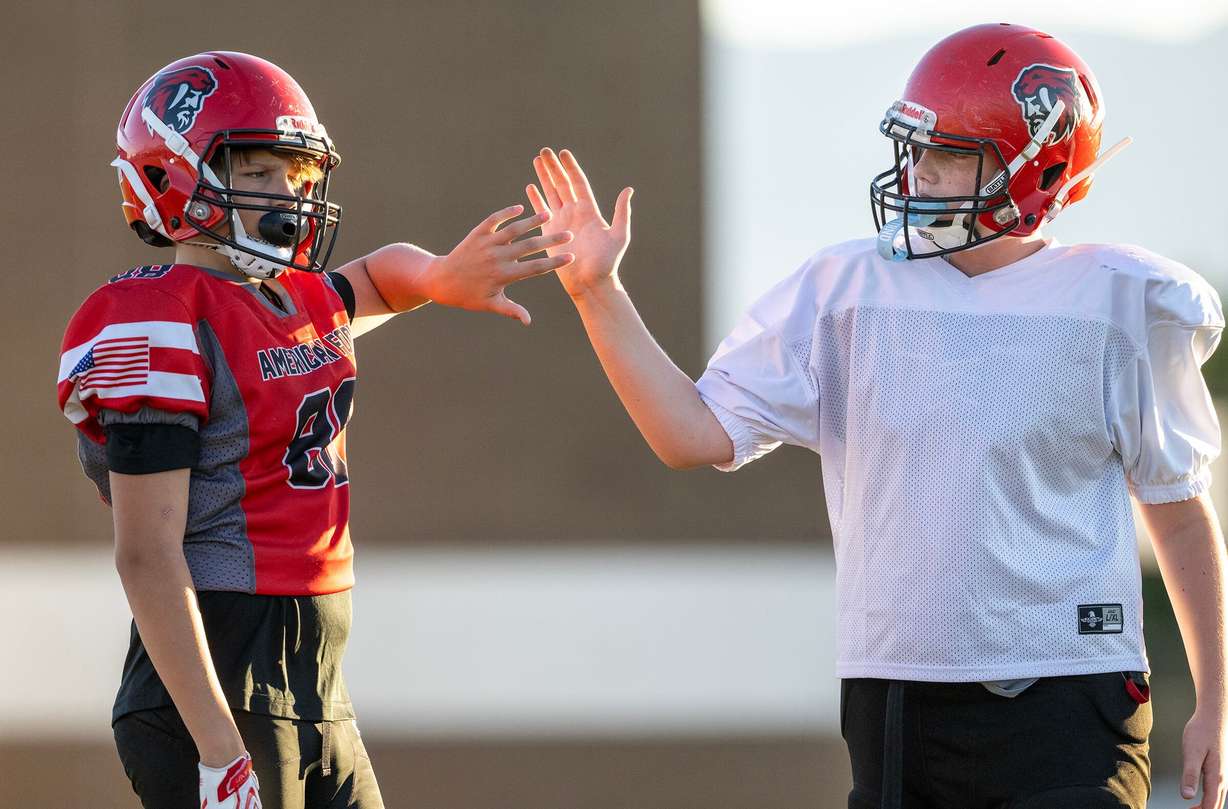
It doesn't mean they're superheroes, though they might dispute that. It means that the American Fork youth football players can only play certain positions because of their size. They have an X on the back of their helmets indicating they're bigger than the other kids.
Easton plays center and defensive tackle on his seventh grade football team. This is his fifth season playing the sport. His younger brother Griffin plays the same positions on his third grade team. He's in his third year.
"We are a football family, for sure," said their mother, Christina Mack.
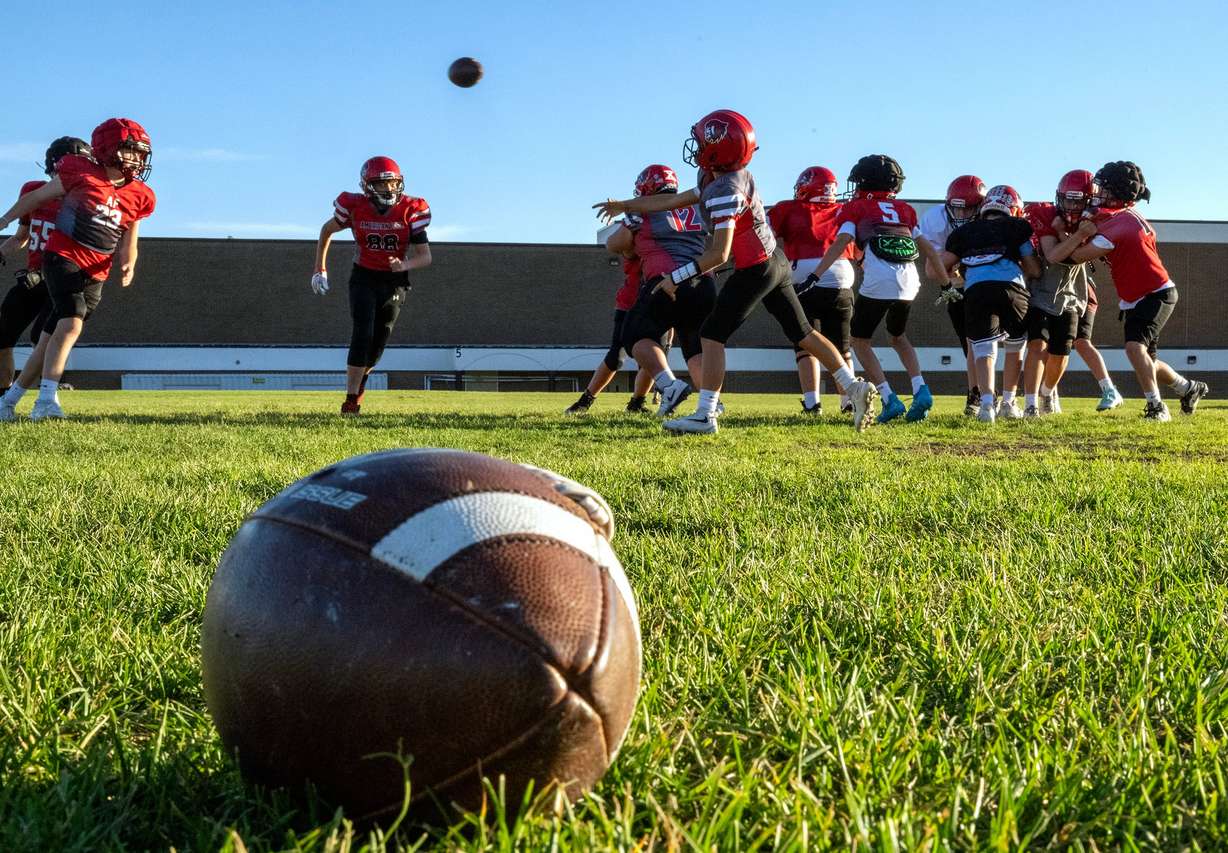
As concussions and, more specifically, chronic traumatic encephalopathy, or CTE, among football players at the highest level make headlines, Mack doesn't worry about her sons getting hurt.
"For me, my boys that play are big kids, and they are restricted right now in the league to play on the line. So I personally have not had any concerns about them with head injuries, concussions because they're not leading with their head for tackles unless it's like a TFL (tackle for loss) or a sack," she said.
"The exercise and the teamwork and the discipline to be able to play the sport outweighed, for me, any potential risks for injury."
Should kids play tackle football?
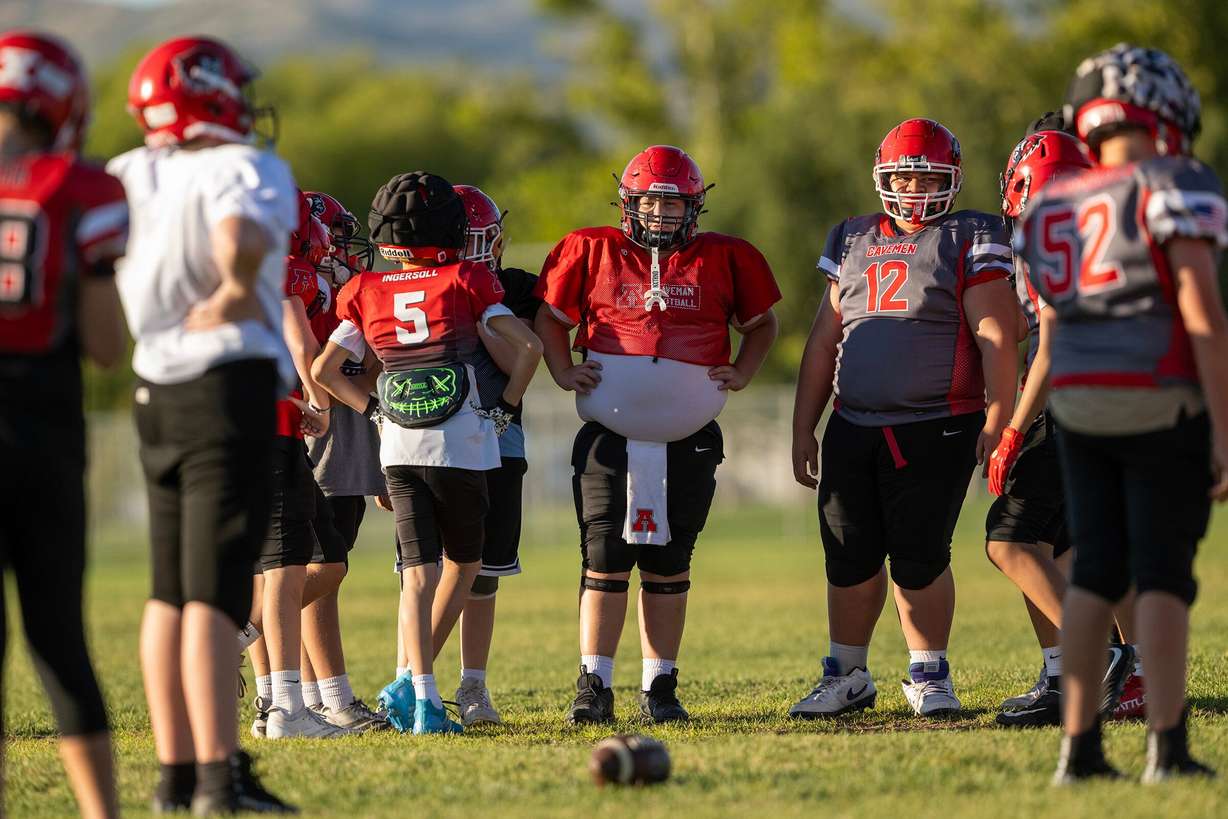
Like Mack, a majority of people across the country feel at ease with kids playing tackle football.
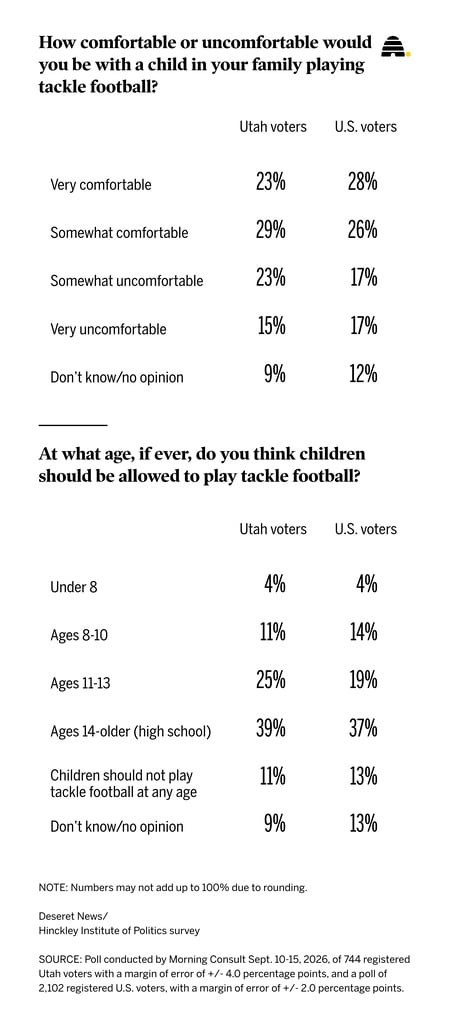
A new Deseret News/Hinckley Institute of Politics poll found 54% of Americans are comfortable with a child in their family playing football, while 34% are uncomfortable. In Utah, the survey shows 52% are comfortable, while 38% are uncomfortable.
Nationally, the poll shows 60% of men compared to 48% of women are comfortable with kids playing football. Among those ages 35-44 — the group most likely to have children in the sport — 56% are comfortable with kids playing football, the highest nationally among the age categories. Those 65 and over were the most uncomfortable at 47%.
In Utah, the survey shows 60% of men compared to 45% of women are comfortable with kids playing football. Among all participants, 63% of those ages 35-44 are comfortable with kids playing football, seven points higher than that age group nationally. Utahns 65 and over were the most uncomfortable at 48%.
Morning Consult conducted the poll of 2,102 registered voters nationally Sept. 10-14 and 744 registered Utah voters Sept. 10-15. The margin of error for the national survey is plus or minus 2 percentage points and for the Utah survey plus or minus 4 percentage points.
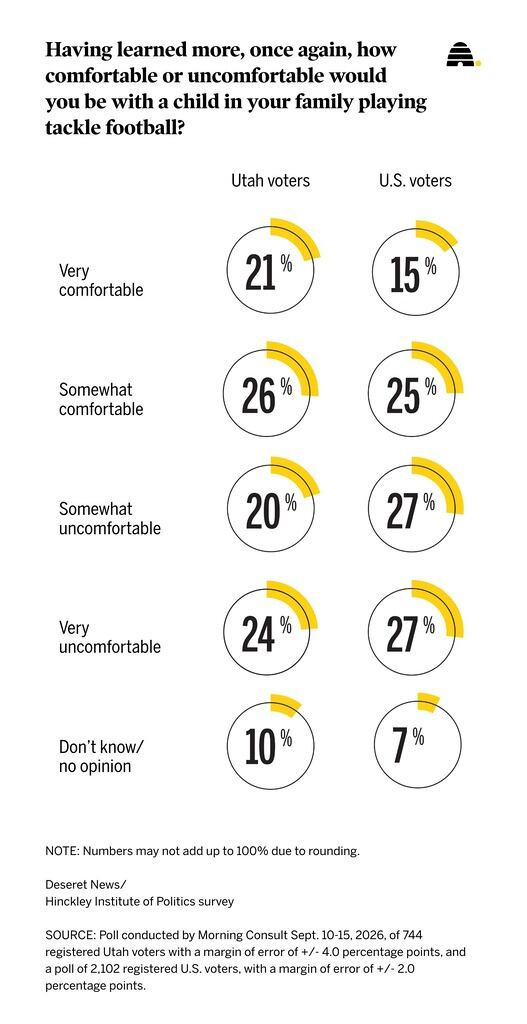
The poll noted that a study released in August 2026 found that at least 1 in 4 former NFL players who died between 2016 and 2021 had chronic traumatic encephalopathy, or CTE, a degenerative brain disease linked to repeated head impacts. Knowing that information, respondents were again asked how comfortable or uncomfortable they are with a child in their family playing football.
The comfort level dropped nationally and in the state.
Among Americans, the percentage of those who said they are comfortable fell 7 points to 47%, while those who said they are uncomfortable went up 10 points to 44%. Among Utahns, comfort dropped 12 points to 40%, while discomfort surged 16 points to 54%.
Being informed about the CTE study had a greater impact on the opinion of women than on men. In the national survey, 59% of men were comfortable with kids playing football compared to 35% of women. Among Utah respondents, just over half of men were comfortable compared to a quarter of women.
In both the national and Utah polls, younger people expressed higher comfort levels than older people.
What's the appropriate age to play tackle football?
Asked in the survey at what age children should be allowed to play football, the most common answer was 14 and older both nationally and in the state. A little over 1 in 10 respondents among both groups said children shouldn't be allowed to play tackle football at any age.
Jason Renfro, an American Fork youth football coach and administrator for 15 years, agrees that 14 is the right age if every child started at that age. He said he thinks kids who play for the first time as teenagers are more at risk of injury because they're going up against players who already have five or six years of experience.
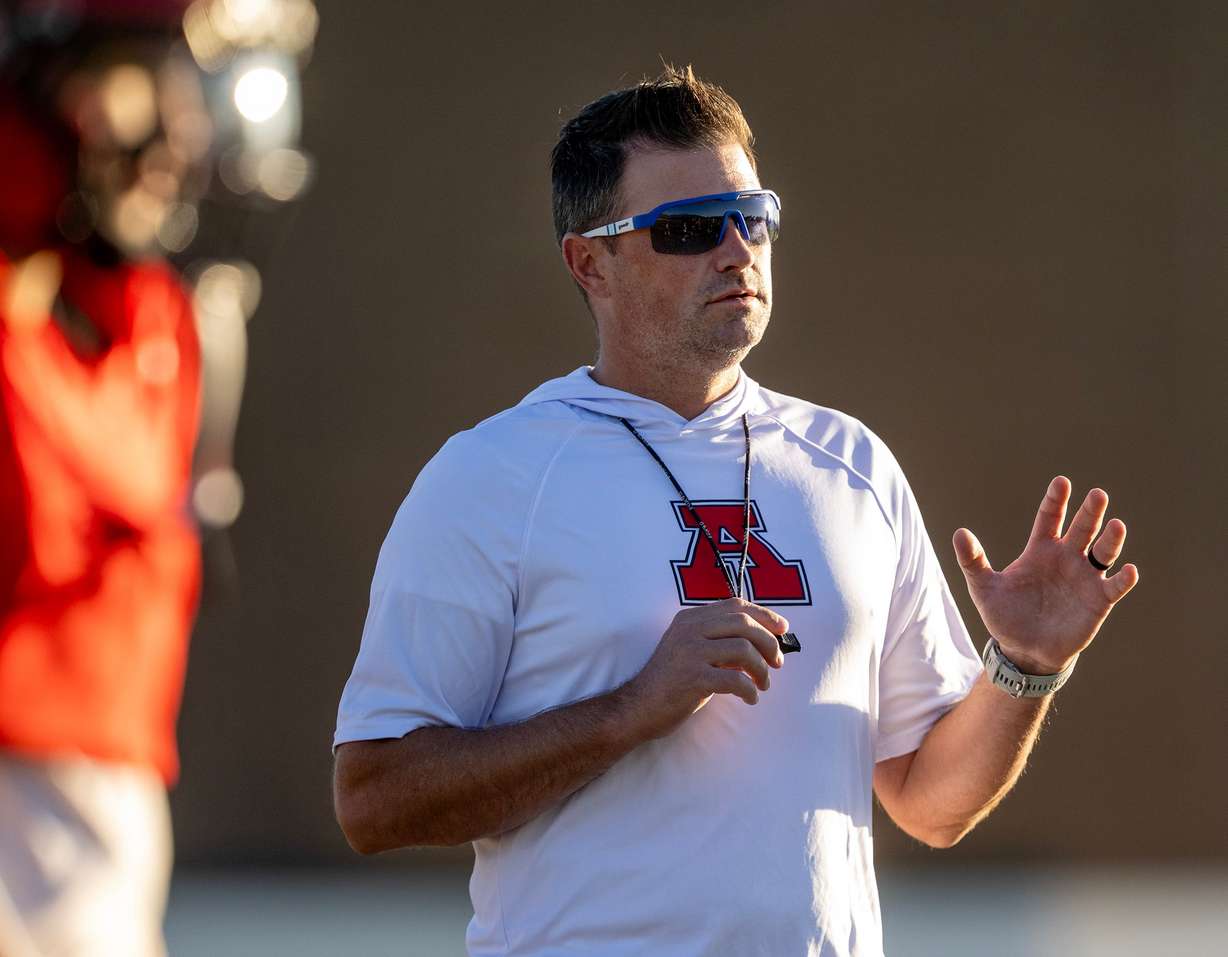
"I would actually say that that's where some of the danger comes in because now they're playing against kids who have played since they were 6 or 7," he said, adding that those kids have been taught how to hit and tackle.
"But then you get a kid who's 13, has never done this before, and that first year of football, the learning curve is massive. Not just from an X's and O's standpoint, but just learning the basics of the game and the physical nature of the game."
In both the national and Utah surveys, ages 11-13 was the second-most popular answer for when kids should be allowed to play, followed by ages 8-10. Less than 5% said children under 8 should be allowed to play.
About 2 million American children ages 6 to 17 regularly play organized tackle football, according to data from the Sports & Fitness Industry Association — down 7% since 2019.
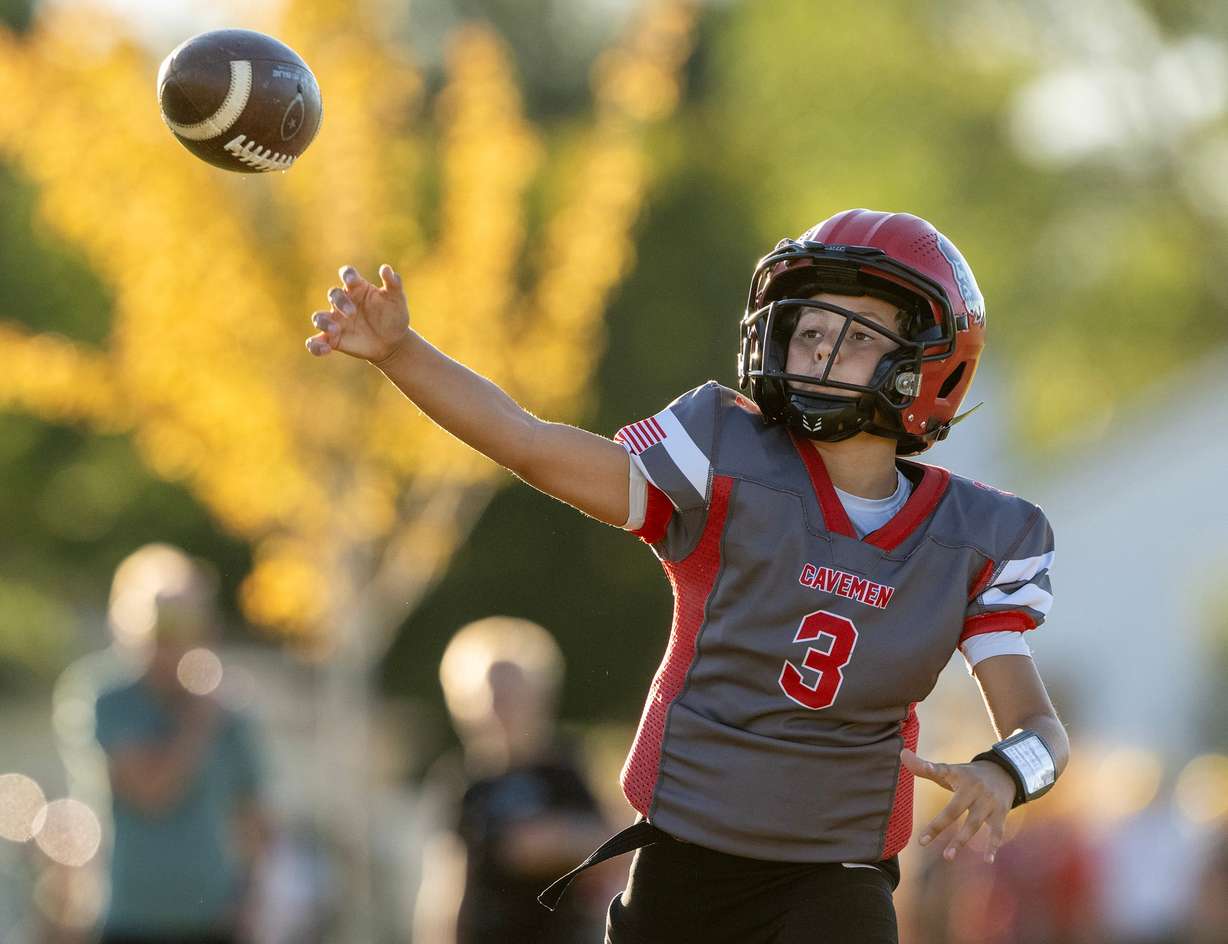
A count of youth players in Utah isn't readily available. But a rough estimate is 16,000 to 20,000, including youth leagues, girls leagues and high school.
The most common injuries among youth football players are fractures and dislocations, sprains and strains, and contusions. "Although less frequent than some other injuries in youth football, Americans are substantially concerned about the risks for concussions and other traumatic brain injuries in tackle football due to the potential for serious and long-term effects," according to a 2024 study in the Journal of Athletic Training.
Football is associated with the largest number of emergency department visits for pediatric sport-related TBIs, including concussions. Tackling is responsible for almost two-thirds of football concussions, per the study.
Do Guardian Caps prevent head injuries?
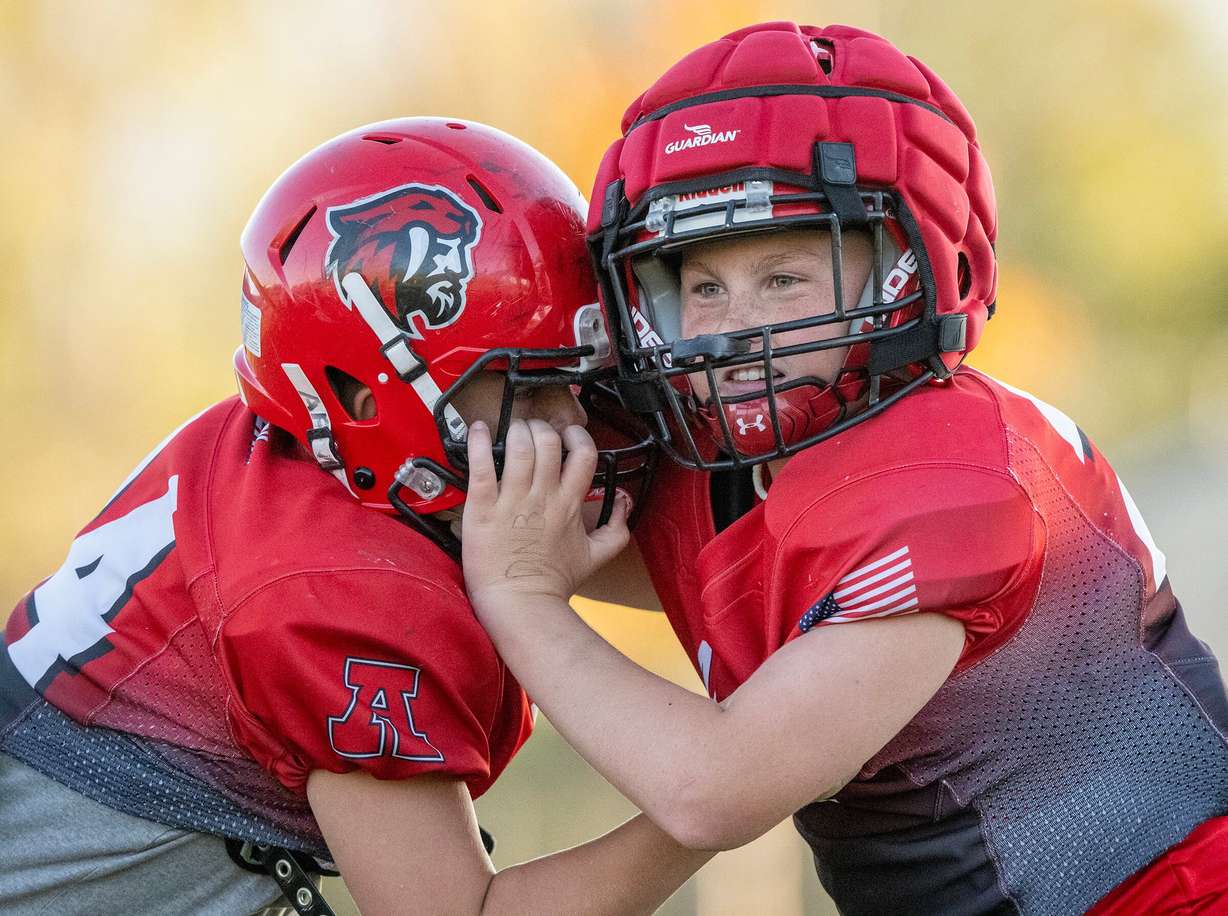
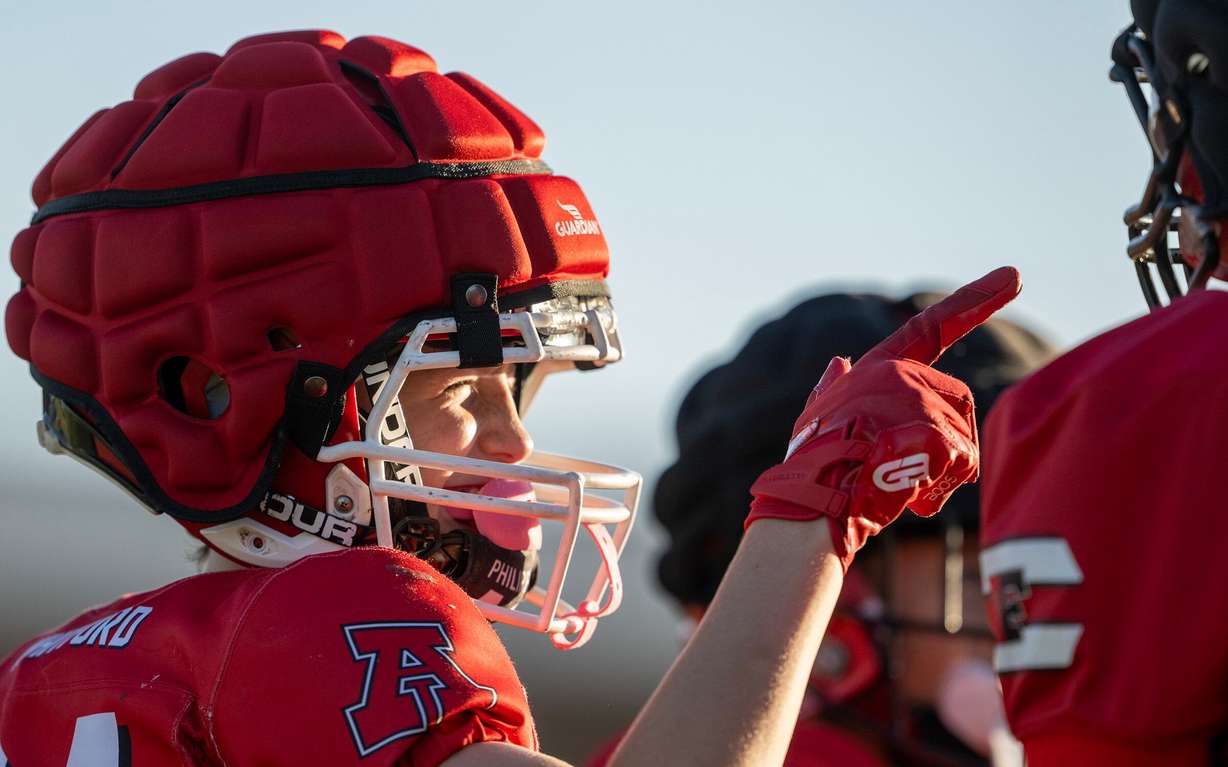
On a recent cloudless evening, Renfro's seventh grade team practiced at American Fork Junior High School. Many of the players wore Guardian Caps, a foam-padded shell over a football helmet to help absorb and disperse blows to the head. NFL and college players routinely wear them during practice and some wear them in games.
But the effectiveness of the extra padding is a matter of debate.
The NFL has cited lab tests showing Guardian Cap cushions the impact of hits to the head by at least 9%. It also points to a 50% reduction in concussions compared to previous three-year averages.
Chris Nowinski, co-founder of Boston University's CTE Center and one of the world's most renowned figures in brain injury research, told Yahoo Sports that the jury is out on whether Guardian Caps are helping NFL players.
"We have no reason to believe it's helping high school and college players," he said. "We've created a sort of nightmare scenario where people strap these things on their kids' helmets and believe they're now safe from concussions and CTE. Nothing could be further from the truth."
The Utah Youth Football Conference, of which American Fork is part, provides concussion information on its website for parents, coaches and administrators. Renfro said the protocol must be followed when a player is suspected of having a concussion.
Perhaps the most comprehensive study on youth football and brain injuries found football accounted for 19.4% of 72,025 concussions researchers identified through TriNetX Research Network, encompassing 150 million patients. The median age was 13.9, according to the study published recently in Neurology Clinical Practice. A second concussion occurred in 37% of the cases.
"These findings highlight football as a critical public health priority and support stronger preventive measures, including delaying tackle football participation and regulating institutional promotion of youth football," the researchers wrote.
A sports medicine doctor's take
Dr. Christian Millward, an Intermountain Health sports medicine specialist, said the survey results don't surprise him because football is part of American culture.
"That's part of what it is, right? The Friday night lights, the fun, the excitement," he said. "Now Europeans think differently. There's some Europeans that are like, 'Why would you ever submit yourself to repetitive head injuries or head impacts?'"
Millward said it's unknown what those hits mean long term. "Is it one major concussion or two major concussions, or is it a whole bunch of small repetitive head injuries over time that cause some of these long-term neurocognitive issues that we're finding? We don't know the answers to those questions yet, so that's the hard part."
Parents ask him about equipment, whether this helmet or that mouthguard is better. While gear has improved, he said there still isn't good evidence that it has made a big difference.
The best injury prevention, Millward said, is education, awareness and coaching for proper tackling.
Whether a parent allows a child to play football is an individual decision. There's physical risk but there are also social benefits, he said.
"So you have to weigh the injury risk with the psychosocial benefits of sports participation as well," Millward said.
"If the kid plays his whole time and has no injuries, then it was a wonderful thing. If he tears his ACL and damages the meniscus, even if that gets fixed, there is good evidence that that will lead to potential arthritis down the road."
The bottom line, he said, is "be smart, be safe, and have fun."
Does knowing about CTE change your attitude about football?
For the CTE study involving deceased NFL players, published in the British Medical Journal, researchers at Boston University and Harvard Medical School analyzed brains that were donated to the UNITE Brain Bank at the Boston University CTE Center and Mount Sinai and University of California San Francisco Alzheimer's Disease Research Center brain banks. CTE can only be diagnosed after death.
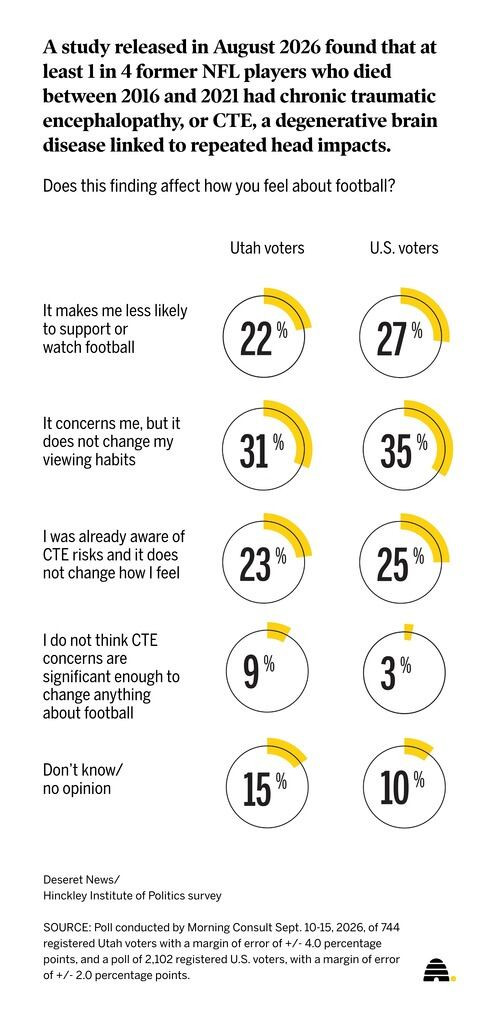
Respondents in the Deseret News/Hinckley Institute poll were asked how the study affects their feelings about football.
Nationally, nearly a third said the findings concern them, but did not change their football viewing habits and almost a quarter said they were already aware of CTE risks and the study did not change how they feel about football.
About 2 in 10 said the study makes them less likely to support or watch football, while nearly 1 in 10 said CTE concerns aren't significant enough to change anything about football.
Among Utahns, 35% said it concerns them, but did not change their football viewing habits, while 27% said they are less likely to support or watch football. A quarter said they're aware of CTE risks and the study did not change how they feel about football.






