'%3e%3cpath%20d='M34.1406%205.85938C30.3906%202.10547%2025.3047%200%2020%200C14.6953%200%209.60938%202.10547%205.85938%205.85938C2.10938%209.61328%200%2014.6953%200%2020C0%2025.3047%202.10547%2030.3906%205.85938%2034.1406C9.61328%2037.8906%2014.6953%2040%2020%2040C25.3047%2040%2030.3906%2037.8945%2034.1406%2034.1406C37.8906%2030.3906%2040%2025.3047%2040%2020C40%2014.6953%2037.8945%209.60938%2034.1406%205.85938ZM37.0117%2023.543H31.1602V13.5391H27.6328V19.9414C28.1211%2020.6914%2028.3711%2021.582%2028.3711%2022.5625V22.625C28.3711%2023.668%2028.1172%2024.6055%2027.6328%2025.4297V26.6094H36.082C33.4883%2032.9375%2027.2891%2037.3789%2020.0039%2037.3789C10.3711%2037.3789%202.62109%2029.6289%202.62109%2020C2.62109%2010.3711%2010.3711%202.62109%2020%202.62109C29.6289%202.62109%2037.3789%2010.3711%2037.3789%2020C37.3789%2021.1484%2037.2617%2022.2656%2037.0508%2023.3477C37.0391%2023.4141%2037.0234%2023.4766%2037.0117%2023.543Z'%20fill='white'/%3e%3cpath%20d='M22.3086%2018.5352C20.4336%2018.125%2019.9531%2017.8398%2019.9766%2017.1836V17.1406C19.9766%2016.6992%2020.3477%2016.2148%2021.4023%2016.2148C22.582%2016.2148%2023.8867%2016.6797%2025.0781%2017.4766L26.8516%2015.0195C25.4453%2013.8906%2023.707%2013.3398%2021.5547%2013.3398C18.5195%2013.3398%2016.4375%2015%2016.4063%2017.4766V17.5352C16.3633%2020.2617%2018.5859%2020.9805%2021.293%2021.6016C23.0391%2021.9766%2023.5703%2022.3164%2023.5703%2022.9609L23.5469%2022.9766C23.5469%2023.3906%2023.2578%2023.7031%2022.7852%2023.8359C22.5742%2023.9062%2022.1289%2023.9727%2021.5156%2023.9727C20.7617%2023.9727%2019.7539%2023.8633%2018.6328%2023.4844C18.0898%2023.2891%2017.4727%2023.0039%2016.8047%2022.6133L20.1406%2026.625C20.2813%2026.6602%2021.0977%2026.8516%2021.7734%2026.8516C25.0039%2026.8516%2027.0859%2025.2461%2027.1094%2022.6328V22.5703C27.1602%2020.1133%2025.2148%2019.1719%2022.3086%2018.5352Z'%20fill='white'/%3e%3cpath%20d='M5.24219%2013.5664V26.6133H8.75391V23.7578L10.2969%2021.9531L14.2031%2026.6133H18.3867L12.3555%2019.5195L17.4023%2013.5664H13.4531L8.75391%2019.0586V13.5664H5.24219Z'%20fill='white'/%3e%3c/g%3e%3cdefs%3e%3cclipPath%20id='clip0_97_2430'%3e%3crect%20width='40'%20height='40'%20fill='white'/%3e%3c/clipPath%3e%3c/defs%3e%3c/svg%3e)


Estimated read time: 7-8 minutes
- "The Happy Song," designed scientifically to soothe babies, has 470 million streams on Spotify.
- Created by psychologists and musician Imogen Heap, it uses baby-friendly sounds.
- Heap's daughter inspired the melody; parents appreciate its non-patronizing, catchy nature.
NEW YORK — As father to both a toddler and an infant, the din of tearful wailing — theirs, not mine (usually) — is the soundtrack to approximately half of all car journeys. I get it. Trapped wind, claustrophobic car seats and long scary tunnels are all legitimate reasons to cry when you're barely big enough to see out of the window.
Like most desperate parents, my wife and I have resorted to jangling keys, scrunching whatever crunchy objects are to hand and offering sing-songy reassurances in unnaturally high-pitched voices. Or, in resignation, we would just mentally tune out until reaching our destination.
But then we were introduced to an anti-crying device so powerful that I've felt compelled, ever since, to share it with every parent I know. It is a work of both science and sorcery: "The Happy Song."
From the opening outbreak of joyous giggling, its soothing effect on my kids is instantaneous. And this is entirely by design.
The two-and-a-half-minute song, which celebrates its 10th anniversary this week, was a collaboration between two psychologists and the Grammy Award-winning (and otherwise very grown-up) musician Imogen Heap. Combining established research on what makes babies happy with the results of infant focus groups, the catchy melody, walking bassline and playful lyrics are almost hypnotic, stopping nascent meltdowns in their tracks.
Over the last decade, "The Happy Song" has been streamed over 470 million times on Spotify, more than Marvin Gaye's "Let's Get It On" and Simon & Garfunkel's "Bridge Over Troubled Water." On YouTube, a continuous 10-hour loop of the song, uploaded by some kind soul, has alone garnered 14 million clicks.
"The Happy Song" is now among the biggest royalty-generators for an artist who, in addition to her solo career, comprises one-half of the duo Frou Frou and co-produced Taylor Swift's "1989."
"I never thought in advance, 'Oh, this is going to make me loads of money from all the babies in the world,'" she laughed, reflecting on the track's enduring success, via video call, from her London studio. "I just really wanted to make a song that gave a few minutes' relief to a family at a point when they're stuck in a traffic jam or whatever."
A discerning audience
"The Happy Song" was commissioned by British baby food brand Cow & Gate, though its corporate origins have largely faded from view. In 2016, the company tasked music psychologist Lauren Stewart, who had previously researched "earworms," the catchy tunes that get stuck in our heads, and child development psychologist Caspar Addyman, author of "The Laughing Baby," with producing a happiness-inducing song to give away to parents. They in turn approached Heap, a musician known for embracing technology — and who, at the time, had an 18-month-old child of her own.
The pair offered Heap various science-backed recommendations, from using major keys and melodic repetition, to musical devices like drum rolls and rising pitch glides that induce anticipation and surprise. Stewart and Addyman meanwhile surveyed more than 2,000 parents to identify noises their babies responded to, which included animal sounds and other children's laughter (both of which feature in the song). Their initial brief also suggested singing in "Motherese," the voice we naturally adopt when talking to babies.
"It separates the vowel sounds and makes things a bit easier to follow; it helps babies know that you're talking to them and not somebody else in the room," said Addyman, joining the video call with Heap. "And you want to stick to things that babies themselves are capable of pronouncing," he added. "So 'plosive' sounds like 'pa' and 'ba.'" (As opposed to "sonorant" ones, like "la.")
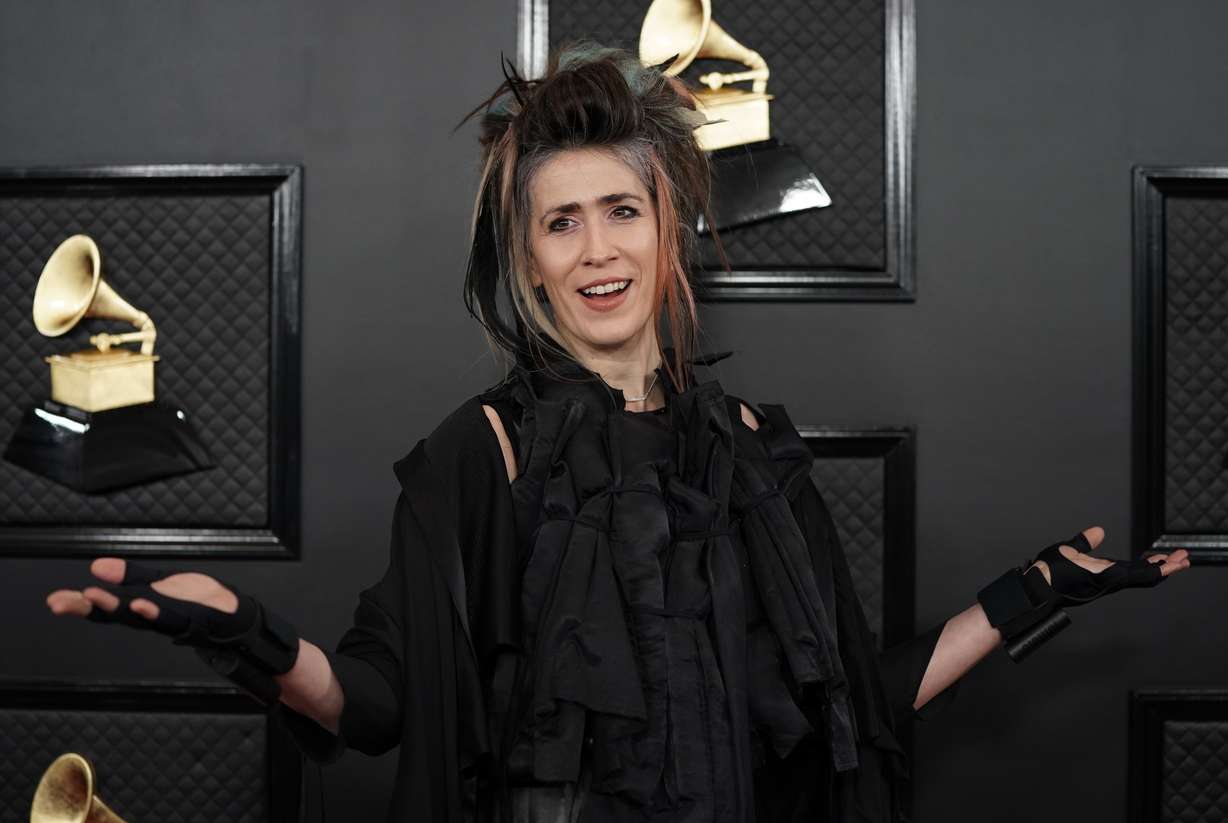
Armed with these recommendations and her own parental instincts ("as a mom," Heap said, "you just intuitively feel what would be nice, and what felt too trite"), the musician got to work. But the science didn't stop there. After she composed four different main melodies, the researchers then tested them, at two different speeds, on a focus group of 26 babies aged 6 to 12 months old.
Participants' movements, facial expressions and vocal reactions (along with a little interpretation from accompanying parents) suggested a clear winner. "They really had a strong preference," said Addyman, reporting that around 80% of the babies preferred the melody that Heap eventually built "The Happy Song" around.
Later, more developed iterations of the song were again tested on the babies. In one session, they listened to versions of the song at different tempos and, to Addyman's surprise, opted for the (slightly) slower one. The researchers had initially suggested that Heap use a fast tempo to reflect infants' heart rates, which are typically higher than adults', but the theory clearly had its limits.
"There was a fast one and a very fast one," said Addyman. "I was convinced that faster is always better for babies, but actually it was the not very fast one that the babies preferred."
"When you're making a record, you never get feedback," added Heap, who welcomed participants' honest and unadulterated opinions. "Usually, you're just sitting in the studio going, 'Is this any good? Is this any good?' So having these reports come back was just so inspiring and motivating — best audience ever."
Parental approval
For all the science involved, serendipity played a part, too. The winning melody was inspired by a ditty sung by Heap's daughter, Scout. "She gets royalties in other ways," joked Heap when I ask whether the now-11-year-old gets a share of the spoils.
In fact, Scout's influence is found throughout the song. Lyrical references to a bicycle, submarine, helicopter, choo-choo train, airplane and "rocket to the starrrrs" were inspired by her obsession with transport at the time. Scout also provided the laughter at the start, and was present during Heap's recording sessions, helping her mother achieve more natural "motherese."
Yet, the magic of "The Happy Song" is not just that kids like it. Unlike the rest of the children's-music-industrial-complex (looking at you, Cocomelon), I don't hate it. I find myself humming it on the stairs and while making coffee. It's an earworm. And while I can't say I'd listen to "The Happy Song" if I didn't have kids, I have done so, willingly, hundreds of times.
"I'm aware of the songs that drive parents nuts," Heap said, adding that she wanted to write something that "wasn't too grating and that had some funny bits."
Having these reports come back was just so inspiring and motivating — best audience ever.
–Imogen Heap
This is achieved by lyrics that are aimed, partly, at adults. The line most frequently stuck in my head ("I just adore-dore-dore you every day more") is something that I feel, not them. I don't care about the wheels on the bus turning, or the inventory of Old MacDonald's farm, but I do care about loving my kids. "I wanted there to be truth to it, and I wanted it to be fun," Heap said of the lyrics.
This approach also worked for babies, who need not be patronized, Addyman added. "I think the key thing behind the success of 'The Happy Song' is that it's not talking down to them," he said.
Heap said she never really promoted the song, but it has nonetheless been discovered by new generations of parents through word of mouth (or desperation, while frantically searching online for ways to stop a baby crying). When it comes to kids' songs, parental approval is, perhaps, the most effective marketing tool around. After all, we're the ones picking the music… for now.
In the decade since the song's release, Heap has been thanked by countless strangers (including me at the start of our interview). Among them were a parent at her daughter's school who recognized her on account of her voice alone and a dad on an airplane whose baby had been crying non-stop for over an hour.
"I was like, 'Oh my god, oh my god. Do I try it? What do I do?" she recalled thinking on the flight, before — bashfully and apologetically, as she tells it — offering the despairing man the song on a pair of headphones. "I was like, 'So, shall I play it?' I played him the song, and the baby heard the laugh at the start and was immediately caught. Just a total change of demeanor.
"The dad was almost in tears and just so thankful for this moment to gather himself."