'%3e%3cpath%20d='M34.1406%205.85938C30.3906%202.10547%2025.3047%200%2020%200C14.6953%200%209.60938%202.10547%205.85938%205.85938C2.10938%209.61328%200%2014.6953%200%2020C0%2025.3047%202.10547%2030.3906%205.85938%2034.1406C9.61328%2037.8906%2014.6953%2040%2020%2040C25.3047%2040%2030.3906%2037.8945%2034.1406%2034.1406C37.8906%2030.3906%2040%2025.3047%2040%2020C40%2014.6953%2037.8945%209.60938%2034.1406%205.85938ZM37.0117%2023.543H31.1602V13.5391H27.6328V19.9414C28.1211%2020.6914%2028.3711%2021.582%2028.3711%2022.5625V22.625C28.3711%2023.668%2028.1172%2024.6055%2027.6328%2025.4297V26.6094H36.082C33.4883%2032.9375%2027.2891%2037.3789%2020.0039%2037.3789C10.3711%2037.3789%202.62109%2029.6289%202.62109%2020C2.62109%2010.3711%2010.3711%202.62109%2020%202.62109C29.6289%202.62109%2037.3789%2010.3711%2037.3789%2020C37.3789%2021.1484%2037.2617%2022.2656%2037.0508%2023.3477C37.0391%2023.4141%2037.0234%2023.4766%2037.0117%2023.543Z'%20fill='white'/%3e%3cpath%20d='M22.3086%2018.5352C20.4336%2018.125%2019.9531%2017.8398%2019.9766%2017.1836V17.1406C19.9766%2016.6992%2020.3477%2016.2148%2021.4023%2016.2148C22.582%2016.2148%2023.8867%2016.6797%2025.0781%2017.4766L26.8516%2015.0195C25.4453%2013.8906%2023.707%2013.3398%2021.5547%2013.3398C18.5195%2013.3398%2016.4375%2015%2016.4063%2017.4766V17.5352C16.3633%2020.2617%2018.5859%2020.9805%2021.293%2021.6016C23.0391%2021.9766%2023.5703%2022.3164%2023.5703%2022.9609L23.5469%2022.9766C23.5469%2023.3906%2023.2578%2023.7031%2022.7852%2023.8359C22.5742%2023.9062%2022.1289%2023.9727%2021.5156%2023.9727C20.7617%2023.9727%2019.7539%2023.8633%2018.6328%2023.4844C18.0898%2023.2891%2017.4727%2023.0039%2016.8047%2022.6133L20.1406%2026.625C20.2813%2026.6602%2021.0977%2026.8516%2021.7734%2026.8516C25.0039%2026.8516%2027.0859%2025.2461%2027.1094%2022.6328V22.5703C27.1602%2020.1133%2025.2148%2019.1719%2022.3086%2018.5352Z'%20fill='white'/%3e%3cpath%20d='M5.24219%2013.5664V26.6133H8.75391V23.7578L10.2969%2021.9531L14.2031%2026.6133H18.3867L12.3555%2019.5195L17.4023%2013.5664H13.4531L8.75391%2019.0586V13.5664H5.24219Z'%20fill='white'/%3e%3c/g%3e%3cdefs%3e%3cclipPath%20id='clip0_97_2430'%3e%3crect%20width='40'%20height='40'%20fill='white'/%3e%3c/clipPath%3e%3c/defs%3e%3c/svg%3e)




Estimated read time: 6-7 minutes
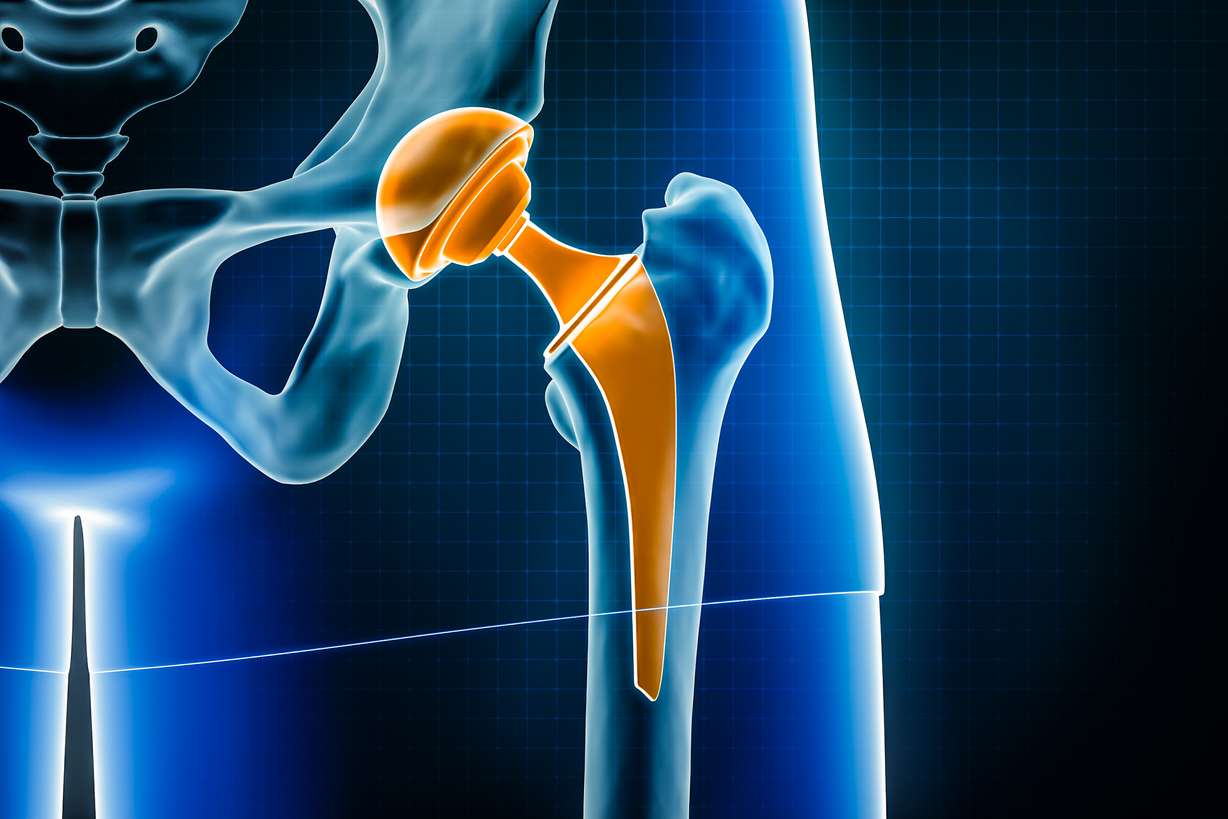
For many Americans, joint replacement surgery feels intimidating, often requiring long hospital stays, significant pain and months of recovery. But today, joint replacements are safer and easier than ever, thanks to major advances in surgical techniques, patient care and technology.
In short, feeling better is a faster and less invasive experience, so you can regain mobility and independence sooner than ever before.
These developments couldn't come soon enough. According to the Centers for Disease Control and Prevention, more than 32.5 million adults in the United States have osteoarthritis, a leading cause of joint pain and disability.
As demand for joint replacement rises, so too does the need for more efficient and patient-friendly solutions.
A new era in joint replacement
Modern joint replacement isn't just for patients suffering long-term mobility issues. Instead, it's a realistic option for patients experiencing pain and discomfort, before immobility is an issue. And fortunately, improved comfort and mobility come sooner than you might think.
"Joint replacement surgery once meant a long, difficult recovery," said Michael Blatter, an orthopedic surgeon at Holy Cross Hospital – Davis. "Now, thanks to minimally invasive techniques, patients are getting back on their feet and regaining their independence far more quickly, significantly improving their quality of life."
Driving this evolution are several factors: patient expectations for quicker recoveries, ongoing technological innovation and a deeper understanding of how the body heals.
Smaller incisions, faster healing
One of the most significant developments is the widespread use of minimally invasive surgery (MIS) in joint replacement. Unlike traditional procedures that require large incisions and extensive muscle disruption, MIS uses smaller incisions and more precise techniques.
For patients, these benefits are tangible. Reduced tissue damage often means less post-operative pain, lower blood loss and shorter hospital stays. Many patients begin moving sooner and return to daily activities more quickly than in the past.
These improvements are helping reshape the patient experience — turning what was once a major, disruptive procedure into a manageable step toward better mobility.
Preparing patients for success
While surgical advancements play a major role, preparation before surgery is often equally important.
Pre-operative education programs are becoming a cornerstone of modern joint-replacement care. At CommonSpirit facilities, patients attend classes that walk them through every stage of the process — from what to expect during surgery to how to safely recover at home.
These sessions cover physical therapy exercises, pain management strategies and practical guidance like using assistive devices or preparing a safe home environment. Patients are also introduced to key recovery goals, including preventing falls and avoiding infections.
Healthcare teams consistently report that patients who participate in these classes feel more confident and experience smoother recoveries. Many say they feel significantly better prepared compared to past procedures where this kind of guidance was not provided.
A coordinated path to recovery
Another major advancement is the adoption of Enhanced Recovery After Surgery protocols — a coordinated, evidence-based approach supporting patients before, during and after surgery.
Enhanced Recovery After Surgery programs focus on several key elements: optimizing patients' health before surgery, using multiple methods to control pain while reducing reliance on opioids, encouraging early movement and ensuring proper nutrition for healing.
This comprehensive strategy is paying off. Research published by the National Institutes of Health has shown that Enhanced Recovery After Surgery protocols can reduce complications and shorten hospital stays while improving overall patient satisfaction.
Patients are often encouraged to stand and walk within hours of surgery, sometimes even the same day. Discharge planning also begins early, helping ensure a safe and smooth transition home.
The precision of robotic assistance
Technology plays an increasingly important role in joint replacement, particularly through robot-assisted surgery.
These systems allow surgeons to plan and execute procedures with greater accuracy, tailoring each operation to the patient's unique anatomy. The result is improved implant positioning, less disruption to surrounding tissues and, in many cases, a quicker recovery.
... with our current techniques and technologies, we are able to facilitate a quicker recovery and healing process for joint replacement. Our patients are able to get back to the activities they enjoy more quickly. For many of our patients, joint replacement is a game-changer.
–Dr. Kevin Sagers, orthopedic surgeon.
"Many joint replacement procedures can now be done same day," said Dr. Kevin Sagers, an orthopedic surgeon at Holy Cross Hospital – Jordan Valley. "And with our current techniques and technologies, we are able to facilitate a quicker recovery and healing process for joint replacement. Our patients are able to get back to the activities they enjoy more quickly. For many of our patients, joint replacement is a game-changer."
A faster return to everyday life
For patients, these advancements translate into meaningful improvements in daily life. Tasks that once seemed impossible — walking without pain, climbing stairs or returning to favorite hobbies — are now achievable sooner.
Shorter hospital stays and faster recoveries also reduce the broader impact of surgery on families and caregivers. In some cases, patients can return home the same day, minimizing disruption and promoting healing in a familiar environment.
Looking ahead
As joint replacement practices and technologies continue to improve, the focus remains the same: improving patient outcomes while making the experience as seamless and comfortable as possible.
Modern joint replacement is no longer just about replacing a joint — it's about restoring quality of life.
CommonSpirit is among the providers leading this transformation, offering advanced orthopedic care that emphasizes precision, education and patient-centered recovery. For more information about joint replacement services, visit CommonSpirit Health.
With continued innovation and a growing emphasis on whole-patient care, joint replacement is entering a new era — one defined not by long recoveries, but by rapid returns to the lives patients love.
–––––––––––––––––––––––––––––––––––––––––––––––––––––––––––––––––––––––––––––––––––––––––––––––––––––––––––––––––––––––––––––––––––
The opinions and conclusions expressed in this article are the sponsor's own and do not reflect the views or opinions of KSL.com. This Site Does Not Provide Medical Advice. Any content on this Site, such as text, graphics, images, information obtained from, or contained on this Site are for informational purposes only. The content is not intended to be a substitute for professional medical advice, diagnosis, or treatment. Always seek the advice of your physician or other qualified health provider with any questions you may have regarding a medical condition. Never disregard professional medical advice or delay in seeking it because of something you have read on this site! The owner and operator of this site do not recommend or endorse any specific tests, physicians, products, procedures, opinions, or other information that may be mentioned on the site. Reliance on any information provided by the Operator, including their employees, contractors or others appearing on the Site at the invitation of the Operator, or other visitors to the Site is solely at your own risk. If you think you may have a medical emergency, call your doctor or 911 immediately.