

Estimated read time: 3-4 minutes
- Button batteries pose serious ingestion risks for young children, experts warn.
- E-bikes' rising popularity prompts calls for helmets meeting NTA 8776 standards.
- Proper safety equipment ensures children enjoy biking without compromising safety, experts say.
SALT LAKE CITY — Parents may not realize some of the biggest safety hazards in their homes and neighborhoods can come in surprisingly small packages.
During a recent interview, trauma experts highlighted the dangers of button battery ingestion and stressed the importance of proper helmet use as e-bikes become increasingly popular among children and teens.
Commonly found in garage door openers, remote controls and some toys, the batteries pose a serious risk to young children.
"It's just tempting for someone, say three and under," said Katherine Stokes, trauma coordinator. "It's so shiny, and it might be tempting for them to pop that in their mouth."
While many people think of button batteries as tiny objects, Stokes noted that larger batteries can be just as dangerous. If a battery becomes lodged in a child's esophagus, it can begin causing severe tissue damage almost immediately.
"The danger with that, if it gets lodged in the esophagus, is it can cause burns," Stokes explained. "If you suspect your child has ingested these, you need us right away," she said.

Warning signs may include drooling, difficulty speaking or obvious discomfort.
"If you suspect that it is lodged, you might see your child drooling, not talking (or) acting uncomfortable," Stokes said. "That's a 911 call or an immediate trip to the emergency department because they are slowly eroding the tissue in the esophagus."
She emphasized that button battery ingestion should never be treated as a wait-and-see situation.
Stokes also focused on the growing number of injuries involving e-bikes and e-scooters, particularly among young riders.
While traditional bicycle helmets remain effective for standard bikes, experts said they may not provide enough protection at the higher speeds e-bikes can reach.
"We're so glad when we see kids wearing these helmets when they're riding bikes," Stokes said, referring to standard bicycle helmets. "If they are on a regular bike, this is going to be great. It's crash-tested up to 14 mph."
However, she cautioned that those same helmets are not designed for the speeds associated with electric bikes.
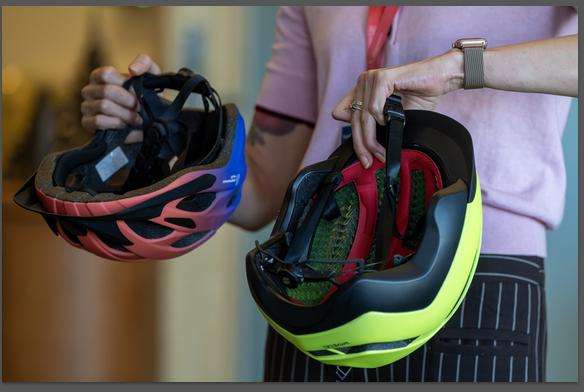
"On these e-bikes, it's not enough," she said.
Instead, parents should look for helmets specifically designed and certified for e-bike use. Stokes recommended helmets meeting the NTA 8776 standard, which are tested for higher-speed impacts.
"This is crash-tested up to 28 mph," she said while demonstrating an e-bike helmet. "NTA 8776. It is specifically made for e-bikes."
According to Stokes, these helmets feature thicker protective shells and additional impact-absorbing materials designed to better protect riders during higher-speed crashes.
"It has this extra material inside that will absorb some of the impact," she said. "This is going to help protect your child's brain a lot more at those higher speeds."
Her message to families was simple: Children can enjoy riding bikes and e-bikes while staying protected by using the proper safety equipment.
"You want to have a great time," Stokes said. "But we can also keep it safe."