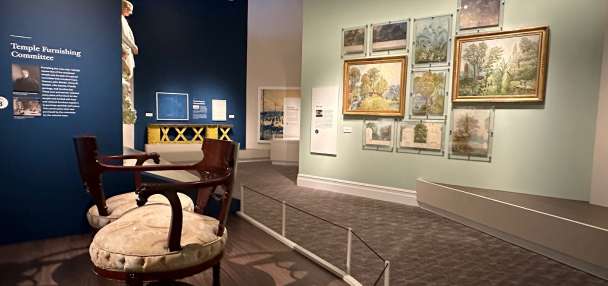
- The Springville Museum of Art presents "In This Together," which explores art's role in fostering social connection.
- The show highlights a BYU professor's research on the health impacts of social connection.
- Artists explored themes of being separate while still being connected in their artworks.
SPRINGVILLE — As a high school teacher, Ryan Moffett has seen firsthand how profoundly loneliness can affect a person.
After the COVID-19 pandemic, he noticed his students severely struggled with mental health issues and loneliness. He lives by the mantra that "art saves lives," and so he has done all he can as a teacher to help his students connect to one another and express themselves through art.
So when he heard about a call for entries for an art exhibit exploring the theme of loneliness, he knew he had to participate. He was one of 22 artists chosen for "In This Together: Art, Belonging and the Urgency of Social Connection" exhibit at the Springville Museum of Art.
"Part of the exhibition is how art can bring people together and provide social connectedness. When students get together and start creating and expressing ... they see other people are going through similar things they are, and that's comforting knowing you are not alone," he said.
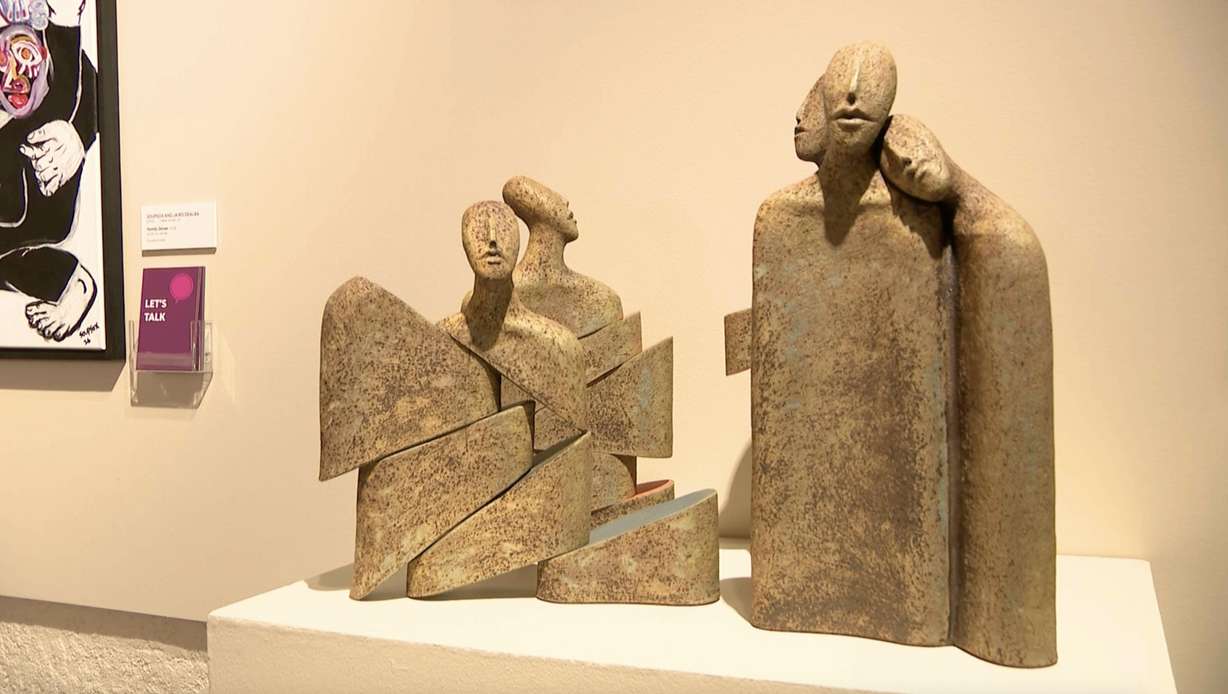
Moffett's sculptures are frequently inspired by song lyrics, and the one he created for "In This Together" was no different.
"This one came from a Mumford and Sons song. There's a line in a song that says, 'When we run, we run together. When we're apart, we fall apart,'" he said.
His artwork, called "Apart we fall apart," shows a couple together and at peace, then shows them drifting apart and beginning to fall apart, and finally one figure completely alone and broken.
"This was perfect for the show but also accurately describes how I have felt often in my life," he said, emphasizing how important it is for people to create together and lean on one another.
The exhibit "In This Together" stemmed from a change in the museum's mission statement, museum director Emily Larsen explained. The museum was dedicated as a "sanctuary of beauty and temple of contemplation," and while it has always aimed to be a place of well-being and community, the museum staff decided to add connection to the mission statement.
"We believe that's one of the main reasons why we have an art museum — why art exists — is to connect us as humans," she said.
In the pursuit of increasing that connection, the museum connected with BYU psychology and neuroscience professor Julianne Holt-Lunstad, one of the world's leading experts on social connection.
Holt-Lunstad's research has informed dozens of studies, reports for the World Health Organization and even led to a U.S. Surgeon General advisory on the epidemic of isolation and loneliness. One of her most well-known findings is that a lack of social connection can have just as negative an impact on a person as smoking 15 cigarettes a day.
Holt-Lunstad said her research has examined the risks of isolation and loneliness worldwide and found that people's relationships are tied to their risk of disease, profoundly affect emotional well-being, as well as physical and cognitive health, and can even influence someone's lifespan.
"It comes down to the fact that humans are fundamentally social beings. We have had to rely on others to survive throughout history," she said. "We function most optimally when we are social. This can lead to dysfunction when we are isolated from others and disconnected."
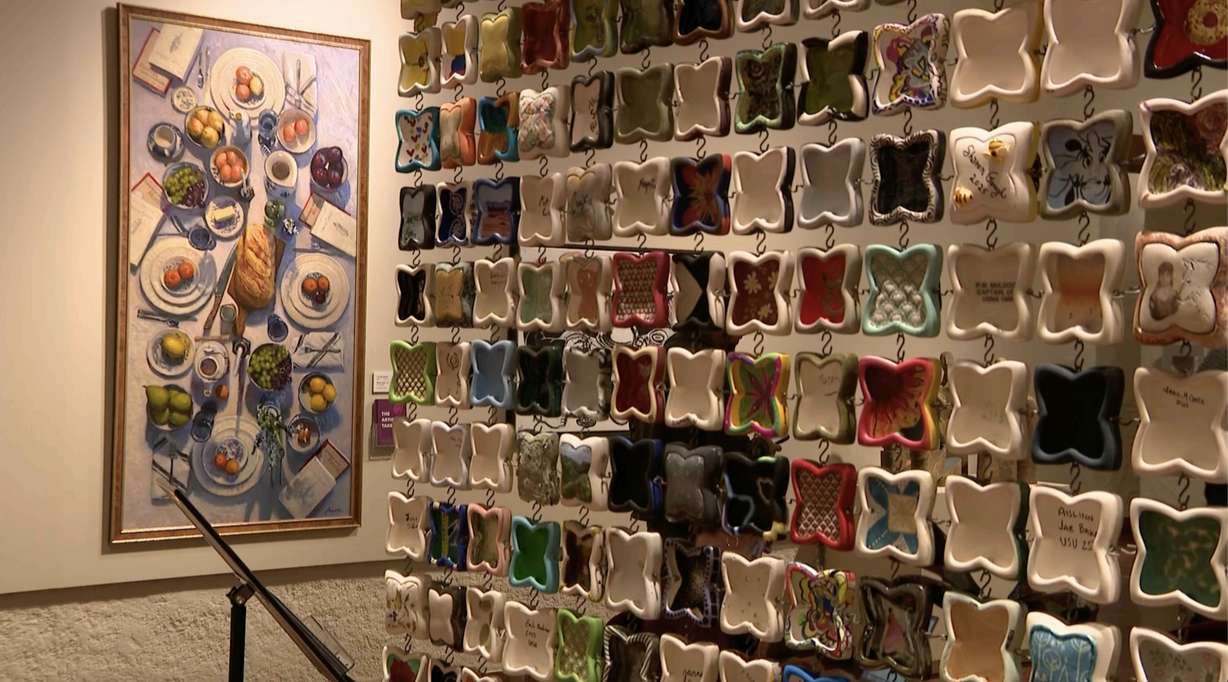
People are spending less time with one another and are more disengaged in their communities, she said. The quality of social connection doesn't just affect individuals, but also impacts the health and functioning of communities and societies.
"This has been under-recognized for a long time. Social lives are thought of as something that is perhaps frivolous or a soft issue, but we have very robust scientific evidence that it is critical and essential to our functioning and survival," she said. "It's clear this topic is now being recognized, and awareness is one step but now, we need to take action," she said.
Working with the Springville Museum of Art to co-create the exhibit was an honor, Holt-Lunstad said.
"We really wanted to select pieces that would help people reflect on connection but also inspire them to go and take small actions in their everyday lives," she said.
In total, more than 180 people worked on the exhibition, which included a book of poems to add a literary aspect to the show. About 400 artists submitted proposals, Larsen said, which is more than they expected for an exhibition on such a specific topic.
The artworks were chosen for the ways they interpreted the research and what it means for our lives and communities, Larsen said.
"I don't think you could find a human who hasn't experienced loneliness. What I love about art is that it can help you feel connected to something bigger than yourself," Larsen said.
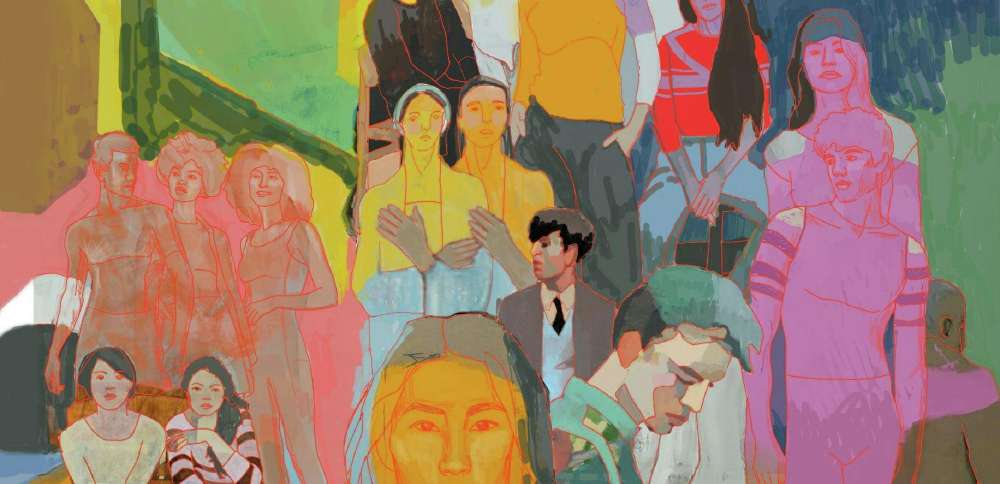
Artist Diane Brazzeal Conner wanted to explore how people are both together and separate throughout life. Her artwork "Kindred" shows a patchwork of diverse people painted in bright colors and in different situations. Some are in groups, and some are alone.
"People are singular but also connected. We can all feel very lonely and yet have different groups we are connected with," she said. "We are all people, we are all connected."
In the end, Larsen hopes anyone who comes to the exhibition leaves feeling more connected. She hopes people feel "their social connections are strengthened. I hope they see art as a tool for fostering connection and see museums as a tool for building community."
"In This Together" opens at the Springville Museum of Art on Wednesday and will run through July 3, 2027.