

KILAUEA VOLCANO, Hawaii — I've shoveled plenty of dirt in my days as part of backyard home-improvement projects.
Never lava, though. There are no lava streams in my backyard, for one thing, and even if there were, I'd keep my distance — a lot of distance.
In the attached video, however, a U.S. Geological Survey staffer, shovel in hand, approaches a pile of red-hot lava as if it's no big deal while lava spews into the air in the background. The text accompanying the video from Kilauea Volcano in Hawaii, posted on the USGS Facebook page, is similarly nonchalant.
"A USGS geologist carefully scoops molten lava from an active flow and drops it into a metal bucket, then cools it with water," it reads.
He's in protective gear, but still, it's got to be a nerve-wracking experience. As a USGS employee, though, it's all apparently in a day's work.
USGS staffers at the agency's Hawaiian Volcano Observatory "track earthquakes, study eruptions and share what's happening and what they learn to help keep communities safe," the Facebook post reads. "These red-hot samples help scientists learn more about what's happening deep inside the volcano's magma chambers."
According to AccuWeather, lava temperatures typically range from 1,300 to 2,200 degrees Fahrenheit. The USGS website said around eight million cubic yards of lava erupted from Kilauea during the episode that ended Nov. 5, when the video of the worker hauling lava was posted. The lava fountains reached as high as 660 feet, and the volcano spewed the material at a rate of about 260 cubic yards a second.
It probably doesn't come as a surprise that the USGS says there are numerous hazards associated with volcanic activity, including the gas they generate.
"Hazards associated with active or recent lava flows include hot and glassy (sharp) surfaces that can cause serious burns, abrasions and lacerations upon contact with unprotected or exposed skin," the USGS website reads. Rough terrain can result in falls, hot temperatures can cause heat exhaustion, and rainfall while lava is flowing can create an acidic ground fog that can limit visibility and hamper breathing.
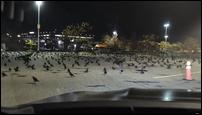
Have You Seen This? A visit to the Crow Depot
Avoid this parking lot at all costs. Being surrounded by a murder of crows is nothing but trouble.