'%3e%3cpath%20d='M34.1406%205.85938C30.3906%202.10547%2025.3047%200%2020%200C14.6953%200%209.60938%202.10547%205.85938%205.85938C2.10938%209.61328%200%2014.6953%200%2020C0%2025.3047%202.10547%2030.3906%205.85938%2034.1406C9.61328%2037.8906%2014.6953%2040%2020%2040C25.3047%2040%2030.3906%2037.8945%2034.1406%2034.1406C37.8906%2030.3906%2040%2025.3047%2040%2020C40%2014.6953%2037.8945%209.60938%2034.1406%205.85938ZM37.0117%2023.543H31.1602V13.5391H27.6328V19.9414C28.1211%2020.6914%2028.3711%2021.582%2028.3711%2022.5625V22.625C28.3711%2023.668%2028.1172%2024.6055%2027.6328%2025.4297V26.6094H36.082C33.4883%2032.9375%2027.2891%2037.3789%2020.0039%2037.3789C10.3711%2037.3789%202.62109%2029.6289%202.62109%2020C2.62109%2010.3711%2010.3711%202.62109%2020%202.62109C29.6289%202.62109%2037.3789%2010.3711%2037.3789%2020C37.3789%2021.1484%2037.2617%2022.2656%2037.0508%2023.3477C37.0391%2023.4141%2037.0234%2023.4766%2037.0117%2023.543Z'%20fill='white'/%3e%3cpath%20d='M22.3086%2018.5352C20.4336%2018.125%2019.9531%2017.8398%2019.9766%2017.1836V17.1406C19.9766%2016.6992%2020.3477%2016.2148%2021.4023%2016.2148C22.582%2016.2148%2023.8867%2016.6797%2025.0781%2017.4766L26.8516%2015.0195C25.4453%2013.8906%2023.707%2013.3398%2021.5547%2013.3398C18.5195%2013.3398%2016.4375%2015%2016.4063%2017.4766V17.5352C16.3633%2020.2617%2018.5859%2020.9805%2021.293%2021.6016C23.0391%2021.9766%2023.5703%2022.3164%2023.5703%2022.9609L23.5469%2022.9766C23.5469%2023.3906%2023.2578%2023.7031%2022.7852%2023.8359C22.5742%2023.9062%2022.1289%2023.9727%2021.5156%2023.9727C20.7617%2023.9727%2019.7539%2023.8633%2018.6328%2023.4844C18.0898%2023.2891%2017.4727%2023.0039%2016.8047%2022.6133L20.1406%2026.625C20.2813%2026.6602%2021.0977%2026.8516%2021.7734%2026.8516C25.0039%2026.8516%2027.0859%2025.2461%2027.1094%2022.6328V22.5703C27.1602%2020.1133%2025.2148%2019.1719%2022.3086%2018.5352Z'%20fill='white'/%3e%3cpath%20d='M5.24219%2013.5664V26.6133H8.75391V23.7578L10.2969%2021.9531L14.2031%2026.6133H18.3867L12.3555%2019.5195L17.4023%2013.5664H13.4531L8.75391%2019.0586V13.5664H5.24219Z'%20fill='white'/%3e%3c/g%3e%3cdefs%3e%3cclipPath%20id='clip0_97_2430'%3e%3crect%20width='40'%20height='40'%20fill='white'/%3e%3c/clipPath%3e%3c/defs%3e%3c/svg%3e)



Estimated read time: 3-4 minutes
People are adopting a myriad of sustainability practices these days. They shop with reusable bags. They take public transportation.
They install smart appliances in their homes. They hit the thrift stores instead of big chains for their wardrobe updates.
All of these can make a big difference when it comes to taking care of the environment — and every little bit helps.
Dairy farmers have that same mentality and are constantly looking for ways to protect resources and plan for the future.
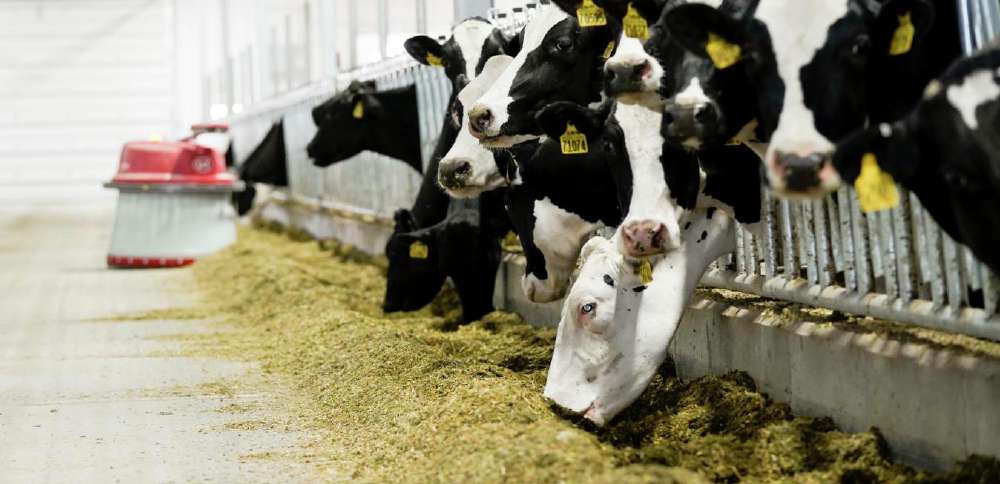
Across the country, dairy farmers are reducing waste in a unique way: By feeding their cows byproducts — the leftovers from food and agriculture production that might otherwise go to waste.
From leftovers to livestock feed
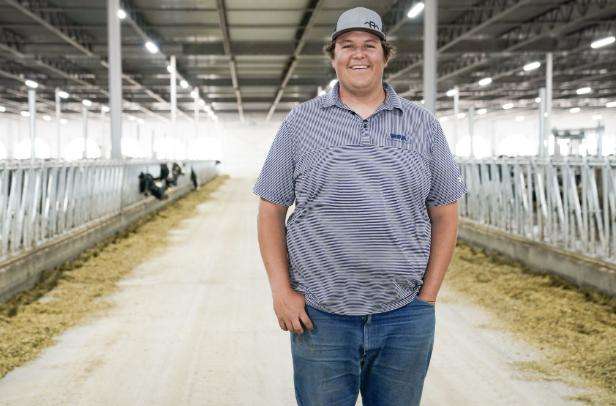
At Bateman Mosida Dairy near Elberta, dairy farmer Kaleb Bateman sees this firsthand.
Instead of ending up in a landfill, byproducts become a valuable part of what cows eat. On Bateman's farm, that includes ingredients like beet pulp, millrun and cherry juice.
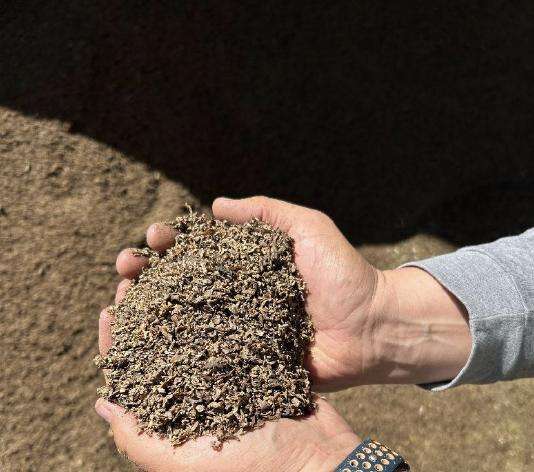
Beet pulp is a high-fiber, low-sugar byproduct of sugar beet processing.
Millrun is a high-fiber, nutrient-dense byproduct from flour milling. And cherry juice is a byproduct of Utah's large tart cherry industry.
Many of these ingredients are sourced close to home — like cherry juice from nearby producers and millrun from Ogden. Others come from across the region.
By using these materials, dairy farms help support other parts of the food system while making sure less goes to waste.
And this isn't unique to one farm — it's a common practice across the dairy community, where farmers work to make the most of available resources.
Across the country, dairy cows are fed a variety of byproducts, including things like citrus pulp, almond hulls and cottonseed.
"These are products that could easily be thrown away," Bateman explains. "But we're able to feed these products to our cows and turn it into milk."
Building a balanced ration
Byproducts are just one piece of a much bigger picture: A cow's daily diet.
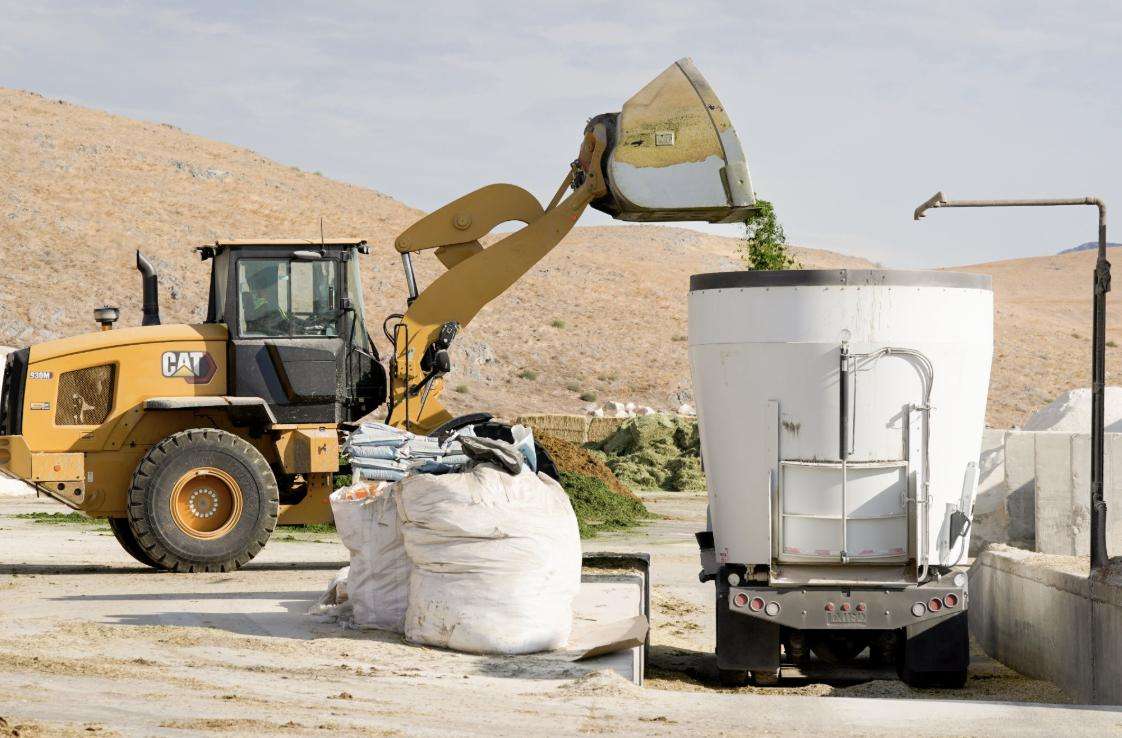
Dairy farmers work closely with nutritionists to create what's known as a total mixed ration — often compared to a well-balanced salad. It includes a variety of ingredients, each serving a specific purpose.
Some provide energy. Others supply protein or fiber. Together, they support digestion, milk production and overall cow health.
Farmers continuously evaluate and adjust these rations based on cow needs, ingredient availability and cost.
"It really comes down to balancing what the cow needs with what's available," Bateman says. "We want cows to be healthy and efficient."
Cows as natural upcyclers
Cows are uniquely equipped to do something humans can't: Turn inedible materials into high-quality nutrition.
According to research from the CLEAR Center at UC Davis, about 80% of what cows eat cannot be consumed directly by humans.
Through their digestive system, cows convert those materials into nutrient-dense milk.
That process is often called "upcycling."
Instead of going to waste, byproducts are transformed into a source of nutritious protein, calcium and other essential nutrients.
Doing more with less
For Bateman, feeding byproducts is just one example of a bigger mindset.
"Sustainability really comes down to doing more with less," he says. "When you're using fewer resources and being more efficient, that's better for the environment and the bottom line."
That approach shows up across the farm — from how feed is sourced to how water and materials are recycled. But at its core, it's about making everyday decisions that keep the farm viable for the future.
"If you're not sustainable, you're not going to be around for the next generation," Bateman says.
A simple way to support sustainability
The next time you reach for milk at the store, there's more behind it than you might realize.
It's not just a staple, it's the result of farmers finding practical ways to reduce waste, use resources efficiently and turn what might otherwise be discarded into something valuable.
Learn more at dairywest.com/sustainability.