Estimated read time: 7-8 minutes
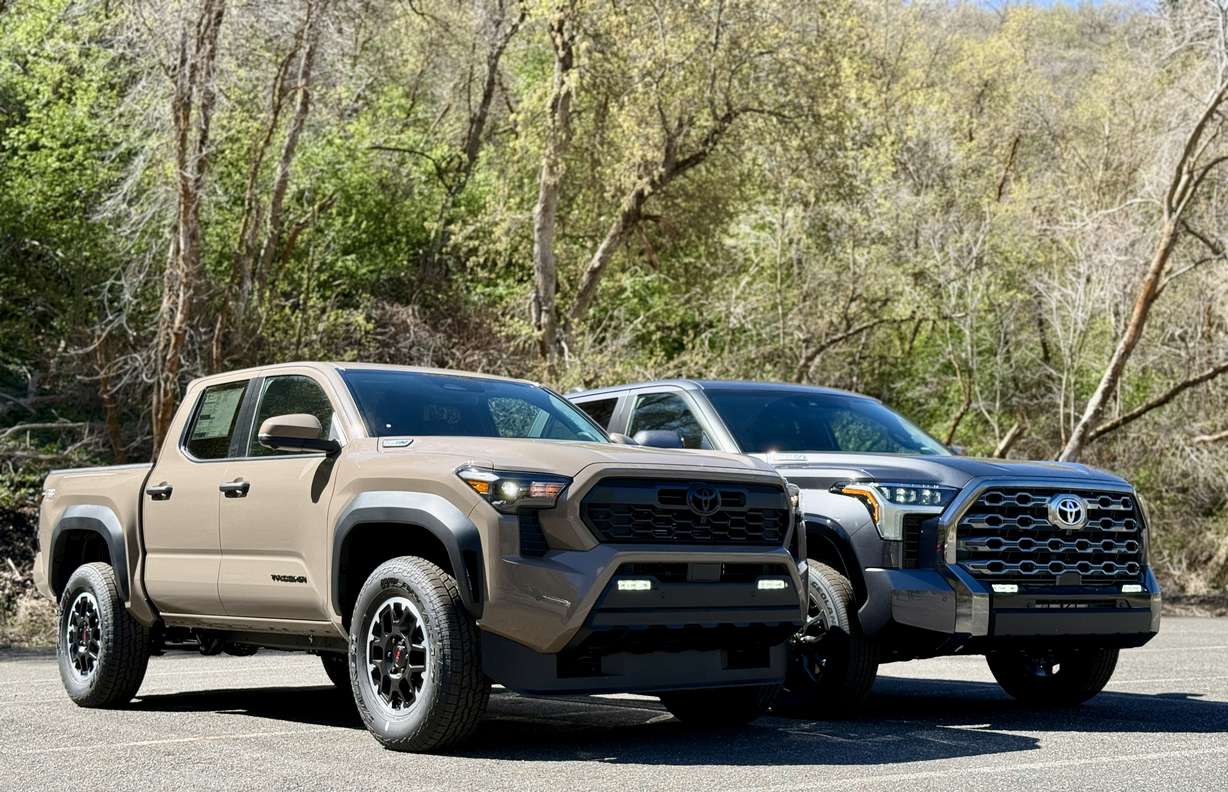
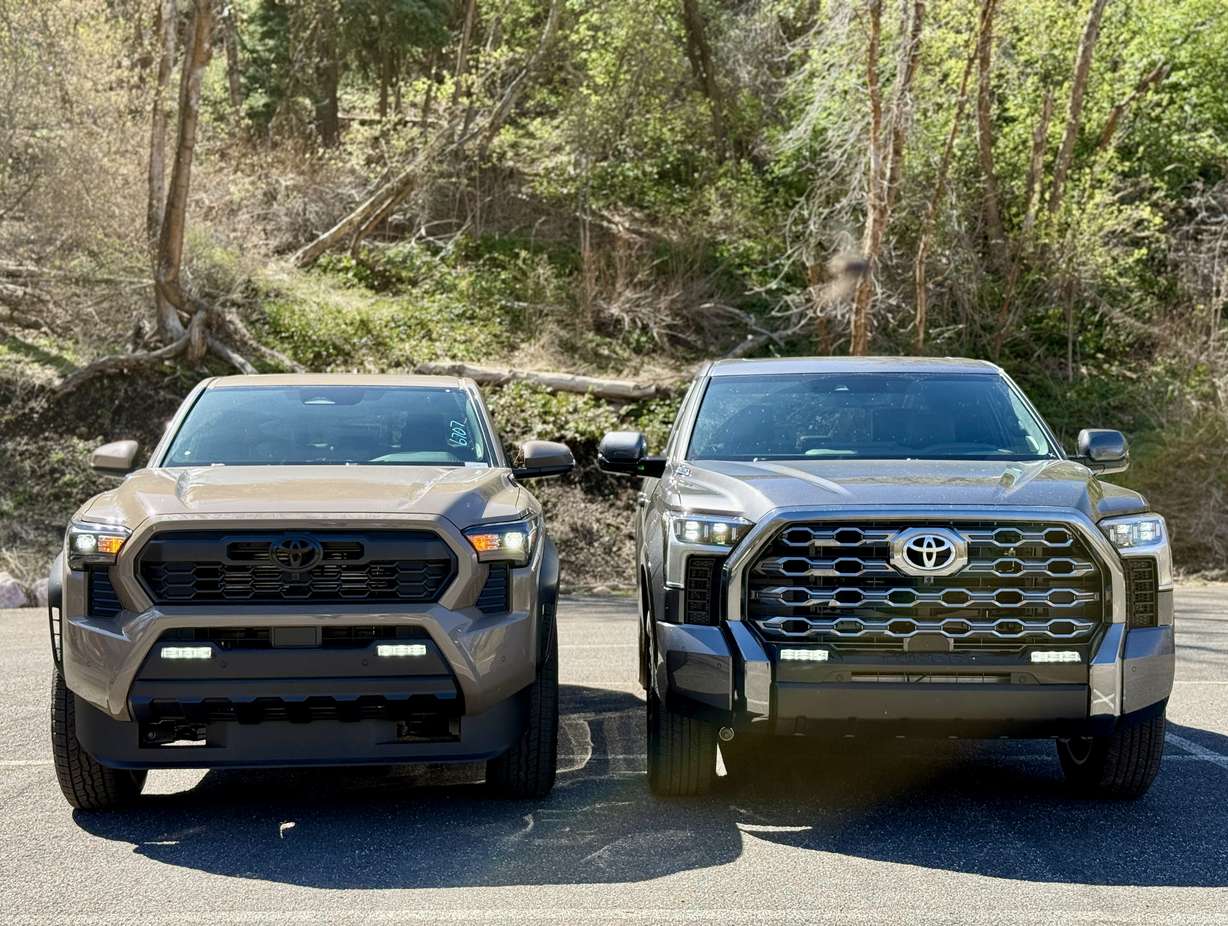
When Toyota asked to compare their new(ish) Tacoma and Tundra, I admit, I was a little nervous. Even as I sit here typing, I'm still nervous. You see, few trucks breed the kind of following that these two nameplates do, and I know that whatever I say will be scrutinized, scoffed at and perhaps, if I'm lucky, violently nodded at in agreement.
But before you react with pitchforks and pointed fingers, let me save you some time: these two trucks are excellent. Really well done. There's a lot to like in each of these wastegate-whistlin' rigs.
If you're in the market for a new truck, the Tacoma and Tundra are great places to start. Each has a lot to offer.
Here are a few highlights, and why one or the other might be a good fit for your life.
Power, towing capacity and payload
As I've said before in other reviews of Toyota trucks, the greatest strength of either of these trucks is their motors and power output. In either truck, they are impressive, punchy, responsive and robust — and I love driving them.
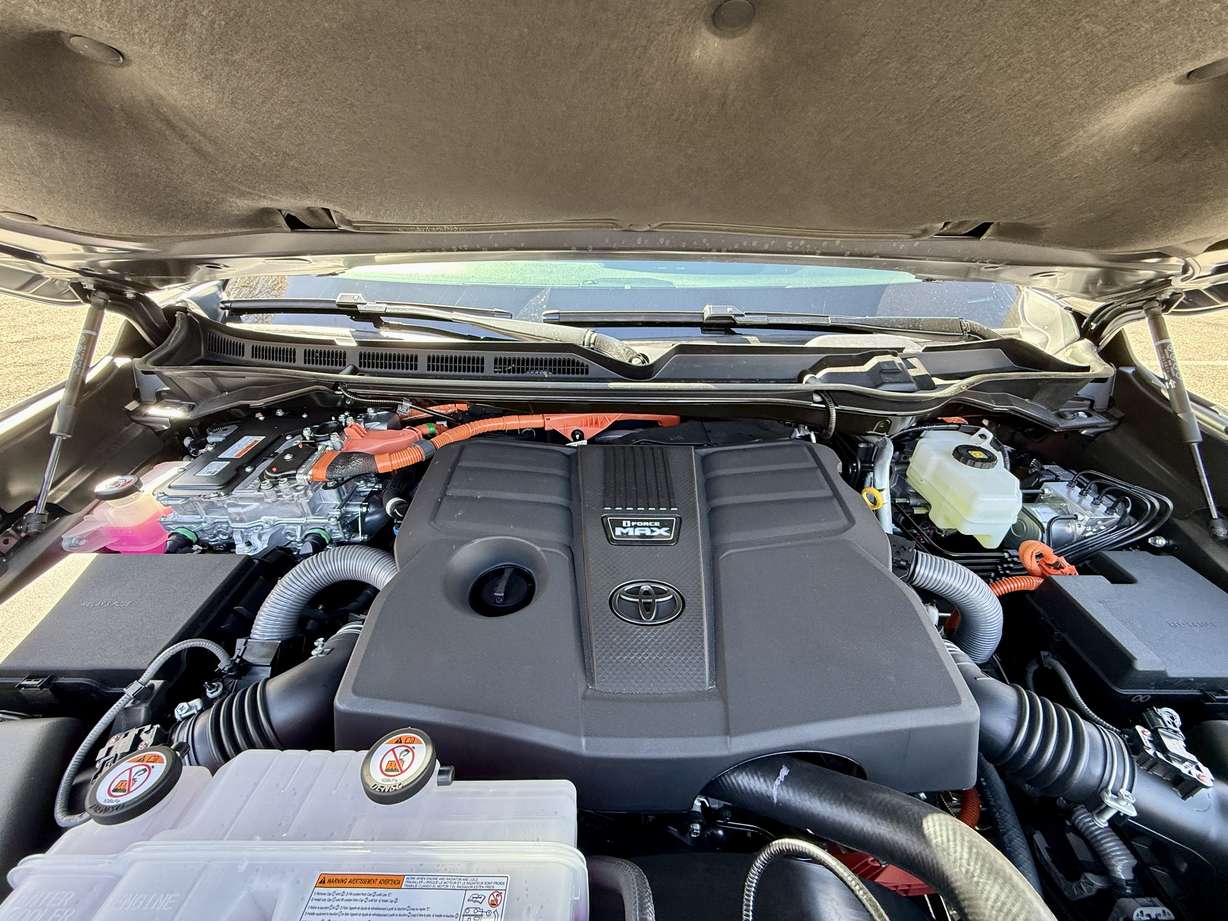
In the Tundra, most trims deliver 389 horsepower and 479 pound-feet of torque, generated by a twin-turbocharged V6. Opt for a trim with the i-Force Max motor, which adds a hybrid component to the existing twin-turbo V6 setup, and that nets you 437 horsepower and 583 pound-feet of torque.
My tester, a Platinum trim with the i-Force Max motor, was so deeply powerful that I never came close to tapping its full potential. It's a seriously impressive powertrain, and you really feel that the torque is constantly ready to move the Earth's rotation in your favor.
As Caleb Jacobs of The Drive wrote, "Ironically enough, the powertrain is … the most impressive part of this truck … You can feel it when you stomp on the throttle, and even though other trucks have beaten the 'Yota in acceleration tests before, it's undeniably quick."
Towing capacity for the Tundra is, unsurprisingly, impressive, especially given its coil-spring suspension setup. It tops out at 12,000 pounds, depending on the trim. Maximum payload is 1,940 pounds, and you can decide between a 5.5-foot, 6.5-foot and 8-foot length bed.
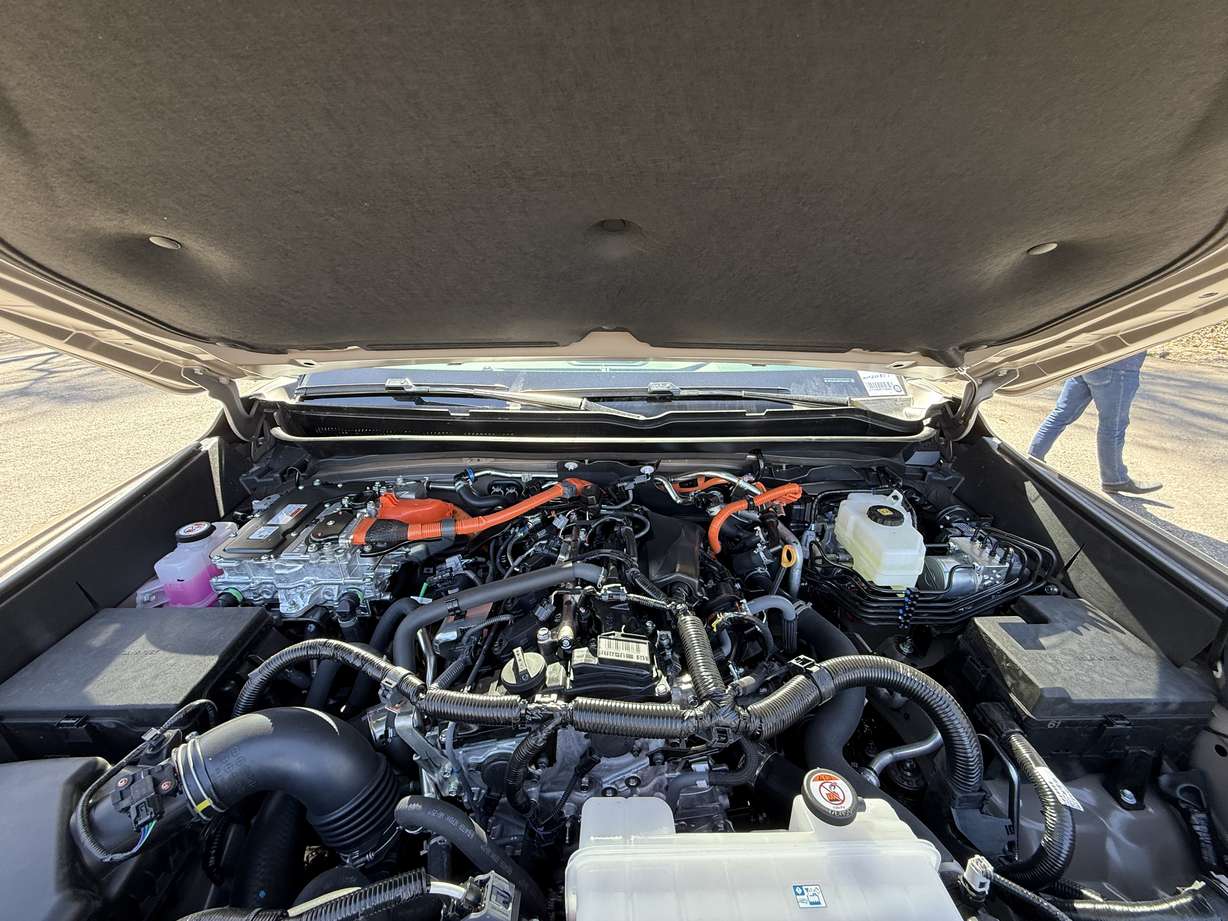
In the Tacoma, a similar setup is available, albeit with a turbocharged four-cylinder engine instead of the six in the Tundra. Standard output is rated at 278 horsepower and 317 pound-feet of torque. The i-Force Max motor, which likewise combines the standard motor with a hybrid component, pumps out 326 horsepower and 465 pound-feet of torque — pretty impressive figures for a mid-size truck, and more than enough, even in non Max form, for the day-to-day driving most owners will do.
Towing capacity for the Tacoma is rated at 6,500 pounds, depending on trim and cab setup, and payload is capped at 1,710 pounds, again depending on trim and cab selections.
If you need to tow, it's clear that the Tundra is your best bet. However, if it's only occasional, small loads, the Tacoma could suit your needs just fine. But one thing is certain in either truck: you're going to love the power.
Interior comfort and space
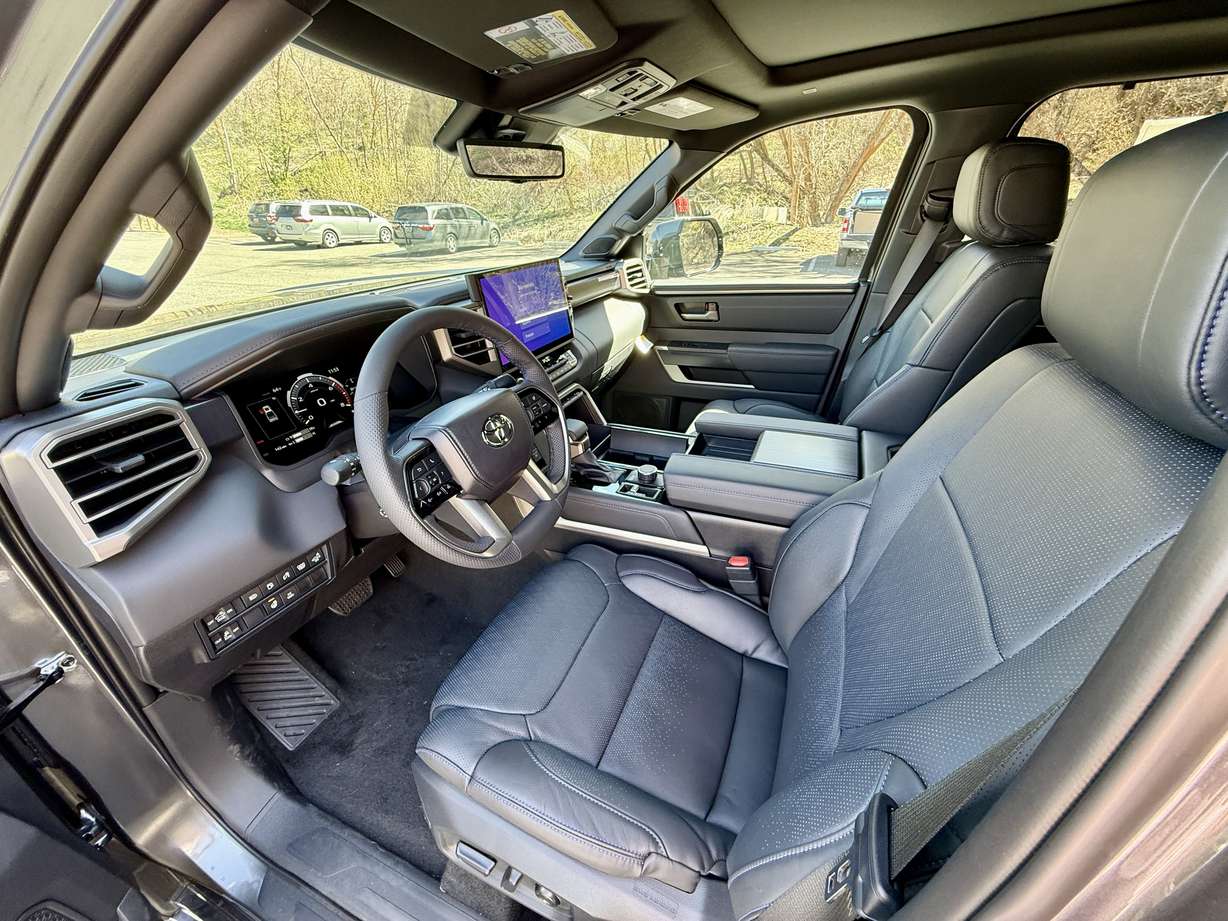
No matter which truck you pick, you're going to be very happy with the driver comfort, technology and overall modern design of the cabin. Which truck is best for you, though, hinges on who you plan on bringing with you on your Costco runs, weekend adventures and Swig drive-thru lines.
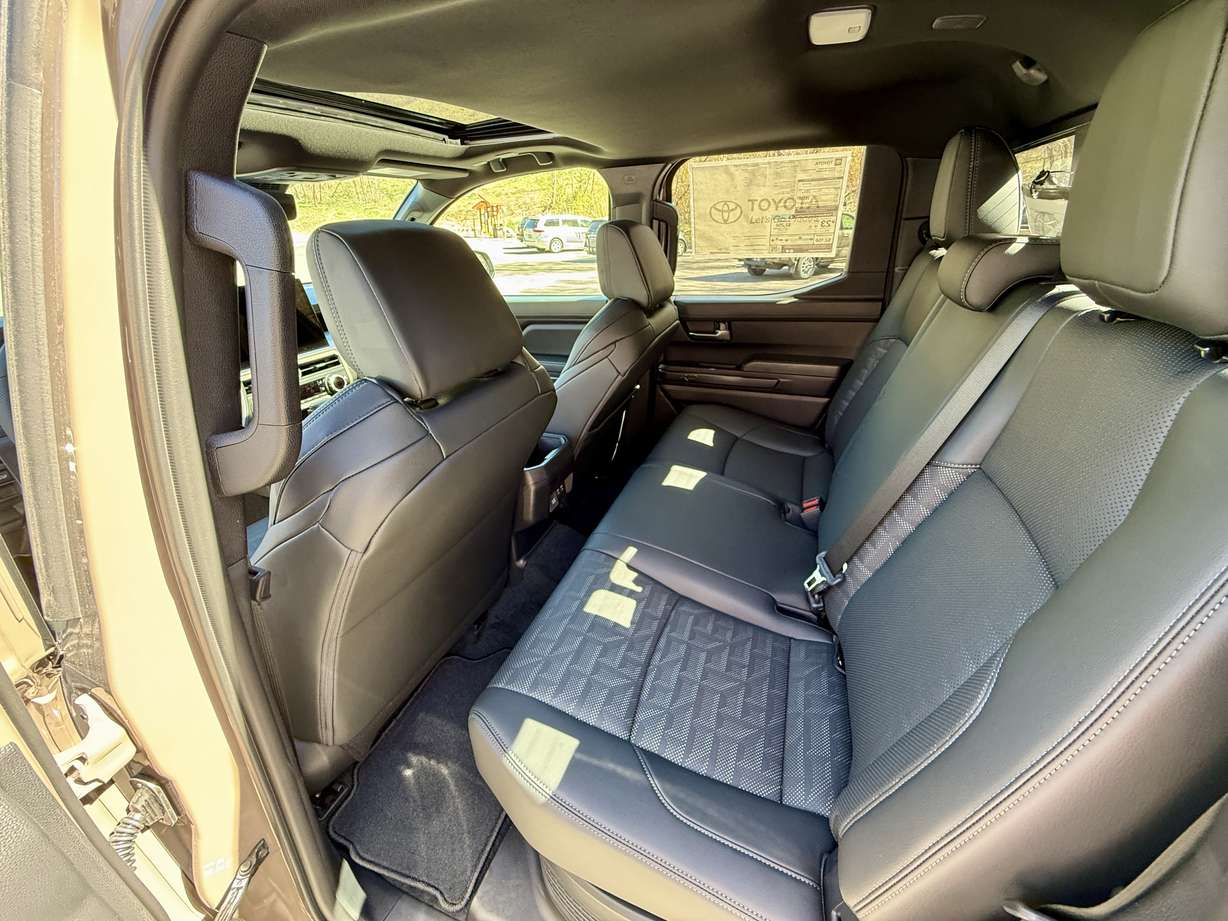
The Tundra is huge inside, and super comfortable for five grown adults. There is space to spread out, legroom for days and the seats are plenty accommodating for just about anyone, including the middle seat on the rear bench.
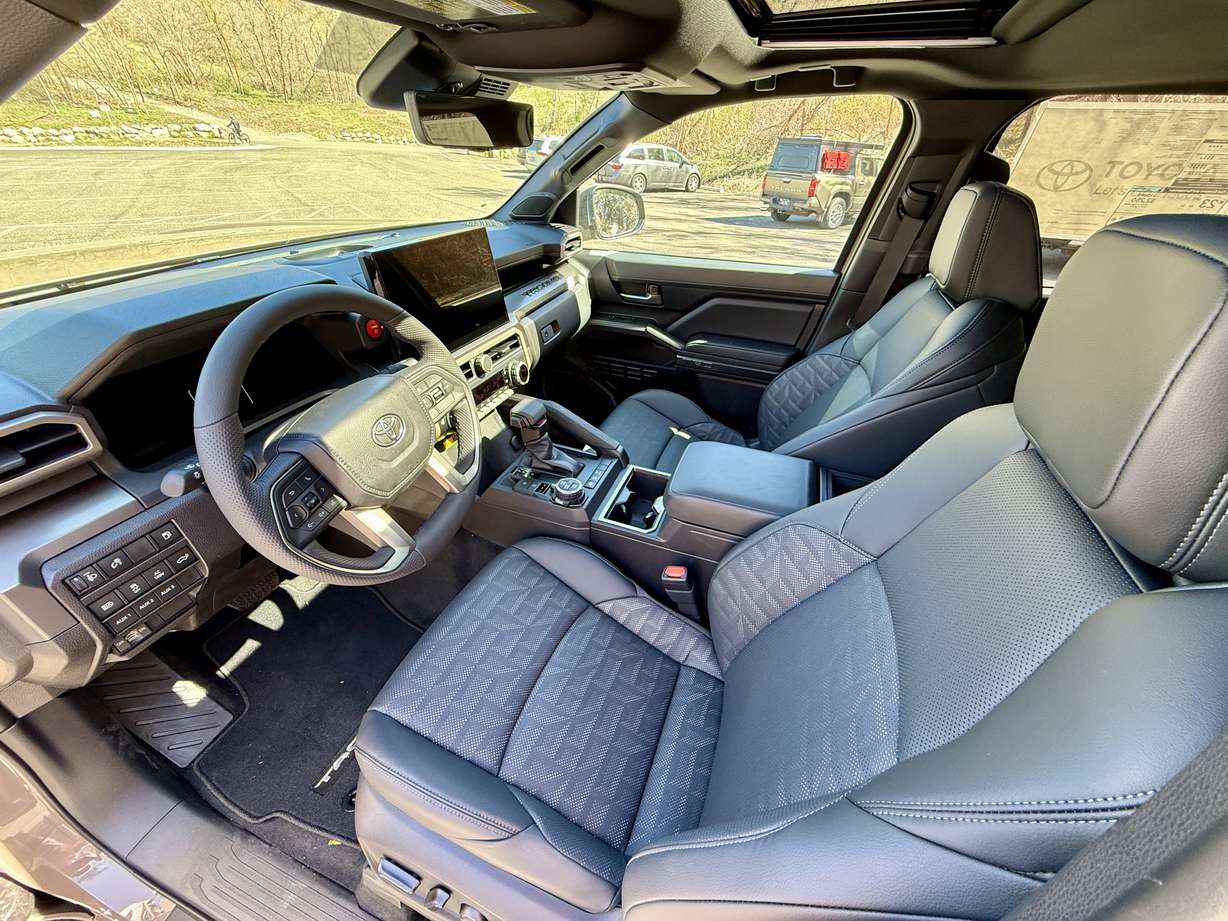
The Tacoma, while a comfortable and practical place for the front two occupants, is much tighter in the backseat. At five feet nine inches tall, I could not fit my three young children across the back of the Tacoma, especially with one of them still in a child seat.
In short, if you, in any degree of regularity, have people in the back seat of your truck, then head straight over to the Tundra. However, if it's just you and one other front-seat occupant in the cab for 97.5% of the time, then the Tacoma will do just fine.
Fuel economy
This one may surprise you. In my week of testing, I achieved just over 15 mpg in the Tundra and nearly 17 mpg in the Tacoma.
The Tundra comes standard with a 32.2-gallon fuel tank, while the Tacoma comes with an 18.2-gallon fuel tank. That means, based on my experience with fuel economy, you could at least have 483 miles of range in the Tundra and 291 miles in the Tacoma.
I live in a fairly hilly area in Bountiful, so if you live in a flatter part of Utah, your results may be higher.
Practicality
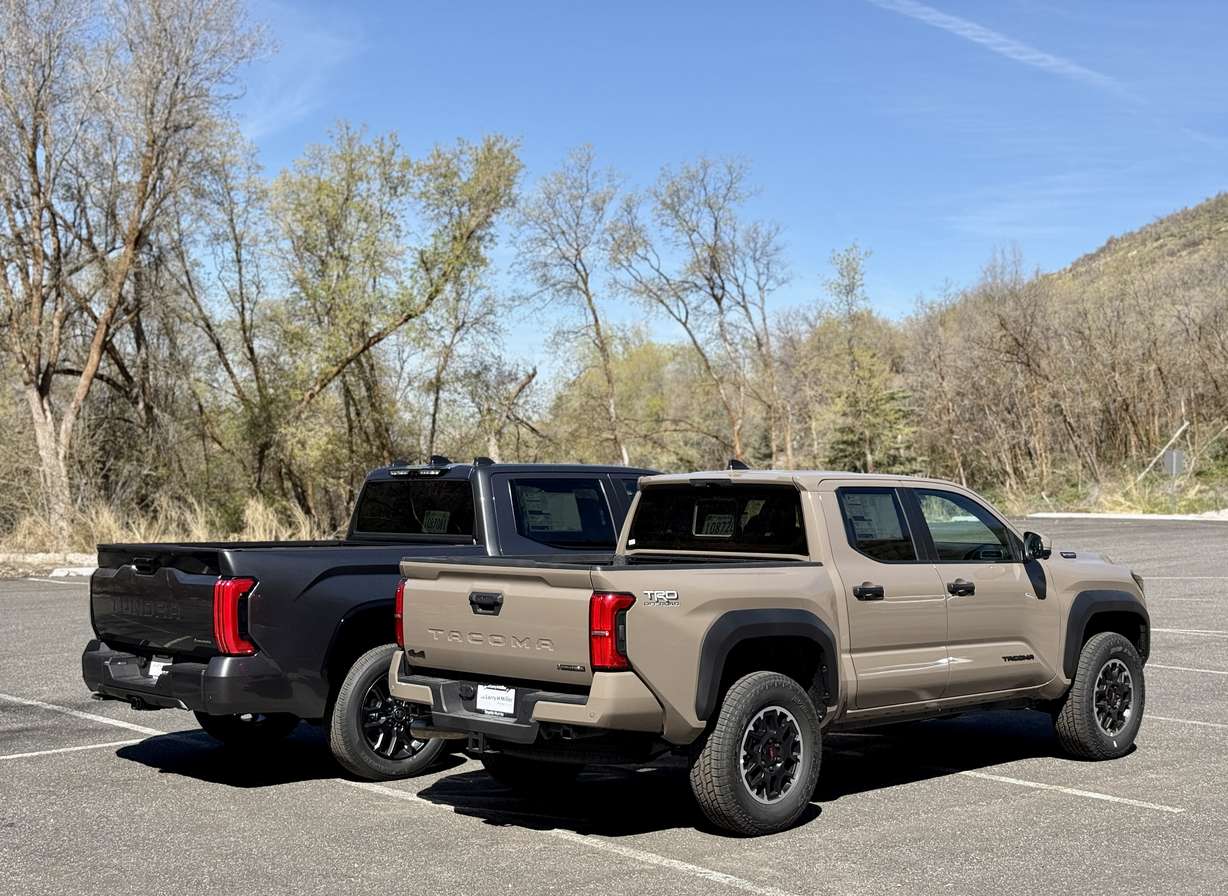
The Tundra and Tacoma are both very practical vehicles, but in very different ways.
The Tundra has much more space, comfort, power, range and towing capability than the Tacoma. On the other hand, it is larger, not as easy to park, drinks more gas and is not as nimble as its sibling.
Conversely, the Tacoma is easier to drive daily, feels more playful, can still tow a decent amount, is slightly more efficient and is going to be better off-road in tighter trails and technical situations.
Deciding which is more practical depends on what elements of practicality you value. Both trucks make a lot of sense, but for different reasons.
Driving characteristics
Of all the traits that go into buying a vehicle, I'm always most interested in what they're like to drive daily. And since most of our driving is done commuting and running errands around town, that's exactly what I did in these trucks. How did they stack up?
First, the Tundra is definitely a bigger truck than the Tacoma — obviously — and you feel it. The hood is large, the turning radius is a bit wide and the ride can be a bit choppy on certain surfaces, which might all sound negative — but — you get used to it. I honestly really enjoyed my time in the Tundra and was sad when it was over.
The Tacoma feels like a baby Tundra in all the best ways, but is also easier to maneuver, park and live with on a day-to-day basis. And given the Tacoma's comfortable front seats and robust power plants, you really don't feel like you're missing out on too much should you decide to go the mid-size route.
Price
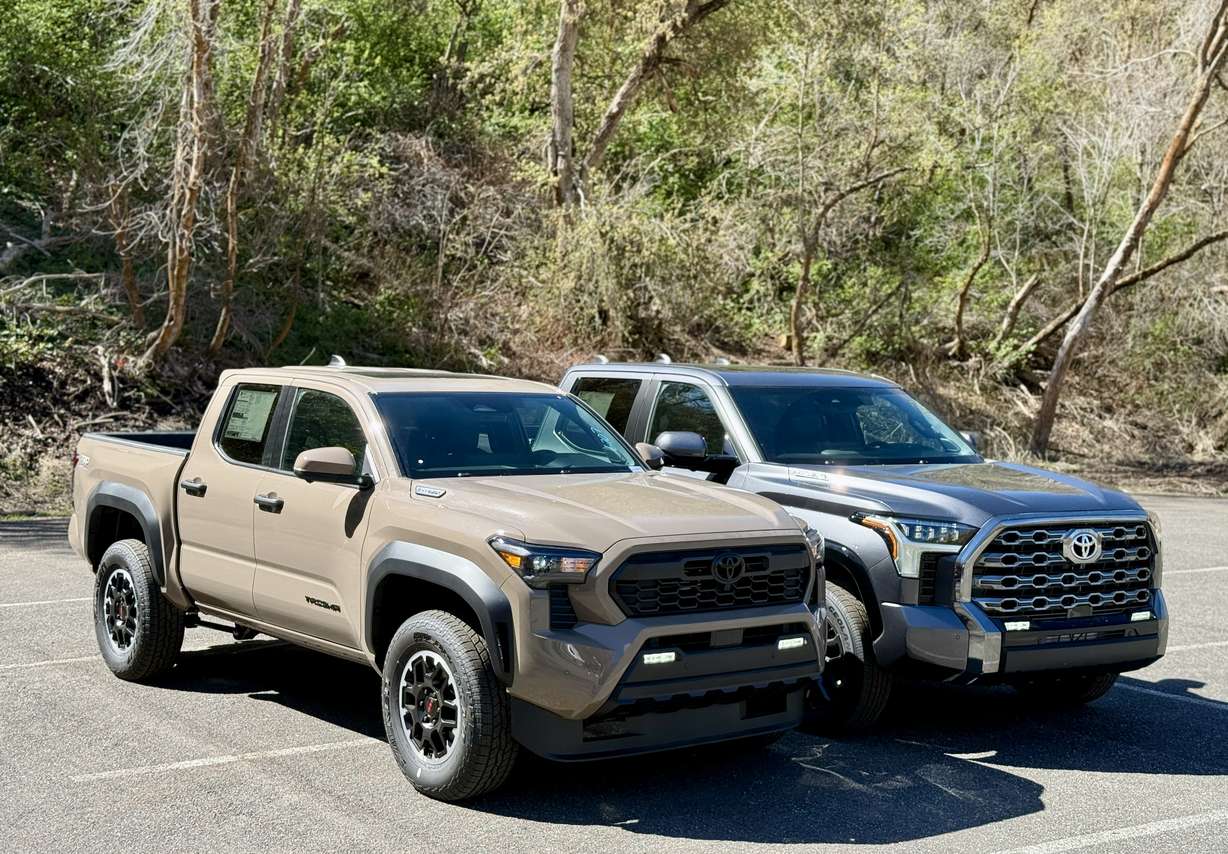
The Tacoma, in its base SR trim, starts at almost $34,000 and goes all the way to more than $67,000 for its loaded TRD Pro trim. Within that range slots the SR, SR5, TRD PreRunner, TRD Sport, TRD Off-Road, TRD Sport i-Force Max, TRD Off-Road i-Force Max, Limited, Limited i-Force Max, Trailhunter and TRD Pro trims.
The Tundra, in its base SR trim, starts at just over $43,000 and increases to more than $83,000 for its top Capstone trim. Within that range, the Tundra offers the SR, SR5, Limited, Limited i-Force Max, Platinum, 1794 Edition, Platinum i-Force Max, 1794 Edition i-Force Max, TRD Pro and Capstone trims.
Which should you buy?
Given the decent amount of overlap in price and fuel economy, it seems that the Tundra is, overall, the better value for most buyers. It's up on power, space and capability over the Tacoma, and for not much more money (or even the same money) and fuel economy.
However, if you value ease of driving and smaller, more livable dimensions, then the Tacoma is an excellent choice for many buyers.
For my money, and with three kids, I'd go with the Tundra. "The Tundra does almost everything exceptionally well," said Caleb Jacobs of The Drive. "It feels appropriately appointed on higher-spec models; the infotainment is easy to use; there are cameras everywhere; the multi-link rear suspension is comfy for daily driving; and even the gas-only models are plenty quick."
Test drive both, compare the costs, and see which one fits best for your life. Either way, the folks at Toyota have done a great job with these trucks and you won't be disappointed, especially in their power, performance and tech.
More photos below:
About the author: Jason Bell is a lifelong car enthusiast who loves sharing his passions as a teacher, podcaster and automotive journalist. He is an accredited member of the Rocky Mountain Automotive Press. You can contact him at jasonbellcars@gmail.com or on his YouTube channel.