'%3e%3cpath%20d='M34.1406%205.85938C30.3906%202.10547%2025.3047%200%2020%200C14.6953%200%209.60938%202.10547%205.85938%205.85938C2.10938%209.61328%200%2014.6953%200%2020C0%2025.3047%202.10547%2030.3906%205.85938%2034.1406C9.61328%2037.8906%2014.6953%2040%2020%2040C25.3047%2040%2030.3906%2037.8945%2034.1406%2034.1406C37.8906%2030.3906%2040%2025.3047%2040%2020C40%2014.6953%2037.8945%209.60938%2034.1406%205.85938ZM37.0117%2023.543H31.1602V13.5391H27.6328V19.9414C28.1211%2020.6914%2028.3711%2021.582%2028.3711%2022.5625V22.625C28.3711%2023.668%2028.1172%2024.6055%2027.6328%2025.4297V26.6094H36.082C33.4883%2032.9375%2027.2891%2037.3789%2020.0039%2037.3789C10.3711%2037.3789%202.62109%2029.6289%202.62109%2020C2.62109%2010.3711%2010.3711%202.62109%2020%202.62109C29.6289%202.62109%2037.3789%2010.3711%2037.3789%2020C37.3789%2021.1484%2037.2617%2022.2656%2037.0508%2023.3477C37.0391%2023.4141%2037.0234%2023.4766%2037.0117%2023.543Z'%20fill='white'/%3e%3cpath%20d='M22.3086%2018.5352C20.4336%2018.125%2019.9531%2017.8398%2019.9766%2017.1836V17.1406C19.9766%2016.6992%2020.3477%2016.2148%2021.4023%2016.2148C22.582%2016.2148%2023.8867%2016.6797%2025.0781%2017.4766L26.8516%2015.0195C25.4453%2013.8906%2023.707%2013.3398%2021.5547%2013.3398C18.5195%2013.3398%2016.4375%2015%2016.4063%2017.4766V17.5352C16.3633%2020.2617%2018.5859%2020.9805%2021.293%2021.6016C23.0391%2021.9766%2023.5703%2022.3164%2023.5703%2022.9609L23.5469%2022.9766C23.5469%2023.3906%2023.2578%2023.7031%2022.7852%2023.8359C22.5742%2023.9062%2022.1289%2023.9727%2021.5156%2023.9727C20.7617%2023.9727%2019.7539%2023.8633%2018.6328%2023.4844C18.0898%2023.2891%2017.4727%2023.0039%2016.8047%2022.6133L20.1406%2026.625C20.2813%2026.6602%2021.0977%2026.8516%2021.7734%2026.8516C25.0039%2026.8516%2027.0859%2025.2461%2027.1094%2022.6328V22.5703C27.1602%2020.1133%2025.2148%2019.1719%2022.3086%2018.5352Z'%20fill='white'/%3e%3cpath%20d='M5.24219%2013.5664V26.6133H8.75391V23.7578L10.2969%2021.9531L14.2031%2026.6133H18.3867L12.3555%2019.5195L17.4023%2013.5664H13.4531L8.75391%2019.0586V13.5664H5.24219Z'%20fill='white'/%3e%3c/g%3e%3cdefs%3e%3cclipPath%20id='clip0_97_2430'%3e%3crect%20width='40'%20height='40'%20fill='white'/%3e%3c/clipPath%3e%3c/defs%3e%3c/svg%3e)


Estimated read time: 3-4 minutes
From the classroom to Capitol Hill
What started as a school project quickly turned into something bigger.
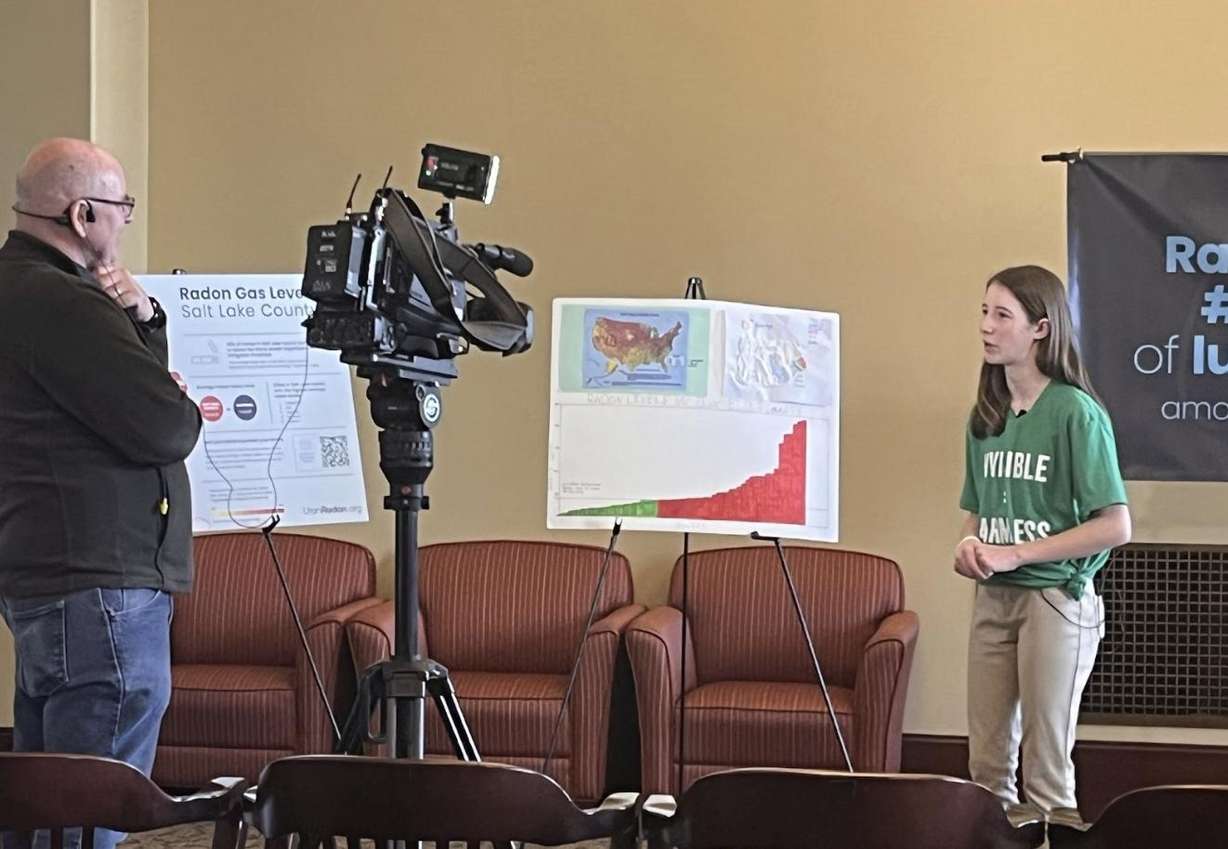
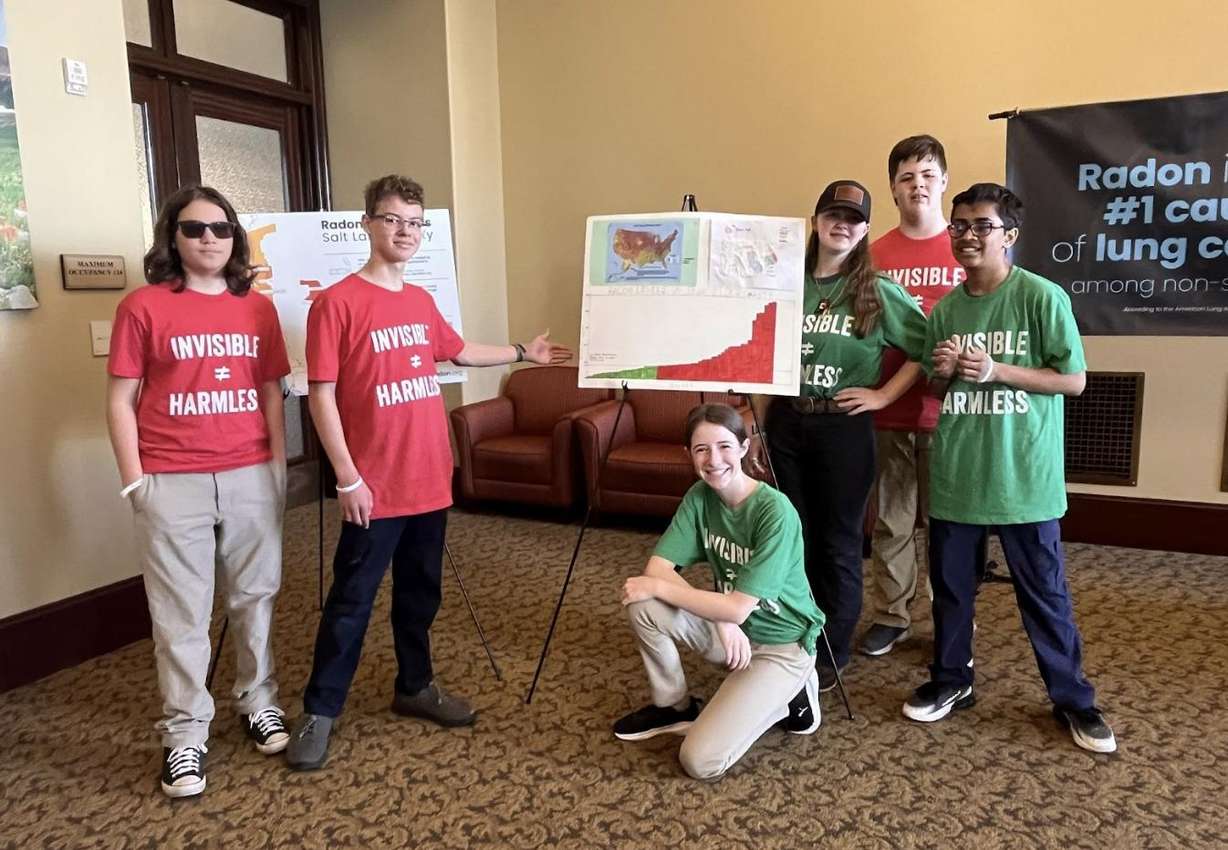
Eighth-grade students at Promontory School of Expeditionary Learning in Box Elder County recently visited Capitol Hill to raise awareness about radon gas, a radioactive gas that affects thousands of homes across Utah.
The project was led by Promontory math teacher Rob Christensen and science teacher Lisa Wells.
As part of the project, students tested 61 homes in Box Elder County and analyzed the results.
What they learned surprised them.
Of the 61 homes tested, 46 (75%) had radon levels that the World Health Organization considers dangerous.
Additionally, the average radon level was 5 times the national average indoor radon level (the national average is 1.3 pCi/L; the homes tested averaged 6.6 pCi/L).
During their presentation at the Capitol, student Rudra Ahir explained, "We learned that radon is a very harmful gas that gets into your lungs and can cause lung cancer."
Another student, Shelby Prince, said the class felt it was important to share what they learned with others.
"We just need to raise awareness about this," Prince said. "Otherwise, lots of people are going to end up with lung cancer."
An invisible threat in Utah homes
Radon gas is often called the silent killer because it cannot be seen, smelled, or tasted.
It forms naturally in the soil and can enter homes through small cracks and openings in the foundation. Once inside, radon can build up to dangerous levels.
Health experts estimate that 20 to 30 percent of lung cancer diagnoses in Utah may be linked to radon exposure.
Even more concerning, nearly half of the homes in Utah have dangerous radon levels.
Despite that risk, many homeowners have never tested their homes. Test your home for free.
Because radon has no warning signs, testing is the only way to know if a home has dangerous levels.
A Utah mother shares her story
Joining the students at the Capitol was radon awareness advocate Kerri Robbins, who knows firsthand the seriousness of radon exposure.
Robbins was diagnosed with stage four lung cancer despite never smoking.
After testing her home, she discovered extremely high radon levels.
"The levels in my house were like I was smoking three packs of cigarettes a day," Robbins said.
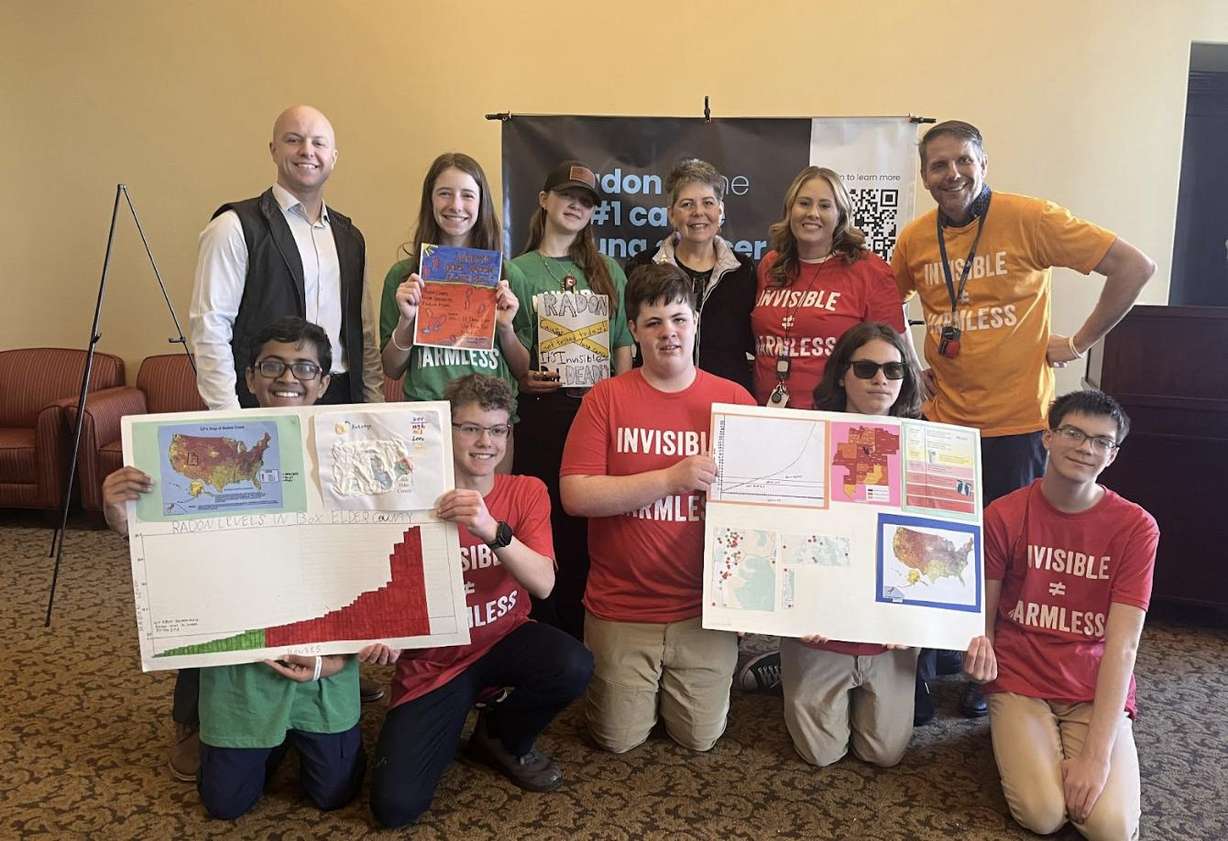
Since her diagnosis, Robbins has worked to raise awareness about radon and encourage Utah families to test their homes.
She said seeing students take an interest in the issue was inspiring.
"They are helping people understand something many families still do not know about," Robbins said.
Students call for stronger protections
The students did more than raise awareness. They also asked lawmakers to consider stronger radon protections for Utah homeowners.
Their proposals included requiring radon mitigation systems in homes with dangerous radon levels before those homes can be sold.
Their message was simple.
Radon is a serious health risk, but it can be prevented by conducting a simple radon test.
How Utah families can protect themselves
The most important step homeowners can take is simple.
Test your home.
Radon testing takes only a few minutes to set up and can reveal whether dangerous radon levels are present.
To help Utah families understand their risk, UtahRadon.org is offering free radon test kits for a limited time.
Ordering a test takes less than a minute and could help protect your family's health.
Request your free radon test kit today at UtahRadon.org.