'%3e%3cpath%20d='M34.1406%205.85938C30.3906%202.10547%2025.3047%200%2020%200C14.6953%200%209.60938%202.10547%205.85938%205.85938C2.10938%209.61328%200%2014.6953%200%2020C0%2025.3047%202.10547%2030.3906%205.85938%2034.1406C9.61328%2037.8906%2014.6953%2040%2020%2040C25.3047%2040%2030.3906%2037.8945%2034.1406%2034.1406C37.8906%2030.3906%2040%2025.3047%2040%2020C40%2014.6953%2037.8945%209.60938%2034.1406%205.85938ZM37.0117%2023.543H31.1602V13.5391H27.6328V19.9414C28.1211%2020.6914%2028.3711%2021.582%2028.3711%2022.5625V22.625C28.3711%2023.668%2028.1172%2024.6055%2027.6328%2025.4297V26.6094H36.082C33.4883%2032.9375%2027.2891%2037.3789%2020.0039%2037.3789C10.3711%2037.3789%202.62109%2029.6289%202.62109%2020C2.62109%2010.3711%2010.3711%202.62109%2020%202.62109C29.6289%202.62109%2037.3789%2010.3711%2037.3789%2020C37.3789%2021.1484%2037.2617%2022.2656%2037.0508%2023.3477C37.0391%2023.4141%2037.0234%2023.4766%2037.0117%2023.543Z'%20fill='white'/%3e%3cpath%20d='M22.3086%2018.5352C20.4336%2018.125%2019.9531%2017.8398%2019.9766%2017.1836V17.1406C19.9766%2016.6992%2020.3477%2016.2148%2021.4023%2016.2148C22.582%2016.2148%2023.8867%2016.6797%2025.0781%2017.4766L26.8516%2015.0195C25.4453%2013.8906%2023.707%2013.3398%2021.5547%2013.3398C18.5195%2013.3398%2016.4375%2015%2016.4063%2017.4766V17.5352C16.3633%2020.2617%2018.5859%2020.9805%2021.293%2021.6016C23.0391%2021.9766%2023.5703%2022.3164%2023.5703%2022.9609L23.5469%2022.9766C23.5469%2023.3906%2023.2578%2023.7031%2022.7852%2023.8359C22.5742%2023.9062%2022.1289%2023.9727%2021.5156%2023.9727C20.7617%2023.9727%2019.7539%2023.8633%2018.6328%2023.4844C18.0898%2023.2891%2017.4727%2023.0039%2016.8047%2022.6133L20.1406%2026.625C20.2813%2026.6602%2021.0977%2026.8516%2021.7734%2026.8516C25.0039%2026.8516%2027.0859%2025.2461%2027.1094%2022.6328V22.5703C27.1602%2020.1133%2025.2148%2019.1719%2022.3086%2018.5352Z'%20fill='white'/%3e%3cpath%20d='M5.24219%2013.5664V26.6133H8.75391V23.7578L10.2969%2021.9531L14.2031%2026.6133H18.3867L12.3555%2019.5195L17.4023%2013.5664H13.4531L8.75391%2019.0586V13.5664H5.24219Z'%20fill='white'/%3e%3c/g%3e%3cdefs%3e%3cclipPath%20id='clip0_97_2430'%3e%3crect%20width='40'%20height='40'%20fill='white'/%3e%3c/clipPath%3e%3c/defs%3e%3c/svg%3e)




Estimated read time: 4-5 minutes
This archived news story is available only for your personal, non-commercial use. Information in the story may be outdated or superseded by additional information. Reading or replaying the story in its archived form does not constitute a republication of the story.
COTTONWOOD HEIGHTS — Construction on a new pipeline to help keep water flowing to residents along the Wasatch Front amid two major upcoming water treatment plant projects began earlier this year, and work is about to pick up in the Salt Lake Valley.
Initial work on the Cottonwoods Connection — multiple 3.8-mile pipelines that will run between the Big and Little Cottonwood water treatment plants — began in May. However, officials with the Metropolitan Water District of Salt Lake and Sandy, also known as Metro Water, say the bulk of the work will pick up next week.
It's also expected to introduce new traffic and construction impacts near the mouth of Big Cottonwood Canyon beginning next week, and in other areas over the next two years as the project moves forward.
The $84 million project is expected to be completed by the fall of 2026.
What is the Cottonwoods Connection pipeline?
The project involves three major lines that run through a nearly 4-mile stretch. Two 36-inch-diameter welded steel pipes will link the Big and Little Cottonwood water treatment plants to the Salt Lake Aqueduct. Another 60- to 72-inch-diameter welded steel pipe will run parallel to the existing Salt Lake Aqueduct.
It's important because both plants — one operated by Salt Lake City Department of Public Utilities and the other operated by Metro Water — were completed well over 60 years ago and are in line for major renovations or rebuilds that would otherwise cut water off to residents.
When one plant is closed for renovation, the other will receive the water, treat it and deliver it to the areas that typically receive water from the closed plant. This keeps the water flowing for tens of thousands of residents in the Salt Lake Valley during the closures.
"That's a lot of people," said Annalee Munsey, Metro Water's general manager. "Where water is such a scarce resource and we're always trying to conserve it, so we thought this would be a way that can support each other."
Construction impacts
There will be some construction impacts as this happens. Work is expected to pick up on Aug. 13, when the intersection of Wasatch Boulevard and Ft. Union Boulevard/Big Cottonwood Canyon Road is reduced to one lane in each direction, which may cause "significant traffic delays."
Drivers are urged to use 3000 East to access Big Cottonwood Canyon at that time, while bicyclists and pedestrians are urged to follow posted detours. The traffic restrictions are expected to last for about three weeks.
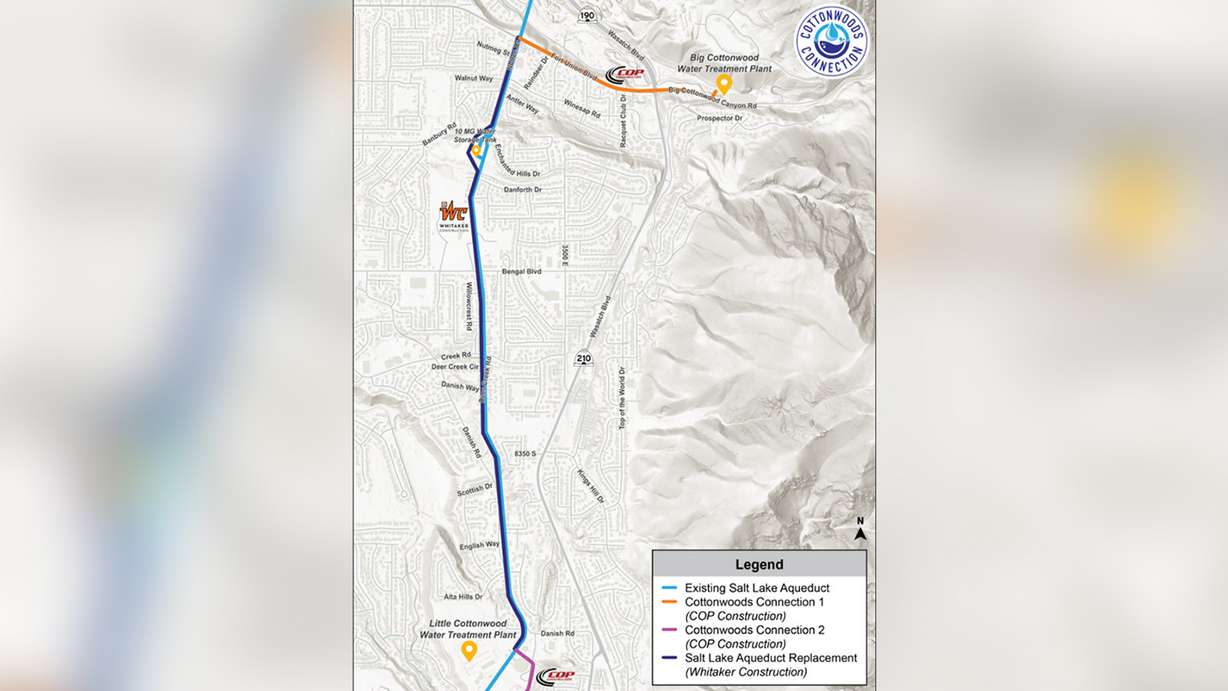
Additional impacts are expected along the path of the pipeline over the next two years. Most of the project follows the existing aqueduct line near the mouth of the canyons, while a new segment will be built along Fort Union Boulevard to an aqueduct connecting point at the intersection with Nutree Drive.
Munsey said Metro Water will provide advanced warning ahead of every new impact through its website, Facebook page and newsletter people can sign up for on the website. Since the aqueduct runs underneath many yards in the area, she added project leaders have worked one on one with impacted homeowners.
"(Construction crews have) purchased the pipe in 50-foot sections; so the goal is they want to get the pipe in, put it in as quickly as they can — but safely — to minimize those disruptions to the neighbors," she said.
Long-term use
The Big and Little Cottonwood water treatment plant projects will begin once the pipeline is complete.
Metro Water will launch its two-year Little Cottonwood Canyon Treatment Plant design phase in 2025, which should get the project ready for construction shortly after the pipeline is completed. Construction would likely last three or four years once it begins, Munsey explained.
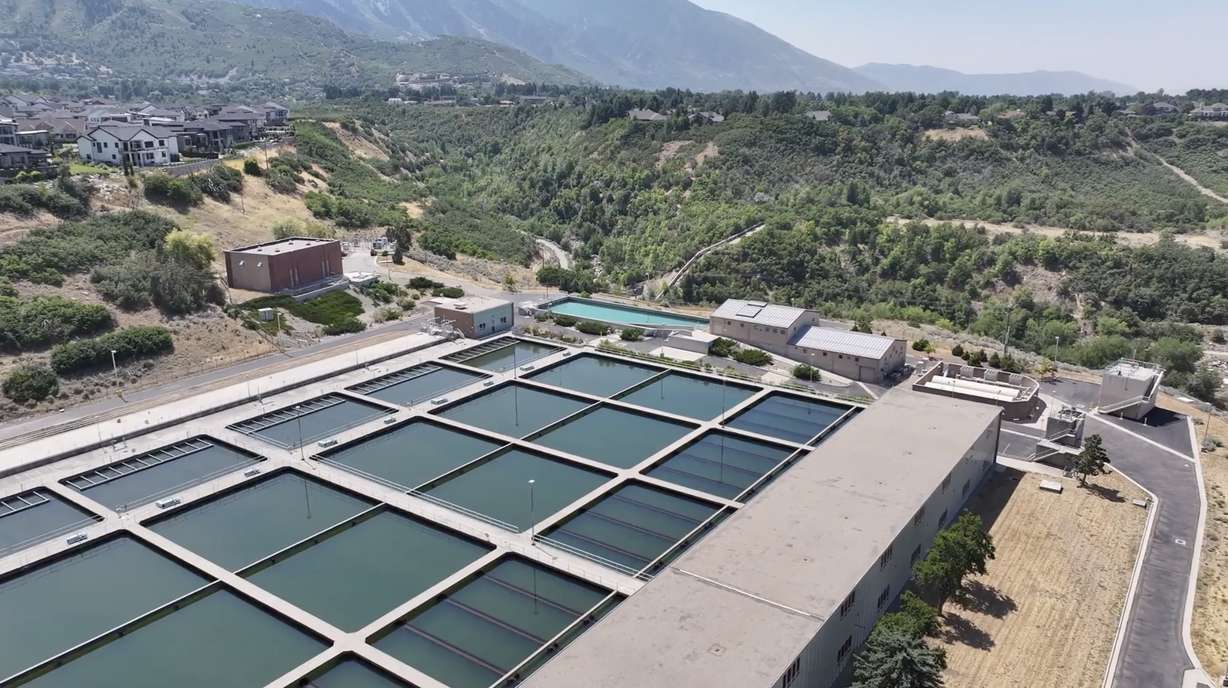
Salt Lake City's Big Cottonwood Canyon project is expected to happen sometime after the 2034 Winter Olympics.
"We have a long history of collaboration, and because of that we've been able to guarantee our residents reliable, clean and safe drinking water," Laura Briefer, director of Salt Lake City Public Utilities, said in a statement.
The pipeline could be used in an emergency when one of the treatment plants is offline after both projects are done.
It can be used in other emergencies, as well. Munsey said the earthquake-resistant pipeline will "complement" the Salt Lake Aqueduct so water continues to flow if the big one hits.
"It takes an investment ... so we can ensure the delivery of reliable, safe (and) clean drinking water," she said. "(You) always want to have a good backup plan, especially when it comes to water because it's such a valued resource."