'%3e%3cpath%20d='M34.1406%205.85938C30.3906%202.10547%2025.3047%200%2020%200C14.6953%200%209.60938%202.10547%205.85938%205.85938C2.10938%209.61328%200%2014.6953%200%2020C0%2025.3047%202.10547%2030.3906%205.85938%2034.1406C9.61328%2037.8906%2014.6953%2040%2020%2040C25.3047%2040%2030.3906%2037.8945%2034.1406%2034.1406C37.8906%2030.3906%2040%2025.3047%2040%2020C40%2014.6953%2037.8945%209.60938%2034.1406%205.85938ZM37.0117%2023.543H31.1602V13.5391H27.6328V19.9414C28.1211%2020.6914%2028.3711%2021.582%2028.3711%2022.5625V22.625C28.3711%2023.668%2028.1172%2024.6055%2027.6328%2025.4297V26.6094H36.082C33.4883%2032.9375%2027.2891%2037.3789%2020.0039%2037.3789C10.3711%2037.3789%202.62109%2029.6289%202.62109%2020C2.62109%2010.3711%2010.3711%202.62109%2020%202.62109C29.6289%202.62109%2037.3789%2010.3711%2037.3789%2020C37.3789%2021.1484%2037.2617%2022.2656%2037.0508%2023.3477C37.0391%2023.4141%2037.0234%2023.4766%2037.0117%2023.543Z'%20fill='white'/%3e%3cpath%20d='M22.3086%2018.5352C20.4336%2018.125%2019.9531%2017.8398%2019.9766%2017.1836V17.1406C19.9766%2016.6992%2020.3477%2016.2148%2021.4023%2016.2148C22.582%2016.2148%2023.8867%2016.6797%2025.0781%2017.4766L26.8516%2015.0195C25.4453%2013.8906%2023.707%2013.3398%2021.5547%2013.3398C18.5195%2013.3398%2016.4375%2015%2016.4063%2017.4766V17.5352C16.3633%2020.2617%2018.5859%2020.9805%2021.293%2021.6016C23.0391%2021.9766%2023.5703%2022.3164%2023.5703%2022.9609L23.5469%2022.9766C23.5469%2023.3906%2023.2578%2023.7031%2022.7852%2023.8359C22.5742%2023.9062%2022.1289%2023.9727%2021.5156%2023.9727C20.7617%2023.9727%2019.7539%2023.8633%2018.6328%2023.4844C18.0898%2023.2891%2017.4727%2023.0039%2016.8047%2022.6133L20.1406%2026.625C20.2813%2026.6602%2021.0977%2026.8516%2021.7734%2026.8516C25.0039%2026.8516%2027.0859%2025.2461%2027.1094%2022.6328V22.5703C27.1602%2020.1133%2025.2148%2019.1719%2022.3086%2018.5352Z'%20fill='white'/%3e%3cpath%20d='M5.24219%2013.5664V26.6133H8.75391V23.7578L10.2969%2021.9531L14.2031%2026.6133H18.3867L12.3555%2019.5195L17.4023%2013.5664H13.4531L8.75391%2019.0586V13.5664H5.24219Z'%20fill='white'/%3e%3c/g%3e%3cdefs%3e%3cclipPath%20id='clip0_97_2430'%3e%3crect%20width='40'%20height='40'%20fill='white'/%3e%3c/clipPath%3e%3c/defs%3e%3c/svg%3e)


Estimated read time: 2-3 minutes
This archived news story is available only for your personal, non-commercial use. Information in the story may be outdated or superseded by additional information. Reading or replaying the story in its archived form does not constitute a republication of the story.
SALT LAKE CITY -- Let's just assume that this story starts with a clever pun on the word 'bling.'
Earlier in the year, astrophysicists discovered a dead star that was made entirely of diamonds (ironically not Elizabeth Taylor) rapidly orbiting a neutron star. It had been reduced to the size of a planet and was orbiting another star, but wasn't really a planet in the proper scientific sense.
Now, though, the opulent folks at Ohio State University have shown that it is entirely possible that there is a diamond planet out there in the vastness of the Milky Way. And they didn't even need a telescope.
They did need about 9.5 million pounds of pressure per square inch, though. Researchers took iron, carbon, and oxygen and subjected it to pressures and temperatures found inside of our own Earth. What they found was that the iron and oxygen decided to get together and form rust, while the carbon was concentrated and squeezed until it turned to diamond. They estimate that in the right conditions, a planet could form up to 15 times the mass of our own that was 50 percent diamond.
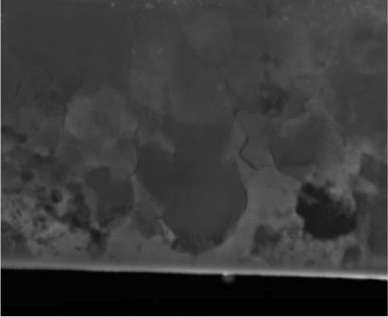
"Our results are striking, in that they suggest carbon-rich planets can form with a core and a mantle, just as Earth did," said lead researcher Wendy Panero. "However, the cores would likely be very carbon-rich - much like steel - and the mantle would also be dominated by carbon, much in the form of diamond."
Not that there would be anyone there to enjoy it. Such a planet would radiate all of its heat off so quickly that life would be impossible.
"We think a diamond planet must be a very cold, dark place," Panero said.
Our own planet is very rich in silicon, which is lucky, because this allows for our planet to retain geothermal energy which in turn leads to atmospheres, magnetic poles, and all sorts of other things that are necessary for life. But that doesn't mean our planet doesn't sport some bling of it's own. The study also seems to confirm something that was rather expected - that deep inside our own earth, just outside the core, lies a layer of diamond as well, one small enough that it does not cause the same problems for life that would plague a larger diamond planet.
These kinds of contrasts are exactly what scientists are looking for.
"The ultimate goal is to compile a suite of conditions that are necessary for an ocean to form on a planet," Panero said.
Email: [dnewlin@ksl.com](<mailto: dnewlin@ksl.com>)