'%3e%3cpath%20d='M34.1406%205.85938C30.3906%202.10547%2025.3047%200%2020%200C14.6953%200%209.60938%202.10547%205.85938%205.85938C2.10938%209.61328%200%2014.6953%200%2020C0%2025.3047%202.10547%2030.3906%205.85938%2034.1406C9.61328%2037.8906%2014.6953%2040%2020%2040C25.3047%2040%2030.3906%2037.8945%2034.1406%2034.1406C37.8906%2030.3906%2040%2025.3047%2040%2020C40%2014.6953%2037.8945%209.60938%2034.1406%205.85938ZM37.0117%2023.543H31.1602V13.5391H27.6328V19.9414C28.1211%2020.6914%2028.3711%2021.582%2028.3711%2022.5625V22.625C28.3711%2023.668%2028.1172%2024.6055%2027.6328%2025.4297V26.6094H36.082C33.4883%2032.9375%2027.2891%2037.3789%2020.0039%2037.3789C10.3711%2037.3789%202.62109%2029.6289%202.62109%2020C2.62109%2010.3711%2010.3711%202.62109%2020%202.62109C29.6289%202.62109%2037.3789%2010.3711%2037.3789%2020C37.3789%2021.1484%2037.2617%2022.2656%2037.0508%2023.3477C37.0391%2023.4141%2037.0234%2023.4766%2037.0117%2023.543Z'%20fill='white'/%3e%3cpath%20d='M22.3086%2018.5352C20.4336%2018.125%2019.9531%2017.8398%2019.9766%2017.1836V17.1406C19.9766%2016.6992%2020.3477%2016.2148%2021.4023%2016.2148C22.582%2016.2148%2023.8867%2016.6797%2025.0781%2017.4766L26.8516%2015.0195C25.4453%2013.8906%2023.707%2013.3398%2021.5547%2013.3398C18.5195%2013.3398%2016.4375%2015%2016.4063%2017.4766V17.5352C16.3633%2020.2617%2018.5859%2020.9805%2021.293%2021.6016C23.0391%2021.9766%2023.5703%2022.3164%2023.5703%2022.9609L23.5469%2022.9766C23.5469%2023.3906%2023.2578%2023.7031%2022.7852%2023.8359C22.5742%2023.9062%2022.1289%2023.9727%2021.5156%2023.9727C20.7617%2023.9727%2019.7539%2023.8633%2018.6328%2023.4844C18.0898%2023.2891%2017.4727%2023.0039%2016.8047%2022.6133L20.1406%2026.625C20.2813%2026.6602%2021.0977%2026.8516%2021.7734%2026.8516C25.0039%2026.8516%2027.0859%2025.2461%2027.1094%2022.6328V22.5703C27.1602%2020.1133%2025.2148%2019.1719%2022.3086%2018.5352Z'%20fill='white'/%3e%3cpath%20d='M5.24219%2013.5664V26.6133H8.75391V23.7578L10.2969%2021.9531L14.2031%2026.6133H18.3867L12.3555%2019.5195L17.4023%2013.5664H13.4531L8.75391%2019.0586V13.5664H5.24219Z'%20fill='white'/%3e%3c/g%3e%3cdefs%3e%3cclipPath%20id='clip0_97_2430'%3e%3crect%20width='40'%20height='40'%20fill='white'/%3e%3c/clipPath%3e%3c/defs%3e%3c/svg%3e)


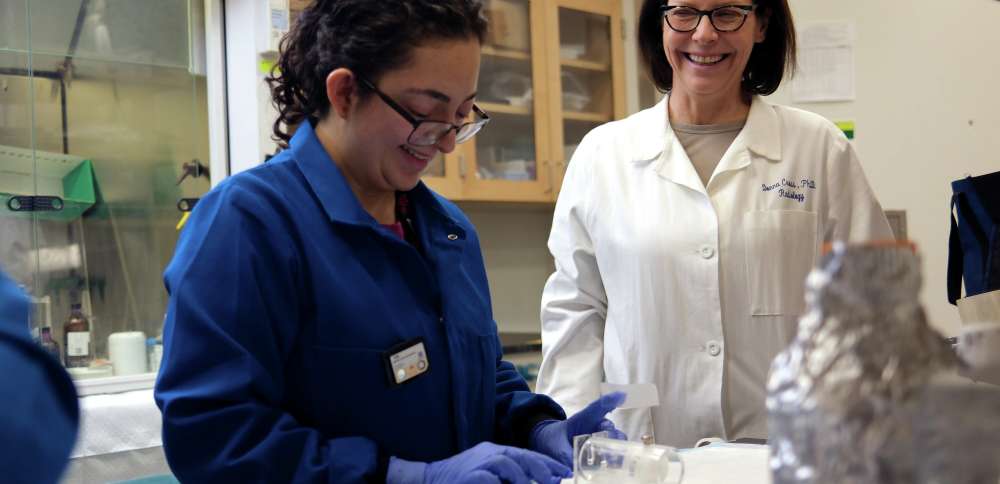
- Dr. Donna Cross is developing Paclitaxel for Alzheimer's at the University of Utah.
- A $450,000 donation and university support have advanced her research efforts.
- Clinical trials could start soon if $5-$10 million in funding is secured.
SALT LAKE CITY — Two significant developments, as unexpected as they are heartening, have happened since we last connected with Dr. Donna Cross, the University of Utah neuroscientist who is behind the development of a drug that could be the answer to healing Alzheimer's and other diseases of the brain.
The medicine is a cancer drug called Paclitaxel that Cross has shown to be effective in successfully reversing brain injury in mice.
Two years ago, at the conclusion of the mouse trials, Cross's hope was to move forward with clinical trials on humans. But as she admitted in an interview with the Deseret News at the time, getting there was going to be a long shot. Drug development takes a lot of money, and she didn't have any.
Then the following happened:
First, a man in the northwest who randomly heard about the research while scrolling the news (media outlets as far away as the Daily Mirror in the UK picked up the Deseret News story), contacted Cross and donated $450,000 to her research, no questions asked. The man's wife had Alzheimer's so it was personal for him, just as it had been for Cross when her grandmother's dementia served as her motivation to dedicate her career to the study of brain health.
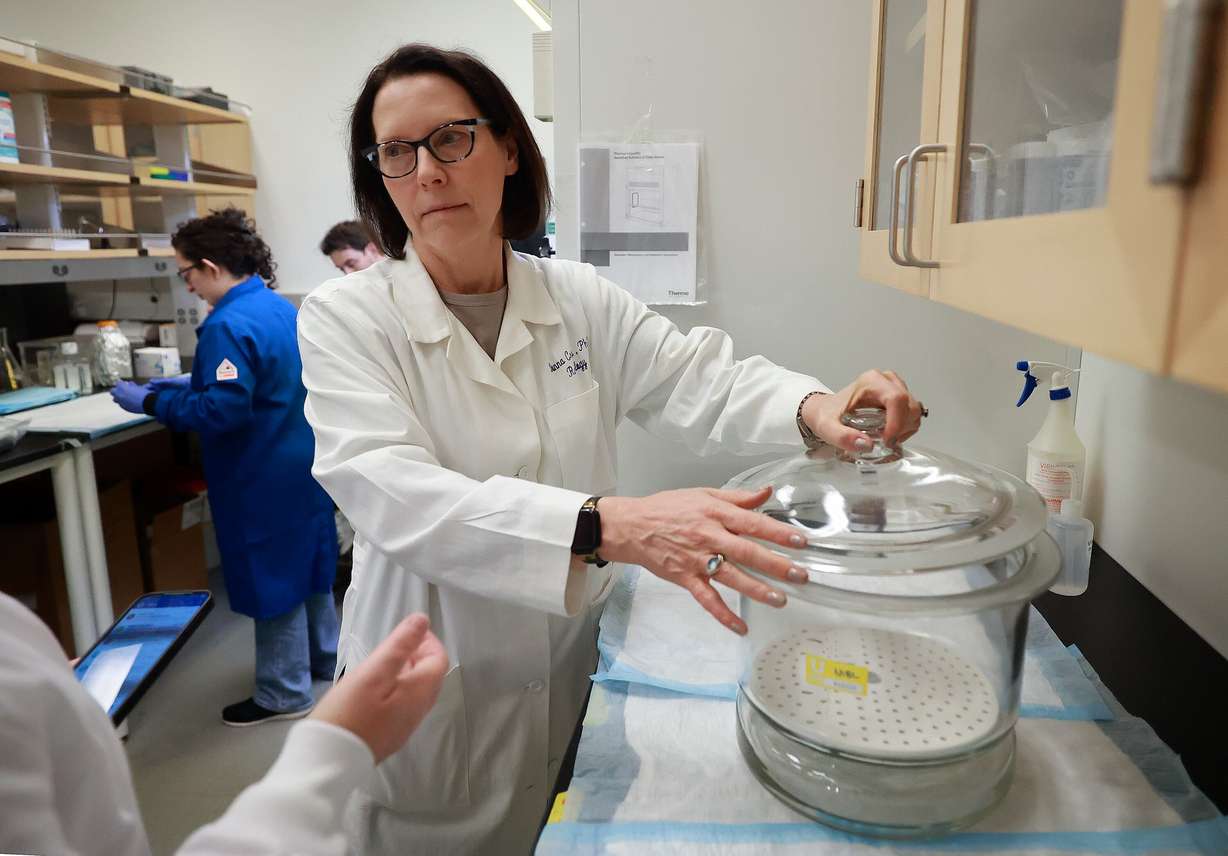
Second, a woman high up in the University of Utah administration contacted Cross and let her know she would be her strong advocate for the university to support her cause in every way possible.
Like the man in the northwest, the woman's story was personal. Seventeen years ago, she was suffering with multiple sclerosis when she was diagnosed with breast cancer.
In fighting the cancer, she took a drug cocktail that included Paclitaxel.
The chemotherapy worked. The woman, who is also a doctor, no longer had cancer — and neither did she have MS. All traces were gone, and it has stayed that way for 17 years and counting.
She believed the Paclitaxel had cured her of MS and thought she knew why.
Here's how Cross explains it: "She took the chemotherapy and the corticosteroids that she was also taking (for her MS) made her blood-brain barrier just a little bit leaky, so a little of the chemotherapy got in her brain and fixed the MS.
"It all makes sense scientifically. She was like, 'Now I understand what might have happened, because until that point, I was just a miracle as far as my doctors were concerned.'"
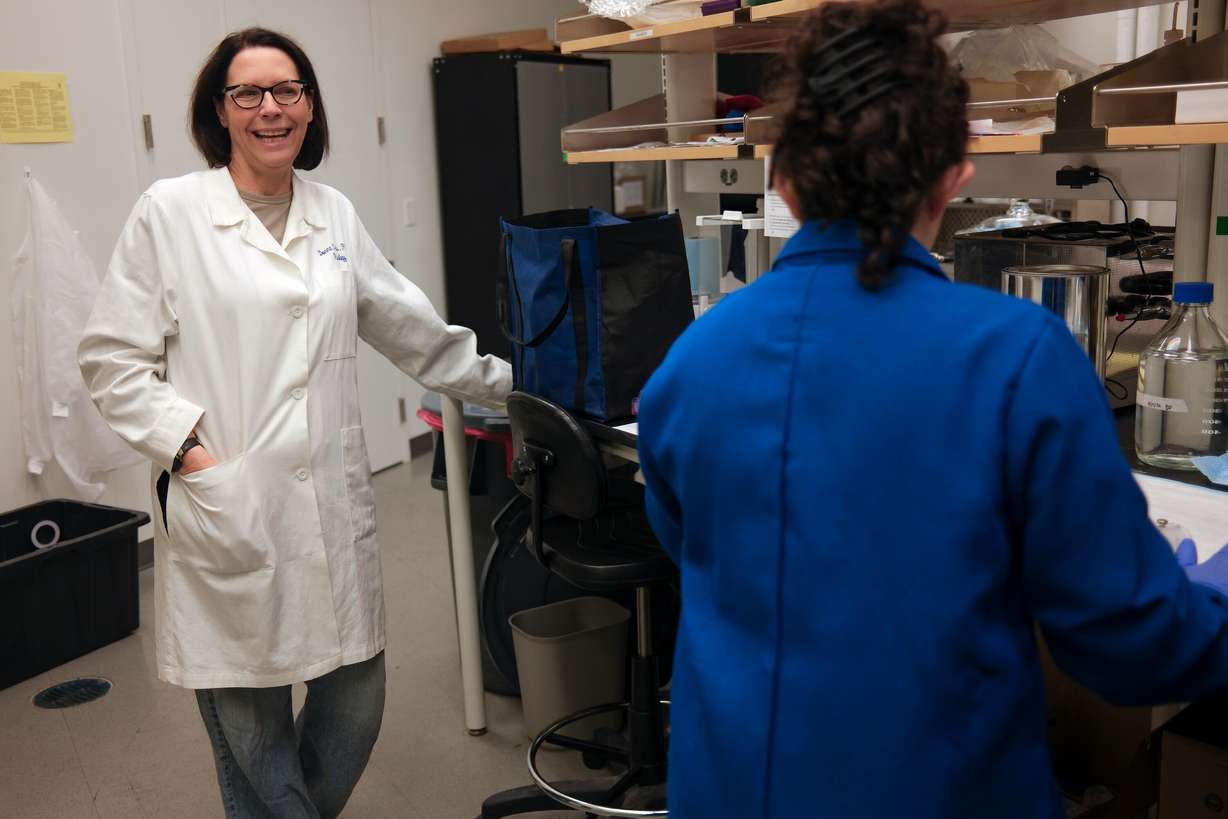
Armed with the $450,000 seed money — she used all of the donation, along with $20,000 of her own money, to conclude her research and publish a paper confirming the results — and the backing of the university administration, Cross was able to continue her crusade.
But getting to the finish line remains a long shot. There are so many more hoops to jump through.
The first step has involved starting a company that will research ways to mass-produce the drug and reach out to pharmaceutical companies to fund the all-important clinical trials, which are expected to cost in the $5 million to $10 million range.
To that end, Cross and her longtime mentor Satoshi Minoshima, formerly chair of radiology at the University of Utah, founded the biopharmaceutical research and development company called Caelium.
If outside funding can be secured — and the University of Utah is providing consulting help to try and make that happen — Cross says the clinical trials could be completed in under two years. If successful, that would pave the way for a pharma company to mass-produce the drug and have it available for the public within five years.
Dr. Cross is 61. She has grandchildren to spoil. She's happiest working in her lab, teaching students. This isn't the career direction she had in mind.
"But once I got the money from that individual, I was committed to at least try," she says. "I thought, OK, the chances of success here are slim. I think it's 90% of startups fail, and it's probably higher for pharmaceuticals. But I'm not going to spend the rest of my life thinking that I just walked away from this, that I didn't even try."
All brain diseases, from MS to ALS to Parkinson's disease to dementia in its many forms, are in play.
"This isn't a drug specific to Alzheimer's," Cross explains. "It's about making the brain stronger, so that if you have a disease or you have an injury or you have an environmental exposure that starts to make your brain sick, this helps it stay strong.
"Nobody chained me to a desk and said, ' You must do this.' I'm not doing this so I can make money and retire. It's just the opposite. I'm dipping into my retirement savings. I'm doing this because I believe this is a viable thing. It's that important."
To learn more or to donate, go to caelium.bio.