'%3e%3cpath%20d='M34.1406%205.85938C30.3906%202.10547%2025.3047%200%2020%200C14.6953%200%209.60938%202.10547%205.85938%205.85938C2.10938%209.61328%200%2014.6953%200%2020C0%2025.3047%202.10547%2030.3906%205.85938%2034.1406C9.61328%2037.8906%2014.6953%2040%2020%2040C25.3047%2040%2030.3906%2037.8945%2034.1406%2034.1406C37.8906%2030.3906%2040%2025.3047%2040%2020C40%2014.6953%2037.8945%209.60938%2034.1406%205.85938ZM37.0117%2023.543H31.1602V13.5391H27.6328V19.9414C28.1211%2020.6914%2028.3711%2021.582%2028.3711%2022.5625V22.625C28.3711%2023.668%2028.1172%2024.6055%2027.6328%2025.4297V26.6094H36.082C33.4883%2032.9375%2027.2891%2037.3789%2020.0039%2037.3789C10.3711%2037.3789%202.62109%2029.6289%202.62109%2020C2.62109%2010.3711%2010.3711%202.62109%2020%202.62109C29.6289%202.62109%2037.3789%2010.3711%2037.3789%2020C37.3789%2021.1484%2037.2617%2022.2656%2037.0508%2023.3477C37.0391%2023.4141%2037.0234%2023.4766%2037.0117%2023.543Z'%20fill='white'/%3e%3cpath%20d='M22.3086%2018.5352C20.4336%2018.125%2019.9531%2017.8398%2019.9766%2017.1836V17.1406C19.9766%2016.6992%2020.3477%2016.2148%2021.4023%2016.2148C22.582%2016.2148%2023.8867%2016.6797%2025.0781%2017.4766L26.8516%2015.0195C25.4453%2013.8906%2023.707%2013.3398%2021.5547%2013.3398C18.5195%2013.3398%2016.4375%2015%2016.4063%2017.4766V17.5352C16.3633%2020.2617%2018.5859%2020.9805%2021.293%2021.6016C23.0391%2021.9766%2023.5703%2022.3164%2023.5703%2022.9609L23.5469%2022.9766C23.5469%2023.3906%2023.2578%2023.7031%2022.7852%2023.8359C22.5742%2023.9062%2022.1289%2023.9727%2021.5156%2023.9727C20.7617%2023.9727%2019.7539%2023.8633%2018.6328%2023.4844C18.0898%2023.2891%2017.4727%2023.0039%2016.8047%2022.6133L20.1406%2026.625C20.2813%2026.6602%2021.0977%2026.8516%2021.7734%2026.8516C25.0039%2026.8516%2027.0859%2025.2461%2027.1094%2022.6328V22.5703C27.1602%2020.1133%2025.2148%2019.1719%2022.3086%2018.5352Z'%20fill='white'/%3e%3cpath%20d='M5.24219%2013.5664V26.6133H8.75391V23.7578L10.2969%2021.9531L14.2031%2026.6133H18.3867L12.3555%2019.5195L17.4023%2013.5664H13.4531L8.75391%2019.0586V13.5664H5.24219Z'%20fill='white'/%3e%3c/g%3e%3cdefs%3e%3cclipPath%20id='clip0_97_2430'%3e%3crect%20width='40'%20height='40'%20fill='white'/%3e%3c/clipPath%3e%3c/defs%3e%3c/svg%3e)



- BYU and Notre Dame share historical football ties through coaches LaVell Edwards and Knute Rockne.
- Both institutions have faith-based legacies, with presidents promoting collaboration across religious differences.
- Notre Dame's 9% admission rate contrasts with BYU's 70%; tuition also significantly differs.
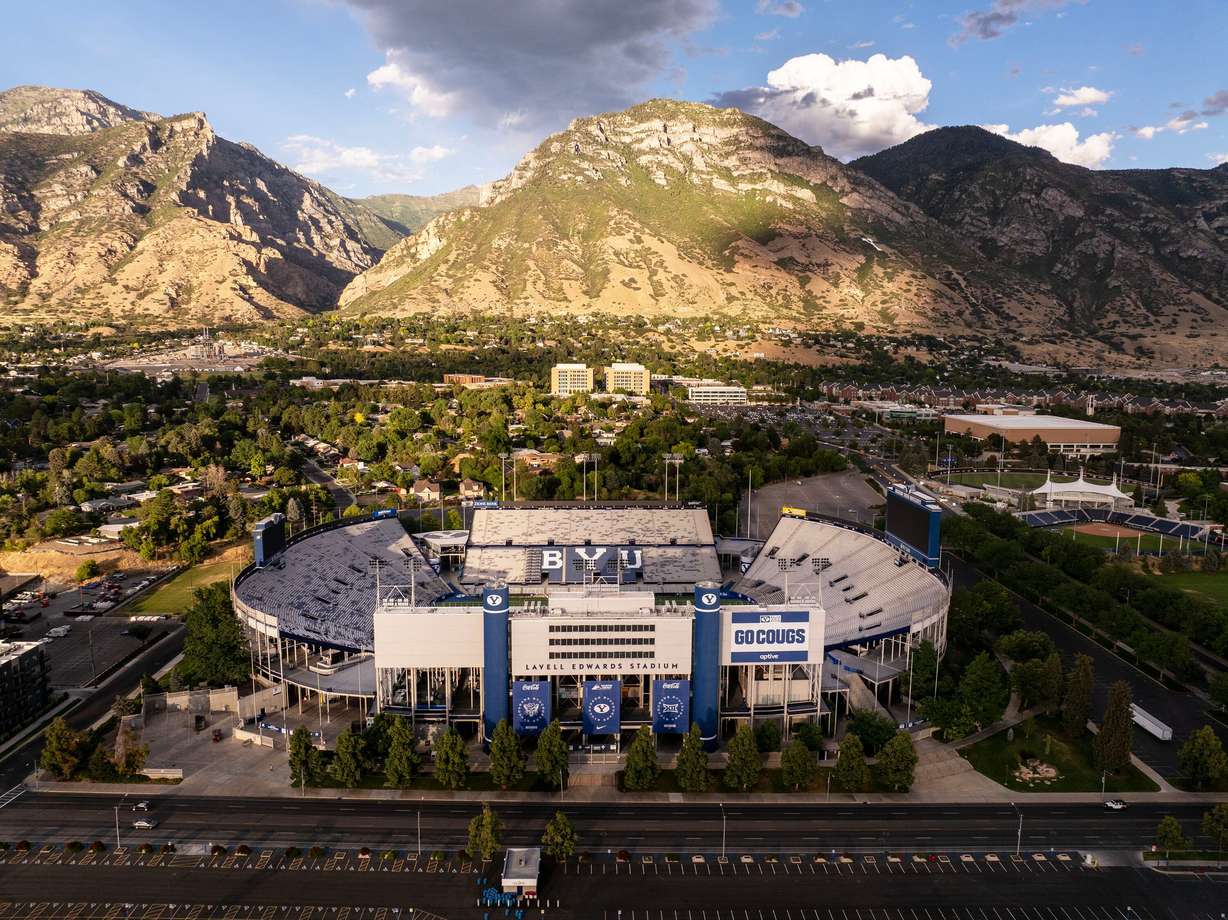
SALT LAKE CITY — LaVell Edwards is unquestionably the "Father of BYU Football."
The man whose name stretches across the school's stadium made "Provo" and "pigskin" synonymous during his 29 seasons as the Cougars' head coach — guiding the program to a national title and plenty of conference championships.
But Knute Rockne might aptly be called the "Godfather of BYU Football."
Yes, the "Rock" — the iconic coach who launched Notre Dame into college football's stratosphere — reportedly spent part of his summer in 1923 in Provo imparting Xs and Os wisdom with the BYU coaches.
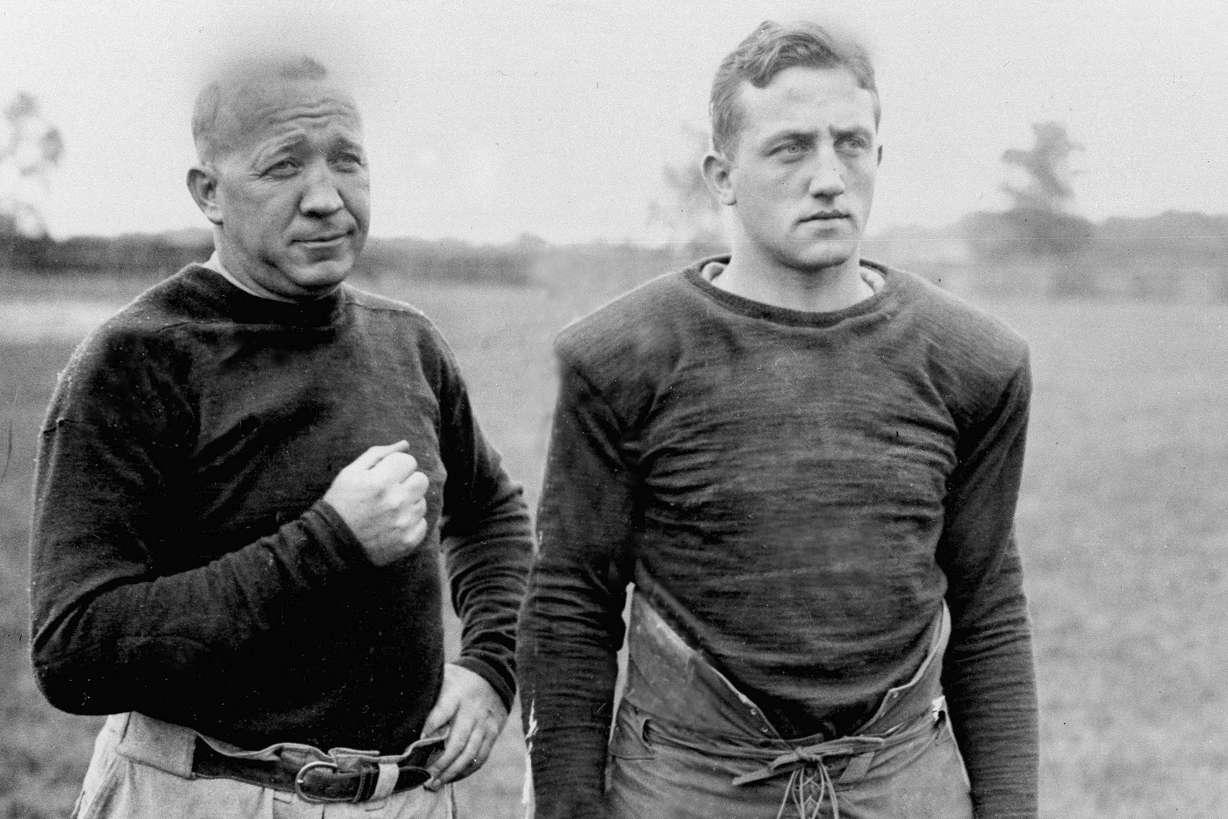
"The (BYU) camp was a success," according to a Time story in 2025 about Notre Dame football's impact on American culture.
"In 1928, the hiring of G. Ott Romney — the first cousin once removed of Mitt Romney — brought BYU its first taste of winning football."
But even a gridiron visionary such as Rockne could not have imagined the football spectacle expected Saturday afternoon when the No. 2-ranked Fighting Irish take the field against No. 8-ranked BYU in Provo in front of a global audience.
The game features two private Christian higher educational institutions that share historical connections to Rockne, with both enjoying national identities strongly linked to football.
But the similarities between Notre Dame and BYU transcend sport. The schools each trace humble beginnings, while also remaining anchored to faith-based legacies. And each has academic traditions and alumni pools reaching far beyond football.
BYU and Notre Dame presidents share a national stage
Saturday afternoon won't be the first time in 2026 that prominent representatives of BYU and Notre Dame share a national stage.
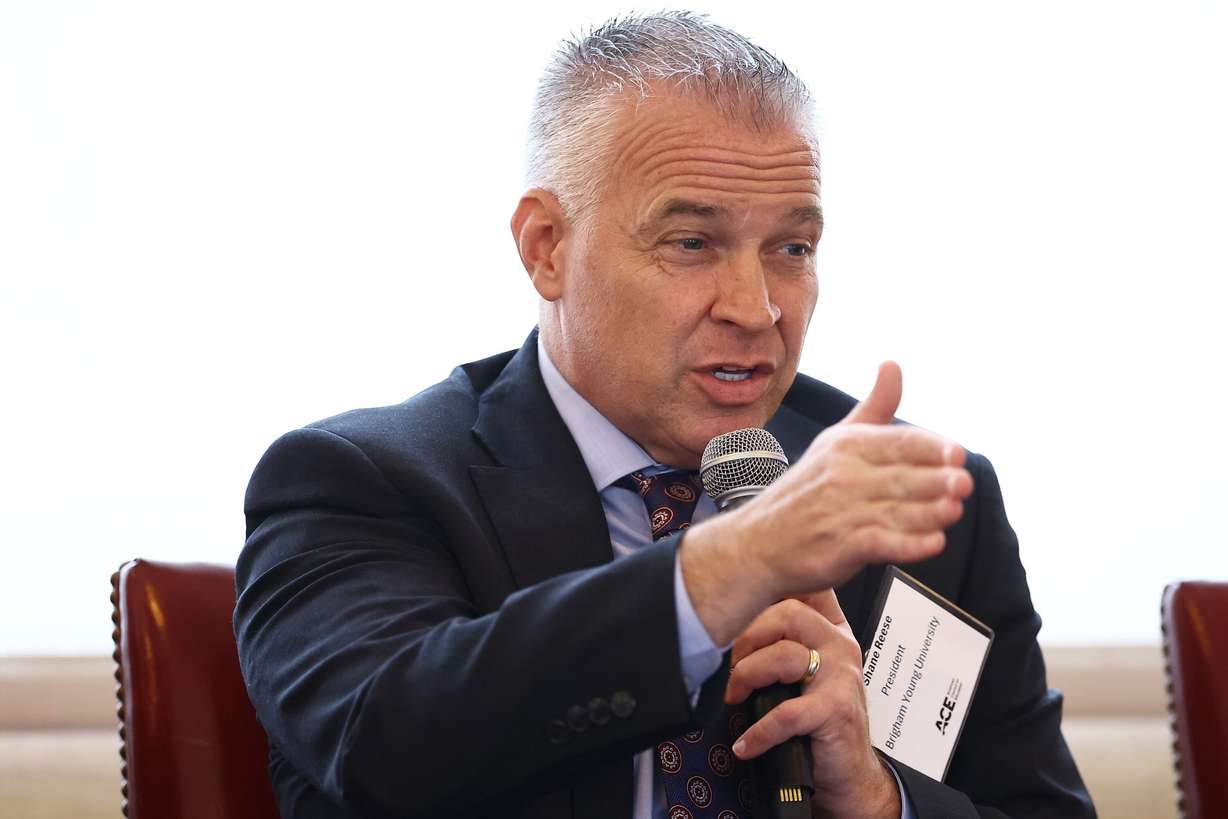
Earlier this year, in a far less physical event, BYU President Shane Reese and Notre Dame's president, the Rev. Robert Dowd, sat next to one another during a panel discussion examining how faith-based schools can work across differences to find commonalities.
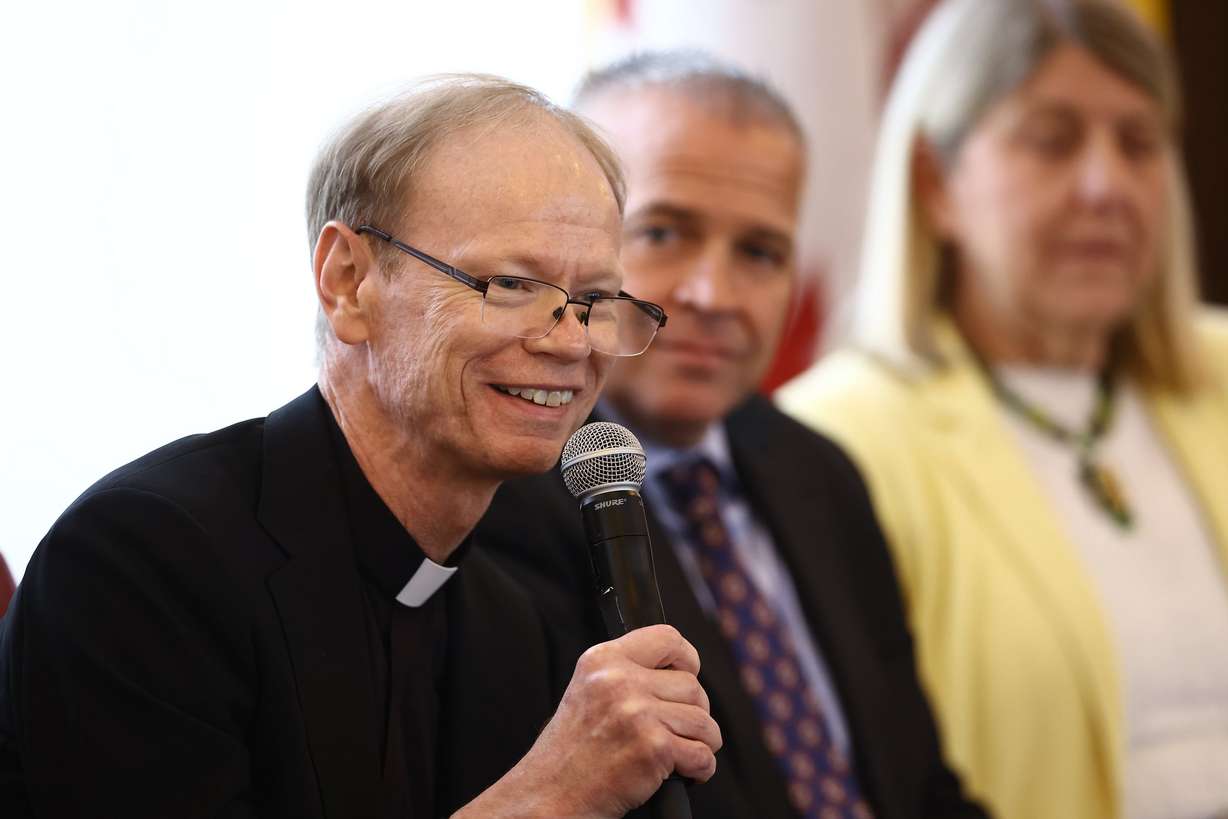
Hosted at Washington, D.C.'s Catholic University, the discussion was sponsored by the American Council on Education Commission on Faith-Based Colleges and Universities. The event also included speeches by Latter-day Saint Apostle Elder Clark G. Gilbert and Utah Gov. Spencer Cox.
Both Reese and Dowd spoke of the special role of faith-based institutions in the nation's higher education ecosystem. And although each college president espouses different religions, their words regarding the roles of their respective schools were interchangeable.
"For us at Notre Dame, it's just incredibly important that we're forming young people who are humble, who are great listeners, and who are also courageous," said Dowd.
"They're willing to defend the most vulnerable among us. They're willing to take their events, talents, and all the skills they develop out into the world in ways that serve society in a special way.
"That's the special role of faith-based institutions, and it's a calling not unique to Notre Dame."
Reese, meanwhile, said his campus community views all as God's children.
"And that brings with it a healthy sense of respect and dignity for all who enter (our) doors, and for all who exist on this earth.
"That changes the nature of the conversation. It changes the commitments and covenants that we have with one another. And our students have this desire."
Notre Dame and BYU: Humble beginnings
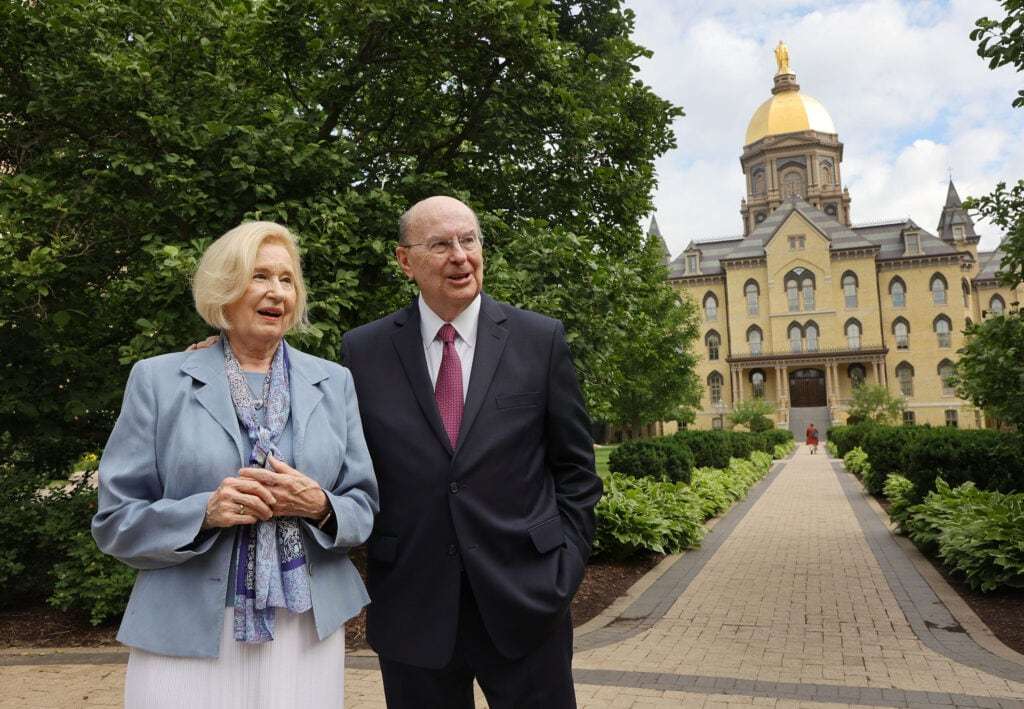
On a bitter cold November afternoon in 1842 — perhaps ideally suited for Fighting Irish football — a young French priest named Rev. Edward Sorin and several companions from the recently established Congregation of Holy Cross took possession of 524 snow-covered acres in northern Indiana, according to the school's website.
Sorin was tasked by church leaders to found a new college in the United States.
"Arriving with their possessions on an oxcart, Father Sorin thought the two lakes covered in snow were a single lake," according to Notre Dame. "A man of lively imagination, he named his fledgling school in honor of Our Lady in his native tongue, 'L'Université de Notre Dame du Lac' — The University of Our Lady of the Lake."
Sorin reportedly arrived in Indiana with $310 — "and a zealot's dream of founding a great Catholic university."
Difficulties defined Notre Dame's early years. Yet Sorin and his colleagues were fueled by the belief that the budding school would become a power for good in their new country.
Fast forward to the early 1900s, when prejudices were being endured by many groups considered "less American" — including Catholics.
In 1924, the Ku Klux Klan reportedly tried to hold a rally in South Bend.
"About 500 Notre Dame students showed their objections by storming downtown and ripping the hoods and robes off surprised Klan members, roughing them up in alleys and stealing their regalia," according to Notre Dame.
The riot was stopped by the school's president, the Rev. Matthew Walsh. Three years later, Walsh reportedly approved the nickname "Fighting Irish" for Notre Dame — believing it preferable to more mocking monikers in use such as "Papists" or "Dirty Irish."
Around that same period, Rockne was guiding the Irish into national gridiron prominence, although some football teams did not want to play Notre Dame, allegedly due to its Catholicism, according to the school.
That prompted the university to create a more national schedule, a practice that continues today for Notre Dame football, which has no conference affiliation.
Notre Dame's football success crafted a blueprint for other private Christian colleges to follow — including BYU.
"These schools recognized that Notre Dame's football success helped to integrate American Catholics into the mainstream, and they believed that it could help strengthen their own faith communities and evangelize to non-believers," noted the Time article.
The foundings of Brigham Young University — and Cougar football
A little over three decades after the Rev. Sorin began establishing a university in Indiana's St. Joseph County, Latter-day Saint prophet Brigham Young founded the Brigham Young Academy in Utah County.
The first classes were held in January 1876 with an inaugural cohort of 70 students, according to BYU. Two decades later, the school became an incorporated subsidiary of The Church of Jesus Christ of Latter-day Saints.
Football is BYU's flagship sport. But the school's first athletic title wasn't won on the gridiron — or by the men. The women's basketball team reportedly claimed the college's first league title in 1900. Twenty-two years would pass before BYU football notched its first official victory as a university team, defeating Wyoming.
While BYU Cougar basketball enjoyed national success during the mid-1900s — winning the 1951 National Invitational Tournament — the school took its first step to becoming a college football power in 1972 with the hiring of Edwards as the Cougars' head coach.
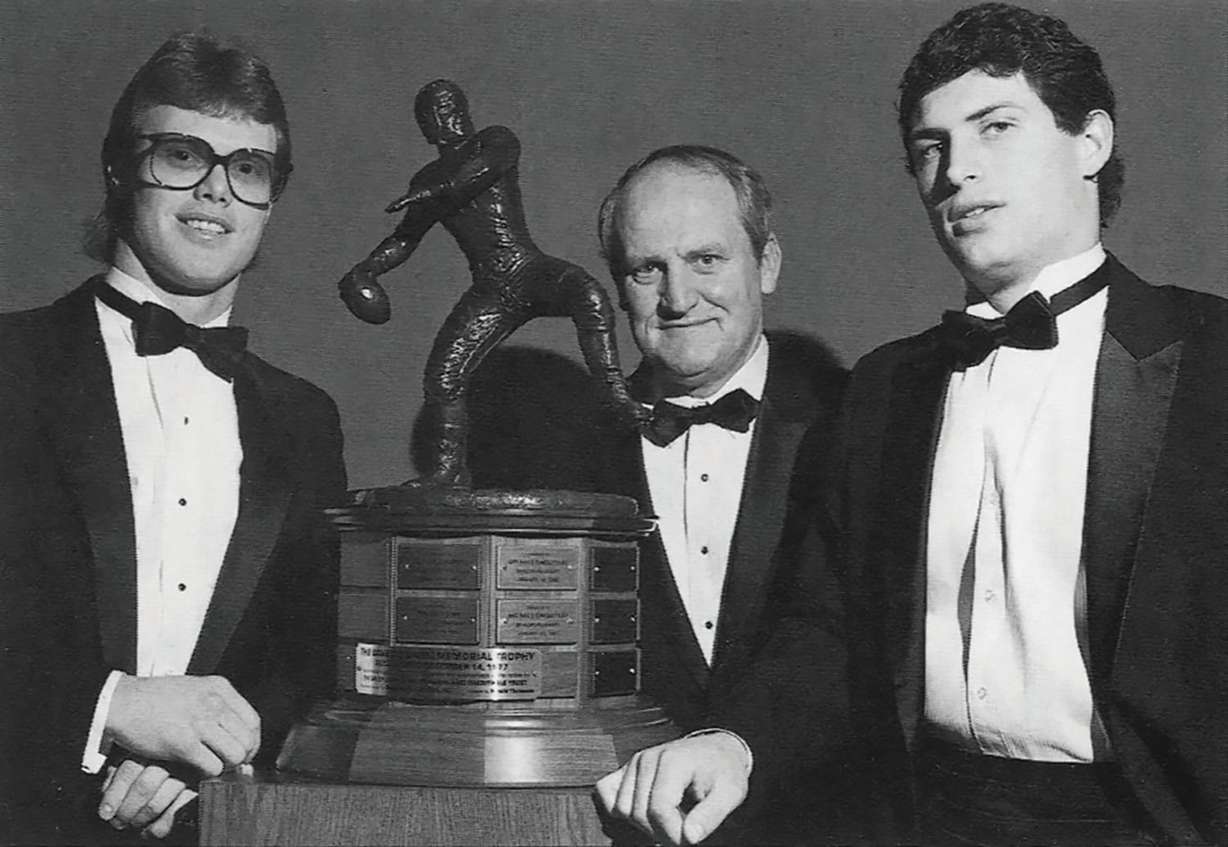
In the years since, BYU was recognized by many for its Edwards-led pass-happy offense and as an Intermountain "QB factory."
Latter-day Saint leaders acknowledge that the institutional significance of BYU football and other Cougars sports stretches beyond high-profile Saturday games and national polls. They are part of the university's religious mission the same way the law school and business school are, said Elder Gilbert in a 2024 Deseret News "Y's Guys" podcast.
"That's why we do this. We have to do that, or else this investment is hard to justify," he said.
Elder Gilbert added that BYU would fail if it tried to win separate from its religious mission.
"I believe when we chase after something else at BYU, not only do we miss our core purpose, but it won't work at BYU," he said. "These teams have to be grounded in the mission of the university, just like everything else at BYU, and that's one of the things I've been so impressed about this football team."
BYU vs Notre Dame: Outside the lines
Notre Dame and BYU, of course, are not mirror institutions. Differences exist, even beyond their sponsoring religious organizations.
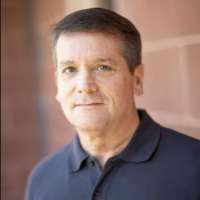
While Notre Dame has an enrollment of approximately 13,000 students, BYU has a much larger student body of over 35,000.
Both schools boast renowned business and law schools, but Notre Dame also enjoys poll-worthy rankings in engineering and computer science. BYU, meanwhile, has elite entrepreneurship undergraduate and graduate programs. And more than 60% of BYU students speak a second language.
Gaining admission to either BYU or Notre Dame is competitive — but much more so at Notre Dame. Only 9% of Notre Dame applicants are admitted, compared to 70% for freshman applicants at BYU.
There's also a sizable gap between annual tuition rates at the two schools.
BYU is regarded as one of the nation's "top value" schools — with an annual tuition of approximately $7,000 for Latter-day Saint undergraduate students. (The price is about double for non-Latter-day Saints.)
Meanwhile, Notre Dame's undergraduate annual tuition is almost $70,000 — although over 70% of its students reportedly receive some form of financial aid.
And while BYU and Notre Dame football fans can have fun arguing over which program has produced the most talented NFL stars — Joe Montana or Steve Young? Paul Hornung or Fred Warner? — each school has plenty of famous non-football alums.
Supreme Court Justice Amy Coney Barrett and former Secretary of State Condoleezza Rice are both Notre Dame grads — along with Regis Philbin.
BYU alumni include bestselling authors Brandon Sanderson and Stephenie Meyer, as well as actor Aaron Eckhart and "Jeopardy!" champ Ken Jennings.
Of course neither school is exclusively Catholic or Latter-day Saint — and those demographics extend to Saturday's football squads.
BYU starting quarterback Bear Bachmeier, for example, was raised Catholic — while Notre Dame senior linebacker Kahanu Kia served a Latter-day Saint mission in North Carolina.