'%3e%3cpath%20d='M34.1406%205.85938C30.3906%202.10547%2025.3047%200%2020%200C14.6953%200%209.60938%202.10547%205.85938%205.85938C2.10938%209.61328%200%2014.6953%200%2020C0%2025.3047%202.10547%2030.3906%205.85938%2034.1406C9.61328%2037.8906%2014.6953%2040%2020%2040C25.3047%2040%2030.3906%2037.8945%2034.1406%2034.1406C37.8906%2030.3906%2040%2025.3047%2040%2020C40%2014.6953%2037.8945%209.60938%2034.1406%205.85938ZM37.0117%2023.543H31.1602V13.5391H27.6328V19.9414C28.1211%2020.6914%2028.3711%2021.582%2028.3711%2022.5625V22.625C28.3711%2023.668%2028.1172%2024.6055%2027.6328%2025.4297V26.6094H36.082C33.4883%2032.9375%2027.2891%2037.3789%2020.0039%2037.3789C10.3711%2037.3789%202.62109%2029.6289%202.62109%2020C2.62109%2010.3711%2010.3711%202.62109%2020%202.62109C29.6289%202.62109%2037.3789%2010.3711%2037.3789%2020C37.3789%2021.1484%2037.2617%2022.2656%2037.0508%2023.3477C37.0391%2023.4141%2037.0234%2023.4766%2037.0117%2023.543Z'%20fill='white'/%3e%3cpath%20d='M22.3086%2018.5352C20.4336%2018.125%2019.9531%2017.8398%2019.9766%2017.1836V17.1406C19.9766%2016.6992%2020.3477%2016.2148%2021.4023%2016.2148C22.582%2016.2148%2023.8867%2016.6797%2025.0781%2017.4766L26.8516%2015.0195C25.4453%2013.8906%2023.707%2013.3398%2021.5547%2013.3398C18.5195%2013.3398%2016.4375%2015%2016.4063%2017.4766V17.5352C16.3633%2020.2617%2018.5859%2020.9805%2021.293%2021.6016C23.0391%2021.9766%2023.5703%2022.3164%2023.5703%2022.9609L23.5469%2022.9766C23.5469%2023.3906%2023.2578%2023.7031%2022.7852%2023.8359C22.5742%2023.9062%2022.1289%2023.9727%2021.5156%2023.9727C20.7617%2023.9727%2019.7539%2023.8633%2018.6328%2023.4844C18.0898%2023.2891%2017.4727%2023.0039%2016.8047%2022.6133L20.1406%2026.625C20.2813%2026.6602%2021.0977%2026.8516%2021.7734%2026.8516C25.0039%2026.8516%2027.0859%2025.2461%2027.1094%2022.6328V22.5703C27.1602%2020.1133%2025.2148%2019.1719%2022.3086%2018.5352Z'%20fill='white'/%3e%3cpath%20d='M5.24219%2013.5664V26.6133H8.75391V23.7578L10.2969%2021.9531L14.2031%2026.6133H18.3867L12.3555%2019.5195L17.4023%2013.5664H13.4531L8.75391%2019.0586V13.5664H5.24219Z'%20fill='white'/%3e%3c/g%3e%3cdefs%3e%3cclipPath%20id='clip0_97_2430'%3e%3crect%20width='40'%20height='40'%20fill='white'/%3e%3c/clipPath%3e%3c/defs%3e%3c/svg%3e)



- The Trump administration proposes fees for international students in the U.S. working under Optional Practical Training.
- The University of Utah criticizes the proposal, citing financial barriers and disruptions.
- The Department of Homeland Security claims the fees protect American jobs while critics warn of innovation setbacks.
SALT LAKE CITY — Many American colleges and universities are feeling deep fiscal strains amid declining enrollments, public skepticism about the value of higher education, and federal research funding cuts.
Now their operating costs could increase if a Trump administration proposal regarding international students and the workplace is finalized.
The Department of Homeland Security on Wednesday announced it was proposing a new rule to implement new fees for international students seeking to work in the United States.
Wednesday's DHS action is the latest in a series of controversial Trump administration actions over the past couple of years focusing on foreign students enrolling at American colleges and universities.
The proposed rule calls for an initial $70,000 fee for each international college student on an F-1 student visa who is participating in Optional Practical Training, or OPT. The OPT program authorizes international students to work temporarily in the United States in jobs directly related to their major field of study.
If the rule is finalized, participating colleges and universities would be required to pay the fee before recommending one of their international students for OPT — and before international students on an F-1 visa apply for employment authorization with Citizenship and Immigration Services.
"USCIS would not grant employment authorization to F-1 nonimmigrant students if schools have not paid the required fee," according to the DHS release.
The proposed fees for schools aren't cheap: $70,000 for each new student's initial OPT application to the program, and $30,000 for each renewal.
More than 294,000 students participated in OPT during the 2024-25 academic year, according to the Institute of International Education.
The University of Utah responds: 'A disappointment and disruption'
The proposed DHS rule drew a quick reproach from officials at the University of Utah, where 918 international students are on some category of OPT.
"The proposal to attach substantial fees to the OPT program comes as a disappointment and disruption," said University of Utah Vice Provost for Global Engagement Randy McCrillis in a statement shared with the Deseret News.
"The OPT program, as well as (the international student employment authorization Curricular Practical Training) provides exceptional hands-on training for students looking to put their University of Utah degrees to work in communities."
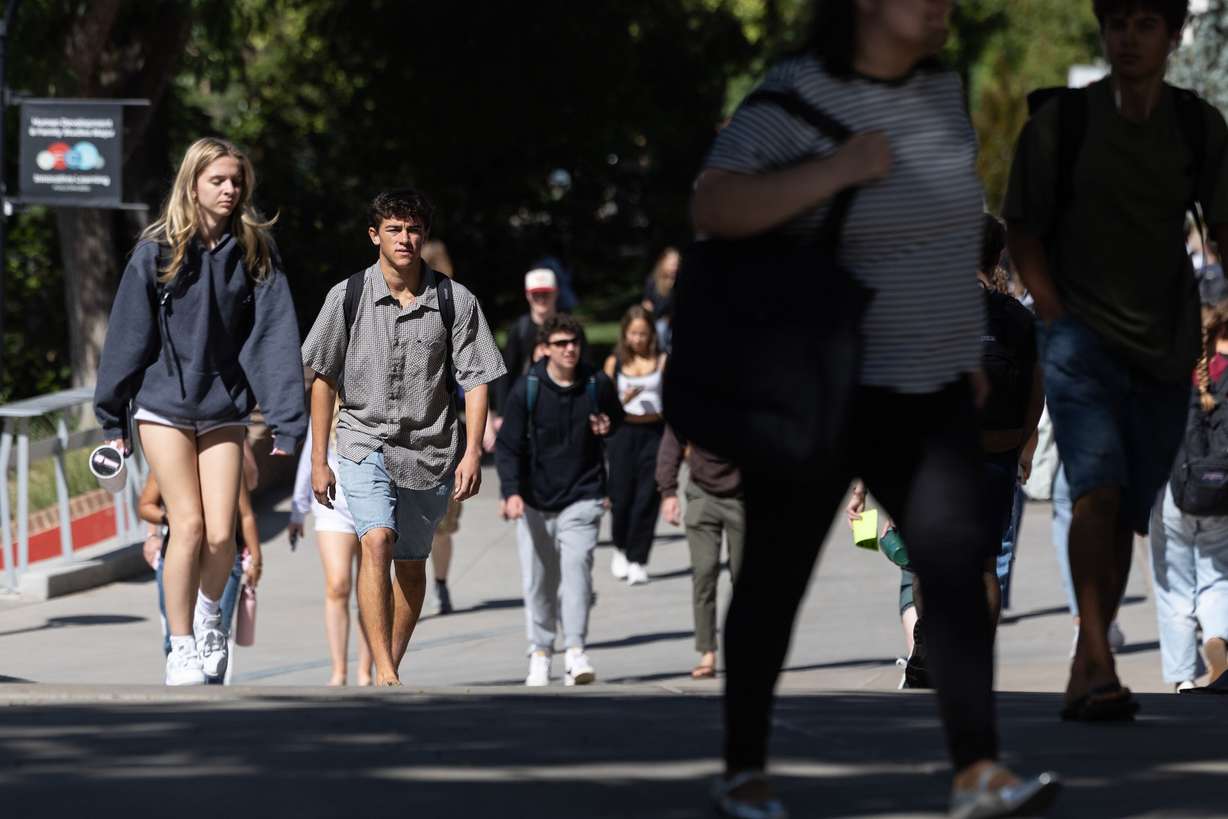
The fees proposed by the DHS, added McCrillis, "will create an insurmountable financial barrier for institutions, and the fallout will extend to recruitment and admissions decisions at a time when universities across the country are trying to solve for a pending decline in enrollment."
McCrillis noted that "swift changes" in policy make for an "increasingly challenging time" to work in global engagement. "But we will continue to strive to provide the best opportunities for our international students."
Why is the DHS proposing fees for immigrant students seeking work?
The agency asserts its proposed fees are designed to reduce "the flow of cheap labor" into the United States — while protecting American jobs.
"Optional Practical Training was never meant to be a back door into the American workforce, a subsidy for cheap labor, or a prize for those who game the system," said a DHS spokesperson in an agency release.
"DHS is upskilling OPT to require foreign students to justify their worth to employers. American workers should not have to compete against a program that has been turned into a pipeline for cheap foreign labor."
Immigrant students may apply for OPT during their academic program or after completing their college studies. Eligible F-1 nonimmigrant students may receive up to 12 months of OPT at each education level, and those who earn degrees in science, technology, engineering or mathematics fields may be eligible for an additional 24-month extension.
But some are utilizing the OPT in deceitful ways, according to DHS.
"As more F-1 nonimmigrant students have participated in OPT, the Student and Exchange Visitor Program has encountered schools, designated school officials, employers, and F-1 nonimmigrant students engaged in schemes to exploit current regulations, including problematic worksites and 'pay-to-stay' visa schemes," the DHS release noted.
The proposed fees, the agency added, will encourage schools to exercise greater oversight and selectivity when recommending immigrant students for OPT.
"The proposed rule also aligns with recent executive orders and other presidential directives emphasizing the protection of U.S. workers and the integrity of employment-based immigration programs," according to the DHS.
The proposed fees would not be tied to a specific employer, the release added. Instead, it would apply when schools make their OPT recommendations.
Collected fees would be deposited in the Treasury.
Rule opponents: It will 'hurt American innovation'
If the DHS's proposed OPT rules are implemented, it could exact a significant cost on U.S. colleges and universities that heavily recruit students from overseas as a source of tuition revenue — as well as to tech companies and other industries that hire many international students for technical roles, The Associated Press reported.
The OPT program allows international students to gain hands-on experience and fill labor shortages in high-demand STEM fields, said Fanta Aw, CEO of NAFSA, an association that represents international education.
"Driving away the talents, perspectives, and aspirations of international students will only hurt American innovation, economic growth, workforce development, and global leadership," Aw said in a written statement to the Associated Press.
The DHS will accept public comments on the proposed rule from Oct. 8 through Nov. 9.
Uncertain times for international students — including NCAA athletes
Wednesday's DHS announcement regarding the proposed fees adds to an ongoing, turbulent period for international students enrolled in American colleges and universities.
In April 2025, the Trump administration terminated the legal statuses of hundreds of foreign students in the United States — including many studying at Utah schools — after they were flagged for alleged crimes or failing to maintain their visa status. Following a series of lawsuits, Immigration and Customs Enforcement later restored the previously terminated legal status of hundreds of foreign students in the United States while it developed a new policy regarding the student visa issue.
Later in 2025, the Trump administration began requiring international students applying for visas to study in the United States to adjust their privacy settings on all of their social media profiles to "public."
Related:
International college students in Utah celebrate after Trump reverses course
International students studying at Utah colleges are counted among the hundreds of students whose recently revoked visas are reportedly being restored following an abrupt announcement by the Trump administration."Every visa adjudication is a national security decision," the State Department announced at the time.
"The United States must be vigilant during the visa issuance process to ensure that those applying for admission into the United States do not intend to harm Americans and our national interests."
Secretary of State Marco Rubio has said he has revoked the visas of hundreds, perhaps thousands of people, including students, because they got involved in activities that he said went against foreign policy priorities, Reuters reported. Those activities include support for Palestinians and criticism of Israel's conduct in the war in Gaza.
And earlier this summer, the Trump administration finalized a rule seeking to prevent international students from staying in the U.S. for more than four years without federal government approval, the Associated Press reported.
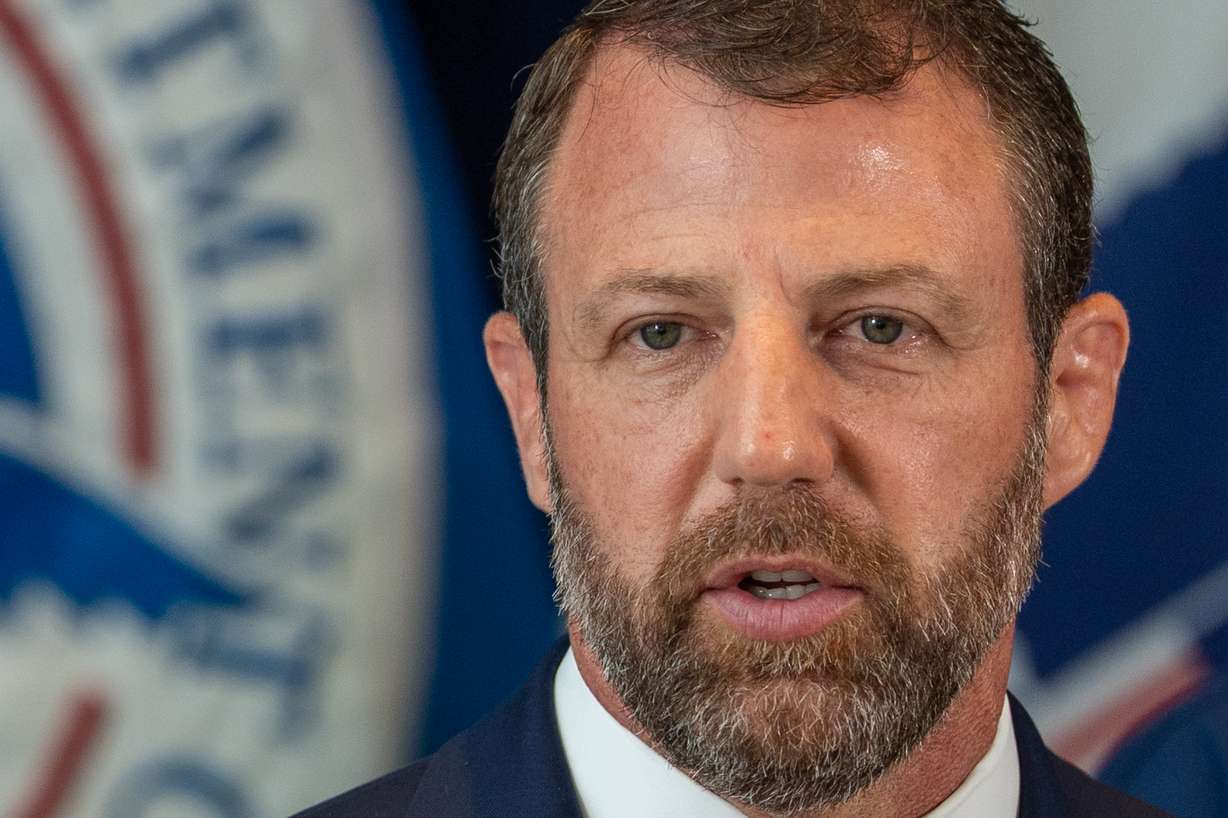
DHS Secretary Markwayne Mullin asserted that foreign students had long been admitted into the U.S. indefinitely, allowing for thousands of immigration system abuses.
"By implementing clear, finite limits on these visas, the United States is reclaiming its ability to properly screen, vet, and monitor individuals within our borders," said Mullin in a DHS release. "This final rule ensures that foreign students remain focused on their primary purpose: completing their studies and returning home."
That DHS action reportedly prompted objections from higher education leaders who said it would increase the burden on schools and noted that many programs are longer than four years by design. A federal court prevented the rule from taking effect in September, according to the Associated Press.
And earlier this month, Rep. Burgess Owens chaired a congressional hearing examining the increasing numbers of international athletes on American college rosters.
The Republican lawmaker noted that international participation in college athletics has grown substantially in recent decades, depriving American athletes of scholarships and roster spots.
"American families devote years of time and money in youth and high school sports so their kids can compete at the college level," said Owens at the Sept. 16 hearing.
"Too often, those spots go to older international athletes instead. The pressure to win at all costs in today's college sports environment has led more coaches to recruit older international athletes instead of American high school graduates."
Owens' remarks regarding international student-athletes came days after Rep. Tim Walberg, R-Mich., and Sen. Jon Husted, R-Ohio, introduced the TEAM USA Act to limit international student-athlete participation to no more than 20% on each varsity sports team.