'%3e%3cpath%20d='M34.1406%205.85938C30.3906%202.10547%2025.3047%200%2020%200C14.6953%200%209.60938%202.10547%205.85938%205.85938C2.10938%209.61328%200%2014.6953%200%2020C0%2025.3047%202.10547%2030.3906%205.85938%2034.1406C9.61328%2037.8906%2014.6953%2040%2020%2040C25.3047%2040%2030.3906%2037.8945%2034.1406%2034.1406C37.8906%2030.3906%2040%2025.3047%2040%2020C40%2014.6953%2037.8945%209.60938%2034.1406%205.85938ZM37.0117%2023.543H31.1602V13.5391H27.6328V19.9414C28.1211%2020.6914%2028.3711%2021.582%2028.3711%2022.5625V22.625C28.3711%2023.668%2028.1172%2024.6055%2027.6328%2025.4297V26.6094H36.082C33.4883%2032.9375%2027.2891%2037.3789%2020.0039%2037.3789C10.3711%2037.3789%202.62109%2029.6289%202.62109%2020C2.62109%2010.3711%2010.3711%202.62109%2020%202.62109C29.6289%202.62109%2037.3789%2010.3711%2037.3789%2020C37.3789%2021.1484%2037.2617%2022.2656%2037.0508%2023.3477C37.0391%2023.4141%2037.0234%2023.4766%2037.0117%2023.543Z'%20fill='white'/%3e%3cpath%20d='M22.3086%2018.5352C20.4336%2018.125%2019.9531%2017.8398%2019.9766%2017.1836V17.1406C19.9766%2016.6992%2020.3477%2016.2148%2021.4023%2016.2148C22.582%2016.2148%2023.8867%2016.6797%2025.0781%2017.4766L26.8516%2015.0195C25.4453%2013.8906%2023.707%2013.3398%2021.5547%2013.3398C18.5195%2013.3398%2016.4375%2015%2016.4063%2017.4766V17.5352C16.3633%2020.2617%2018.5859%2020.9805%2021.293%2021.6016C23.0391%2021.9766%2023.5703%2022.3164%2023.5703%2022.9609L23.5469%2022.9766C23.5469%2023.3906%2023.2578%2023.7031%2022.7852%2023.8359C22.5742%2023.9062%2022.1289%2023.9727%2021.5156%2023.9727C20.7617%2023.9727%2019.7539%2023.8633%2018.6328%2023.4844C18.0898%2023.2891%2017.4727%2023.0039%2016.8047%2022.6133L20.1406%2026.625C20.2813%2026.6602%2021.0977%2026.8516%2021.7734%2026.8516C25.0039%2026.8516%2027.0859%2025.2461%2027.1094%2022.6328V22.5703C27.1602%2020.1133%2025.2148%2019.1719%2022.3086%2018.5352Z'%20fill='white'/%3e%3cpath%20d='M5.24219%2013.5664V26.6133H8.75391V23.7578L10.2969%2021.9531L14.2031%2026.6133H18.3867L12.3555%2019.5195L17.4023%2013.5664H13.4531L8.75391%2019.0586V13.5664H5.24219Z'%20fill='white'/%3e%3c/g%3e%3cdefs%3e%3cclipPath%20id='clip0_97_2430'%3e%3crect%20width='40'%20height='40'%20fill='white'/%3e%3c/clipPath%3e%3c/defs%3e%3c/svg%3e)


Estimated read time: 2-3 minutes
- Locals support reducing Grand Staircase-Escalante National Monument for better land management.
- Ranchers and officials argue the change allows improved wildfire prevention and conservation.
- Tribal leaders warn monument reduction risks cultural resource degradation and ancestral site loss.
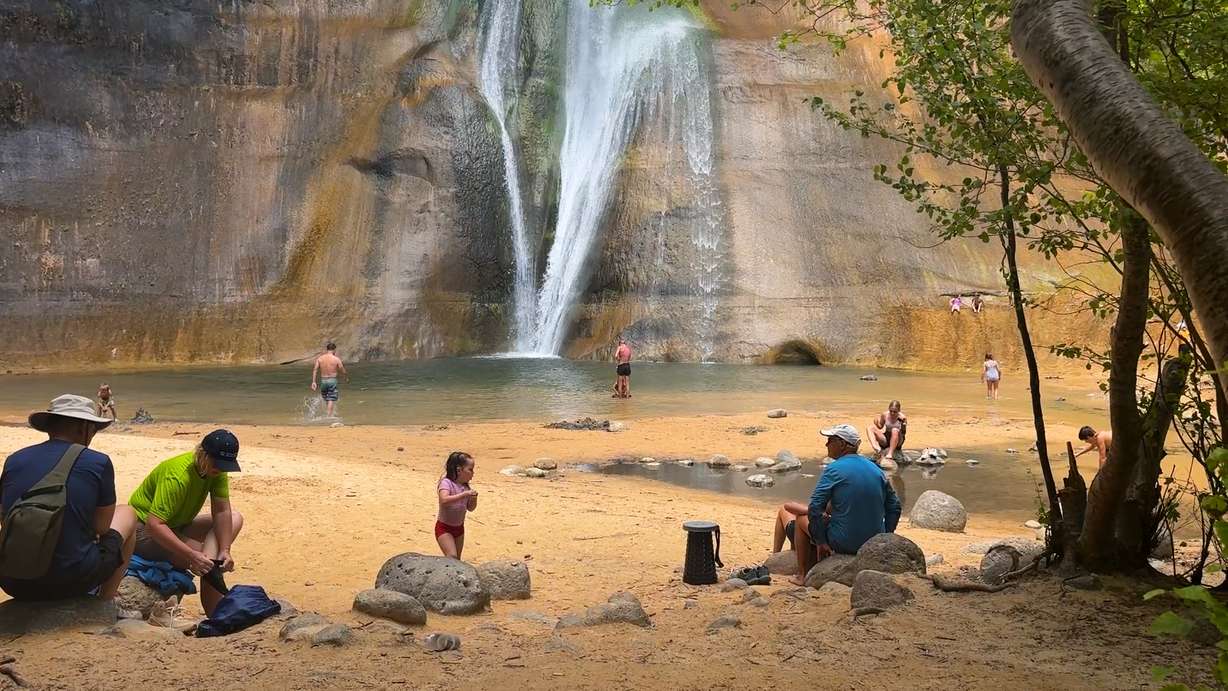
ESCALANTE — For some people who grew up around what's known as the Grand Staircase-Escalante National Monument, that federal designation was not a welcome one. Ranchers like Link Chynoweth say the 1996 change only brought more tourists to lands that otherwise remained mostly untouched.
"We're protecting it to death," Chynoweth said. "We're protecting it from the local people, so people from around the world come because it's a monument and they're the ones destroying it."
Garfield County Commission Chairman Leland Pollock believes the shrunken monument offers a fair compromise.
"Bill Clinton created this huge monument, 2 million acres, just to stop a coal mine," he said, referring to a mine that had been proposed by Andalex Mining Company around that time. "Clinton created this whole mess just to stop that coal mine and try to justify what he put in down on the southern end by Highway 89, which is not a monument."
Pollock says the lands will remain protected under the Bureau of Land Management, but the designation change will let local governments better clear drying fuels that can feed wildfires.
"When you can't do that, you have invasive weeds and you have soil erosion. That's our main focus," Pollock explained. "We're the true conservationists. We're environmentally going to make that land more healthy. That's our concern."
Kevin Griffin, a grocery store owner who grew up in the area, shares that perspective and believes most of his neighbors do too.
"The media and people make it seem like we're 50/50," he said. "We consistently elect people that one of their main platforms is reducing the monument, getting rid of the monument.
"(The reduction) lets us concentrate on the places that actually need to be protected. Not 2 million acres of sagebrush."
Leaders of tribes with thousands of years of ancestry invested in the land, however, believe the added federal protections of a monument are necessary.
"Our connection to these lands predates the monument's legal proclamation, predates Utah's statehood, and predates the United States itself," Laurel Yellowhorse, chairwoman of the Paiute Indian Tribe of Utah, said in a statement.
She said, "The reductions in Monument protections will have significant and irreversible consequences ... including but not limited to: impact on cultural resources, the degradation of ancestral sites, disruption of cultural landscapes, impairment of traditional uses, and the loss of places that are essential to the preservation and transmission of the Paiute Indian Tribe of Utah's culture, identity, and knowledge."