'%3e%3cpath%20d='M34.1406%205.85938C30.3906%202.10547%2025.3047%200%2020%200C14.6953%200%209.60938%202.10547%205.85938%205.85938C2.10938%209.61328%200%2014.6953%200%2020C0%2025.3047%202.10547%2030.3906%205.85938%2034.1406C9.61328%2037.8906%2014.6953%2040%2020%2040C25.3047%2040%2030.3906%2037.8945%2034.1406%2034.1406C37.8906%2030.3906%2040%2025.3047%2040%2020C40%2014.6953%2037.8945%209.60938%2034.1406%205.85938ZM37.0117%2023.543H31.1602V13.5391H27.6328V19.9414C28.1211%2020.6914%2028.3711%2021.582%2028.3711%2022.5625V22.625C28.3711%2023.668%2028.1172%2024.6055%2027.6328%2025.4297V26.6094H36.082C33.4883%2032.9375%2027.2891%2037.3789%2020.0039%2037.3789C10.3711%2037.3789%202.62109%2029.6289%202.62109%2020C2.62109%2010.3711%2010.3711%202.62109%2020%202.62109C29.6289%202.62109%2037.3789%2010.3711%2037.3789%2020C37.3789%2021.1484%2037.2617%2022.2656%2037.0508%2023.3477C37.0391%2023.4141%2037.0234%2023.4766%2037.0117%2023.543Z'%20fill='white'/%3e%3cpath%20d='M22.3086%2018.5352C20.4336%2018.125%2019.9531%2017.8398%2019.9766%2017.1836V17.1406C19.9766%2016.6992%2020.3477%2016.2148%2021.4023%2016.2148C22.582%2016.2148%2023.8867%2016.6797%2025.0781%2017.4766L26.8516%2015.0195C25.4453%2013.8906%2023.707%2013.3398%2021.5547%2013.3398C18.5195%2013.3398%2016.4375%2015%2016.4063%2017.4766V17.5352C16.3633%2020.2617%2018.5859%2020.9805%2021.293%2021.6016C23.0391%2021.9766%2023.5703%2022.3164%2023.5703%2022.9609L23.5469%2022.9766C23.5469%2023.3906%2023.2578%2023.7031%2022.7852%2023.8359C22.5742%2023.9062%2022.1289%2023.9727%2021.5156%2023.9727C20.7617%2023.9727%2019.7539%2023.8633%2018.6328%2023.4844C18.0898%2023.2891%2017.4727%2023.0039%2016.8047%2022.6133L20.1406%2026.625C20.2813%2026.6602%2021.0977%2026.8516%2021.7734%2026.8516C25.0039%2026.8516%2027.0859%2025.2461%2027.1094%2022.6328V22.5703C27.1602%2020.1133%2025.2148%2019.1719%2022.3086%2018.5352Z'%20fill='white'/%3e%3cpath%20d='M5.24219%2013.5664V26.6133H8.75391V23.7578L10.2969%2021.9531L14.2031%2026.6133H18.3867L12.3555%2019.5195L17.4023%2013.5664H13.4531L8.75391%2019.0586V13.5664H5.24219Z'%20fill='white'/%3e%3c/g%3e%3cdefs%3e%3cclipPath%20id='clip0_97_2430'%3e%3crect%20width='40'%20height='40'%20fill='white'/%3e%3c/clipPath%3e%3c/defs%3e%3c/svg%3e)


Estimated read time: 4-5 minutes
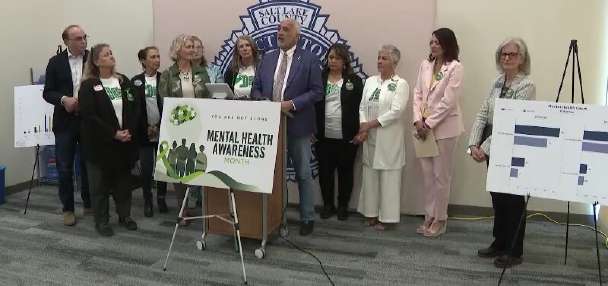
SALT LAKE CITY — When someone is in crisis, every second matters. For Utahns who feel like they have nowhere to turn, three numbers — 988 — can connect them to immediate help. The 988 Suicide and Crisis Lifeline marked its three-year anniversary in July, and leaders in Utah say it's already saving lives. In the last fiscal year (July 1, 2024-June 30, 2025), the 988 Suicide & Crisis Lifeline received nearly 115,000 calls from Utah — a 25% increase year over year. The in-state answer rate is 92%, according to Huntsman Mental Health Institute, which staffs Utah's Crisis Line. "Our team of crisis workers are here 24/7, 365, and ready to offer that immediate support, intervention and connection to care," said Rachel Lucynski, director of community crisis services at Huntsman Mental Health Institute. Lucynski said any call not answered within two minutes is picked up by regional backup centers, so no call for help goes unanswered. Mental health advocates say the increase shows more Utahns know where to turn for help. That kind of growth can be a challenge when federal support is uncertain, but Utah is working on ways to ensure long-term, sustainable funding. "The vast majority of our funding comes from the state of Utah and from legislative dollars. So we fortunately do have sustainable funding for our programs in the state," Lucynski said. In 2024, 656 Utahns died by suicide — a reminder of the ongoing need. "One death by suicide is too many, so there's still so much work to be done," Lucynski said. She emphasized people don't need to wait until they're in crisis. "If you're thinking about calling 988, that's the right time to reach out and call 988," she said. "You are worthy of calling in — you're not alone."
What happens when you contact 988 in Utah
- Who answers: Calls, texts and chats from Utah connect to the Utah Crisis Line at Huntsman Mental Health Institute, staffed by trained counselors.
- Services: 24/7, free, confidential support for mental health concerns, substance use and suicidal thoughts.
- Next steps: Counselors can connect you to Mobile Crisis Outreach Teams or local receiving centers for in-person care when needed.
Additional resources
- SafeUT: Parents, students and educators can connect with a licensed crisis counselor through chat by downloading the SafeUT app or by calling 833-3SAFEUT (833-372-3388)
- SafeUT Frontline: First responders, including firefighters, law enforcement, EMS and healthcare professionals can chat with a licensed crisis counselor at no cost 24/7/365 by downloading the SafeUT Frontline app.
- SafeUTNG: Members of the National Guard can chat with a licensed crisis counselor at no cost 24/7/365 by downloading the SafeUTNG app.
- Utah Warm Line: For non-crisis situations, when you need a listening ear as you heal and recover from a personal struggle, call 1-833 SPEAKUT 8:00 a.m.-11:00 p.m., 7 days a week, 365 days a year.
- The Huntsman Mental Health Institute offers a wide variety of programs and services including suicide prevention and crisis services, hospital treatment, therapy & medication management, substance Use & addiction recovery, child & teen programs and maternal mental health services including birth trauma, pregnancy loss, infertility, and perinatal mood and anxiety disorders.
- LiveOnUtah.org is a statewide effort to prevent suicide by promoting education, providing resources, and changing Utah’s culture around suicide and mental health. It offers resources for faith based groups, LGBTQ+, youth, employers, firearm suicide prevention and crisis and treatment options.
Counties in Utah provide services for mental health and substance use disorders. Centers are run by the thirteen Local Mental Health and Substance Use Authorities all across the state and offer therapy, substance use disorder treatment, support groups, mobile services, youth treatment and more.
Other community-based resources
- NAMI Utah provides education, support and advocacy for individuals and families impacted by mental illness.
- American Foundation for Suicide Prevention offers prevention programs, public education, support for loss survivors and fundraising for research.
- Encircle Utah: LGBTQ+ family and youth resource center.
- Utah Pride Center empowers Utah’s diverse LGBTQ+ community.
- The Trevor Project: LGBTQ+ teen resource center.
- U.S. Department of Veterans Affairs Mental Health
- Latino Behavioral Health Services
Center for Workplace Mental Health offers suicide prevention and response for employers. Rep. Steve Eliason shares the impact of 988 in Utah and what leaders are doing to increase awareness of mental health resources: