
- Salt Lake City plans a $58M Civic Center overhaul, creating a downtown park.
- The Land Art Generator Initiative picked Salt Lake City for its 2027 competition to design public art that doubles as clean energy infrastructure.
- Construction could begin in 2027; completion is aimed for 2031, with plans to host major events.
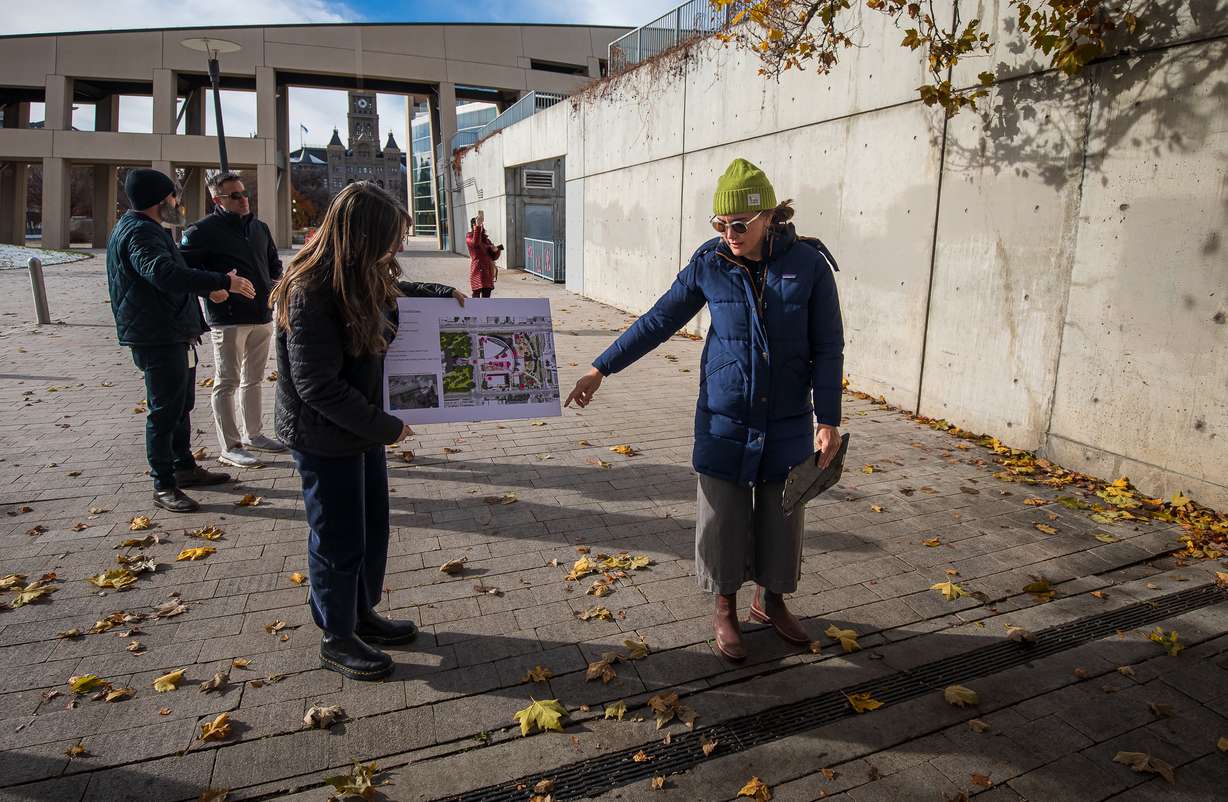
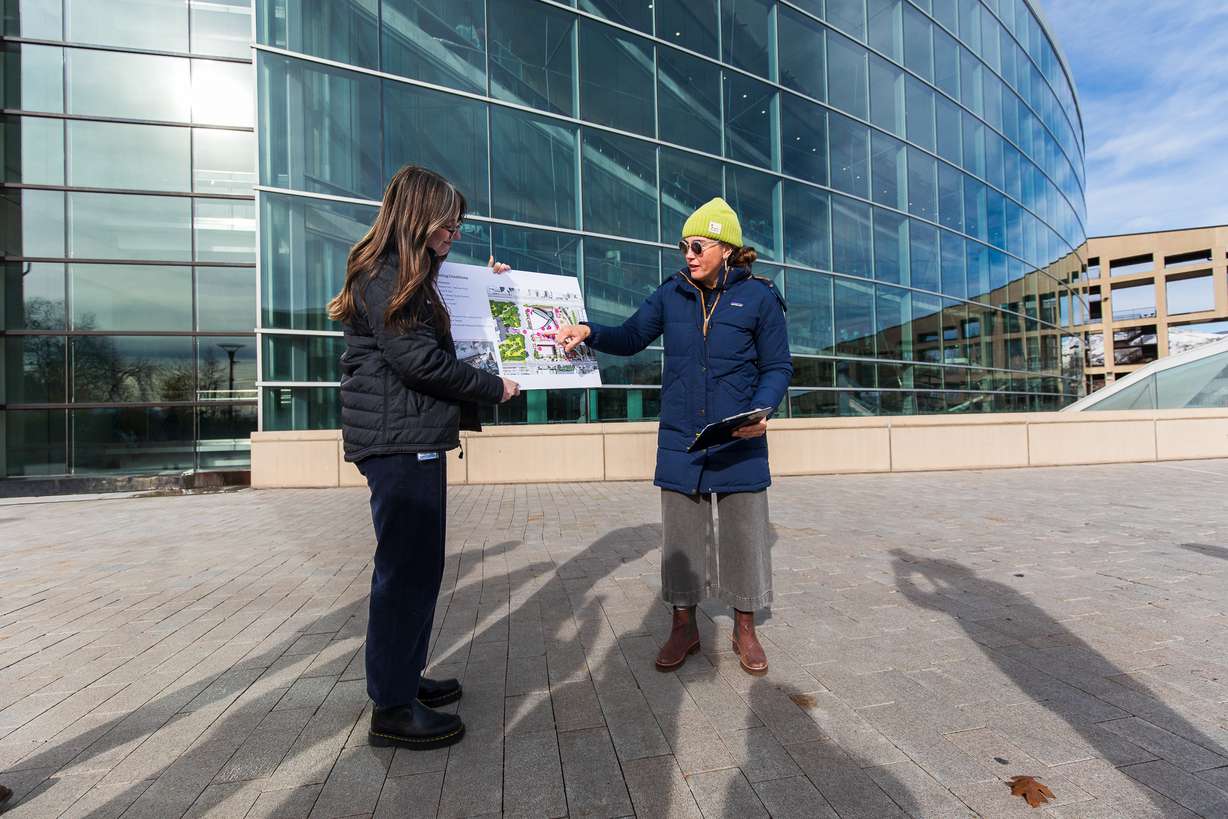
SALT LAKE CITY — One person walks across toward Salt Lake City's main library as Mayor Erin Mendenhall explains the need for a complete overhaul of the space between the library and City Hall.
There's a subtle hum in the background while cars buzz along 400 South and State Street in the distance, but it's nearly as quiet as it is empty.
"This is how it typically looks on any given day at 2 p.m.," Mendenhall said, looking around the plaza. "Almost no one's here. There are almost never children here."
Not only is the space empty, but it's falling apart. The mayor pointed to empty business spaces, crumbling concrete pavers, shifting ground levels and many other challenges scattered across the library block as she offered a tour of the site. It factors into why this place is so empty.
One of her final visions for the city, which she first unveiled in January, is turning the deferred maintenance into a complete overhaul that transforms Salt Lake City's "Civic Center" into more of a new downtown park.
The $58 million project is now getting a boost from a renowned international design competition, which selected the Civic Center as its next challenge.
Salt Lake City has been picked as the site for the 2027 Land Art Generator Initiative international competition, an event that gathers scientists, engineers, artists, architects and others to create public art projects that double as environmentally friendly energy infrastructure.
Officials are seeking a project that shades the plaza, generates clean electricity for the site, and helps create an "inspiring place" for residents and visitors alike since the space holds many annual festivals.
Ideally, the design will make "often overlooked resources tangible through experiences of wonder and curiosity that only art can inspire," said Elizabeth Monoian, co-founder of the Land Art Generator Initiative.
Overhauling the Civic Center
Salt Lake City has slowly pieced together a new plan for the Civic Center since Mendenhall called for a project that swaps a deteriorating "sea of pavers" within the existing plaza with more green space and vegetation to help reduce the urban heat island effect.
Repairing the city's aging and underutilized infrastructure was already going to be costly, which is why she said she explored new ways to enhance the space to make it livelier at the same time.
The project calls for replacing the site's community garden with a skate park, while a playground and dog park would be added toward the eastern edge of the site. Crews would remove the shops underneath the winding bridge toward the top of the building to create a more connected space.
Hundreds of new trees could be planted, and a new water feature would add a natural touch. Most of the pavers would be replaced with water-efficient grass, with a pathway to guide people across the block.
The project would also move artificial elevation elements throughout the block so the space would be at the same grade.
Salt Lake City's Community Reinvestment Agency allocated $2.2 million toward the project in August, completing funding for the $3.2 million needed to get the ball rolling on a final project design that is now in the 40% design phase.
County leaders allocated $3.1 million toward the project's future all-abilities playground in a $128 million parks bond that residents approved this month.
It could end up being a downtown park completely different from Liberty or Pioneer parks, Mendenhall said. It also could be converted into a major event site, larger than the current capabilities of its existing footprint.
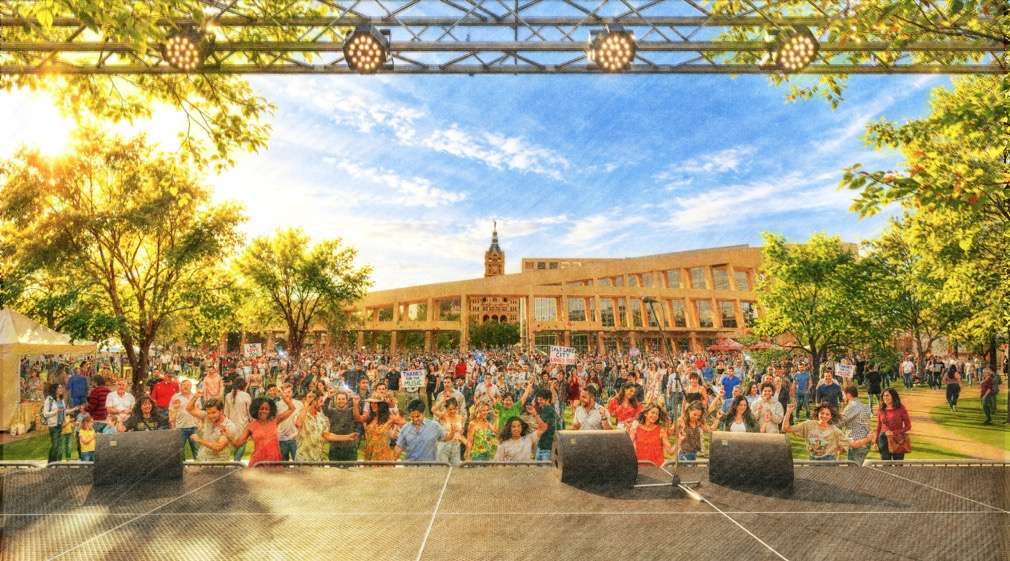
The site has lost out on events over its walls and odd configuration. The proposed adjustment would add more than 7 acres of net new green space and allow over 36,000 attendees at the same time, said Blake Thomas, Salt Lake City's senior advisor on real estate and capital projects.
City officials met with multiple event organizers to map out how to retain popular festivals, such as Living Traditions or Illuminate. The site has also been used for Twilight Concert Series concerts, and was briefly the home of Kilby Block Party.
"Our whole goal is to have the block activated seven days a week," Thomas said, noting that it could be downtown workers having a place to enjoy during lunchtime or large events on the weekend.
Construction of the project's first phase could begin by the end of 2027, focusing on areas east of the library first. Its second phase is tentatively planned for late 2028 or early 2029, depending on various construction variables.
Phases allow for events to continue during construction.
The goal is to have the project completed by approximately 2031.
City officials are exploring public-private partnerships and philanthropic donations with some "real skin in the game from the city," Mendenhall said. It helps that Utah will host the 2034 Winter Olympics and Paralympics, and the space could be used for community events during it.
"We're well on our way," she said.
Eye of the design world
The estimated costs don't include the Land Art Generator Initiative, which selected Salt Lake City for its next contest.
The international competition was created in 2010, focusing on Abu Dhabi, United Arab Emirates. Similar events have taken place all over the world on a sporadic basis, including in the New York City and Los Angeles areas.
While most clean energy infrastructure is designed to essentially disappear, the competition seeks a different approach, Monoian explained.
Its forthcoming event opens on Jan. 5, 2027, when competitors from all over the world will be tasked with designing upgrades for Salt Lake City's Civic Center. The proposed artistic shade structure is tentatively planned to be placed toward the east end of the library block.
The structure would likely use geothermal energy for heating and cooling elements at the park.
It's "very special" that Salt Lake City was picked, Mendenhall said. The city hopes that it will become a revered artistic piece as well, like the Spiral Jetty but in an urban setting.
Submissions from across the globe will be collected through April 12. A board composed of local artists, engineers, renewable energy experts and residents will be organized to review the designs.
Three finalists will receive $50,000 to advance their design proposals by October 2027. A winning design will be picked by the end of the year and incorporated into the project.
A major donation will cover the cost of the $150,000 in prize money, and the city plans to seek public-private partnerships to pay for the winning design.
"A civic artwork that produces clean energy for the city every day is the kind of investment that keeps paying back for generations ... that says we can meet the challenges of the 21st century," said Robert Ferry, co-founder of the initiative.