

Estimated read time: 4-5 minutes
- Utah House Democrats are set to double their seats after elections.
- House Minority Leader Angela Romero cites dissatisfaction with the Legislature for gains.
- Republicans must regain trust, party leaders say.
SALT LAKE CITY – For the last two years, Democrats in the Utah House of Representatives have held 14 seats.
But their caucus is set to double after big gains in last week's elections.
As of Wednesday afternoon, Democrats are on track to hold 28 seats in the Utah House of Representatives. Two unaffiliated candidates also won their races.
This means the House will no longer have a Republican supermajority for the first time in decades.
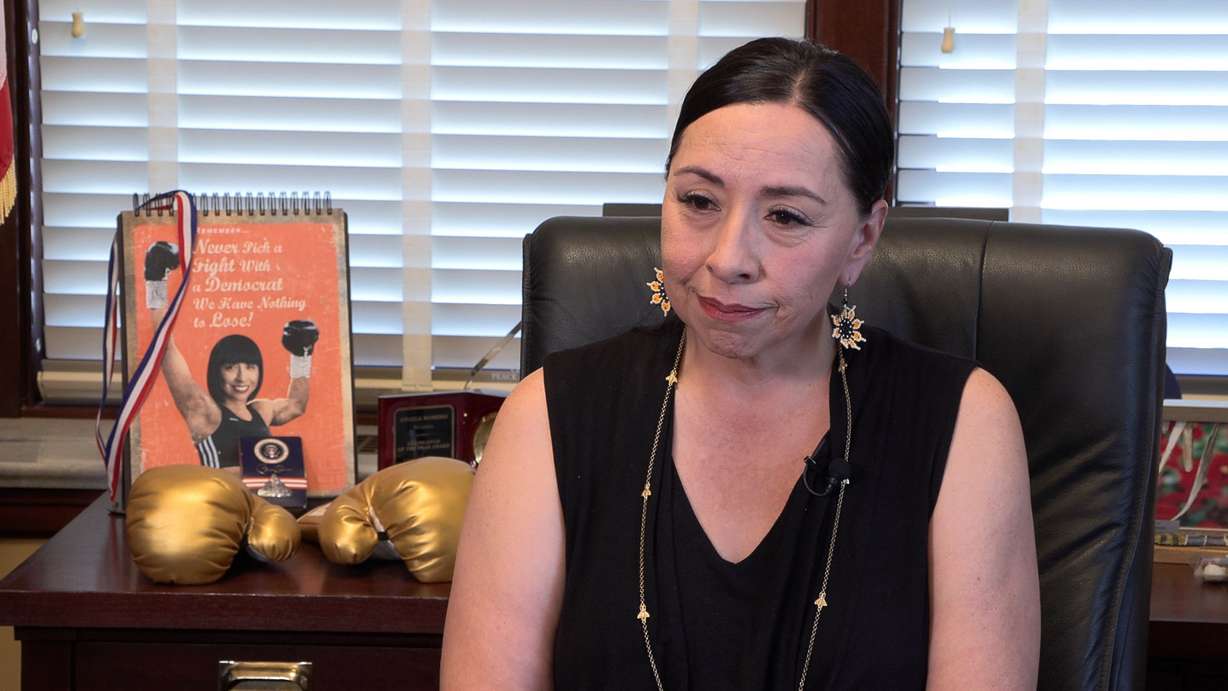
House Minority Leader Angela Romero, D-Salt Lake City, chalks the results up to dissatisfaction with the Legislature as well as national pushback against Republicans. Either way, this looks to change things up dramatically on Capitol Hill, although the GOP still holds a majority.
But Romero said she met with House Speaker Mike Schultz, R-Hooper, on Tuesday, and she came away optimistic about the upcoming session, which starts in January.
"I think there's a way for us to work together to address the concerns of the people of Utah," Romero said. "I don't think people want us fighting. I think people want solutions, and so I think there's ways in which we can work together on affordability issues, and on public education in particular, and to let our teachers know we support them."
The following incumbent Utah House Republicans have lost their seats, according to Associated Press projections: Rep. Jason Thompson, R-River Heights; Rep. Tiara Auxier, R-Morgan; Rep. Jason Kyle, R-Huntsville; Rep. Jake Sawyer, R-West Haven; Rep. Matt MacPherson, R-West Valley City; Rep. Anthony Loubet, R-West Valley City; Rep. Jim Dunnigan, R-Taylorsville; Rep. Ken Ivory, R-West Jordan; Rep. Clint Okerlund, R-Sandy; Rep. Steve Eliason; R-Sandy; Rep. Jordan Teuscher, R-South Jordan; and Rep. Norm Thurston, R-Provo.
Rep. Melissa Garff Ballard, R-North Salt Lake, also trailed her Democratic challenger on Wednesday by 184 votes, but that race had not been called.
Democrats have also flipped one GOP-held seat in the House where the incumbent was not running, and they were on track to pick up a second seat if current results hold.
In the Utah Senate, Republicans were on track to lose one total seat as of Wednesday.
Republicans respond
Earlier this week, Schultz, the House speaker, said the election results showed that many Republicans stayed home or voted for Democrats, which indicates that GOP legislative leaders must make changes to regain trust.
"I think we need to look at where we made mistakes," Schultz said in a joint Deseret News/KSL editorial board meeting on Monday, explaining that it's something he is looking at himself, including how he and other representatives engage the public.
He reflected on a conversation with Arizona Republican leaders a few years ago who said they feared Arizona would shift blue because they were more united on issues, which has been the case in recent years.
Sen. Evan Vickers, R-Cedar City, who was recently elected to be the next Utah Senate president, also believes the election shows public trust has been lost.
It may require finding ways to be more transparent and communicative about all the issues and the rationale for decisions made to tackle them, he said. It also likely means that residents want the Legislature to be more collaborative, both within respective parties and across the aisle, Vickers said.
Vickers said he wants to begin his tenure as Senate president identifying important issues and tackling them as early as possible, working out major disagreements as part of a what he called a "new day dawning."
"They expect us to work together and do a better job of working together," Vickers said. "The House and Senate working together — the House and Senate working with the governor, and including the minority party in the discussions so we can lead to better outcome. More diverse opinions may not change the outcome … but at least people will have an opportunity to weigh in and give their input."
Will Democrats hold these seats?
While Democrats picked up many seats in Utah this election, whether that will translate into long-term success for the party remains to be seen.
"I would look at these pickups as not solid," Romero said. "We as Democrats have to show people that we're going to fight for them."
The minority leader said she believes the issues Utahns care most about include affordability, housing costs, saving the Great Salt Lake, and public education, among other things.
Ultimately, Romero said, the election showed that both Democrats and Republicans need to focus less on partisanship.
"This tells us as a legislature that we're going to have to work together and we're going to have to figure this out and we're going to have to prioritize people over the cultural wars," she said.
House Democrats are scheduled to meet and elect their leadership on Monday. Romero told KSL she plans to run for minority leader for one more term, believing it will help the caucus to have consistency. She expects she will face at least one opponent.
"If they choose not to support me," Romero said, "I will support whoever our caucus selects."