
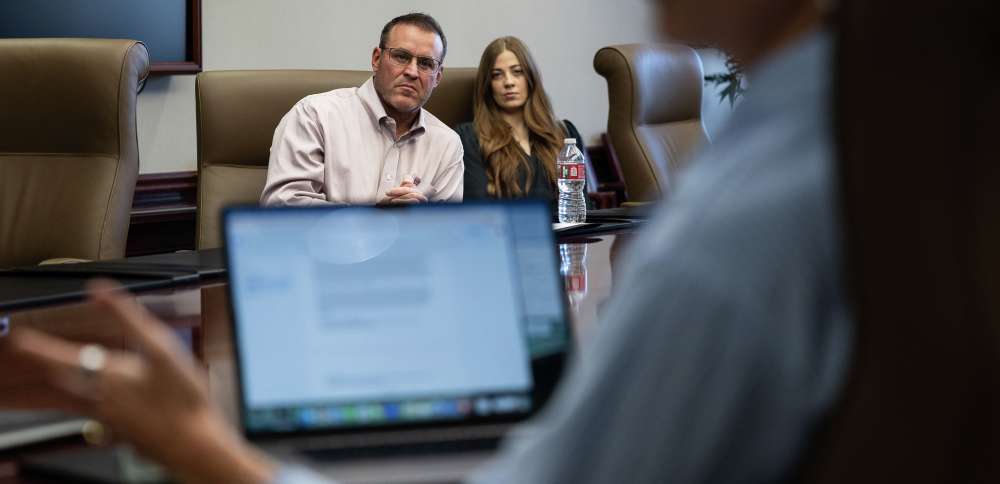
- Utah House Speaker Mike Schultz criticizes MIDA's role in data center decisions.
- Schultz cites public concerns and process flaws in the Stratos Project's approval.
- Reforms may include giving local governments more authority over data center approvals.
SALT LAKE CITY — Utah House Speaker Mike Schultz agrees that the general public had "fair concerns" regarding the Stratos Project as the massive data center project, led by celebrity businessman Kevin O'Leary, was going through the state approval process.
That's why he bemoans how those concerns and the whole process were handled.
"You have Kevin O'Leary saying, China this and China that and whatever else, and I wanted to bang my head against the wall as that was happening. ... I've never been more frustrated than that," said Schultz, R-Hooper, recalling the drama during a joint Deseret News/KSL editorial board meeting on Monday.
O'Leary worked out a framework for the data center proposal in a remote area of Box Elder County with the Military Installation Development Authority, a board made up of government appointees.
It seeks to bolster the U.S. military's access to artificial intelligence and cloud-computing capabilities.
Box Elder County leaders carried out additional votes to move it forward.
One of the leaders who voted in favor said they felt pressured to accept it to avoid costly lawsuits. They could have rejected it and "the project area would not exist," MIDA executive director Dan Hemmert said last month.
Project officials recently filed a new water application, which states the facility would include 11 data center building clusters along with a 7.5-gigawatt generation facility comprised of 15 500-megawatt combined-cycle natural gas power plants. It plans to use a little more than 1,700 acre-feet annually from Salt Wells Spring Stream.
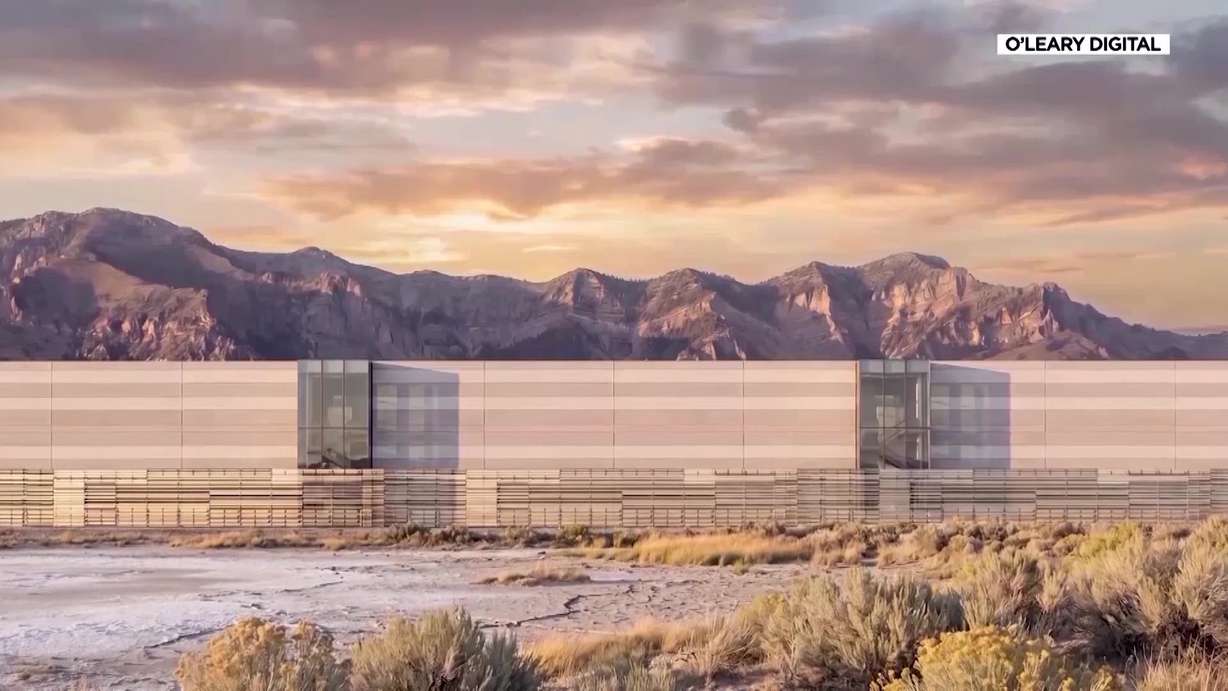
Meanwhile, multiple Utah residents who opposed the project have sued O'Leary and Fox News in recent months, claiming that the billionaire defamed them by falsely claiming they were agents of the Chinese government during interviews with the network for objecting to the plan.
While O'Leary has sought a dismissal in at least one of the suits, the whole series of events was difficult to watch and proved that process adjustments are needed for data centers, Schultz said.
"The thing that broke down on that was the process. That's where it went awry," he said. "Really getting back to fundamentally following the process on these controversial issues will help alleviate those concerns."
A 'huge mistake'
Data center reform may be one of the priorities during the 2027 legislative session, which is expected to be different following a drastic change in the Utah Legislature, said Schultz and Senate President-elect Evan Vickers, R-Cedar City.
Senate President Stuart Adams, who serves as the MIDA board chair, was ousted in the Republican primary. Republicans also lost a supermajority in the House of Representatives for the first time in decades, the Associated Press projected on Monday.
It's unclear how much of that was tied to data centers, but top state leaders acknowledged that it may have factored in lost public trust.
Reforms to data center policy may start with giving local governments a greater say when it comes to approving data centers.
Utah stepped up to oversee data centers when it became clear that they could overwhelm the state's energy grid without coordination between local governments, Schultz explained. However, he believes the recent backlash shows that the current process is broken.
"MIDA should never be doing data centers," he said. "That was a huge mistake. ... I think it's important to know that and recognize that and make sure that doesn't happen again."
Data centers can bring short-term property tax relief for Utahns and drastically improve local property tax bases in rural counties, the University of Utah Kem C. Gardner Policy Institute noted in August, which could help affordability challenges — likely another key subject next year.
If you can go through this process and check those boxes, it really comes down to a local decision. Do you want it or don't you?
–Utah Senate President-elect Evan Vickers
But the institute warns that they can create future tax increases and "greater volatility" in some areas. That's on top of environmental concerns, which typically include urban heat, water consumption, and strains on electricity grids, the Yale School of Environment points out.
The state, Vickers said, has already passed requirements tied to utility rates and water consumption. Modern facilities might be able to offset additional concerns, but the debate over pros and cons should be taken up on a local level.
It's something that might require local entities to break down each request to see if it's the right fit.
"If you can go through this process and check those boxes, it really comes down to a local decision," he said. "Do you want it or don't you?"
Other adjustments?
Utah may also examine other concerns, such as the rate of tax increments handed out for projects, Schultz noted.
He and Vickers spoke on the issue weeks after fellow state lawmakers grilled Hemmert on the Stratos Project during interim meetings at the Utah Capitol.
Some wondered if MIDA provided adequate notice about the project to the public or questioned whether local officials are facing pressure when considering MIDA partnerships. Others worried that public trust in MIDA was waning.
Gov. Spencer Cox also called for major reforms to MIDA in August, largely over concerns tied to the Stratos Project.
It's unclear how that will factor into future legislation, but Schultz said he prefers a future system where the state sets coordination guidelines and local governments decide on future projects.
"The state shouldn't be making decisions," he said. "From the state level, we need to set the high-level priorities ... and then ultimately, it comes down to the locally elected officials, whether they want that in their community."