'%3e%3cpath%20d='M34.1406%205.85938C30.3906%202.10547%2025.3047%200%2020%200C14.6953%200%209.60938%202.10547%205.85938%205.85938C2.10938%209.61328%200%2014.6953%200%2020C0%2025.3047%202.10547%2030.3906%205.85938%2034.1406C9.61328%2037.8906%2014.6953%2040%2020%2040C25.3047%2040%2030.3906%2037.8945%2034.1406%2034.1406C37.8906%2030.3906%2040%2025.3047%2040%2020C40%2014.6953%2037.8945%209.60938%2034.1406%205.85938ZM37.0117%2023.543H31.1602V13.5391H27.6328V19.9414C28.1211%2020.6914%2028.3711%2021.582%2028.3711%2022.5625V22.625C28.3711%2023.668%2028.1172%2024.6055%2027.6328%2025.4297V26.6094H36.082C33.4883%2032.9375%2027.2891%2037.3789%2020.0039%2037.3789C10.3711%2037.3789%202.62109%2029.6289%202.62109%2020C2.62109%2010.3711%2010.3711%202.62109%2020%202.62109C29.6289%202.62109%2037.3789%2010.3711%2037.3789%2020C37.3789%2021.1484%2037.2617%2022.2656%2037.0508%2023.3477C37.0391%2023.4141%2037.0234%2023.4766%2037.0117%2023.543Z'%20fill='white'/%3e%3cpath%20d='M22.3086%2018.5352C20.4336%2018.125%2019.9531%2017.8398%2019.9766%2017.1836V17.1406C19.9766%2016.6992%2020.3477%2016.2148%2021.4023%2016.2148C22.582%2016.2148%2023.8867%2016.6797%2025.0781%2017.4766L26.8516%2015.0195C25.4453%2013.8906%2023.707%2013.3398%2021.5547%2013.3398C18.5195%2013.3398%2016.4375%2015%2016.4063%2017.4766V17.5352C16.3633%2020.2617%2018.5859%2020.9805%2021.293%2021.6016C23.0391%2021.9766%2023.5703%2022.3164%2023.5703%2022.9609L23.5469%2022.9766C23.5469%2023.3906%2023.2578%2023.7031%2022.7852%2023.8359C22.5742%2023.9062%2022.1289%2023.9727%2021.5156%2023.9727C20.7617%2023.9727%2019.7539%2023.8633%2018.6328%2023.4844C18.0898%2023.2891%2017.4727%2023.0039%2016.8047%2022.6133L20.1406%2026.625C20.2813%2026.6602%2021.0977%2026.8516%2021.7734%2026.8516C25.0039%2026.8516%2027.0859%2025.2461%2027.1094%2022.6328V22.5703C27.1602%2020.1133%2025.2148%2019.1719%2022.3086%2018.5352Z'%20fill='white'/%3e%3cpath%20d='M5.24219%2013.5664V26.6133H8.75391V23.7578L10.2969%2021.9531L14.2031%2026.6133H18.3867L12.3555%2019.5195L17.4023%2013.5664H13.4531L8.75391%2019.0586V13.5664H5.24219Z'%20fill='white'/%3e%3c/g%3e%3cdefs%3e%3cclipPath%20id='clip0_97_2430'%3e%3crect%20width='40'%20height='40'%20fill='white'/%3e%3c/clipPath%3e%3c/defs%3e%3c/svg%3e)


- Utah parents face challenges with afterschool care due to limited program availability.
- Afterschool programs improve academics but funding remains a hurdle for expansion.
- Parents struggle with costs and scheduling; some rely on family for childcare.
SALT LAKE CITY — For thousands of Utah families, the end of the school day can create a difficult question: Where do children go while their parents are still at work?
Parents of 348,357 Utah children say they would enroll their children in an afterschool program if one were available, according to the Afterschool Alliance's Utah After 3 p.m. data. But 290,465 of those children, about five in six, are not currently participating in one.
"We have five out of six kids in Utah (who) are missing out on an afterschool program," said Ben Trentelman, executive director of the Utah Afterschool Network.
The report found 57,892 Utah children were participating in an afterschool program in 2025.

Demand is outpacing available programs
Trentelman said availability is one of the biggest barriers for Utah families.
"The availability is probably the biggest factor because there just are not enough programs to meet the demand in the state," Trentelman said.
The problem is not limited to one part of Utah. Trentelman said rural communities can face challenges such as fewer programs and transportation barriers, while more densely populated areas can have more children competing for available spots.
For families who cannot find care, alternatives can be limited. Trentelman said some parents rely on older siblings, grandparents, extended family members or neighbors. Other children may spend time without adult supervision.
Trentelman said children without access to an afterschool program typically spend about 6 to 6.5 hours per week unsupervised between 3 and 5 p.m.
For KSL reporter Heather Peterson, a mother of three children ages 9, 6 and 1, finding care for the hours between school and the end of the workday requires careful planning.
Peterson's two school-age children get out around 3:30 p.m., while she works until about 5:30 p.m. Her family uses a youth center that picks up her children from school and provides care until she or her husband can get them.
Even with that option, Peterson said coordinating work, childcare and activities can be difficult.
"It's always like: rush to get the kids dropped off, rush to work, finish work as fast as possible, rush back to get them, take them where they need to go, feed them and get them in bed," Peterson said. "It's just constant chaos."
The challenge can become even greater on teacher-development days, early-release days and holidays when school and childcare schedules do not necessarily match parents' work schedules.
"I think it's just that normal office hours are not really conducive to childcare hours," Peterson said. "They just don't line up a lot of the time."
When Peterson's husband was deployed for several months, she said she had to take time off whenever childcare was unavailable.
"I ended up having to take a ton of time off because every time the kids had a day off, I had to take a day off," Peterson said. "It was a huge use of sick time, vacation time, all the things."
Cost creates another challenge
Even when afterschool programs are available, families have to determine whether they can afford them.
Trentelman said some programs offer sliding fee scales based on a family's income. Depending on the program and available funding, families may qualify for reduced-cost or free care.
An afterschool program could cost around $150 per week, Trentelman said, while some qualifying families may pay between $20 and $50 per week or have the fee waived.
For some parents, Trentelman said the cost of childcare can become significant enough that they have to weigh how care fits into their employment decisions. He noted that he does not have data showing how many Utah parents have left the workforce because of afterschool care.
Peterson said cost played a role in her family's decision to use the youth center near their home instead of the aftercare program at her children's school. The youth center is federally subsidized and was the less expensive option for her family.
Summer can create an additional challenge because parents may need care for an entire workday rather than just the hours after school.
"We did a lot of searching for summer camps that could accommodate both our schedule and our cost needs because summer care gets really expensive when you're paying for a full day," Peterson said.
More than a place to wait for parents
Afterschool programs can look different depending on the community.
Some are operated inside schools, while others are run through community organizations, recreation centers or municipalities. Organizations such as the YMCA and Boys & Girls Clubs can also partner with schools or operate programs at their own facilities.
A typical afternoon may start with a snack followed by structured homework time. Children can then participate in activities ranging from sports and cooking to STEM, computer science, video editing and entrepreneurship.
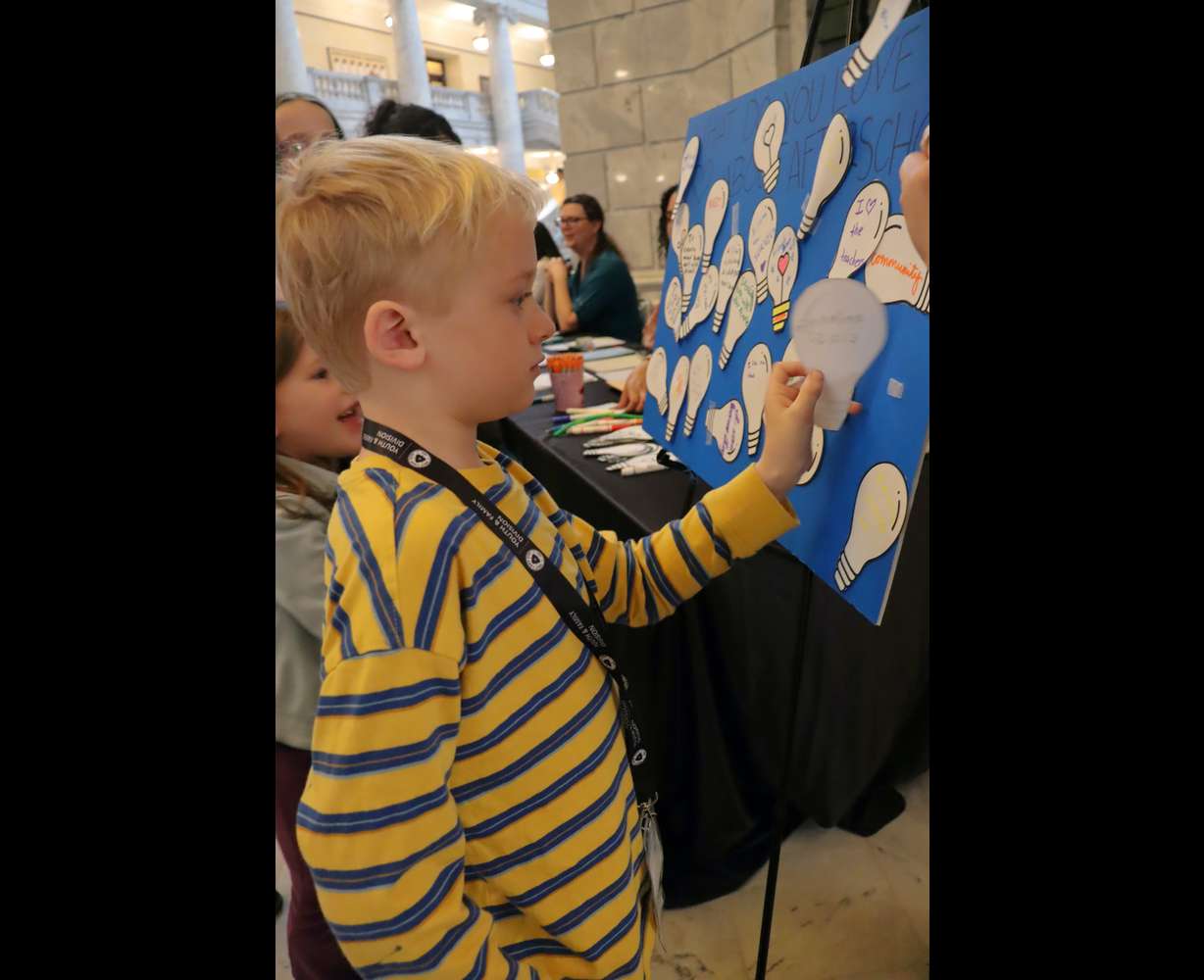
Some programs also provide dinner.
"A lot of programs in the state offer dinner for kids," Trentelman said. "Sometimes there may not be anyone home for several hours for those kids to get a hot meal from."
Beyond providing supervision, Trentelman said Utah programs have seen academic improvements among participating students in subjects including math, science and reading. He said programs can also help children build relationships, prepare for future careers and spend their afternoons in a structured environment with adult supervision.
Peterson said those additional opportunities are part of what she values about her children's program.
"They're getting their energy out, playing sports, doing crafts," Peterson said. "They're doing active things, making friends, and some of their closest friends are kids they get to play with every day after school."
Funding remains a challenge
Trentelman said Utah does not currently invest state dollars directly into afterschool programming, with public funding instead coming from federal programs.
Those include Temporary Assistance for Needy Families, the Child Care and Development Fund and the 21st Century Community Learning Centers program.
Trentelman said federal 21st Century Community Learning Centers funding was temporarily held up last year before eventually being released. The delay created uncertainty for programs preparing for summer and the upcoming school year.
More recently, Utah has used federal Temporary Assistance for Needy Families funding to expand afterschool opportunities through a competitive grant process. However, Trentelman said restrictions tied to that funding can limit which children and programs can benefit.
The Utah Afterschool Network is also looking to Utah's expected proceeds from a recent multistate settlement with Meta as a potential future funding source. Utah is expected to receive $212 million over 10 years under the settlement, which is subject to court approval. Trentelman said afterschool and summer programming could be among the uses for the money, and the network is advocating for a portion of Utah's share.
The Utah Afterschool Network sought $10 million for afterschool and summer programs during the 2026 legislative session, Trentelman said. Lawmakers ultimately approved about $3 million in federal TANF funding for the programs, according to legislative budget documents.
"That is still significant, but is not meeting those needs," Trentelman said.
What can parents do?
For parents struggling to cover the hours between school and the end of the workday, Trentelman recommends first finding out what programs are available nearby.
The Utah Afterschool Network has an interactive online map where families can search by city or ZIP code for programs in their area. Listings can include information about fees, contact information and other program details.
If a nearby program is full, Trentelman encourages parents to communicate the impact of waiting lists and limited access to state lawmakers.
For Peterson, reliable afterschool care is what allows her family to bridge the gap between the school day and the workday.
"I don't know how we would be able to work a normal eight-hour day without it," Peterson said.

Photos
Most recent Family stories
Related topics
 Aleigha Marie McDonough