'%3e%3cpath%20d='M34.1406%205.85938C30.3906%202.10547%2025.3047%200%2020%200C14.6953%200%209.60938%202.10547%205.85938%205.85938C2.10938%209.61328%200%2014.6953%200%2020C0%2025.3047%202.10547%2030.3906%205.85938%2034.1406C9.61328%2037.8906%2014.6953%2040%2020%2040C25.3047%2040%2030.3906%2037.8945%2034.1406%2034.1406C37.8906%2030.3906%2040%2025.3047%2040%2020C40%2014.6953%2037.8945%209.60938%2034.1406%205.85938ZM37.0117%2023.543H31.1602V13.5391H27.6328V19.9414C28.1211%2020.6914%2028.3711%2021.582%2028.3711%2022.5625V22.625C28.3711%2023.668%2028.1172%2024.6055%2027.6328%2025.4297V26.6094H36.082C33.4883%2032.9375%2027.2891%2037.3789%2020.0039%2037.3789C10.3711%2037.3789%202.62109%2029.6289%202.62109%2020C2.62109%2010.3711%2010.3711%202.62109%2020%202.62109C29.6289%202.62109%2037.3789%2010.3711%2037.3789%2020C37.3789%2021.1484%2037.2617%2022.2656%2037.0508%2023.3477C37.0391%2023.4141%2037.0234%2023.4766%2037.0117%2023.543Z'%20fill='white'/%3e%3cpath%20d='M22.3086%2018.5352C20.4336%2018.125%2019.9531%2017.8398%2019.9766%2017.1836V17.1406C19.9766%2016.6992%2020.3477%2016.2148%2021.4023%2016.2148C22.582%2016.2148%2023.8867%2016.6797%2025.0781%2017.4766L26.8516%2015.0195C25.4453%2013.8906%2023.707%2013.3398%2021.5547%2013.3398C18.5195%2013.3398%2016.4375%2015%2016.4063%2017.4766V17.5352C16.3633%2020.2617%2018.5859%2020.9805%2021.293%2021.6016C23.0391%2021.9766%2023.5703%2022.3164%2023.5703%2022.9609L23.5469%2022.9766C23.5469%2023.3906%2023.2578%2023.7031%2022.7852%2023.8359C22.5742%2023.9062%2022.1289%2023.9727%2021.5156%2023.9727C20.7617%2023.9727%2019.7539%2023.8633%2018.6328%2023.4844C18.0898%2023.2891%2017.4727%2023.0039%2016.8047%2022.6133L20.1406%2026.625C20.2813%2026.6602%2021.0977%2026.8516%2021.7734%2026.8516C25.0039%2026.8516%2027.0859%2025.2461%2027.1094%2022.6328V22.5703C27.1602%2020.1133%2025.2148%2019.1719%2022.3086%2018.5352Z'%20fill='white'/%3e%3cpath%20d='M5.24219%2013.5664V26.6133H8.75391V23.7578L10.2969%2021.9531L14.2031%2026.6133H18.3867L12.3555%2019.5195L17.4023%2013.5664H13.4531L8.75391%2019.0586V13.5664H5.24219Z'%20fill='white'/%3e%3c/g%3e%3cdefs%3e%3cclipPath%20id='clip0_97_2430'%3e%3crect%20width='40'%20height='40'%20fill='white'/%3e%3c/clipPath%3e%3c/defs%3e%3c/svg%3e)


- The University of Utah is set to acquire the final 50 acres of Fort Douglas.
- The transfer marks a historic milestone, blending historical preservation with future university growth.
- Ownership officially transfers Oct. 1, with housing and recreation spaces named as potential uses of the new space.
SALT LAKE CITY — The University of Utah's story is impossible to tell without Fort Douglas.
In fact, there might not even be a story to tell if not for the fort.
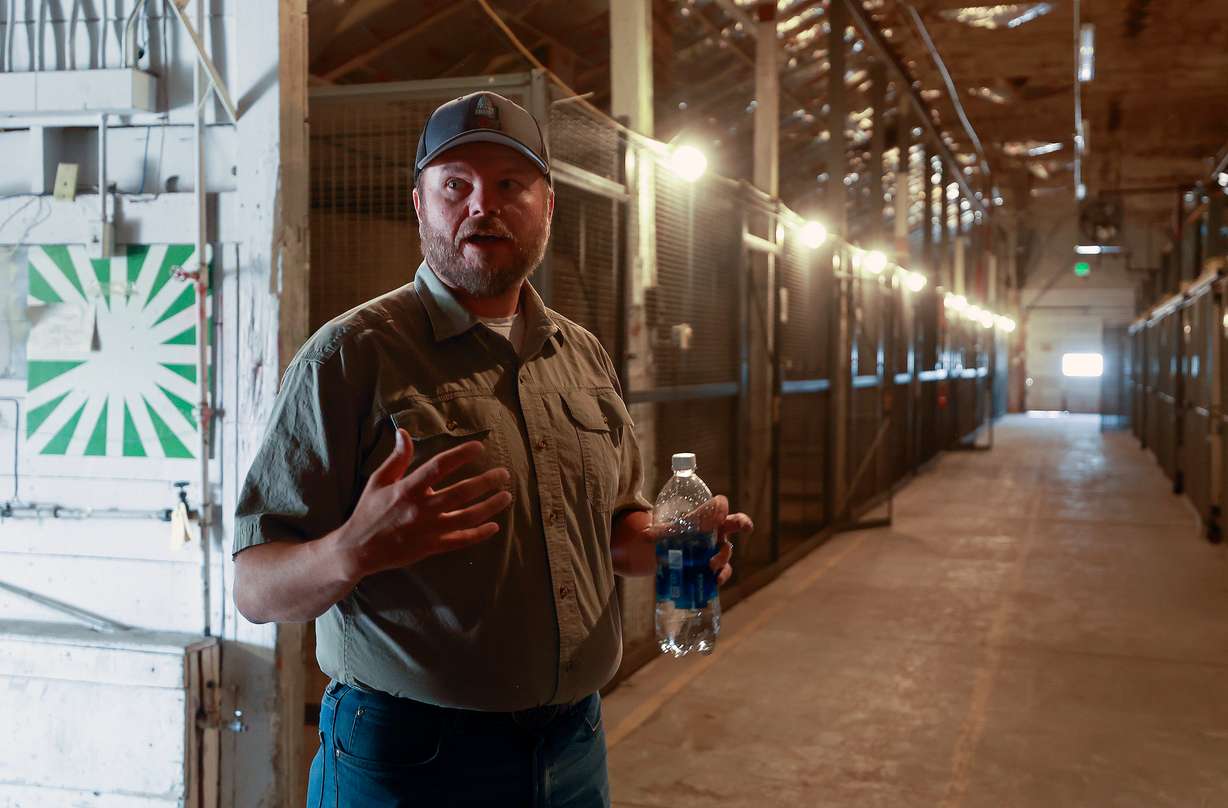
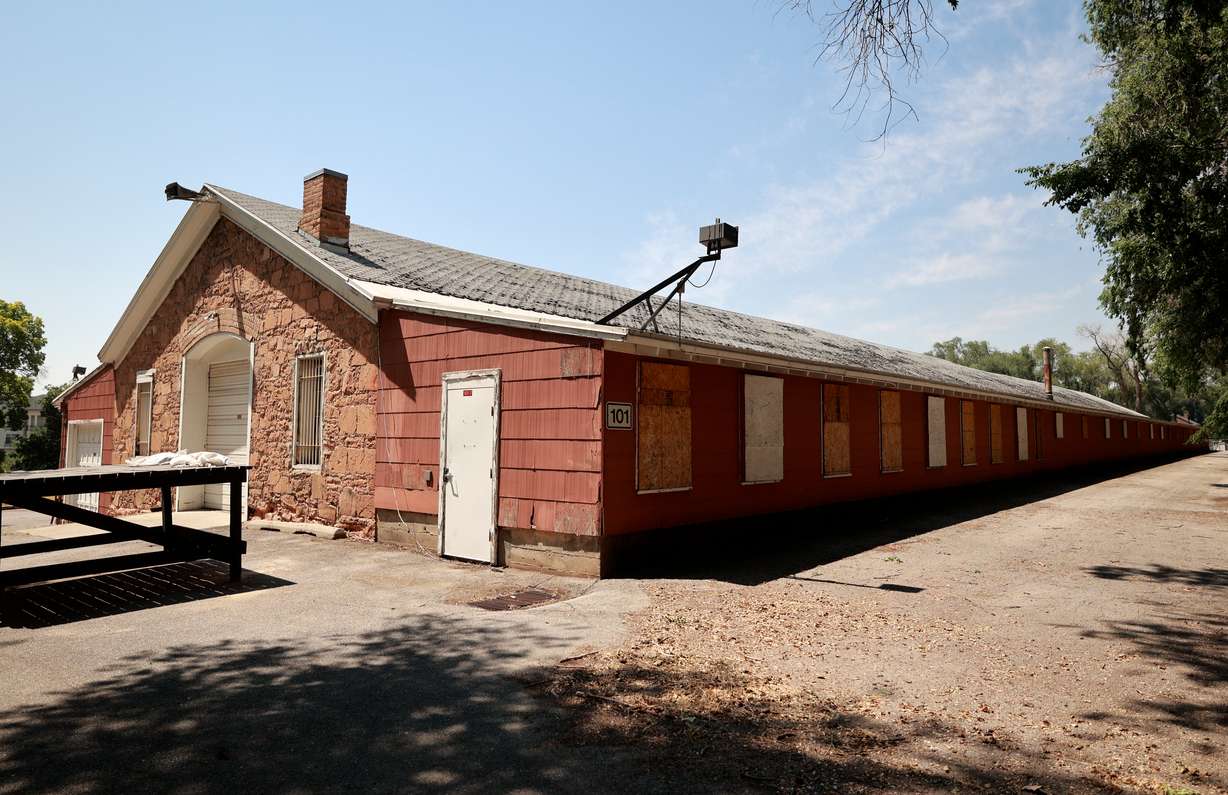
"You can't untangle the life of the University of Utah and Fort Douglas," Chris Merritt, Utah's state historic preservation officer, said while standing outside the property's historic stables, constructed in 1886 out of sandstone from Utah's own Red Butte Canyon.
"This is truly a national treasure," he added.
Founded in 1862 by the federal government in part to keep tabs on Brigham Young and the pioneers in Salt Lake City, the fort at one time stretched over 10,500 acres along Salt Lake City's east bench — from 900 South to 6th Avenue, and from 1300 East to the mouth of Emigration Canyon.
On Saturday, the final remaining 50 acres of active military land at Fort Douglas will be transferred to the U. as Fort Douglas' operations in June began moving to a new, $127 million, 227,000-square-foot home for the Army Reserve at Camp Williams in Bluffdale.
'Reconceptualization of America'
With Fort Douglas predating Utah's statehood by over three decades, it's a given that its many buildings share stories of U.S. and Utah history alike.
The fort's buildings and grounds initially served as a western outpost of the federal government before Utah's statehood.
During World War I, the fort acted as a mobilization and training garrison.
"By 1900, it was clear that the way we were training troops, the way we were equipping troops, and the size of our military was insufficient to keeping the United States on a national stage of strategic interest," Merritt said.
To that point, Congress decided to significantly expand the fort to act as a regional training ground and base camp for military personnel.
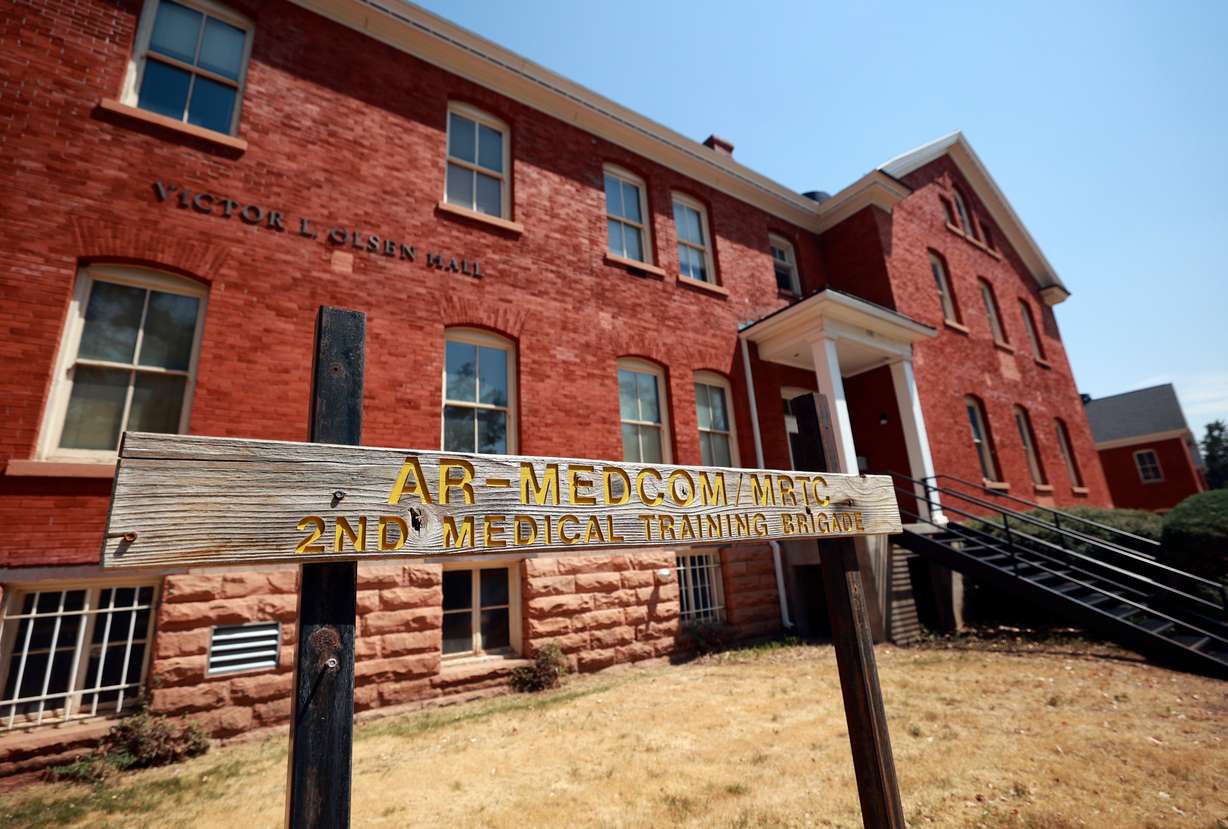
"As we saw our involvement in World War I coming like a storm, this facility stepped into action," Merritt said. "These structures are that post-1900 reconceptualization of America on the international stage."
Fast-forward to World War II, the fort served as the headquarters for the Ninth Service Command and as a reception and separation center. Additionally, it housed German and Italian prisoners of war.
"Again, that fundamental connection between the University of Utah and this camp ... those same barracks were used as student housing after World War II for a certain period while they started figuring out dorms and offices and classrooms," Merritt said.
Today, the whole of Fort Douglas is on the National Register of Historic Places, along with the State Historic Register.
University use through the decades
Throughout its existence, the U. has grown by absorbing land owned or controlled largely by the U.S. Forest Service, Bureau of Land Management and U.S. Army.
In fact, the first land transfer between the U. and the Army in 1898 created Presidents Circle — a campus landmark home to the original quad and now the office of the president and other administrative offices.
In 1962, land that would eventually become the site of the U. Health Hospital, Spencer Fox Eccles Medical School, College of Nursing and College of Pharmacy was granted to the U.
Six years later, 320 acres for Red Butte Garden and Arboretum and Research Park became university (and state) property.
Ahead of the Olympic Winter Games in 2002, the historic Officers Circle was transferred to the University of Utah and became part of the Olympic Village. It now serves as student housing.
Before the latest transfer, a total of 1,534 acres had been transferred to the university over the past 126 years.
Today, this land is home to many well-known staples of Salt Lake City and the U., including:
- Land now used for Utah Athletics facilities
- The Natural History Museum of Utah
- Red Butte Garden and Arboretum
- Research Park
- University of Utah teaching and research buildings
- University of Utah Health Hospitals and Clinics
- Student housing along historic Fort Douglas Circle
- 469 acres in a Heritage Preserve
What's next for the property?
For its part, the university is excited about the possibilities that could be realized through the now official acquisition of 50 acres.
"Once again, a transfer of federal land from Fort Douglas presents the university with incredible opportunities for thoughtful growth, innovative re-use and responsible historic preservation," the U. said in a statement. "Future uses could include housing, recreation spaces and a secondary student union building."
For Merritt and U. leaders, the discussion now shifts to striking the balance between use and preservation of the historic site.
U. spokeswoman Rebecca Walsh pointed to what the university did around Officers Circle ahead of the 2002 Winter Olympics, specifically how it "wove in new buildings around old buildings."
"I think we're going to approach this space the same way that we did the space around Officers Circle," Walsh said.
Merritt, for one, believes it can be done, adding his belief that historic buildings don't have to be "anti-future."
"As a culture, sometimes we see history and historic buildings as a hurdle to get over to get into the next phase of development. Our viewpoint is, you can honor this history by making it work for you in the future," Merritt said. What does this post serve in 2026? We don't need large military posts in the center of our country anymore, but we do need higher education."
U. President Taylor Randall, in a statement, said the U. will accept stewardship over the final 50 acres of the fort's property "with a commitment to honor its past while creating new opportunities for future generations through education, discovery, health care and innovation."
While Saturday will mark a ceremonial passing of the torch, the U. won't officially assume full ownership until Oct. 1, Walsh said.
More historical information on the fort can be found here.