'%3e%3cpath%20d='M34.1406%205.85938C30.3906%202.10547%2025.3047%200%2020%200C14.6953%200%209.60938%202.10547%205.85938%205.85938C2.10938%209.61328%200%2014.6953%200%2020C0%2025.3047%202.10547%2030.3906%205.85938%2034.1406C9.61328%2037.8906%2014.6953%2040%2020%2040C25.3047%2040%2030.3906%2037.8945%2034.1406%2034.1406C37.8906%2030.3906%2040%2025.3047%2040%2020C40%2014.6953%2037.8945%209.60938%2034.1406%205.85938ZM37.0117%2023.543H31.1602V13.5391H27.6328V19.9414C28.1211%2020.6914%2028.3711%2021.582%2028.3711%2022.5625V22.625C28.3711%2023.668%2028.1172%2024.6055%2027.6328%2025.4297V26.6094H36.082C33.4883%2032.9375%2027.2891%2037.3789%2020.0039%2037.3789C10.3711%2037.3789%202.62109%2029.6289%202.62109%2020C2.62109%2010.3711%2010.3711%202.62109%2020%202.62109C29.6289%202.62109%2037.3789%2010.3711%2037.3789%2020C37.3789%2021.1484%2037.2617%2022.2656%2037.0508%2023.3477C37.0391%2023.4141%2037.0234%2023.4766%2037.0117%2023.543Z'%20fill='white'/%3e%3cpath%20d='M22.3086%2018.5352C20.4336%2018.125%2019.9531%2017.8398%2019.9766%2017.1836V17.1406C19.9766%2016.6992%2020.3477%2016.2148%2021.4023%2016.2148C22.582%2016.2148%2023.8867%2016.6797%2025.0781%2017.4766L26.8516%2015.0195C25.4453%2013.8906%2023.707%2013.3398%2021.5547%2013.3398C18.5195%2013.3398%2016.4375%2015%2016.4063%2017.4766V17.5352C16.3633%2020.2617%2018.5859%2020.9805%2021.293%2021.6016C23.0391%2021.9766%2023.5703%2022.3164%2023.5703%2022.9609L23.5469%2022.9766C23.5469%2023.3906%2023.2578%2023.7031%2022.7852%2023.8359C22.5742%2023.9062%2022.1289%2023.9727%2021.5156%2023.9727C20.7617%2023.9727%2019.7539%2023.8633%2018.6328%2023.4844C18.0898%2023.2891%2017.4727%2023.0039%2016.8047%2022.6133L20.1406%2026.625C20.2813%2026.6602%2021.0977%2026.8516%2021.7734%2026.8516C25.0039%2026.8516%2027.0859%2025.2461%2027.1094%2022.6328V22.5703C27.1602%2020.1133%2025.2148%2019.1719%2022.3086%2018.5352Z'%20fill='white'/%3e%3cpath%20d='M5.24219%2013.5664V26.6133H8.75391V23.7578L10.2969%2021.9531L14.2031%2026.6133H18.3867L12.3555%2019.5195L17.4023%2013.5664H13.4531L8.75391%2019.0586V13.5664H5.24219Z'%20fill='white'/%3e%3c/g%3e%3cdefs%3e%3cclipPath%20id='clip0_97_2430'%3e%3crect%20width='40'%20height='40'%20fill='white'/%3e%3c/clipPath%3e%3c/defs%3e%3c/svg%3e)



- Utah's moderate political network, including Doers Network and Governing Group, influences GOP politics.
- Jay Faison, a major donor, supports Utah's pragmatic conservatism to reshape national politics.
- The network aims to promote 'common sense conservatism' and ethical leadership in Utah and beyond.
SALT LAKE CITY — An ecosystem of center-right nonprofit groups emerged in Utah over the past three years before quickly becoming one of the most influential forces in Republican politics, shaping campaigns for Congress and school boards alike.
The organizations differ in approach, but share a mission of maintaining the politely pragmatic conservatism that has set the state apart over the past decade as President Donald Trump's GOP adopted a doctrine of confrontation.
One Republican megadonor has taken note.
After blasting nearly $2.5 million into Utah's 2024 Senate race on behalf of John Curtis, North Carolina clean energy philanthropist Jay Faison zeroed in on two Utah firms as models for remaking America in Curtis' political image.
Through his 501(c)(4), America Leads Inc., Faison donated $100,000 in May 2025 to Governing Group PAC, the election shop set up by former congressional candidate Becky Edwards to build a bench of moderate local officials.
Up to this point, it was the biggest single donation made to the Governing Group PAC, comprising more than 40% of the contributions received that cycle. Later in 2025, Faison would invest in creating his own organization in the state.
By November, Faison had teamed up with Owen Fuller, the founder of All In For Utah — a foundation supporting projects and politicians aligned with Gov. Spencer Cox's "Disagree Better" brand — to bring America Leads to Utah.
Now called Doers Network, Faison's operation has already entrenched itself in Utah's political landscape, attracting a host of Capitol insiders to its boards, while endorsing several of the same candidates as Governing Group.
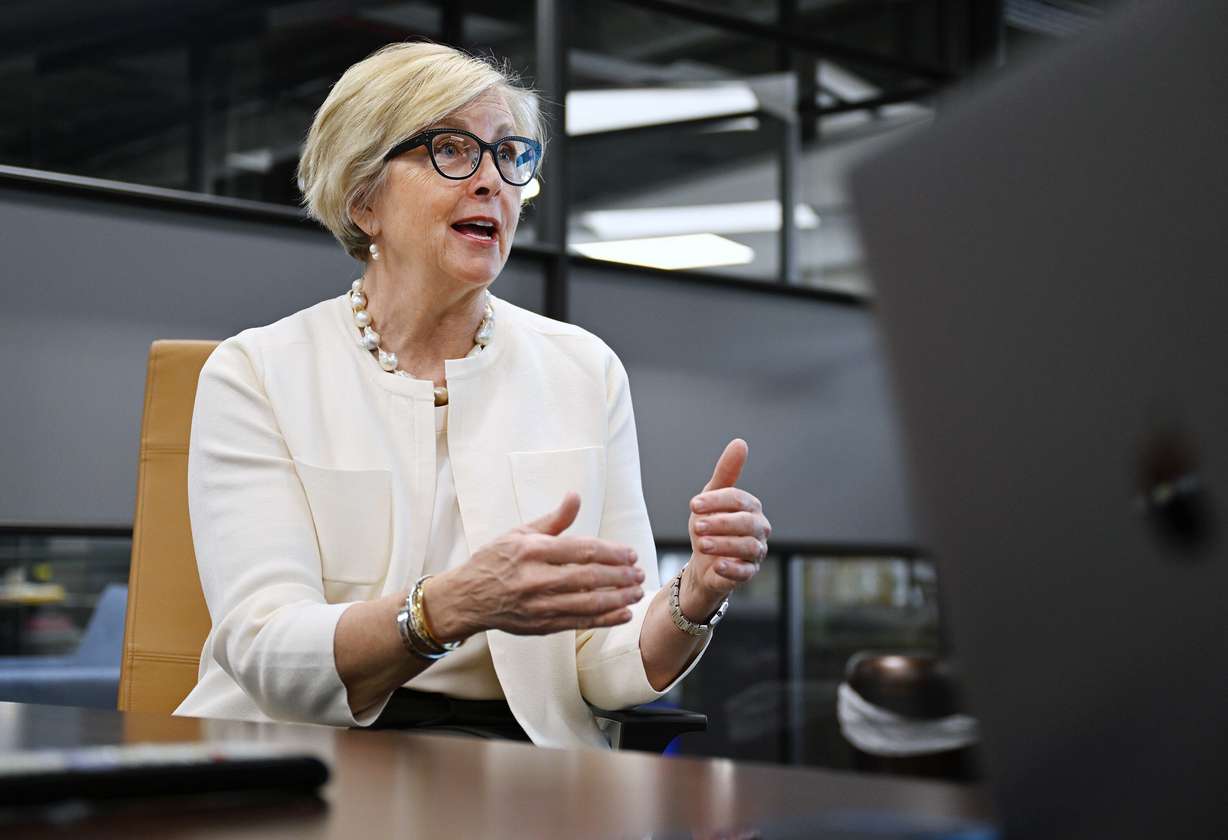
The arrival of Doers Network, which follows the formation of All In For Utah and Governing Group in 2023, completes a new constellation of nonprofits providing a fundraising infrastructure to reinforce Utah's distinct shade of red.
But its ambitions extend beyond the Beehive State.
From the beginning, Faison's aim — shared to some extent by Edwards and Fuller — was to scale Utah-style politics to the national stage as the GOP faces a pivotal reckoning over what a post-Trump party will look like ahead of 2028.
While the groups may diverge on how to navigate the money game of elections, these upstart political players are united in their vision of a "common sense conservatism" that they think Utah does better than anywhere else.
What is Doers doing?
On Aug. 1, Doers Network held an America 250 celebration that doubled as a public introduction to its new state director, Zac Wilson, a 31-year-old former congressional candidate with a background in Republican youth outreach.
Among the 200 or so in attendance were Curtis and Utah Reps. Blake Moore and Burgess Owens. Since taking the helm, Wilson has spread Doers' support across a wide spectrum that has left some scratching their heads.
Doers' roster includes those recognized as the most conservative members of the Utah House GOP caucus, as well as the most middle-of-the-road. The rubric, Wilson said, prioritizes individual results over a rigid ideology.
"Performance is easier than policymaking; clickbait ... is much easier than doing the hard work to pass legislation," Wilson told the Deseret News. "We want to see more work and less drama — maybe making politics boring again."
Endorsements are decided by "regional advisory boards," occupied by community leaders organized into Davis, Salt Lake and Utah counties. Choices are not made by a central office, and certainly not by Faison, according to Wilson.
Faison's touch has not always been so light.
Back in February 2025, Connor Child got a call from Fuller, his first boss out of college. The two were enmeshed in Utah's software-as-a-service sector, and shared a longing for the Republican Party before the "MAGA movement."
Faison gave Child a sketch of what he wanted: apply the analytics of social media marketing to elections. Child called the application "campaign engine." By systematizing races, Faison wanted to alter the identity of the GOP.
"He really wants to see a pretty dramatic shift in where the Republican Party is going," Child told the Deseret News.
Utah was the ideal launching pad because it had largely avoided the Trumpification of the Republican Party nationwide, according to Child. "Like, a John Curtis and a Spencer Cox are electable candidates here," Child said.
Faison did not respond to requests for an interview.
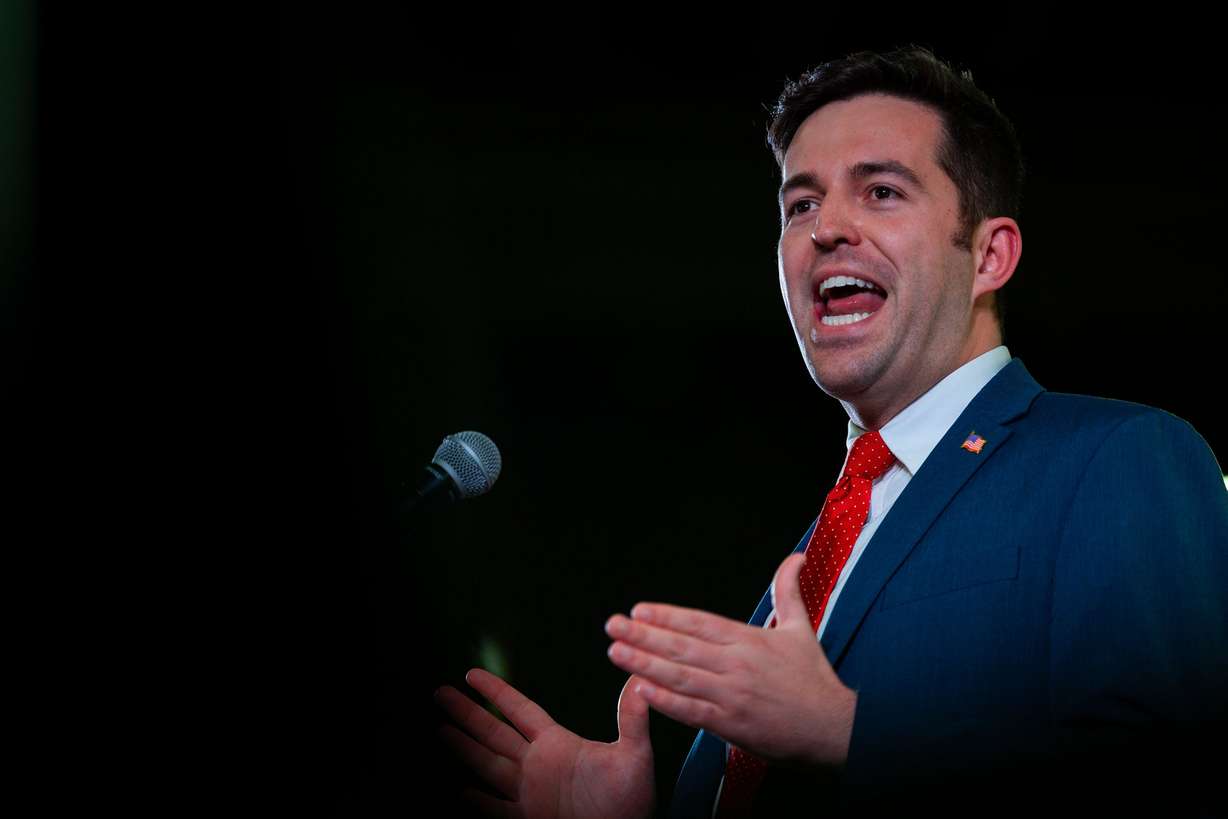
To lead as the public face of Doers Network, Faison and Fuller recruited Riley Owen, a young Ivy League graduate and former White House staffer in the Trump administration, who worked as a Navy intelligence officer.
With seed funding from Faison, Owen set out to identify, in the language of a tech startup, the "minimum viable product" to increase turnout in municipal and state elections and improve outcomes by 10% of the vote.
"Your mayor and city council members often end up becoming who your state legislators are, and your state legislators often end up becoming your congressmen and senators and your governors," Owen told the Deseret News.
Examples abound: Curtis entered office in 2010 when he was elected as mayor of Provo only to run for Congress in a 2017 special election. Likewise, Cox got his start as a Fairview City Council member and then as a state legislator.
In February, Owen announced he would run as a Republican for Utah's new Democratic-leaning 1st Congressional District to "advance the vision" of Doers. Around the same time, Fuller also stepped away from the group.
Under Wilson, Doers has already made a splash in the midterms. The group brought public polling to state legislative primaries — a rarity for Utah — and just last month donated $21,000 to candidates in tough districts.
The group says it plans to rely on Utah donors going forward.
While fairly modest, this amount of money can move the needle at the legislative level. Before 2028, the group hopes to have a proof of concept they can imitate in other states, Wilson said, each with their own state director.
All in for what?
As Doers finds its footing at the local level, All In For Utah is making an impact at the federal, spending $80,000 in the June primary to oppose Phil Lyman and Karianne Lisonbee, and support Reps. Moore and Celeste Maloy.
In addition to sponsoring Disagree Better and The Pioneer Trail, All In For Utah expanded its outreach in April with a new state PAC run by Fuller, World Trade Center Utah CEO Jonathan Freedman and consultant Dan Hemmert.
While Doers' political involvement has so far been largely self-funded, these efforts by All In For Utah have been primarily fueled by conservative business leaders in the state, like former Zions Bank CEO Scott Anderson.
The goal of All In For Utah, according to its freshly hired 28-year-old director Nick Coleman, is to make sure the incentives for candidates align with regular Utah voters. This includes preserving the signature path to the ballot.
"I'm worried about a version of Utah politics that I think we stand a chance to lose," Coleman told the Deseret News. "Our mission is pretty simple and straightforward; it is to protect what has made the state of Utah work."
This comes down to a "political culture" of "common sense conservative leadership," Coleman said, characterized by ethical behavior, including the ability of public servants to "disagree without hating each other," and competency.
The 'center-right' network
This is where the overlap is impossible to miss.
Governing Group has articulated an almost identical mission through board members like Edwards, former Utah Gov. Gary Herbert, Dignity Index co-creator Tami Pyfer and Utah Women and Leadership Project Director Susan Madsen.
The group has put its money where its mouth is, spending more than $666,000 in the past three years to support over 100 candidates with direct contributions as well as free consulting, volunteers and leadership training.
It is working: Around 25% of the state Legislature's GOP caucus is composed of Governing Group candidates, according to Edwards. Another 17 candidates won their primaries in June, which will bring the ratio up to one-third.
"What would happen if our political system rewarded elected officials for governing well, not just for winning the next election?" Edwards asked in a Deseret News interview. "We start to look at service differently."
In addition to donations from Edwards and Madsen, Governing Group receives significant support from "pro-democracy groups," Edwards said, noting few red states have as much energy targeting these kinds of initiatives.
This focus has placed diverse groups on the same page.
Governing Group occasionally discusses how to support its endorsed candidates with groups like Equality Utah, an LGBTQ advocacy organization; and Better Boundaries, a coalition that supported Utah redistricting and other initiatives.
It is "actually really healthy" to have some behind-the-scenes "collaboration" between groups, said Governing Group senior adviser Kyle Friant, who still coordinates campaigns while working as Provo deputy mayor.
It is all part of an effort to create a network of moderates.
"How do we replicate the structures ... in our politics for people who are more pragmatic?" Friant told the Deseret News. "The structures that exist really empower a lot of folks who may be a little bit more extreme."
The informal collaboration between groups has jokingly been referred to as the "Wolf PAC," Friant confirmed, based on a post from state school board candidate Nichole Isom, lamenting the primary loss of conservative candidates.
"We are now the blue state in red clothing," Isom said. "The PAC of wolves now surrounds us."
Before joining Governing Group, Friant worked as deputy director of Better Boundaries. He is also a member of LGBTQ+ and Allied Lawyers of Utah with members of the Equality Utah board — on which Edwards sits.
One candidate for Salt Lake County council has seen the intersection firsthand. Mike Bird, who is a Governing Group board member, has the endorsement of Equality Utah, Doers Network and is waiting to hear from All In For Utah.
This coalition of backers fits with Bird's aspiration to be less extreme and more effective, he told the Deseret News, especially as heightened partisan polarization has seeped into even local elections across "the last decade or so."
"Utah is a unique state where no matter the national headlines we as people want good people representing us regardless of party," Bird told the Deseret News. "We want people that are ethical and just all around good people."
That is the objective Utah's newest political network shares in common. Any other overlap between the groups has likely arisen after the fact, Bird said. "I wouldn't say that there's big coordinating collaborative efforts on both ends."