'%3e%3cpath%20d='M34.1406%205.85938C30.3906%202.10547%2025.3047%200%2020%200C14.6953%200%209.60938%202.10547%205.85938%205.85938C2.10938%209.61328%200%2014.6953%200%2020C0%2025.3047%202.10547%2030.3906%205.85938%2034.1406C9.61328%2037.8906%2014.6953%2040%2020%2040C25.3047%2040%2030.3906%2037.8945%2034.1406%2034.1406C37.8906%2030.3906%2040%2025.3047%2040%2020C40%2014.6953%2037.8945%209.60938%2034.1406%205.85938ZM37.0117%2023.543H31.1602V13.5391H27.6328V19.9414C28.1211%2020.6914%2028.3711%2021.582%2028.3711%2022.5625V22.625C28.3711%2023.668%2028.1172%2024.6055%2027.6328%2025.4297V26.6094H36.082C33.4883%2032.9375%2027.2891%2037.3789%2020.0039%2037.3789C10.3711%2037.3789%202.62109%2029.6289%202.62109%2020C2.62109%2010.3711%2010.3711%202.62109%2020%202.62109C29.6289%202.62109%2037.3789%2010.3711%2037.3789%2020C37.3789%2021.1484%2037.2617%2022.2656%2037.0508%2023.3477C37.0391%2023.4141%2037.0234%2023.4766%2037.0117%2023.543Z'%20fill='white'/%3e%3cpath%20d='M22.3086%2018.5352C20.4336%2018.125%2019.9531%2017.8398%2019.9766%2017.1836V17.1406C19.9766%2016.6992%2020.3477%2016.2148%2021.4023%2016.2148C22.582%2016.2148%2023.8867%2016.6797%2025.0781%2017.4766L26.8516%2015.0195C25.4453%2013.8906%2023.707%2013.3398%2021.5547%2013.3398C18.5195%2013.3398%2016.4375%2015%2016.4063%2017.4766V17.5352C16.3633%2020.2617%2018.5859%2020.9805%2021.293%2021.6016C23.0391%2021.9766%2023.5703%2022.3164%2023.5703%2022.9609L23.5469%2022.9766C23.5469%2023.3906%2023.2578%2023.7031%2022.7852%2023.8359C22.5742%2023.9062%2022.1289%2023.9727%2021.5156%2023.9727C20.7617%2023.9727%2019.7539%2023.8633%2018.6328%2023.4844C18.0898%2023.2891%2017.4727%2023.0039%2016.8047%2022.6133L20.1406%2026.625C20.2813%2026.6602%2021.0977%2026.8516%2021.7734%2026.8516C25.0039%2026.8516%2027.0859%2025.2461%2027.1094%2022.6328V22.5703C27.1602%2020.1133%2025.2148%2019.1719%2022.3086%2018.5352Z'%20fill='white'/%3e%3cpath%20d='M5.24219%2013.5664V26.6133H8.75391V23.7578L10.2969%2021.9531L14.2031%2026.6133H18.3867L12.3555%2019.5195L17.4023%2013.5664H13.4531L8.75391%2019.0586V13.5664H5.24219Z'%20fill='white'/%3e%3c/g%3e%3cdefs%3e%3cclipPath%20id='clip0_97_2430'%3e%3crect%20width='40'%20height='40'%20fill='white'/%3e%3c/clipPath%3e%3c/defs%3e%3c/svg%3e)


- Yuan Shimao's martial arts academy in Wudang emphasizes Taoist principles beyond fighting.
- Students learn physical and mental resilience through courses in kung fu and tai chi.
- Yuan's methods adapt to younger generations focusing on inner strength and harmony.
SHIYAN, China — There was a time when Chinese master Yuan Shimao thought martial arts were all about punching and kicking. As a young practitioner, he focused on speed and strength.
"I trained that way for many years without becoming still enough to search within myself," said Yuan, who founded a kung fu academy in central China in 2004.
"But as you gradually settle into stillness, you begin to understand what the scriptures mean by spirit," he added. "You can begin to rediscover yourself."
That process is known as "entering the Dao" in martial arts. It is a guiding principle at Yuan's academy in the sacred Wudang Mountains, where disciplines like kung fu and tai chi draw on Taoist thought.
Practitioners like Yuan start by strengthening the body. As they progress, the mind becomes more resilient and willpower develops.
"The body is a vehicle or vessel within which the spirit resides," Yuan said. "You therefore need a healthy body capable of carrying your spirit."
Yuan began practicing martial arts in the 1980s. Boxing and the Chinese combat sport of sanda attracted him at first.
He heard of Wudang later that decade. As his body ached with rheumatism, Yuan read an article claiming Taoist practices could heal him. So he packed his bags and moved to the mountains. There, he became acquainted with Taoist temples and embraced practices such as standing meditation.
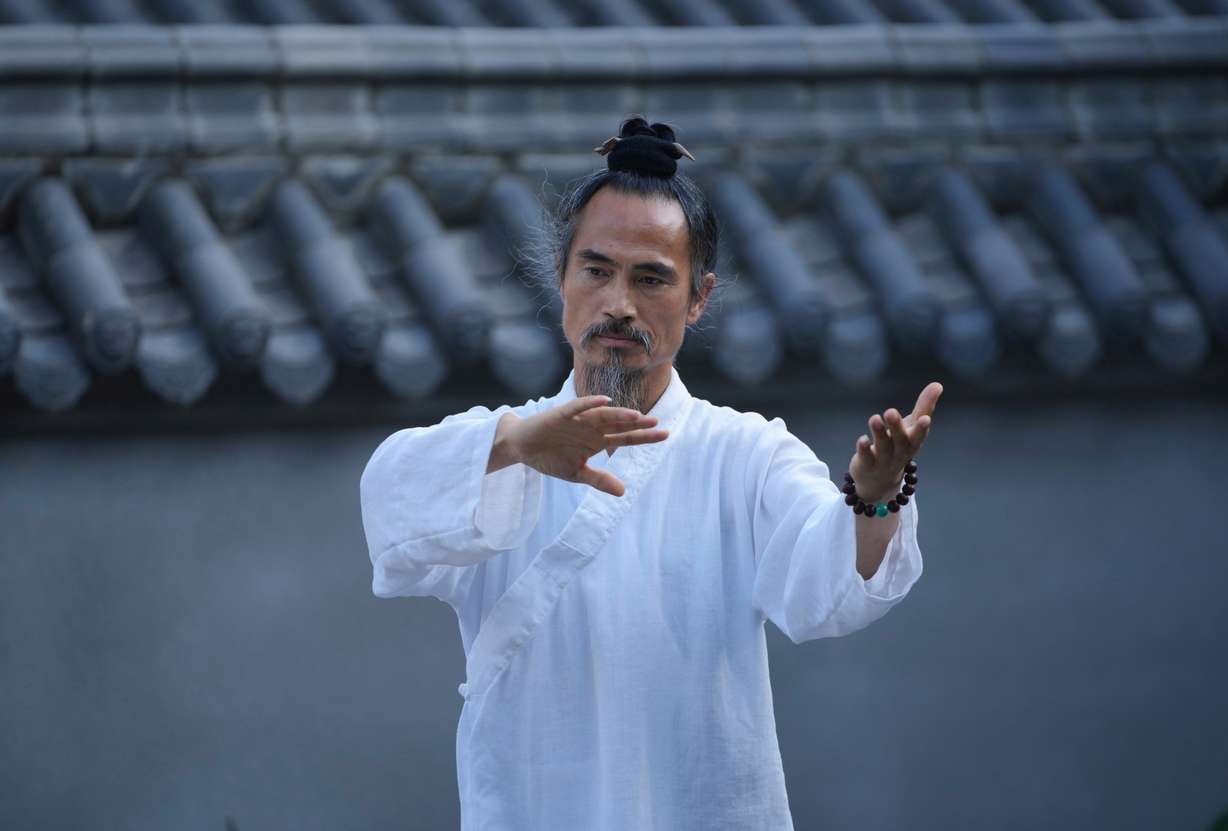
He came to understand that movement and stillness are interconnected, rather than opposites. That physical activity can help practitioners quiet the body, allowing them to become calm and grounded.
"I slowly became interested, and eventually I benefited from the practice myself," Yuan said. "That process was very profound for me."
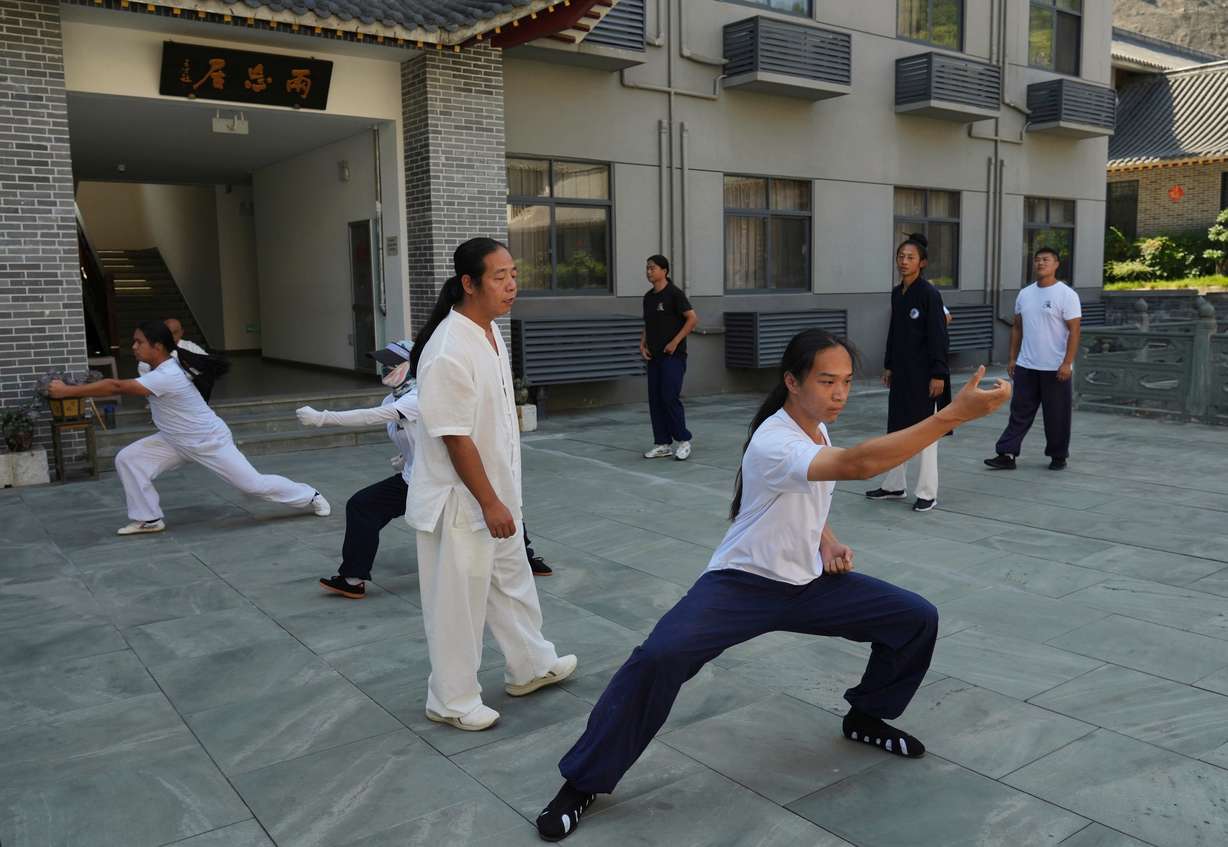
Yuan now seeks to share that knowledge with local and foreign students enrolled in the three programs at his academy.
One is a five-year course offering in-depth martial arts training. The second is focused on health and well-being, helping adults exercise and cultivate their minds. The third is a summer camp for children seeking exercise during school breaks.
Chinese philosopher Laozi is believed to have passed on teachings foundational to Taoism to his first student more than 2,500 years ago. That disciple settled on the mountain and helped spread his master's ideas.
"It did not develop into a collective religious faith until after the Qin and Han dynasties," said Shu Chenghai, the director of social education at Wudang Museum.
Wudang lies between present-day Xi'an and Luoyang, two major political centers in ancient China. That made it easier for practitioners to seek seclusion while remaining within reach of major population centers.
"The Taoist tradition was therefore never entirely about withdrawing from the world," Shu said.
Wudang's importance as a Taoist religious center came later. During the Tang era, prayers for rain at the mountain were believed to have been answered. Its standing continued to grow under subsequent rulers, reaching its height under Ming emperors.
Guo Xinyi is a Chinese student who began training at Yuan's academy five years ago. She knew of his decades-long commitment to preserving and passing down traditional Taoist martial arts. That made her feel she could trust him.
Within Chinese martial arts, teachers like Yuan are known as "Shifu." The closest English translation is "master." But the Chinese term includes the character for "father." Guo, therefore, thinks of Yuan not merely as a mentor, but as a father figure.
When she first came to his academy, she struggled with conflict with her parents. Her tai chi lessons, though, taught her to approach confrontation calmly.
"I invited Master Yuan to have tea and talk with us," Guo said. "During that conversation, the conflict somehow seemed to dissolve almost invisibly."
Yuan eased her father's anxiety, tension and excessive concern for her, she said, adding that the conversation resembled a tai chi lesson.
"When we encounter conflict, our physical instinct is to resist or attack, to move forward and meet what is coming at us," Guo said. "But tai chi does something different. First, you release tension. Then you sink. Only afterwards do you rise."
The number of students from China and abroad studying at Yuan's academy has increased in recent years.
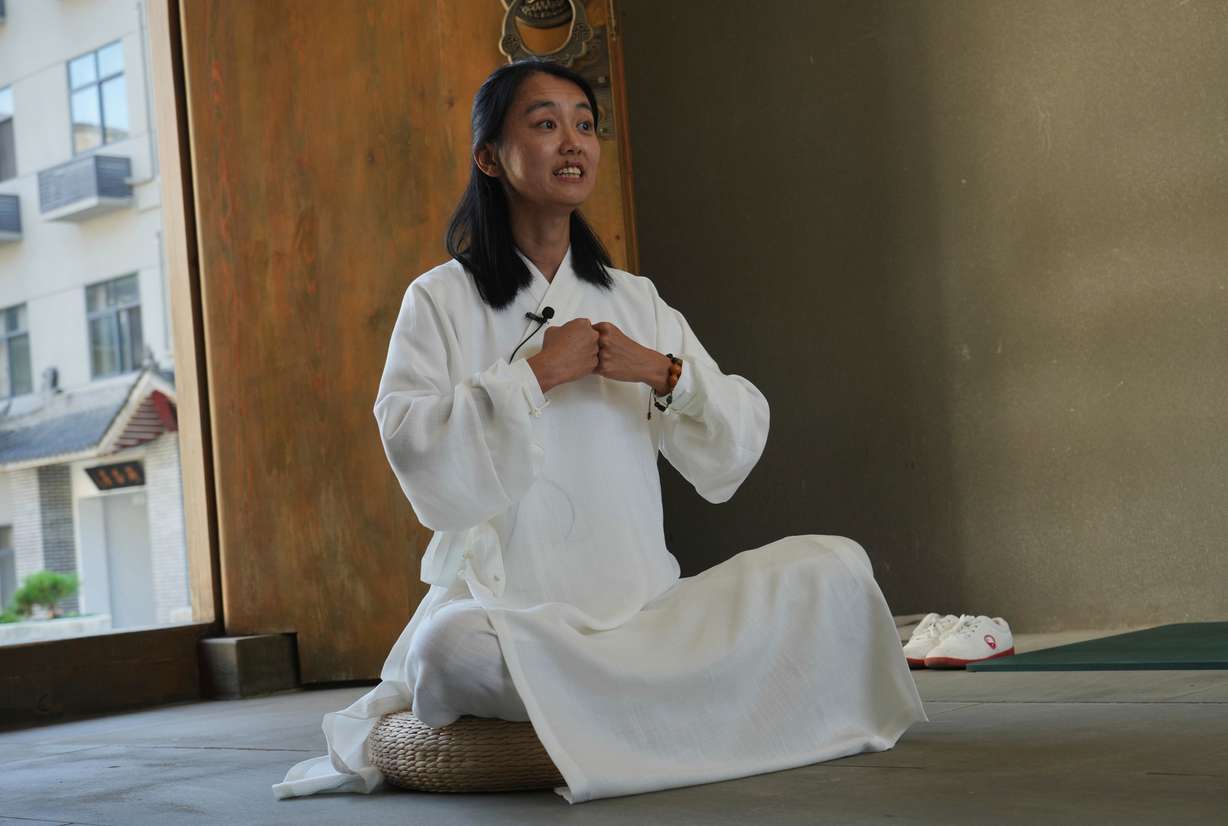
"In the past, most learners were middle-aged or elderly, but the student population has gradually become younger," he said.
Among that younger generation is Jake Pinnick, an American practitioner who arrived at age 20 and, 16 years later, calls Wudang home.
Pinnick grew up in the U.S. watching kung fu movies and playing sports that relied on competition. What he found in China forever changed his life.
"I came here for martial arts, but I stayed because of this philosophy," said Pinnick, who also became a martial arts master and recently opened his own academy in Wudang.
Yuan said teaching methods have evolved to adapt to younger generations.
Physical training is less demanding and corporal punishment has been eliminated. New ways of motivating students have been introduced instead. Among them is the chanting of slogans aimed at building physical and inner strength.
"Faith in your heart, light in your eyes and a smile on your face," is one of his students' daily chants.
Routines at his academy vary depending on the program, but training can begin as early as 6 a.m. After breakfast, students practice fundamentals before splitting into groups for specific martial arts training. Their schedules also include theory classes and meditation.
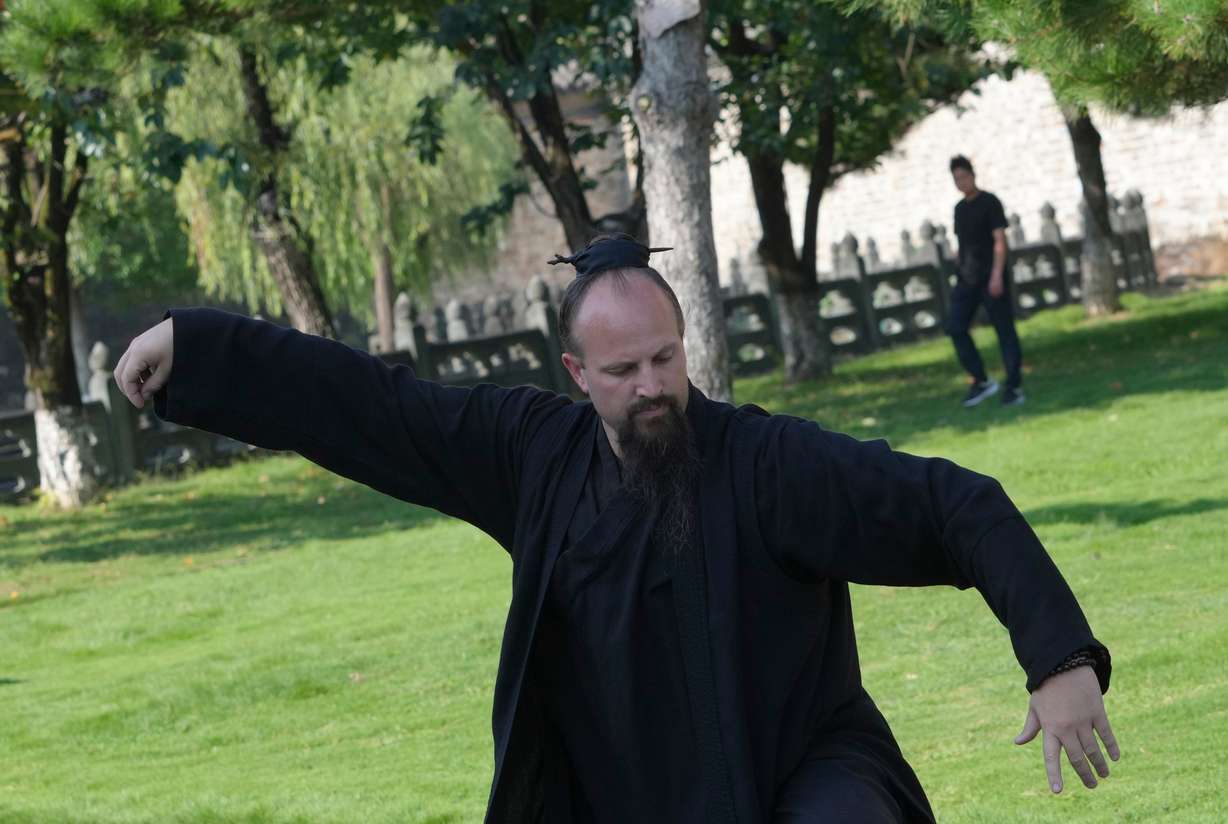
Yuan believes learning in Wudang means immersing oneself in the Taoist culture that has shaped its martial arts tradition. That environment, he said, can help students cultivate harmony with nature, with others and within themselves.
"Consider how deeply this nourishes the human heart, mind and spirit," he added. "If practicing martial arts can nourish you to such an extent, what more could you ask for?"
Contributing: Wu Jia