
Estimated read time: 4-5 minutes
- Utah lawmakers questioned a $170,000 water funding study's accuracy after KSL's investigation.
- The study, used for HB501, ignored existing water provider revenues, raising concerns.
- Utah Rivers Council found water suppliers' $2 billion revenue exceeded $1.2 billion expenses.
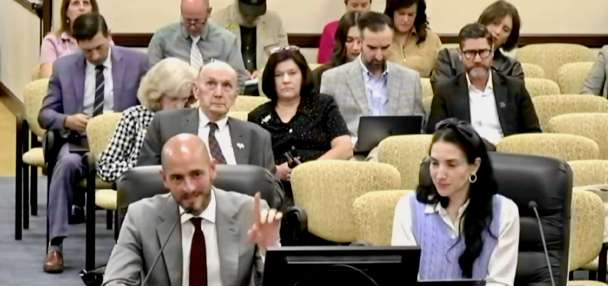
SALT LAKE CITY — Utah lawmakers questioned the accuracy of a state-commissioned study on Wednesday that was previously used as the basis for proposed legislation that, if passed, would have pressured many water suppliers across the state to collect more money from taxpayers.
The hearing followed reporting by the KSL Investigators earlier this month that revealed the study did not consider existing revenues collected by water providers.
Both legislators and utility representatives scrutinized the study, which cost taxpayers approximately $170,000 and was the basis for HB501, which got close but ultimately did not pass during the 2026 legislative session.
Rep. James Dunnigan, R-Taylorsville, said he believes the conclusions drawn from the study may be unreliable.
"It seems to me, best I can tell, that the information provided and the results from that are flawed," Dunnigan said during the hearing.
The study was commissioned to examine future water infrastructure needs across Utah and ways to pay for future projects. However, KSL's investigation found the analysis focused on future projects identified by water providers without accounting for current revenues utilities might already have in place to fund those projects.
Danyce Steck, the administrative services director for West Jordan City, told lawmakers state researchers asked utilities to provide lists of future projects but did not ask about their existing resources, reserves or excess income. She likened the experience working with the state to that of making a holiday wish list.
"It almost felt like, quite honestly, you got, I as a kid, I remember getting the Sears catalog and like going through and picking out all the toys I wanted and I put in that list to my parents. I never asked them anything past that. I just gave them the list," Steck said. "It was, 'What projects do you have on your list?' And we put in that project list, but I think that was an excess of what the actual need was, and at no time were we asked what kind of reserves or capital management financing plan we had in place."
The study's estimate of a $1.2 billion annual water infrastructure spending need has been a key figure in discussions about future water funding.
During Wednesday's hearing, state officials emphasized that number is an estimate. And that the study was part of a multi-step process.
"The fee study had to be completed a year ago, last October. The Unified Water Infrastructure Plan wasn't completed until this March. So, I think it's more important now to look at the actual project list," said Shalaine DeBernardi, deputy director of the Division of Water Resources. "When we look at it internally, we are now, I won't say move past, but we've kind of moved past the $1.2 billion number because now we have actual projects."
In an interview with KSL, DeBernardi said, "The Unified Water Infrastructure Plan indicates projects needed in the next two years show a state funding need of approximately $300 million."
That estimate is significantly lower than the $1.2 billion annual figure that the division presented to lawmakers as recently as May.
The Utah Rivers Council also testified during the hearing. The nonprofit organization spent the summer reviewing financial disclosures from 76 Utah water suppliers, according to executive director Zach Frankel. According to its analysis, those providers reported roughly $1.2 billion in expenses but more than $2 billion in revenue, leaving nearly $780 million in net revenue after the bills were paid.
Frankel also addressed the legislation considered during the 2026 legislative session that relied on the findings in the study and was aimed at encouraging water providers to bring in more revenue from taxpayers.
"This is one of the most egregious proposals I have seen," Frankel said.
He urged state leaders to pursue a more comprehensive analysis.
"We believe that we should be seeing a study that can stand the light of day to demonstrate where the spending need is," Frankel said.
The Utah Division of Water Resources previously acknowledged to KSL that water providers' revenues were not verified and that the study relied on assumptions about the funds water suppliers already have.
"This study is looking forward at future anticipated expenses," Division Director Joel Williams said. "We're going to assume anything that's in (a utility provider's) existing revenue is for an existing expense."