
Estimated read time: 5-6 minutes
SALT LAKE CITY — As days shorten and the weather begins to cool, many people begin to open up their cookbooks. Seasonal flavors such as pumpkin, cinnamon and peppermint come back into vogue and people begin to prepare their kitchens for holiday feasts. One such holiday, Thanksgiving, has long since been paired with turkey dinners, mashed potatoes and gravy, squash, cranberries and pumpkin pie, among other holiday dishes. The centerpiece of the Thanksgiving meal is usually a golden brown turkey, hopefully cooked to perfection. Of course, everyone's idea of a turkey dinner is different, with millions of home cooks experimenting with thawing, basting and timing the perfect bird. Every home cook who has attempted the turkey likely has their own secret tips and tricks to ensure the bird comes out ideally. Unfortunately, not every trick passed down by families and friends are true — or safe. Utah State University associate professors Andrea Schmutz and Callie Adams reviewed five commonly believed myths that really should stay off this year's Thanksgiving guest list.
Myth #1: It's safe to thaw your turkey on the counter overnight.
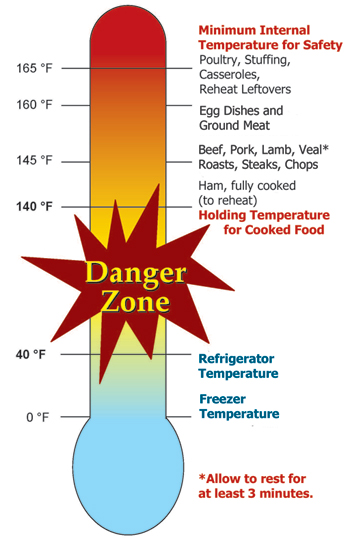
While thawing turkey on the counter may seem like a fast and easy way to prepare Thanksgiving's main course, leaving the bird out is a great way to invite bacteria to the feast. Schmutz and Adams warn that a turkey left out for more than two hours enters the "danger zone" for food (40°F-140°F). Bacteria grow quickly in these temperature ranges, even if the center of the turkey remains frozen.Rather than thawing on the counter, thawing a turkey in the refrigerator (24 hours for every four to five pounds of turkey) will allow the bird to defrost without allowing bacteria to grow. Another way to thaw turkeys is to wrap the bird in a leak-proof plastic bag and submerge it in a bath of cold water. Schmutz and Adams recommend changing the water every 30 minutes, with 30 minutes of defrosting in the water per pound of turkey.
Myth #2: Cooks should rinse their turkeys before cooking
If cooks are concerned about potential bacteria infecting their food, they should avoid rinsing their birds. The Center for Disease Control warns that rinsing turkeys may splash water droplets from the turkey across the sink, counter and utensils, contaminating multiple objects with bacteria. If cooks are determined to rinse their bird before cooking, clean all nearby objects with hot soapy water after rinsing the bird. After cleaning the area with hot water, Schmutz and Adams recommend sanitizing surfaces with either a solution composed of tablespoon of bleach mixed in a gallon of water, or else to simply use a commercial kitchen cleaner labeled as a disinfectant. Any surfaces that are used to prepare raw meat or poultry should be sanitized and only used to prepare those food items. Cooks should avoid cross-contamination by using separate preparation and cooking surfaces for produce and other foods. For those that choose not to rinse their bird, the cooking process will kill any harmful bacteria that may be present.
Myth #3: The pop-up timer will reliably tell cooks when their turkey is done
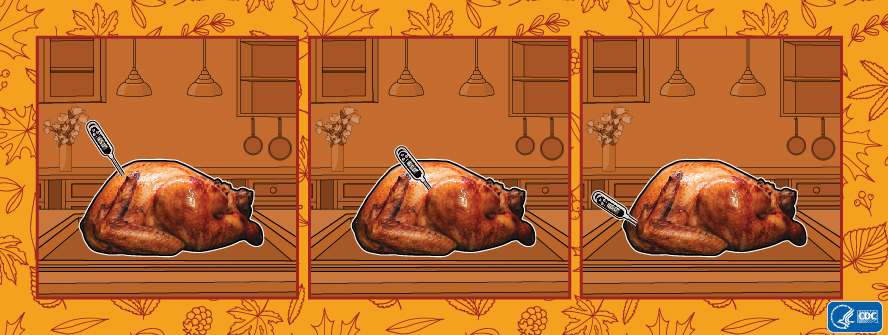
While some turkeys may have a pop-up timer included in their packaging, the USDA recommends using a food thermometer to ensure multiple areas of the bird reach 165°F. Schmutz and Adams identify three key areas of the turkey to check with the thermometer: the thickest part of the turkey breast, the innermost part of the thigh and the innermost part of the wing.
Myth #4: Stuffing cooks safely inside the turkey
Stuffing baked within the turkey may not reach 165°F, causing bacteria from the turkey to transfer over to the stuffing. Schmutz and Adams recommend cooking the stuffing in a separate dish, which they say will often lead to a better texture compared to cooking the stuffing within the turkey.
MYTH #5: Leftovers can stay out until everyone’s finished eating
The USDA warned that leftovers need to be refrigerated within two hours of serving. While this guideline is important for dishes with dairy, eggs or meat, it can be applied generally to all food items. Schmutz and Adams suggest several tips to cool food quickly after the meal has been finished:
- Carve turkey leftovers into smaller pieces so they cool faster.
- Mashed potatoes made with milk and butter should be refrigerated right away.
- Casseroles with eggs, cream or broth should be cooled quickly.
- Gravy is at high risk with both moisture and meat drippings working against it. Leftovers should be cooled in shallow containers in the fridge.
- Cranberry Sauce is more acidic, providing a poor place for bacteria to grow, but Schmutz and Adams still recommend no more than two hours out of the fridge.
- Rolls and bread are at low risk for bacteria, but can still grow stale if left out for too long.
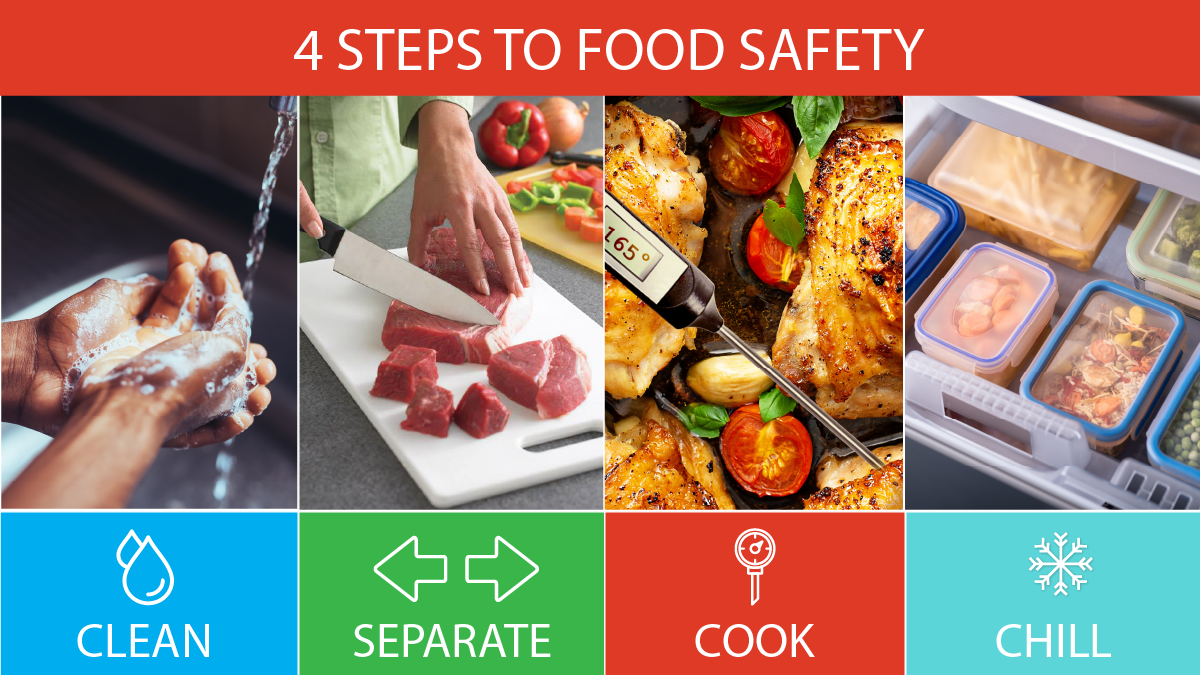
Each of these dishes can be placed into shallow containers to allow leftovers to cool faster. Schmutz and Adams also recommend labeling leftovers with the date refrigerated to ensure people know when to toss the food (within three to four days), if foraging relatives don't eat them first.The four steps of food prep, cleaning surfaces before and after food preparation, separating raw meat and poultry from produce and other foods, cooking to the proper temperatures and chilling within two hours, will ensure the meals prepared will be both delicious and safe for all.