'%3e%3cpath%20d='M34.1406%205.85938C30.3906%202.10547%2025.3047%200%2020%200C14.6953%200%209.60938%202.10547%205.85938%205.85938C2.10938%209.61328%200%2014.6953%200%2020C0%2025.3047%202.10547%2030.3906%205.85938%2034.1406C9.61328%2037.8906%2014.6953%2040%2020%2040C25.3047%2040%2030.3906%2037.8945%2034.1406%2034.1406C37.8906%2030.3906%2040%2025.3047%2040%2020C40%2014.6953%2037.8945%209.60938%2034.1406%205.85938ZM37.0117%2023.543H31.1602V13.5391H27.6328V19.9414C28.1211%2020.6914%2028.3711%2021.582%2028.3711%2022.5625V22.625C28.3711%2023.668%2028.1172%2024.6055%2027.6328%2025.4297V26.6094H36.082C33.4883%2032.9375%2027.2891%2037.3789%2020.0039%2037.3789C10.3711%2037.3789%202.62109%2029.6289%202.62109%2020C2.62109%2010.3711%2010.3711%202.62109%2020%202.62109C29.6289%202.62109%2037.3789%2010.3711%2037.3789%2020C37.3789%2021.1484%2037.2617%2022.2656%2037.0508%2023.3477C37.0391%2023.4141%2037.0234%2023.4766%2037.0117%2023.543Z'%20fill='white'/%3e%3cpath%20d='M22.3086%2018.5352C20.4336%2018.125%2019.9531%2017.8398%2019.9766%2017.1836V17.1406C19.9766%2016.6992%2020.3477%2016.2148%2021.4023%2016.2148C22.582%2016.2148%2023.8867%2016.6797%2025.0781%2017.4766L26.8516%2015.0195C25.4453%2013.8906%2023.707%2013.3398%2021.5547%2013.3398C18.5195%2013.3398%2016.4375%2015%2016.4063%2017.4766V17.5352C16.3633%2020.2617%2018.5859%2020.9805%2021.293%2021.6016C23.0391%2021.9766%2023.5703%2022.3164%2023.5703%2022.9609L23.5469%2022.9766C23.5469%2023.3906%2023.2578%2023.7031%2022.7852%2023.8359C22.5742%2023.9062%2022.1289%2023.9727%2021.5156%2023.9727C20.7617%2023.9727%2019.7539%2023.8633%2018.6328%2023.4844C18.0898%2023.2891%2017.4727%2023.0039%2016.8047%2022.6133L20.1406%2026.625C20.2813%2026.6602%2021.0977%2026.8516%2021.7734%2026.8516C25.0039%2026.8516%2027.0859%2025.2461%2027.1094%2022.6328V22.5703C27.1602%2020.1133%2025.2148%2019.1719%2022.3086%2018.5352Z'%20fill='white'/%3e%3cpath%20d='M5.24219%2013.5664V26.6133H8.75391V23.7578L10.2969%2021.9531L14.2031%2026.6133H18.3867L12.3555%2019.5195L17.4023%2013.5664H13.4531L8.75391%2019.0586V13.5664H5.24219Z'%20fill='white'/%3e%3c/g%3e%3cdefs%3e%3cclipPath%20id='clip0_97_2430'%3e%3crect%20width='40'%20height='40'%20fill='white'/%3e%3c/clipPath%3e%3c/defs%3e%3c/svg%3e)


- Phragmites, an invasive reed, covers approximately 51,000 acres around Great Salt Lake.
- Removing phragmites could save 82,000 acre-feet of water annually, experts estimate.
- State leaders are urged to continue funding phragmites removal to improve the ecosystem.
SALT LAKE CITY — If you were to have walked along the shoreline of Great Salt Lake's Farmington Bay a little more than two decades ago, you would have seen a mostly barren surface.
"After the floodwaters of the '80s and '90s receded, you can see the lakebed is not really vegetated at all. It's mostly just a salt flat," said Keith Hambrecht, restoration and invasive species program manager for the Utah Division of Forestry, Fire and State Land, pointing to a picture of the area taken in 2003.
By 2017, that same location had become blanketed by thousands of acres of phragmites, an invasive reed species that can grow upwards of 10 feet to 15 feet in height.
This is a crucial problem, but removing it and replacing it with native plant species, while tricky and time-consuming, could help save the struggling Great Salt Lake retain tens of thousands of acre-feet of water every year, Hambrecht told Utah lawmakers on Thursday.
It shows why the state has focused on the species as it seeks to get the lake back to a healthy level.
"Phragmites does have a really significant impact on Great Salt Lake, but it can be effectively controlled, and those efforts to control it are worth it, and present many win-win solutions," he said, during a Utah Legislative Water Development Commission meeting.
Utah has targeted phragmites for much of the past decade. It's a concern because the phragmites harms the Great Salt Lake's hydrology and its ecosystem.
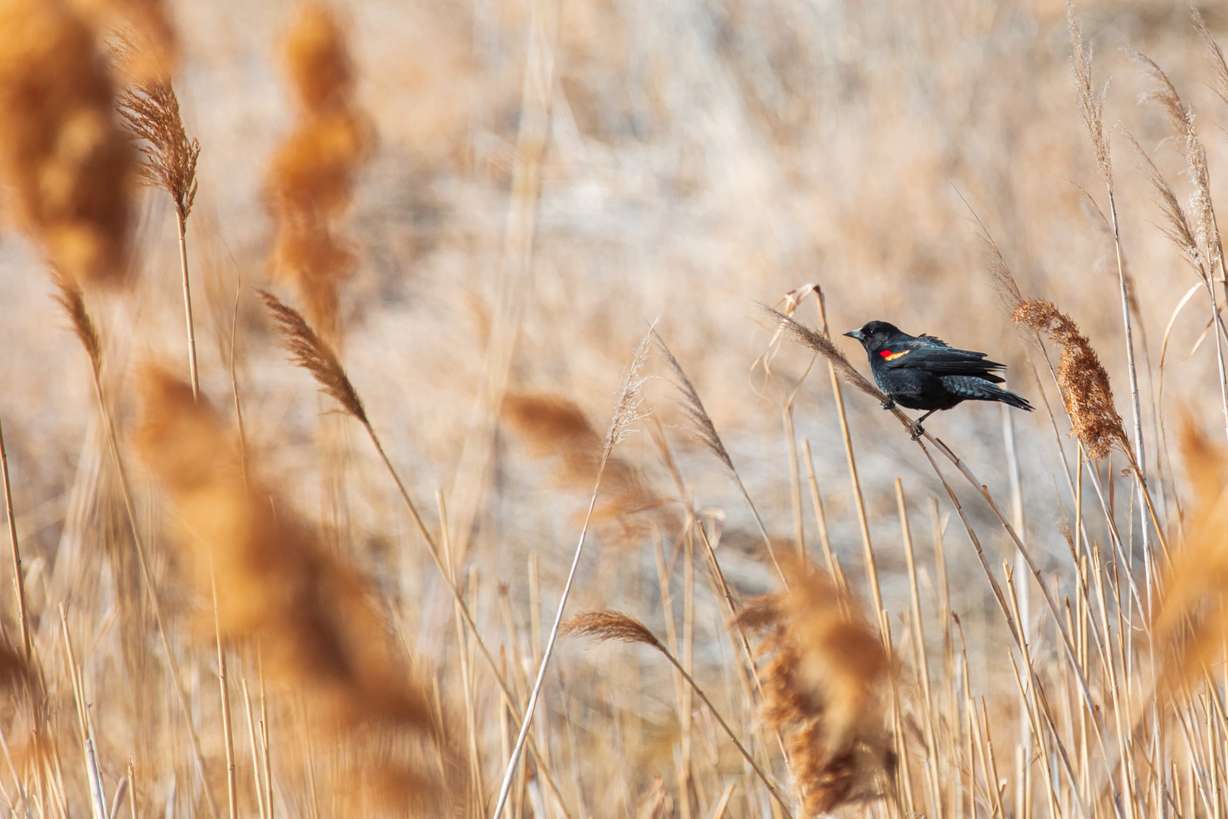
First, it's so dense that it can block "sheet flow" of water from flowing across the lakebed, while trapping sediment that raises the elevation of the ground, Hambrecht explained. That also prevents water from reaching the lake.
It's unclear how much water it's blocking, other than that it's happening.
Second, phragmites takes up water from the soil, and it evaporates through its leaf tissue. That's increased since it's so dense.
The state estimates phragmites covers approximately 51,000 acres around the lake, although that number might be lower because of the efforts to remove the species. Experts with the Utah Geological Survey and Utah Division of Water Resources are currently studying the exact impact of all the phragmites, which has yet to be completed.
However, the state preliminarily estimates that it can save 82,000 acre-feet of water annually if it can convert 51,000 acres of phragmites with approximately 40,800 acres of inland saltgrass, a native plant species, per a report sent to the committee.
Inland saltgrass also consumes water, but studies suggest it's about half the rate that invasive phragmites have consumed based on measurements at the lake.
"That's how we found these savings," Hambrecht said. "That's significant savings, but I want to point out those water savings are only realized if water is delivered to the lakebed. … Water has to make it to the lake in order to see those savings."
Additional water savings are possible when attacking phragmites elsewhere in the Great Salt Lake basin.
Phragmites creates more harm than just pulling water from the lake, he also pointed out.
Since it's tall and dense, it blocks birds from accessing the wetlands it relies on. That's part of the habitat and biodiversity challenges it creates, while also impeding recreation access along the lake.
The plant species is more prone to drying out over the summer, creating fire risks, too, all of which is why the state has invested in removing phragmites.
That's why Hambrecht called on state leaders to keep funding programs to remove phragmites from the Great Salt Lake's wetlands, along with any upstream sources that could affect ditches, canals and streams throughout the lake's watershed, as well as Utah Lake.
He estimated that it might take about a decade of additional "lake-wide scale" work to effectively remove the majority of Great Salt Lake's phragmites, when asked by state lawmakers.
Approximately $800,000 in annual ongoing funds are dedicated to the project, and another $300,000 goes toward annual Utah Lake costs. However, state land managers often seek one-time funds when wet years provide greater opportunity to remove the species.
The commission appeared optimistic with what was presented to them, viewing it as an affordable effort to improve the lake's ecosystem. It also brainstormed ways to improve coordination between agencies when it comes to removing phragmites.
Yet, having this information could sway one-time funds if wetter conditions develop during any given legislative session.
"We probably just need to be aware that we can do a lot of damage on these phragmites if we're paying attention when we get the money at the right time," said Senate Majority Assistant Whip Mike McKell, R-Spanish Fork.