'%3e%3cpath%20d='M34.1406%205.85938C30.3906%202.10547%2025.3047%200%2020%200C14.6953%200%209.60938%202.10547%205.85938%205.85938C2.10938%209.61328%200%2014.6953%200%2020C0%2025.3047%202.10547%2030.3906%205.85938%2034.1406C9.61328%2037.8906%2014.6953%2040%2020%2040C25.3047%2040%2030.3906%2037.8945%2034.1406%2034.1406C37.8906%2030.3906%2040%2025.3047%2040%2020C40%2014.6953%2037.8945%209.60938%2034.1406%205.85938ZM37.0117%2023.543H31.1602V13.5391H27.6328V19.9414C28.1211%2020.6914%2028.3711%2021.582%2028.3711%2022.5625V22.625C28.3711%2023.668%2028.1172%2024.6055%2027.6328%2025.4297V26.6094H36.082C33.4883%2032.9375%2027.2891%2037.3789%2020.0039%2037.3789C10.3711%2037.3789%202.62109%2029.6289%202.62109%2020C2.62109%2010.3711%2010.3711%202.62109%2020%202.62109C29.6289%202.62109%2037.3789%2010.3711%2037.3789%2020C37.3789%2021.1484%2037.2617%2022.2656%2037.0508%2023.3477C37.0391%2023.4141%2037.0234%2023.4766%2037.0117%2023.543Z'%20fill='white'/%3e%3cpath%20d='M22.3086%2018.5352C20.4336%2018.125%2019.9531%2017.8398%2019.9766%2017.1836V17.1406C19.9766%2016.6992%2020.3477%2016.2148%2021.4023%2016.2148C22.582%2016.2148%2023.8867%2016.6797%2025.0781%2017.4766L26.8516%2015.0195C25.4453%2013.8906%2023.707%2013.3398%2021.5547%2013.3398C18.5195%2013.3398%2016.4375%2015%2016.4063%2017.4766V17.5352C16.3633%2020.2617%2018.5859%2020.9805%2021.293%2021.6016C23.0391%2021.9766%2023.5703%2022.3164%2023.5703%2022.9609L23.5469%2022.9766C23.5469%2023.3906%2023.2578%2023.7031%2022.7852%2023.8359C22.5742%2023.9062%2022.1289%2023.9727%2021.5156%2023.9727C20.7617%2023.9727%2019.7539%2023.8633%2018.6328%2023.4844C18.0898%2023.2891%2017.4727%2023.0039%2016.8047%2022.6133L20.1406%2026.625C20.2813%2026.6602%2021.0977%2026.8516%2021.7734%2026.8516C25.0039%2026.8516%2027.0859%2025.2461%2027.1094%2022.6328V22.5703C27.1602%2020.1133%2025.2148%2019.1719%2022.3086%2018.5352Z'%20fill='white'/%3e%3cpath%20d='M5.24219%2013.5664V26.6133H8.75391V23.7578L10.2969%2021.9531L14.2031%2026.6133H18.3867L12.3555%2019.5195L17.4023%2013.5664H13.4531L8.75391%2019.0586V13.5664H5.24219Z'%20fill='white'/%3e%3c/g%3e%3cdefs%3e%3cclipPath%20id='clip0_97_2430'%3e%3crect%20width='40'%20height='40'%20fill='white'/%3e%3c/clipPath%3e%3c/defs%3e%3c/svg%3e)


- Utah senators toured the Great Salt Lake to assess restoration efforts firsthand.
- The lake's level remains a foot above 2022's record low, despite last winter's poor snowpack.
- Lawmakers will continue to prioritize the lake during next year's legislative session.
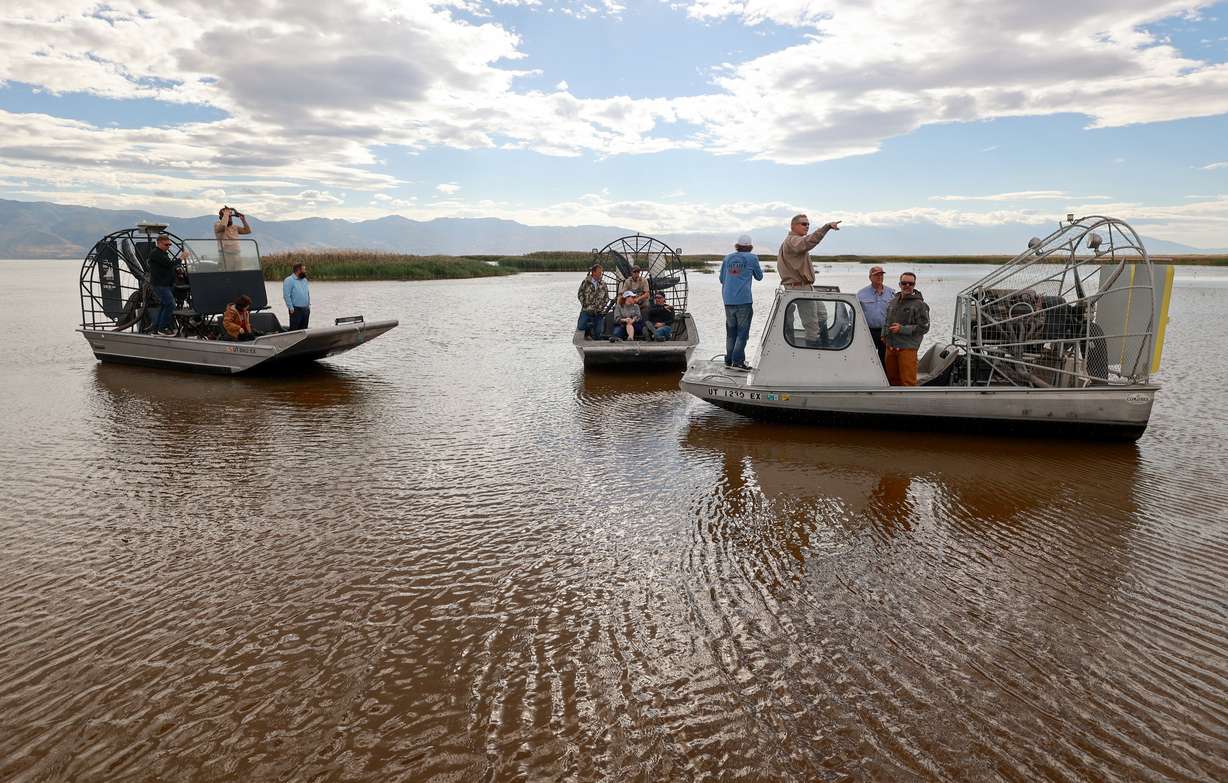
FARMINGTON — Several top Republican state senators took an airboat tour of the Great Salt Lake Thursday morning along with the new lake commissioner to get a firsthand look at the lake as they plan future legislation to continue efforts to restore it.
Hannah Freeze, who was confirmed as Great Salt Lake commissioner by the Senate a day earlier, said that despite a poor snowpack last winter, the lake likely won't reach the record low levels seen in 2022. It still sits about a foot higher than the low of 4,188.5 feet, and while that's still well below healthy lake levels, Freeze said it's thanks to conservation and legislative efforts over the past several years that the level isn't even lower.
"We won't see the Great Salt Lake hit a record low, and that's in large part due to the efforts that we are doing to get more water to the lake," she told lawmakers.
Senate Majority Whip Chris Wilson said lawmakers aren't losing focus on the lake and said it's still a "high priority."
"We still have concerns," he said. "It's a foot above the lowest levels in 2022, so yeah, it's a little bit of a win, but we've still got a lot of work to do, no question about it."
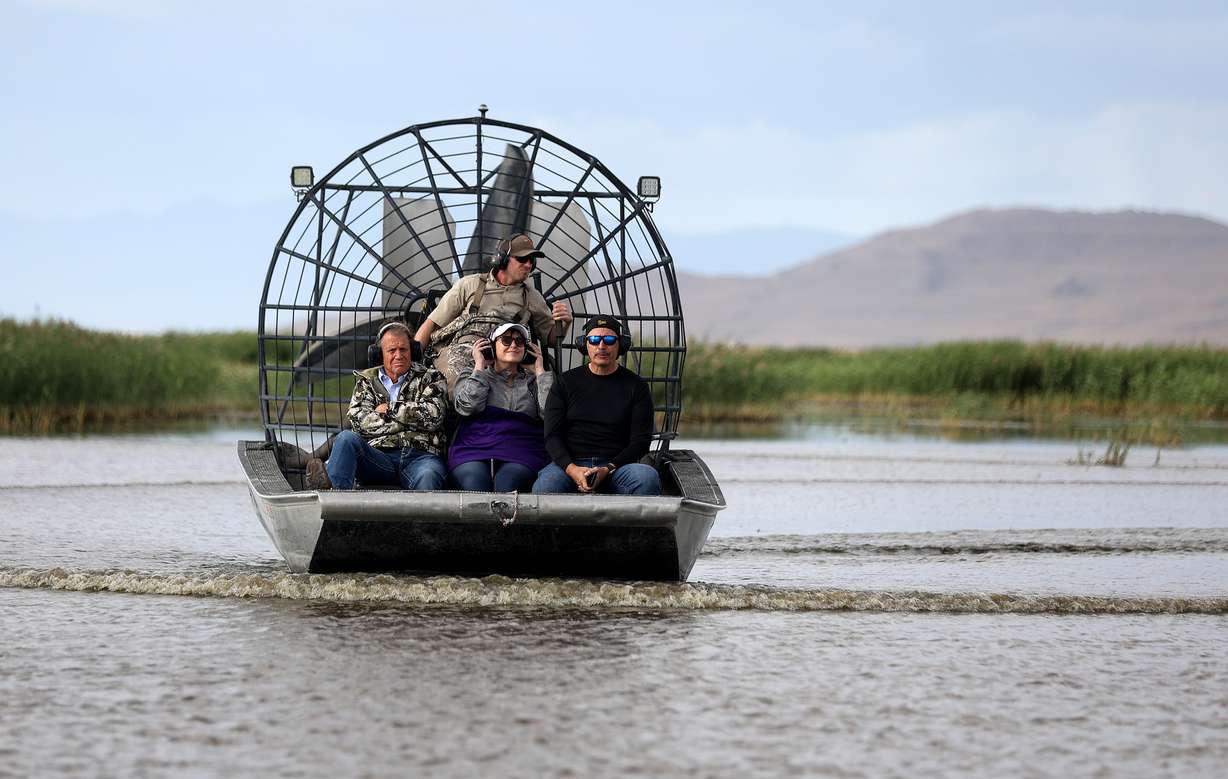
The senators spent about an hour touring the shallow water of Farmington Bay in airboats piloted by employees of the Utah Department of Natural Resources.
It was the first time on the lake for Wilson, R-North Logan, who was drenched with mud from the shallow lake bed when his airboat came to an abrupt halt. But even that didn't dampen his excitement at seeing the thousands of birds floating on the surface and flying alongside the boat — some of the nearly 12 million that visit the lake each year.
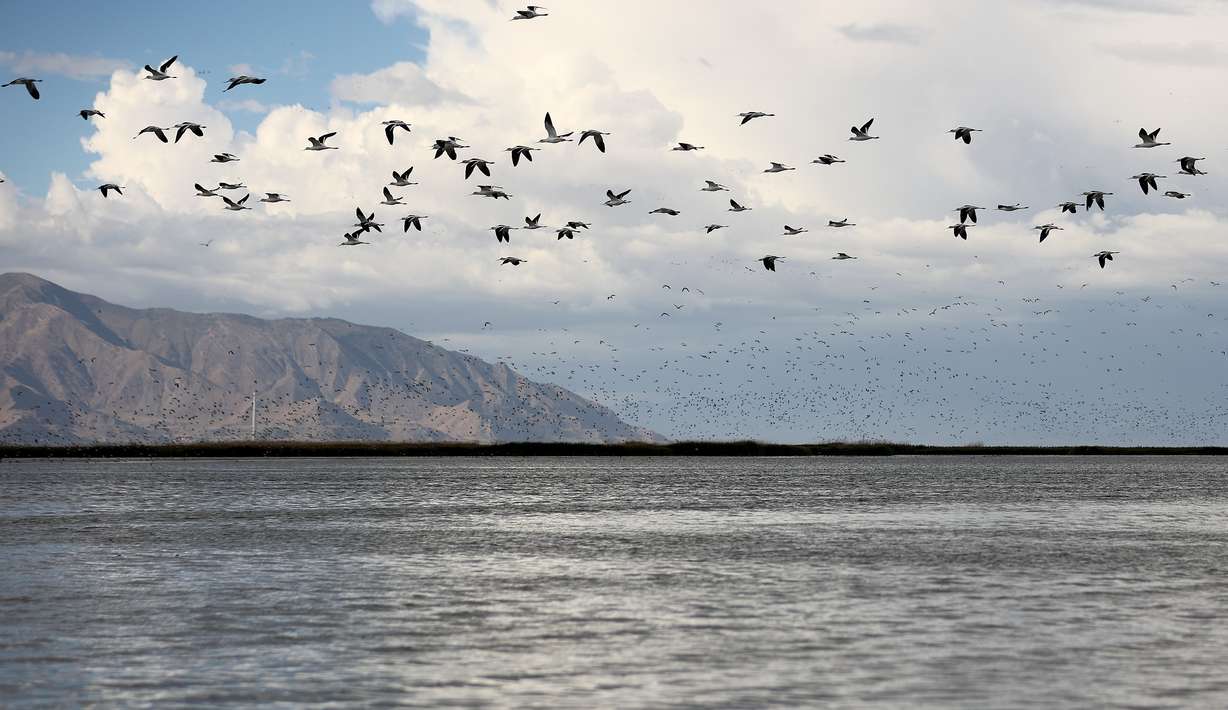
John Luft, Great Salt Lake ecosystem program manager for the Utah Division of Wildlife Resources, said he has been with the division for more than two decades and remembers when there were so many birds they would partially block out the sun when they took flight.
"We've got all kinds of wildlife, it's been beautiful out here," Wilson told KSL before the tour. "Seeing is believing."
The dwindling size of the Great Salt Lake presents multiple problems for the residents of the state, human and non-human alike. The lake supports Utah's famous ski industry as well as the brine shrimp industry and mining. It's also a crucial stopover for several species of migratory birds, and its evaporation could release heavy metals that could be detrimental to human health.
Wilson, who has more than a dozen grandchildren living in the Beehive State, said he's most worried about the air quality. Lawmakers have invested in dust monitoring systems around the lake to help track dust around the lake.
We still have concerns. It's a foot above the lowest levels in 2022, so yeah, it's a little bit of a win, but we've still got a lot of work to do, no question about it.
–Senate Majority Whip Chris Wilson
Rep. Jill Koford, R-Ogden, has been behind several recent bills focused on the lake and said she's planning more for next year's legislative session, should she win her election to fill the seat left vacant by Sen. Ann Millner's retirement.
After a short moratorium on major lake legislation this past year to give time to assess the efficacy of previous policies, lawmakers are planning to focus more on the lake next year, though the details are still being worked out.
"We're always looking for ways to do better," Koford said. "We're looking at some conservation legislation, looking at some infrastructure and some funding. I've got about four different buckets that I'm looking at in terms of policies towards Great Salt Lake."
The state is working aggressively to eradicate phragmites, an invasive and thirsty reed that is common around the lake. Wilson said he wants to take a similar approach to forest management — eliminating invasive, water-intensive plants in hopes of returning more runoff to the lake.
"We know that if they have pine needles, that that water doesn't get into the ground," he said. "It evaporates either off the canopy of the tree (or) it gets on pine needles and it doesn't get into the ground. ... My guess is that's the next lever we can push."
They're also still pushing for the $1 billion President Donald Trump has requested from Congress to help the lake.
Koford said her visits to the lake in recent years have changed her perception of it.
"I grew up in Utah, and for so many years we thought that the Great Salt Lake was just this dead, stinky body of water, and it is not," she said. "It is this incredible water system that is such an asset to our state. I wish I could get every person out there to experience. It's almost an emotional experience when you get that connection to the lake and you see the life and the migratory process and just everything that's out there. It's beautiful."