'%3e%3cpath%20d='M34.1406%205.85938C30.3906%202.10547%2025.3047%200%2020%200C14.6953%200%209.60938%202.10547%205.85938%205.85938C2.10938%209.61328%200%2014.6953%200%2020C0%2025.3047%202.10547%2030.3906%205.85938%2034.1406C9.61328%2037.8906%2014.6953%2040%2020%2040C25.3047%2040%2030.3906%2037.8945%2034.1406%2034.1406C37.8906%2030.3906%2040%2025.3047%2040%2020C40%2014.6953%2037.8945%209.60938%2034.1406%205.85938ZM37.0117%2023.543H31.1602V13.5391H27.6328V19.9414C28.1211%2020.6914%2028.3711%2021.582%2028.3711%2022.5625V22.625C28.3711%2023.668%2028.1172%2024.6055%2027.6328%2025.4297V26.6094H36.082C33.4883%2032.9375%2027.2891%2037.3789%2020.0039%2037.3789C10.3711%2037.3789%202.62109%2029.6289%202.62109%2020C2.62109%2010.3711%2010.3711%202.62109%2020%202.62109C29.6289%202.62109%2037.3789%2010.3711%2037.3789%2020C37.3789%2021.1484%2037.2617%2022.2656%2037.0508%2023.3477C37.0391%2023.4141%2037.0234%2023.4766%2037.0117%2023.543Z'%20fill='white'/%3e%3cpath%20d='M22.3086%2018.5352C20.4336%2018.125%2019.9531%2017.8398%2019.9766%2017.1836V17.1406C19.9766%2016.6992%2020.3477%2016.2148%2021.4023%2016.2148C22.582%2016.2148%2023.8867%2016.6797%2025.0781%2017.4766L26.8516%2015.0195C25.4453%2013.8906%2023.707%2013.3398%2021.5547%2013.3398C18.5195%2013.3398%2016.4375%2015%2016.4063%2017.4766V17.5352C16.3633%2020.2617%2018.5859%2020.9805%2021.293%2021.6016C23.0391%2021.9766%2023.5703%2022.3164%2023.5703%2022.9609L23.5469%2022.9766C23.5469%2023.3906%2023.2578%2023.7031%2022.7852%2023.8359C22.5742%2023.9062%2022.1289%2023.9727%2021.5156%2023.9727C20.7617%2023.9727%2019.7539%2023.8633%2018.6328%2023.4844C18.0898%2023.2891%2017.4727%2023.0039%2016.8047%2022.6133L20.1406%2026.625C20.2813%2026.6602%2021.0977%2026.8516%2021.7734%2026.8516C25.0039%2026.8516%2027.0859%2025.2461%2027.1094%2022.6328V22.5703C27.1602%2020.1133%2025.2148%2019.1719%2022.3086%2018.5352Z'%20fill='white'/%3e%3cpath%20d='M5.24219%2013.5664V26.6133H8.75391V23.7578L10.2969%2021.9531L14.2031%2026.6133H18.3867L12.3555%2019.5195L17.4023%2013.5664H13.4531L8.75391%2019.0586V13.5664H5.24219Z'%20fill='white'/%3e%3c/g%3e%3cdefs%3e%3cclipPath%20id='clip0_97_2430'%3e%3crect%20width='40'%20height='40'%20fill='white'/%3e%3c/clipPath%3e%3c/defs%3e%3c/svg%3e)


- Colorado biologists rescued 103 Uncompahgre cutthroat trout from Nate Creek amid the Gold Mountain Fire.
- The fish, unique to the Upper Uncompahgre River Basin, faced habitat threats.
- Rescue efforts involved coordination with firefighters and Colorado Parks and Wildlife.
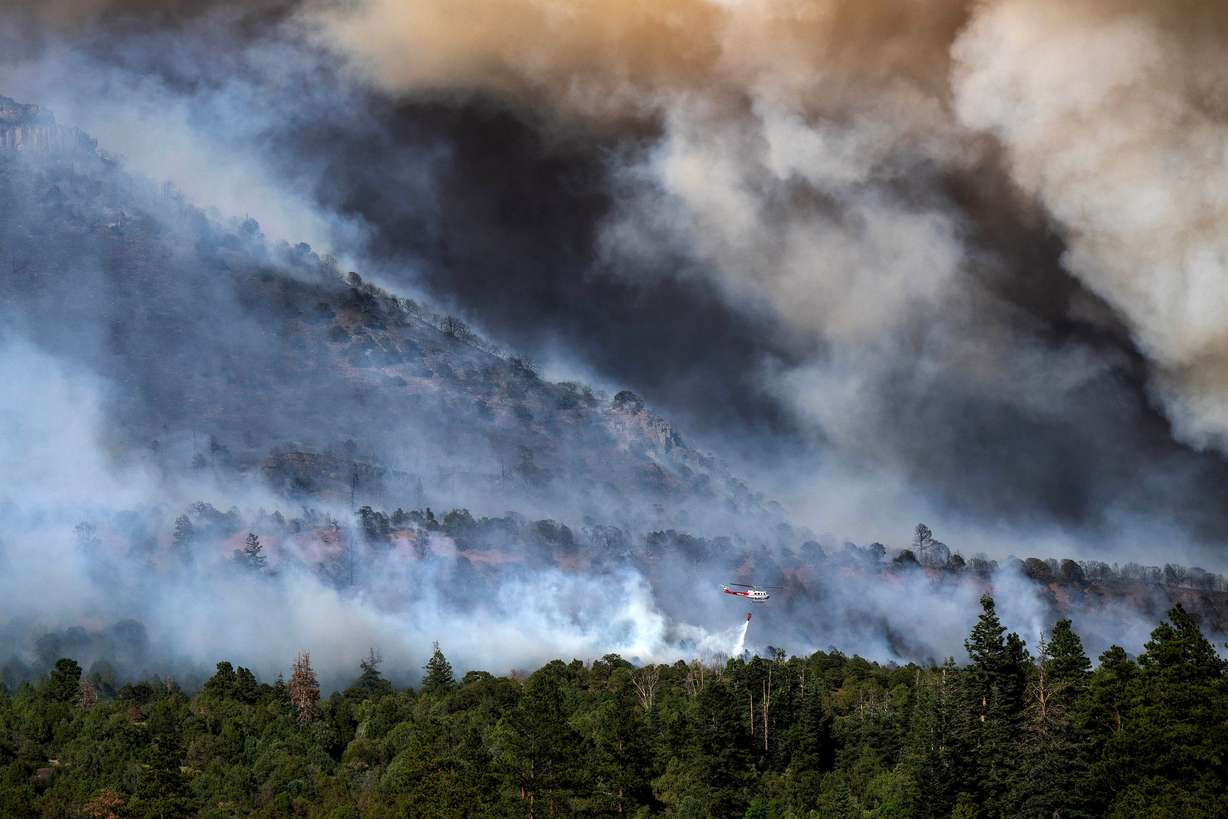
SALT LAKE CITY — The Gold Mountain Fire was first discovered about two miles northeast of Ouray, Colorado, in the early evening of June 27. Over the next few days, the fire spread to more than 16,000 acres, potentially endangering many lives, not all of which were human. Authorities issued the first voluntary evacuation July 1.
The fire crossed into Gunnison County, near the Uncompahgre National Forest, which is home to hundreds of wildlife species, and mandatory evacuation orders were issued on July 7. Over the following weeks, the fire consumed nearly 40,000 acres while nearly 1,000 personnel worked to contain it.
Of course, not all of the "residents" of the region who were in harm's way could evacuate, nor receive warning. For local wildlife populations, there's little communities and governments can do to help protect them during such extreme events.
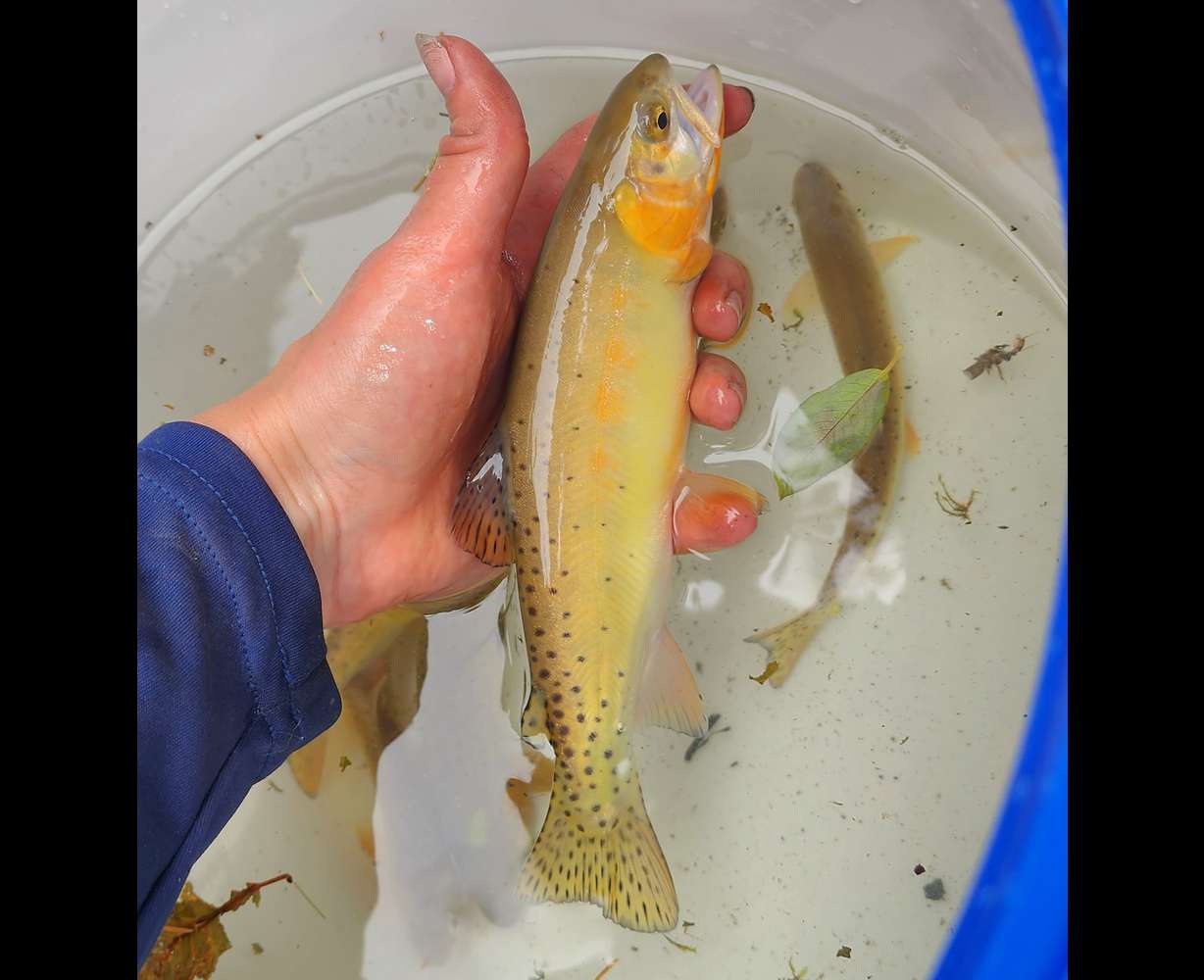
Yet, that did not stop Eric Gardunio, an aquatic biologist with the Colorado Parks and Wildlife, from doing everything in his power to save from a stream within the burn the only known remaining population of the Uncompahgre cutthroat trout.
"These beautiful fish represent a living part of the history of this place," Gardunio told Colorado Outdoors Magazine. "Currently, (Colorado Parks and Wildlife) is trying to restore them to many of the streams where they have been lost. They are resilient and have persisted in harsh environments for thousands of years, and they can flourish again if we give them a chance."
Accompanied by a team of firefighters, Gardunio and several other biologists from Colorado Parks and Wildlife hiked into Nate Creek while the ridge and nearby trees still burned. They were going to try and save the last of this unique native fish.
The Uncompahgre cutthroat
A conversation with a biologist about how rare or unique a species is can quickly get into the weeds. In the case of the Uncompahgre cutthroat trout, it may not fit those definitions perfectly, but a little context helps.
"The fish are an irreplaceable remnant of the native cutthroat trout populations that historically occupied numerous creeks in the Uncompahgre River system around Ouray and Ridgway," wrote John Livingston, the public information officer, for Colorado Parks and Wildlife, in Colorado Outdoor Magazine. The cutthroat subspecies as a whole only occupies 10%-13% of its historic range, said Dan Kowalski, an aquatic research scientist with Colorado Parks and Wildlife who also participated in the rescue.
As a result, the cutthroat today exists in a marginal way, and yet its genetic diversity is differentiated all the way down to the specific river basins they're from. Kowalski pointed out that, for example, San Juan River cutthroats are genetically different than Colorado River cutthroats.
For the fish that Gardunio set out to save is only found in one place: Nate Creek.
"This is the only aboriginal cutthroat known to the Upper Uncompahgre River Basin," Kowalski said.
"From a standpoint of preserving unique genetic diversity within the subspecies or species, this population is one of one."
And, as the fire spread closer to their home waters, Gardunio told Livingston that he was getting increasingly anxious. He did not know if there'd be an opportunity to get into the forest to save them.
The rescue
Nate Creek is about 11 miles east of Ridgway, in the Uncompahgre National Forest. It's a small feeder to the Uncompahgre River, which flows into the Gunnison River, one of the Colorado River's largest tributaries.
Around 6 p.m. on July 14, Gardunio and his crew got a call from the Forest Service, which said Colorado Parks and Wildlife would have a window to enter the next morning. At that point, more than 35,000 acres had burned and the fire was only 12% contained, but the Forest Service said they'd have until 1 p.m. to try and get as many fish out of the creek as they could.
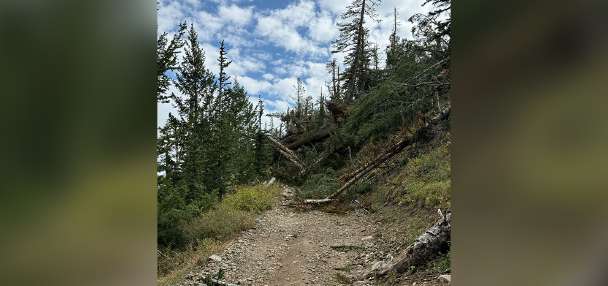
Twelve hours later, the team was mobilizing at their offices in the dark. After attending the Forest Service's daily morning briefing, they drove up the unpaved Owl Creek Pass Road, which runs adjacent to Nate Creek up into what's called Devil's Canyon.
Once they arrived, they split into three different teams to access the creek at different locations. Gardunio's team had to go down the 400 or so vertical feet and hike about a mile and a half to the stream. One of the other teams had about half a mile to cover.
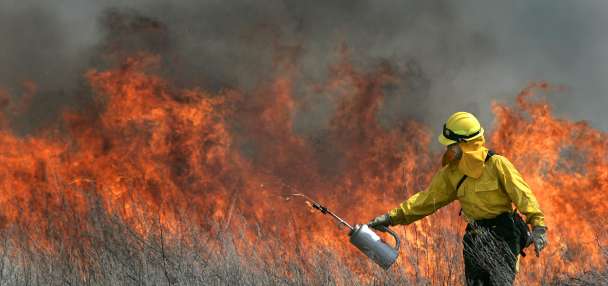
"It was still burning" when they arrived, Kowalski said. "There were trees that were on fire as we were hiking down. We could see active fire up on the ridge above us and there was still a lot of heat in the ground and big trees were still burning while we were in there. We saw active fire."
As they hiked, they were told by the firefighters to be aware of falling trees and to avoid stepping into roots still burning under the ash.
While the fires themselves have some potential to affect the fish, it is what comes later that's most deadly and damaging.
In particular, rain storms and the subsequent floods wash through the creek, knocking the fish out of the water, and filling them with ash and debris. Kowalski said that such events make the streams anoxic — without oxygen — which kills the cutthroats.
Gardunio and his team used a tool called an electrofishing backpack, which stunned the fish in the water, making it easier to net the cutthroat before transferring them to five-gallon buckets.
From a standpoint of preserving unique genetic diversity within the subspecies or species, this population is one of one.
–Dan Kowalski, Colorado Parks and Wildlife aquatic research scientist
The team pulled fish from about one-third of their habitat, ensuring that they had a representative population should the habitat not survive subsequent flooding.
In all, they pulled 103 of the cutthroats out of the stream, varying in size from 3 to 7 inches long.
"I am happy with the number of fish we were able to rescue," Gardunio told Livingston. "I think that it was almost exactly what we were hoping to get."
All those 5-gallon buckets then needed to be humped back to the road, where a transfer truck from Colorado Parks and Wildlife's Rifle Falls Fish Hatchery was waiting to take the fish to an isolation system.
Not a minute too soon, either. The weather began to shift right as the firefighters predicted and the crew drove out of the canyon at 12:50 p.m.
What's next?
Just in the nick of time, too. On July 29, there was a massive flash flood that washed through Nate Creek. An adjacent stream that was measuring around 7 or 8 cubic feet per second jumped to 400 cubic feet per second within an hour.
"With the way the monsoons really rolled in, getting that one six-hour window or so really ended up showing how important getting that window was," Livingston said.
"You don't want to impact that population of fish unnecessarily. And we didn't — there was still plenty of fish left — but in our hearts we were all hoping that the fish in the creek would be fine," Kowalski said.
With those floods, it's unlikely the fish would survive. Kowalski said that the timing of the rescue and the effort to execute it — the result of a gargantuan level of coordination and preplanning done by Gardunio — was "an absolutely necessary thing."
Now they'll wait and see what happens to the ecosystem around Nate Creek. If the Uncompahgre cutthroat survives in their natural habitat, Colorado Parks and Wildlife has a brood stock to repopulate other nearby waterways with the indigenous, unique fish. If not, they'll be able to restore the population they saved. Either way, as a result of their rescue, they now have the option.
A grateful community
This is not the first time that Colorado Parks and Wildlife has had to rescue a unique population of fish. Last year, their biologists successfully saved a similar population from the Stoner Mesa Fire in Wildcat Creek near Rico. In the past, they've also stepped in to save various fish species from drought conditions, where streams are close to running dry.
But Kowalski stressed how significant Gardunio and Jim White's efforts were to ensure this small population survived the fires.
"(Gardunio) spent weeks in close coordination with the Forest Service and our hatchery staff," he said. "There was a tremendous amount of background work and homework that had to be done."
But Kowalski also made clear that none of this would have been possible without the incident command firefighters. Not only did they see the importance of preserving the natural record of Colorado, but also how important saving the cutthroat was to the community.
"We certainly couldn't do it without the support of the incident command folks allowing it to happen," Kowalski said.