'%3e%3cpath%20d='M34.1406%205.85938C30.3906%202.10547%2025.3047%200%2020%200C14.6953%200%209.60938%202.10547%205.85938%205.85938C2.10938%209.61328%200%2014.6953%200%2020C0%2025.3047%202.10547%2030.3906%205.85938%2034.1406C9.61328%2037.8906%2014.6953%2040%2020%2040C25.3047%2040%2030.3906%2037.8945%2034.1406%2034.1406C37.8906%2030.3906%2040%2025.3047%2040%2020C40%2014.6953%2037.8945%209.60938%2034.1406%205.85938ZM37.0117%2023.543H31.1602V13.5391H27.6328V19.9414C28.1211%2020.6914%2028.3711%2021.582%2028.3711%2022.5625V22.625C28.3711%2023.668%2028.1172%2024.6055%2027.6328%2025.4297V26.6094H36.082C33.4883%2032.9375%2027.2891%2037.3789%2020.0039%2037.3789C10.3711%2037.3789%202.62109%2029.6289%202.62109%2020C2.62109%2010.3711%2010.3711%202.62109%2020%202.62109C29.6289%202.62109%2037.3789%2010.3711%2037.3789%2020C37.3789%2021.1484%2037.2617%2022.2656%2037.0508%2023.3477C37.0391%2023.4141%2037.0234%2023.4766%2037.0117%2023.543Z'%20fill='white'/%3e%3cpath%20d='M22.3086%2018.5352C20.4336%2018.125%2019.9531%2017.8398%2019.9766%2017.1836V17.1406C19.9766%2016.6992%2020.3477%2016.2148%2021.4023%2016.2148C22.582%2016.2148%2023.8867%2016.6797%2025.0781%2017.4766L26.8516%2015.0195C25.4453%2013.8906%2023.707%2013.3398%2021.5547%2013.3398C18.5195%2013.3398%2016.4375%2015%2016.4063%2017.4766V17.5352C16.3633%2020.2617%2018.5859%2020.9805%2021.293%2021.6016C23.0391%2021.9766%2023.5703%2022.3164%2023.5703%2022.9609L23.5469%2022.9766C23.5469%2023.3906%2023.2578%2023.7031%2022.7852%2023.8359C22.5742%2023.9062%2022.1289%2023.9727%2021.5156%2023.9727C20.7617%2023.9727%2019.7539%2023.8633%2018.6328%2023.4844C18.0898%2023.2891%2017.4727%2023.0039%2016.8047%2022.6133L20.1406%2026.625C20.2813%2026.6602%2021.0977%2026.8516%2021.7734%2026.8516C25.0039%2026.8516%2027.0859%2025.2461%2027.1094%2022.6328V22.5703C27.1602%2020.1133%2025.2148%2019.1719%2022.3086%2018.5352Z'%20fill='white'/%3e%3cpath%20d='M5.24219%2013.5664V26.6133H8.75391V23.7578L10.2969%2021.9531L14.2031%2026.6133H18.3867L12.3555%2019.5195L17.4023%2013.5664H13.4531L8.75391%2019.0586V13.5664H5.24219Z'%20fill='white'/%3e%3c/g%3e%3cdefs%3e%3cclipPath%20id='clip0_97_2430'%3e%3crect%20width='40'%20height='40'%20fill='white'/%3e%3c/clipPath%3e%3c/defs%3e%3c/svg%3e)




- Orem High School students Abigail Clark and Teon Sonomura joined Utah's delegation in D.C.
- They previously exchanged letters with President Xi, fostering cross-cultural understanding.
- Their involvement highlights Utah's strong Chinese immersion program and promotes international friendship.
OREM — Six years after a class of fourth-grade students wrote New Year's cards to President Xi Jinping, two of those students joined Utah's delegation last month in D.C. to welcome the Chinese president to the U.S.
Orem High students Abigail Clark and Teon Sonomura said that because of their decision to join the Chinese immersion program while in elementary school, they have been given so many opportunities they never dreamed of.
Abigail chose to join the program because she thought it would be cool, and didn't realize how that one little decision would change so much in her life. Teon did the program, following his older siblings' lead, because his father believed learning Chinese would contribute to their futures.
In 2020, their class wrote cards to send to President Xi for Chinese New Year. Abigail remembers her teacher saying the president enjoys soccer, so she included in her letter how much she loves playing soccer.
Since it was the beginning of the COVID-19 pandemic, Teon said he wrote that he hoped all the diseases the Chinese people were dealing with would get better. The elementary students were so shocked and surprised when they received a letter in response from the president.
"There was a line in his letter that said 'Many of you enjoy sports and exercise and I do, too.' And I was like, 'That's his line that was replying to my letter!' Looking back, I don't know, probably 50% of the kids mentioned sports, but it felt like that was his line to me," Abigail said.
Xi's letter also mentioned that he would love to visit Utah once everything from the pandemic calmed down, Teon said.
"I think that was really just speaking to all of us in general, as we hoped COVID would start to go away and that we wished him well and we welcome him to Utah. In a way, he really responded to all our letters," he said.
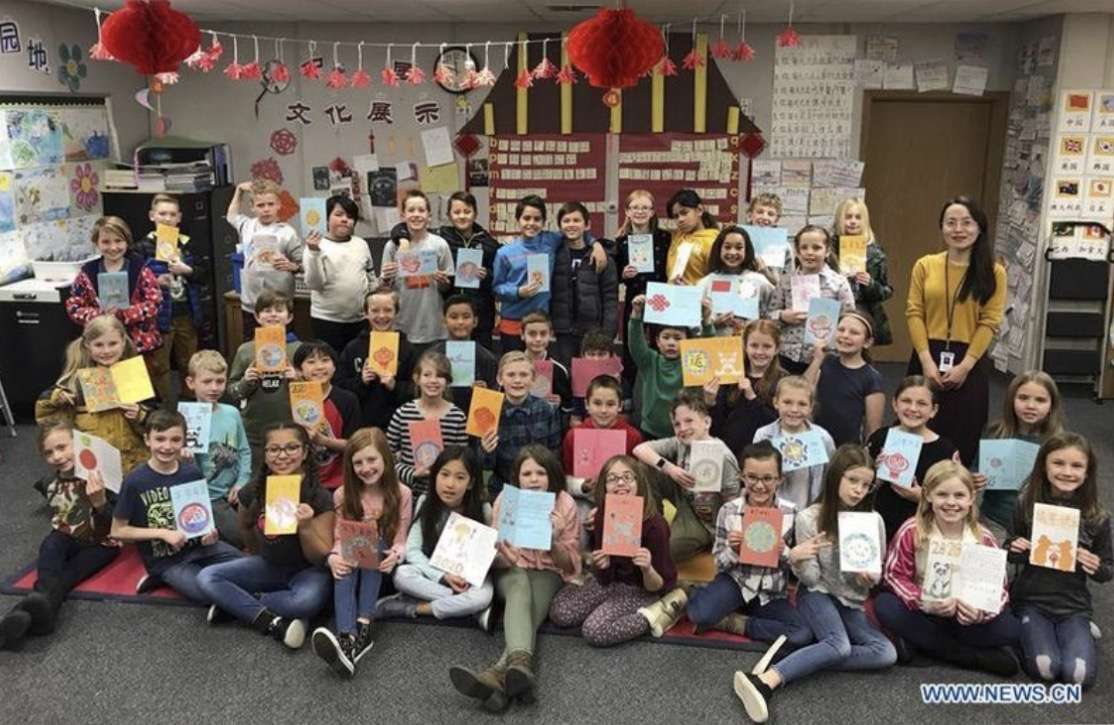
Abigail, Teon, and some of the other students were later interviewed by China Central Television to talk about their experience exchanging letters with Xi and learning the Chinese language. A few years later in 7th grade, Teon and Abigail met with a Chinese ambassador who dropped off the original copy of Xi's letter.
Last spring, Teon and Abigail received a Young Envoys Scholarship from the Chinese Embassy, which funded a short-term exchange trip to China. Abigail said everyone they met in China received them warmly, and people were excited to speak Chinese with them.
"This is a country that is so beautiful and kind and full of amazing culture," Abigail said. "After having been in the program for 11 years now, learning all of these things about the Chinese culture and community, I just think it's so important to continue building that connection."
A few months after their visit to China, Teon and Abigail were asked by BYU professor Peter Chan to participate in a delegation to D.C. for when Xi visited the country. Chan initiated the delegation to express Utah's friendship toward the Chinese people.
"We recognize the tensions between the U.S. and China, but our countries remain major trading partners. Utah has one of the nation's strongest Chinese immersion programs. As a Chinese American, I love both countries and believe we have far more in common at the grassroots level than our political differences might suggest," Chan said.
Abigail said all of their prior experiences with Chinese culture helped prepare them to be part of the delegation. The students met with the 18-person delegation several times prior to the trip to discuss the schedule and practice a presentation for the Chinese Embassy, where each of them would give an opening statement to introduce themselves.
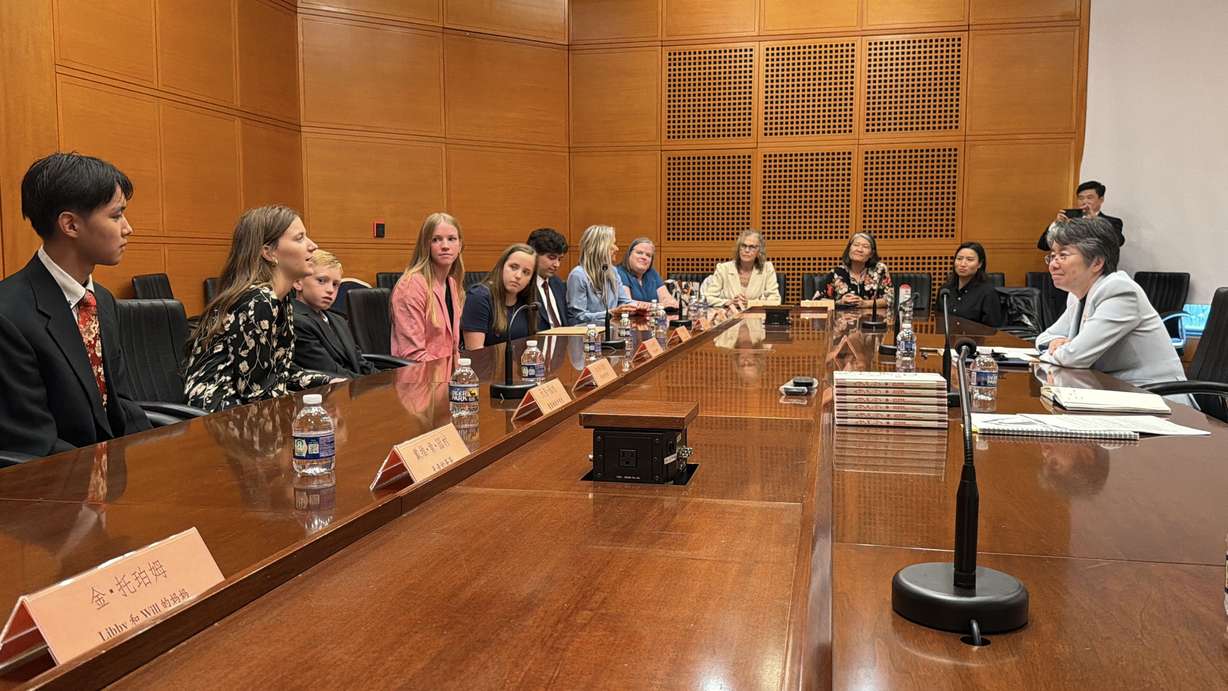
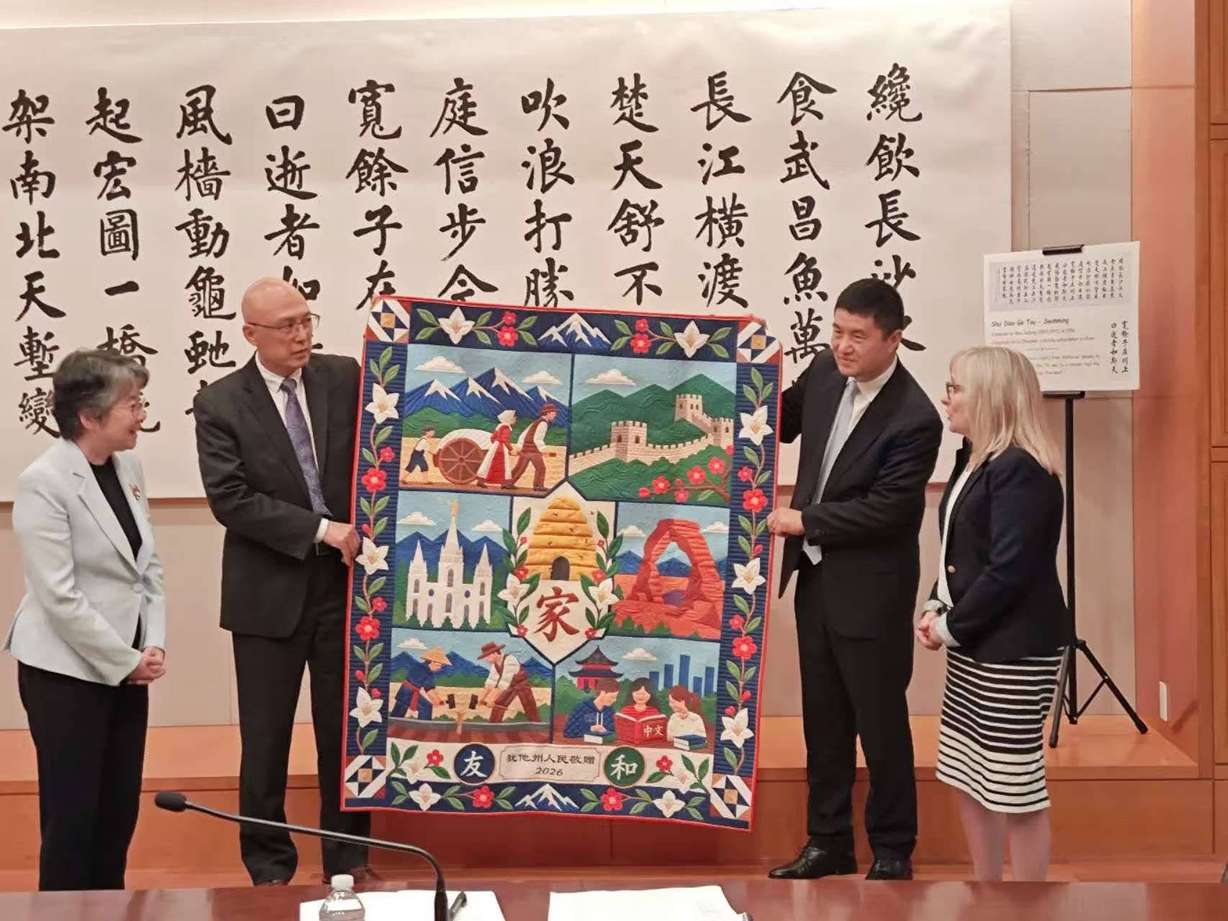
Both Teon and Abigail said they were nervous about giving their opening statements and practiced them a lot on the plane. On their first day in D.C., the delegation presented gifts to the Chinese ambassadors, including the Utah–China Friendship Quilt and a letter to President Xi, signed by the delegation, expressing friendship and inviting him to visit Utah.
The quilt featured both Chinese and Utah landmarks, honored the Chinese immigrants who helped build the transcontinental railroad in Utah, and promoted shared values of family, friendship, harmony and peace.
"Quilts hold a special place in Utah's pioneer heritage," Chan said. "(A quilt) represents more than warmth — it embodies family, perseverance, mutual support and love. We hope this friendship quilt carries that same warmth — a warm embrace from the people of Utah to President Xi and the people of China."
Teon said presenting the gifts was "a full circle moment of giving gratitude" back to the Chinese people and government for the cultural and friendship experiences he's had.
The next day, the students woke up early and headed to the airport to wait with their banner, hoping to see the president's motorcade. Sadly, Xi's motorcade went a different route out of the airport.
"It's one of those things where they choose a random exit at the end so people can't prepare for it, but it was actually a big blessing in disguise," Abigail said.
Many news reporters had been in the area also hoping to catch the motorcade, but when it didn't come by, they turned their attention to the Utah students trying to welcome Xi. The students got interviewed four different times and were happy to talk about their experiences of trying to spread friendship with China.
"Without the Chinese immersion program, I would've had more of the stereotypical thoughts that the media would've painted about China and I wouldn't be the person I am at the current moment. It has given me opportunities to pave a path of what I truly hope to do in the future," Teon said.
After having so many impactful and meaningful experiences, Teon and Abigail hope to grow language immersion programs so they can be available to everyone. Cross-cultural experiences help people understand and appreciate those from other countries, Teon said.
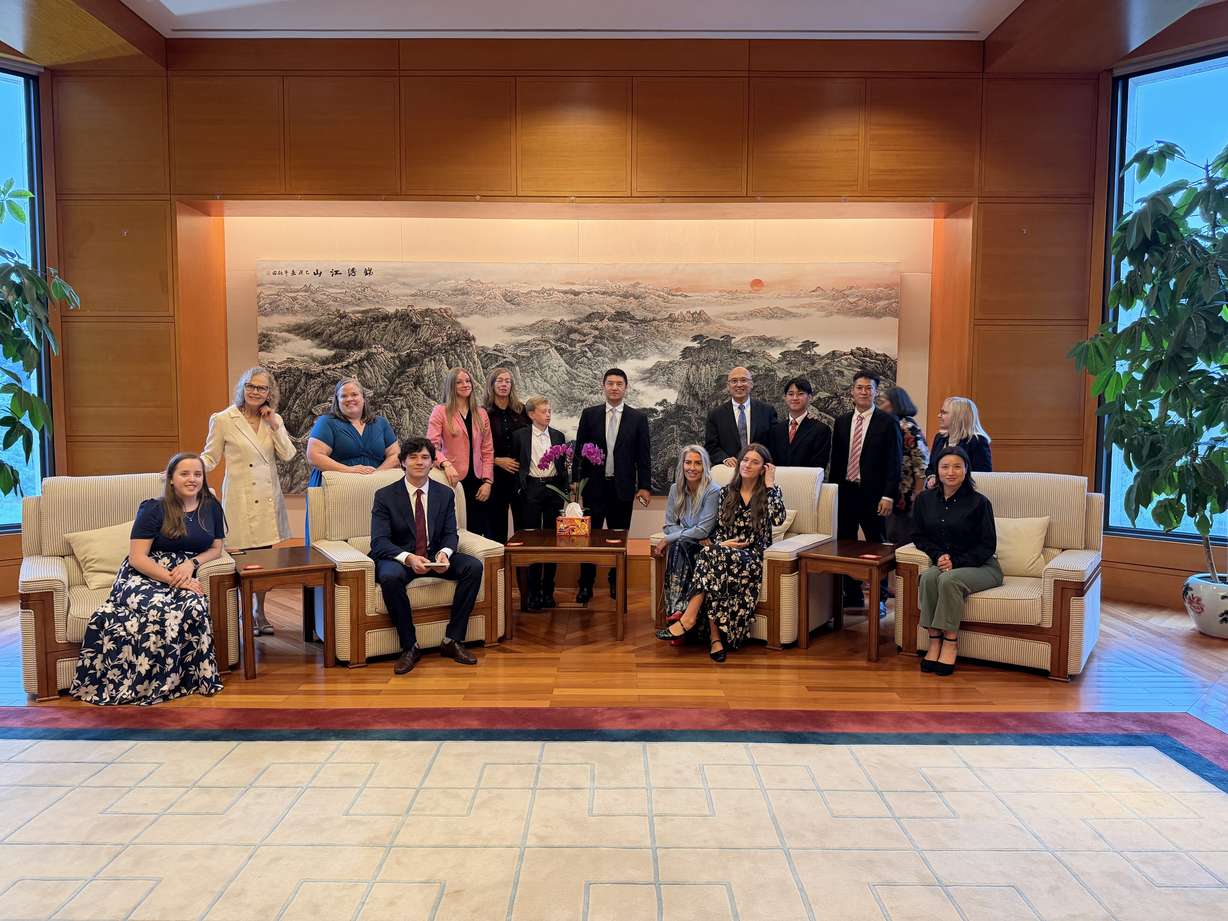
"Both nations are great and we underestimate each other. I'm still in high school and wonder what I want to do in the future, but I just really do hope to get to know these people more and that my peers will be able to also have the opportunity to get to know them," Teon said. "I do hope more people can understand outside of what they typically and normally live in."
Recently, both Abigail and Teon started working with Chan to recruit groups of students for foreign exchange trips.
"When I was in kindergarten, it didn't seem like a big deal to sign up for the Chinese program, and it's led to so many cool experiences. I just want people to know how much something as small as a language immersion program, how much of a difference it can make in your life because they really do change and shape your future," Abigail said.
Chan said Chinese student visits have declined significantly in recent years, partly because of visa difficulties and political tensions, but he hopes that improving relations can lead to more students traveling in both directions.
"Abby and Teon demonstrate what years of language learning can accomplish. Beyond language proficiency, these students gain cultural understanding, international friendships and skills that can open doors throughout their lives," Chan said. "We can recognize our countries' political differences while continuing to respect, understand and care about one another. Friendship between peoples matters, especially during difficult times."