'%3e%3cpath%20d='M34.1406%205.85938C30.3906%202.10547%2025.3047%200%2020%200C14.6953%200%209.60938%202.10547%205.85938%205.85938C2.10938%209.61328%200%2014.6953%200%2020C0%2025.3047%202.10547%2030.3906%205.85938%2034.1406C9.61328%2037.8906%2014.6953%2040%2020%2040C25.3047%2040%2030.3906%2037.8945%2034.1406%2034.1406C37.8906%2030.3906%2040%2025.3047%2040%2020C40%2014.6953%2037.8945%209.60938%2034.1406%205.85938ZM37.0117%2023.543H31.1602V13.5391H27.6328V19.9414C28.1211%2020.6914%2028.3711%2021.582%2028.3711%2022.5625V22.625C28.3711%2023.668%2028.1172%2024.6055%2027.6328%2025.4297V26.6094H36.082C33.4883%2032.9375%2027.2891%2037.3789%2020.0039%2037.3789C10.3711%2037.3789%202.62109%2029.6289%202.62109%2020C2.62109%2010.3711%2010.3711%202.62109%2020%202.62109C29.6289%202.62109%2037.3789%2010.3711%2037.3789%2020C37.3789%2021.1484%2037.2617%2022.2656%2037.0508%2023.3477C37.0391%2023.4141%2037.0234%2023.4766%2037.0117%2023.543Z'%20fill='white'/%3e%3cpath%20d='M22.3086%2018.5352C20.4336%2018.125%2019.9531%2017.8398%2019.9766%2017.1836V17.1406C19.9766%2016.6992%2020.3477%2016.2148%2021.4023%2016.2148C22.582%2016.2148%2023.8867%2016.6797%2025.0781%2017.4766L26.8516%2015.0195C25.4453%2013.8906%2023.707%2013.3398%2021.5547%2013.3398C18.5195%2013.3398%2016.4375%2015%2016.4063%2017.4766V17.5352C16.3633%2020.2617%2018.5859%2020.9805%2021.293%2021.6016C23.0391%2021.9766%2023.5703%2022.3164%2023.5703%2022.9609L23.5469%2022.9766C23.5469%2023.3906%2023.2578%2023.7031%2022.7852%2023.8359C22.5742%2023.9062%2022.1289%2023.9727%2021.5156%2023.9727C20.7617%2023.9727%2019.7539%2023.8633%2018.6328%2023.4844C18.0898%2023.2891%2017.4727%2023.0039%2016.8047%2022.6133L20.1406%2026.625C20.2813%2026.6602%2021.0977%2026.8516%2021.7734%2026.8516C25.0039%2026.8516%2027.0859%2025.2461%2027.1094%2022.6328V22.5703C27.1602%2020.1133%2025.2148%2019.1719%2022.3086%2018.5352Z'%20fill='white'/%3e%3cpath%20d='M5.24219%2013.5664V26.6133H8.75391V23.7578L10.2969%2021.9531L14.2031%2026.6133H18.3867L12.3555%2019.5195L17.4023%2013.5664H13.4531L8.75391%2019.0586V13.5664H5.24219Z'%20fill='white'/%3e%3c/g%3e%3cdefs%3e%3cclipPath%20id='clip0_97_2430'%3e%3crect%20width='40'%20height='40'%20fill='white'/%3e%3c/clipPath%3e%3c/defs%3e%3c/svg%3e)


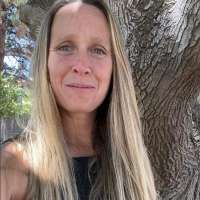
- Melissa Coles frequently hikes Mount Timpanogos and has been collecting trash left by others.
- Sarah Flinder of Uinta-Wasatch-Cache National Forest urges responsible recreation practices.
- Visitors are advised to pack out trash and consider alternative plans for crowded areas.
OREM — Melissa Coles has hiked Mount Timpanogos several times each summer over the past 20 years. Recently, however, her journey has been spent picking up garbage left by other hikers.
"I took my kids up a few weeks ago, and we collected two solid bags of trash at the shack," Coles told KSL. "I was thinking that it was really bad then, and then it was much worse this last time when we collected over four (grocery-sized) bags of trash."
The trek to the top of Mount Timpanogos is roughly 7 miles, making the total out-and-back hike of about 14 miles. The hike also has two trailheads: one at Timpooneke in American Fork Canyon, and one at Aspen Grove near Sundance Resort.
Carrying other people's trash on her way down the mountain, Coles said, "wasn't a lot of fun."
"The first time I went up, there was a Costco-size Skippy peanut butter jar just sitting there. I couldn't believe it," she said. "And then there were bigger bike-size water bottles, two huge water jugs and three pairs of socks.
"The last time we went up, there was a Tupperware container, a Costco-sized goldfish cracker bag up there and more bottles and cans," she added. "I will remember to bring gloves next time because there were also (feminine product) applicators up there."
This type of garbage is called micro-trash, but according to Sarah Flinder, zone recreation staff officer for the Uinta-Wasatch-Cache National Forest, all the"micro" pieces can add up.
"Timpanogos is highly visited and sees a lot of micro trash like granola bar wrappers, water bottles and sometimes people will take their jacket off, put it on the side of the trail and think they're going to pick it up on the way down," Flinder told KSL.
"We ask people to recreate responsibly — and part of recreating responsibly is to pack it in, pack it out, dispose of your waste properly and know all of the rules, especially in a designated wilderness."

Mount Timpanogos is a designated wilderness, meaning no motorized vehicles and no open fires are allowed. Flinder said that because the trail is hiked on foot, anyone planning to recreate there needs to "know before they go" by paying attention to the weather and even bringing extra bags to carry things out if necessary.
She also said that, along with litter being an issue on the mountain, people need to be mindful of a few things at the trailheads.
"We have a lot of folks who assume somebody else is going to take their garbage home and that the trailhead is a good place to unload the car of leftover food," Flinder said. "The problem is, it can sit out there in the garbage bag until we get there to pick it up, and it invites wildlife to come and look for food, which then scatters things around. It also promotes larvae growth and causes other issues we don't want."
With places like Mount Timpanogos being hiked by hundreds of thousands of people each season, Flinder said that it's always a good idea for people to have a "plan B."
It's an amazing place, but we need to leave it better than we found it.
–Sarah Flinder
"Sometimes you arrive, and the parking lot is full. It's not ideal, but if there is no room to park, the area is probably at capacity," Flinder explained. "We certainly don't want people parking out on the roadways. We really have a hard time with that up on (state Route) 92 on the lower Aspen Grove-side. Folks will park on the road and then we can't get two-way traffic through, so it's hard for emergency vehicles to get through.
"It's something to think about," she continued. "We all want to do what we planned for that day, and it's really hard to change plans, but a 'plan B' is a good idea."
In the end, both Coles and Flinder want Mount Timpanogos and other places in nature to be welcoming to all, which is why they're asking everyone to do their part.
"We really do want people to come out and recreate," Flinder said. "It's an amazing place, but we need to leave it better than we found it. ... If everybody was just a good land steward, we wouldn't have these issues."