Estimated read time: 6-7 minutes
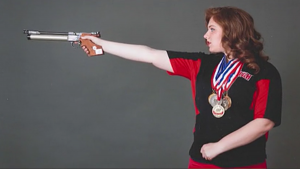
SALT LAKE CITY — The University of Utah’s pistol marksmanship program, home to a high-demand course, a nationally ranked collegiate team and Olympic alumni, is preparing to relocate due to the campus shooting range being slated for renovation and closure next year. The closure affects both "PRTL 1160: Pistol Marksmanship," a course that's been around for decades, and the University of Utah Marksmanship Club, which trains daily in the basement range of the Naval Science Building. Beyond campus recreation, the range has long functioned as a pipeline for elite competitive shooting. Olympic and national-level athletes have trained and continue to train at the University of Utah facility. Without a suitable replacement, faculty warned in private emails that the closure could jeopardize the course itself, threatening one of the few civilian collegiate pathways into Olympic-style pistol shooting in the United States. Recently, the University of Utah Marksmanship Club hosted an intercollegiate match on campus with Ohio State University, one of the only fully funded non-military collegiate pistol programs in the country and a major training home for aspiring Olympians. Ohio State coaches have historically referred male athletes to Utah’s program due to OSU’s Title IX-related restrictions on accepting male competitors. "This leaves a gap in the collegiate pistol program for male athletes who don't want to go to a military school. In past conversations with the Ohio State coaches they have indicated they would refer male athletes to our program," UPMS lead instructor Hyrum Davis wrote. The Pistol Marksmanship class is taught by volunteers from the Utah Precision Marksmanship Society, a nonprofit dedicated to promoting precision pistol disciplines governed by the National Rifle Association and the International Shooting Sport Federation, the latter of which oversees Olympic shooting events. Proceeds from the course directly support the university’s competitive team. As a course, Pistol Marksmanship introduces students to firearm safety, discipline and competitive fundamentals for credit. The Marksmanship Club, which includes the university's competitive team, is a student organization that represents Utah at the national level, qualifying athletes for collegiate championships and, in some cases, Olympic development pipelines. According to Davis, the class has been consistently full and typically has students on a waiting list. "As evidence of the popularity, the Pistol Marksmanship class has been taught continuously since before my involvement in UPMS (about 2000)," Davis said. "Depending on the number of available volunteers there have been between one and four sections taught in each of Spring, Summer and Fall semesters." Under Davis’s tenure as traveling coach, the university’s Marksmanship Club placed 3rd in Air Pistol and 4th overall in the National Collegiate Pistol Competition. Air pistol is a precision contest at 10 meters using .177-caliber air-powered pistols and is one of the core events featured at the Olympic Games. Collegiate national placements signal a program's ability to develop athletes to international competitive standards. Previous athletes have achieved numerous All-American Athlete honors and individual top three placements in the Collegiate Nationals. Alumni of the program include Will Brown, who competed in men's 10-meter air pistol at the 2016 Rio de Janeiro Olympic Games, and Lexi Lagan, who represented the United States in women's 10-meter air pistol at the Tokyo 2020 Olympics & Paris2024Olympics.
Aging facility prompts closure
The decision to close the Naval Science Building range stems from long-standing structural concerns. According to university spokesperson Rebecca Walsh, the 1947 facility requires significant renovation and repurposing. "With all aging infrastructure, it requires updating and re-use as we work to accommodate our growing ROTC populations," Walsh said in an email to KSL. The basement area currently housing the live-fire range is slated for reuse to accommodate the rapidly growing Air Force and Navy ROTC programs, whose enrollments have nearly doubled in recent years. The space also faces environmental challenges, including inadequate ventilation for live-fire training, asbestos and lead paint. [gallery columns="5" ids="856350,858971,856349,858970,856348"] "Our Navy ROTC numbers have grown from 37 a few years ago to 75 this year. The Air Force ROTC has doubled its cadet numbers in the past four years to 70 students," Walsh said. A Facilities Use Agreement with UPMS is set to expire on Dec. 31 and will not be renewed, Walsh said. While sports clubs may continue using the space through Spring 2026, university officials state that groups requiring live-fire practice will need to relocate to private ranges afterward. Retrofit planning is scheduled to begin next summer, with a target reopening date of Fall 2026 for a fully repurposed space. The Naval Science gym’s air pistol range will remain open, but organizations — like the Pistol Marksmanship Club — that rely on live fire ranges will need to secure off-campus locations. Faculty and program leaders have raised concerns over these changes about accessibility. Private emails from professors and supervisors noted that many students do not have cars, commercial ranges are too far and are often too expensive on a per-lane basis, and few facilities allow secure equipment storage. "We are currently looking for off-site facilities that can accommodate us but they are expensive and at least one hour from campus," Davis said. PRT faculty warned in these private emails that without an on-campus replacement, the University risks losing the pistol marksmanship course entirely. UPMS volunteers also stress that the university offers a regulated educational setting that counters misconceptions about firearms and the sport shaped by media, video games and entertainment. They said the closest one they can secure is approximately an hour away. In response to the impending closure, UPMS submitted a formal proposal to university leadership to repurpose rooms in the James Fletcher Building into an air gun range, a .22-caliber range and a classroom. The nonprofit offered to fund major discipline-specific renovations. The PRT department chair and other faculty expressed written support, citing student benefits, program longevity and alignment with university educational goals. As of Dec. 18, 2025, the proposal remained under review. Davis noted that multiple former athletes — including Lagan and national championMicha Scholes — have offered public support for the program. University officials acknowledge the frustration. “We understand that this range has a strong sense of history and nostalgia associated with it,” Walsh wrote. She also emphasized that the closure is unrelated to campus firearms policy, writing: "This is an issue of an aging facility NOT firearms policy on campus. The policy for openly carrying a gun on campus is the current state of Utah law. Individuals who are 18 years old or older and have a current Utah concealed weapon permit (CWP) may carry a weapon on campus, including in an open fashion." For now, the future of pistol marksmanship at the University of Utah hinges on whether a suitable and accessible replacement training space can be secured before the live-fire access ends in 2026.
Editor's Note: This article was amended to redact source information that was given ahead of publication and later rescinded.