
Estimated read time: 6-7 minutes
- A Utah mom says her kindergartener faced unlawful seclusion at Orchard Elementary, despite a 2025 ban.
- Seclusion incidents in Utah schools rose 37% in 2025-26, raising concerns about effectiveness.
- Lori and a lawyer for the Disability Law Center in Utah call for better oversight, funding, training and resources for special education to prevent trauma.
NORTH SALT LAKE — Bouncy, happy and full of joy. That's how Lori describes her 6-year-old son, Gunner.
"He is the sweetest little boy in the world," she said.
The KSL Investigators agreed to only identify the mother and son by their first names in an effort to protect the child's privacy.
"At the beginning of the year, he loved school. He was excited to go to school every single day," Lori said.
That changed after Gunner, who is autistic, had behavior issues at school and was placed in seclusion. In this instance, he was alone inside a classroom.
"And now he has these negative feelings, and honestly, (he's) being scared of school," Lori said.
Lori said she never expected to get the call from Orchard Elementary informing her that Gunner had been secluded. It happened several months after a 2025 law banned the use of seclusion in kindergarten.
"He's in kindergarten," Lori said.
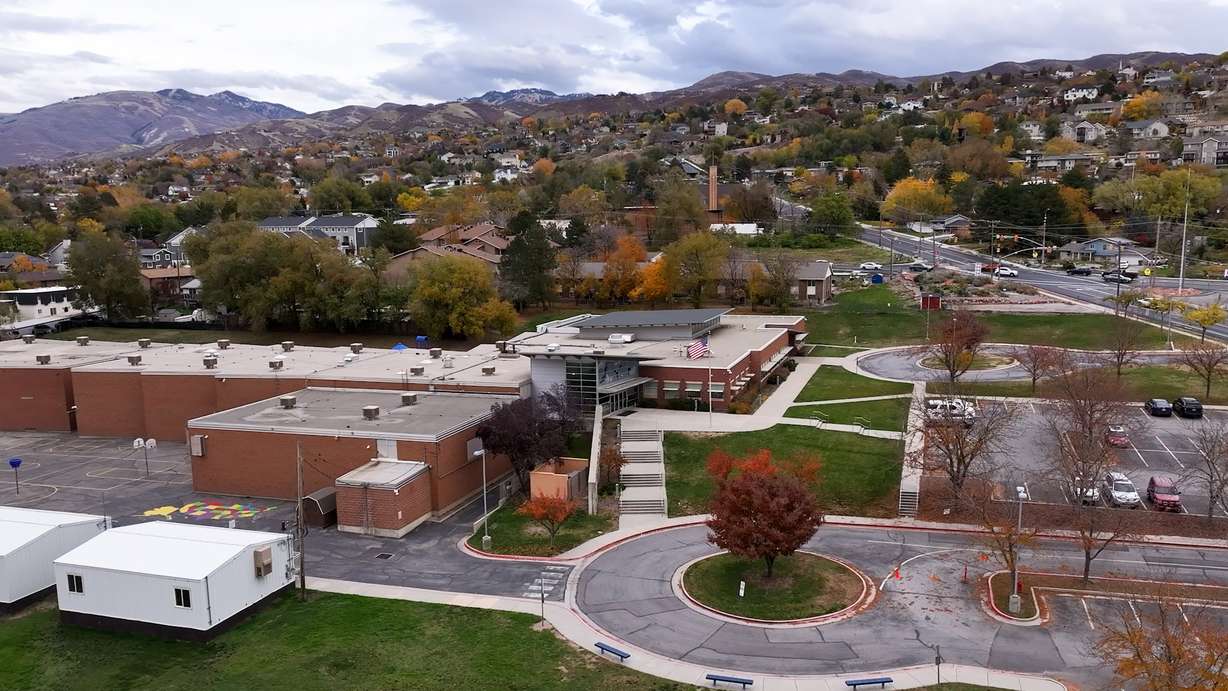
When asked whether it was alarming that lawmakers had expressly prohibited the practice and it still happened to her son, Lori replied, "It's terrifying."
Incident reports detail Gunner throwing and tearing up classroom items, hitting, kicking, punching and biting.
"I will be the first to admit that my son's not perfect," Lori said.
She said Gunner had a behavioral plan in place at school to avoid escalation in difficult moments, but she believes it wasn't followed.
The KSL Investigators reached out to the Davis School District to ask about Gunner's case, what steps have been taken to ensure it does not happen again, whether the district reported the incident to the Utah State Board of Education, and whether any other kindergarten students were secluded after the state ban went into effect.
The district refused to participate in an interview. Instead, the district emailed a statement saying in part: "The safety, dignity and well-being of every student are among the Davis School District's highest responsibilities."
The statement also said: "The district takes every use of an emergency safety intervention seriously."
District officials cited federal student privacy law as a reason they could not discuss an individual student.
The full statement read:
"We understand why any report involving the seclusion of a child raises serious concern for families and the community. Federal student privacy law prohibits the district from discussing information that could identify an individual student. As a result, we cannot confirm or comment on the specific circumstances involving any student. Emergency safety interventions, including seclusion, are not used as punishment or as a routine behavior management practice. They may be used only as a last resort when a student presents an imminent danger of serious physical harm to themselves or others. We train our professionals to end any intervention as soon as the imminent danger has passed or sooner if the student shows signs of physical or serious emotional distress. When an emergency safety intervention is used, district procedures require timely notification of the student's parent or guardian, and documentation of the incident and district review. These reviews examine whether required procedures were followed, whether staff support or retraining is needed, and what additional steps may help prevent the need for a similar intervention in the future. The district takes every use of an emergency safety intervention seriously. Our responsibility extends beyond responding to an immediate safety concern; it also includes understanding what led to the situation, supporting the student, family, and educators involved; and ensuring that the student continues to receive appropriate educational services in a safe environment."
"I don't think it's OK. I don't think it's ever the answer," Lori said.
According to new statewide data from the Utah State Board of Education, seclusion incidents have increased during the last several years. Schools reported 1,565 seclusion incidents during the 2025-26 school year — a 37% increase from the year before.
"We are not really sure why there is an increase," said Krisanne Lewis, the student services coordinator with the Utah State Board of Education.
Emergency Safety Intervention Data Exploration
Lewis said several factors, including increased scrutiny in recent years along with policy and definition changes, make it difficult to know whether the numbers truly represent a significant increase.
"We're hoping to have more accurate data within the next couple of years," Lewis said.
Current data shows the number of students being secluded in Utah schools has remained relatively stable while the number of recorded seclusion incidents has climbed. The percentage of students experiencing seclusion more than once has doubled since 2022.
"Clearly our system is not working," said Nate Crippes, the public affairs supervising attorney with the Disability Law Center in Utah.
Crippes said the numbers raise concerns about whether seclusion is being used effectively.
"When you have a student where the behaviors are increasing after the use of seclusion, that is not an intervention that is working," he said.
While the Utah Legislature has acted to place some restrictions on the use of seclusion, Crippes said guardrails are only helpful if schools actually follow them.
"We need better oversight. We need to know what is happening in these schools," he said.
That oversight falls to the state school board.
The KSL Investigators obtained 15 compliance letters sent by the Utah State Board of Education in November 2025 detailing dozens of reported violations.
Those letters describe incidents involving untrained staff members, seclusions lasting well beyond the legal 30-minute limit, seclusions used when there was no immediate danger and another case involving a kindergarten student placed in seclusion.
Lewis said those letters are part of the state's oversight process.
Once districts submit data to the state, school board staff follow up on apparent violations.
"We contact the school or the (local education agency) to find out what happened with this particular incident," Lewis said. "They will let us know what happened. And we also ask for outcomes."
She said the state expects to see corrective action.
"We're really trying to make sure that all of those procedures were followed," Lewis said.
Lori believes two incidents of unlawful seclusion in kindergarten set Gunner on a heartbreaking trajectory. His behavior has worsened since starting first grade, and he has experienced several more seclusions.
"I honestly don't know if they can make it right. I feel like the trauma's been done," she said.
Now, she is sharing her son's story in the hope that people with the power to make change are listening.
"I'd want them to know that these kids deserve better," Lori said.
Both Lori and Crippes said they would like to see more funding, training and resources devoted to special education in Utah.
One important perspective remains notably absent from the conversation.
Some special education teachers pushed back against a proposed total ban on seclusion during past legislative discussions, telling lawmakers that seclusion is a tool they needed in some circumstances.
The KSL Investigators have sought out teachers willing to discuss that perspective on camera for months, but have not yet found anyone willing to do so.