'%3e%3cpath%20d='M34.1406%205.85938C30.3906%202.10547%2025.3047%200%2020%200C14.6953%200%209.60938%202.10547%205.85938%205.85938C2.10938%209.61328%200%2014.6953%200%2020C0%2025.3047%202.10547%2030.3906%205.85938%2034.1406C9.61328%2037.8906%2014.6953%2040%2020%2040C25.3047%2040%2030.3906%2037.8945%2034.1406%2034.1406C37.8906%2030.3906%2040%2025.3047%2040%2020C40%2014.6953%2037.8945%209.60938%2034.1406%205.85938ZM37.0117%2023.543H31.1602V13.5391H27.6328V19.9414C28.1211%2020.6914%2028.3711%2021.582%2028.3711%2022.5625V22.625C28.3711%2023.668%2028.1172%2024.6055%2027.6328%2025.4297V26.6094H36.082C33.4883%2032.9375%2027.2891%2037.3789%2020.0039%2037.3789C10.3711%2037.3789%202.62109%2029.6289%202.62109%2020C2.62109%2010.3711%2010.3711%202.62109%2020%202.62109C29.6289%202.62109%2037.3789%2010.3711%2037.3789%2020C37.3789%2021.1484%2037.2617%2022.2656%2037.0508%2023.3477C37.0391%2023.4141%2037.0234%2023.4766%2037.0117%2023.543Z'%20fill='white'/%3e%3cpath%20d='M22.3086%2018.5352C20.4336%2018.125%2019.9531%2017.8398%2019.9766%2017.1836V17.1406C19.9766%2016.6992%2020.3477%2016.2148%2021.4023%2016.2148C22.582%2016.2148%2023.8867%2016.6797%2025.0781%2017.4766L26.8516%2015.0195C25.4453%2013.8906%2023.707%2013.3398%2021.5547%2013.3398C18.5195%2013.3398%2016.4375%2015%2016.4063%2017.4766V17.5352C16.3633%2020.2617%2018.5859%2020.9805%2021.293%2021.6016C23.0391%2021.9766%2023.5703%2022.3164%2023.5703%2022.9609L23.5469%2022.9766C23.5469%2023.3906%2023.2578%2023.7031%2022.7852%2023.8359C22.5742%2023.9062%2022.1289%2023.9727%2021.5156%2023.9727C20.7617%2023.9727%2019.7539%2023.8633%2018.6328%2023.4844C18.0898%2023.2891%2017.4727%2023.0039%2016.8047%2022.6133L20.1406%2026.625C20.2813%2026.6602%2021.0977%2026.8516%2021.7734%2026.8516C25.0039%2026.8516%2027.0859%2025.2461%2027.1094%2022.6328V22.5703C27.1602%2020.1133%2025.2148%2019.1719%2022.3086%2018.5352Z'%20fill='white'/%3e%3cpath%20d='M5.24219%2013.5664V26.6133H8.75391V23.7578L10.2969%2021.9531L14.2031%2026.6133H18.3867L12.3555%2019.5195L17.4023%2013.5664H13.4531L8.75391%2019.0586V13.5664H5.24219Z'%20fill='white'/%3e%3c/g%3e%3cdefs%3e%3cclipPath%20id='clip0_97_2430'%3e%3crect%20width='40'%20height='40'%20fill='white'/%3e%3c/clipPath%3e%3c/defs%3e%3c/svg%3e)



Estimated read time: 5-6 minutes
- Sen. John Curtis supports prescribed burns to prevent catastrophic wildfires in Utah.
- He advocates for the Wildfire Emissions Prevention Act to ease prescribed burn implementation.
- Prescribed burns are cost-effective, reducing wildfire risk and managing hazardous fuels.
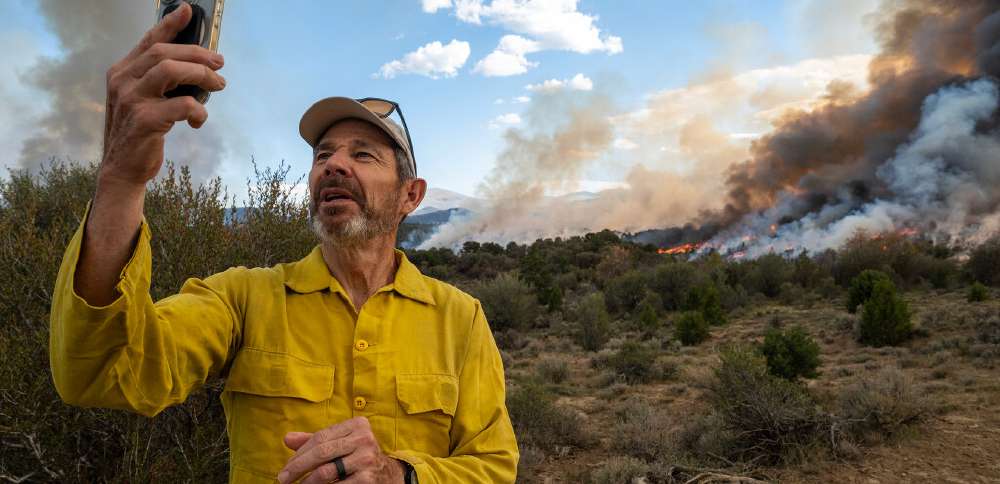
RICHFIELD — Utah Sen. John Curtis held his phone up in front of him at eye level and pressed the small record button at the bottom of his screen. Visible in the camera frame behind him was a wall of smoke fueled by a mass of flames burning up dry ground.
"I am at what is called a prescribed burn," Curtis said Wednesday, filming a video to send to his grandkids. "A planned fire which helps prevent bigger fires later on."
While he spoke, orange flames flickered in the wind just over his shoulder. However, neither he nor the fire officials surrounding him seemed the slightest bit unnerved.
Curtis' visit on Wednesday to a prescribed burn site in Richfield, was his first time witnessing a prescribed fire in person. The practice, however, is one he's familiar with.
Just over a week before his visit, Curtis stood on the floor of the Senate advocating for the Wildfire Emissions Prevention Act, a bill aimed at helping states prevent wildfires by lowering the administrative hurdles to implementing a prescribed burn.
"With every passing day, the threat to our communities, our lands and our very lives grows more severe," Curtis said on the floor. "That is why it makes no sense to leave a critical tool like controlled burns off the table."
Curtis said prescribed fire is "one of the most effective ways to reduce hazardous fuels and prevent catastrophic wildfires."
In an interview with the Deseret News at the burn site Wednesday, Curtis said he has seen firsthand the devastation that wildfire can cause.
"It wipes out homes. It wipes out second homes. It wipes out farms and communities and brings a tremendous cost," Curtis said. "Not just to the cost to fight the fire, but all the devastation and so on."
"Particularly where these fires are being more intense and more frequent, we've got to get ahead of it," he added.
While at the burn site, Curtis talked with local and state fire officials about both the need for and the benefits that come from prescribed burns.
Next to the group, the ashy mountainside was blurred by thick smoke taking up the blue tint of the sky behind it. Patches of orange flame peeked through the clouds of grey. A helicopter passed overhead, on its way to carefully light a new section of the burn site.
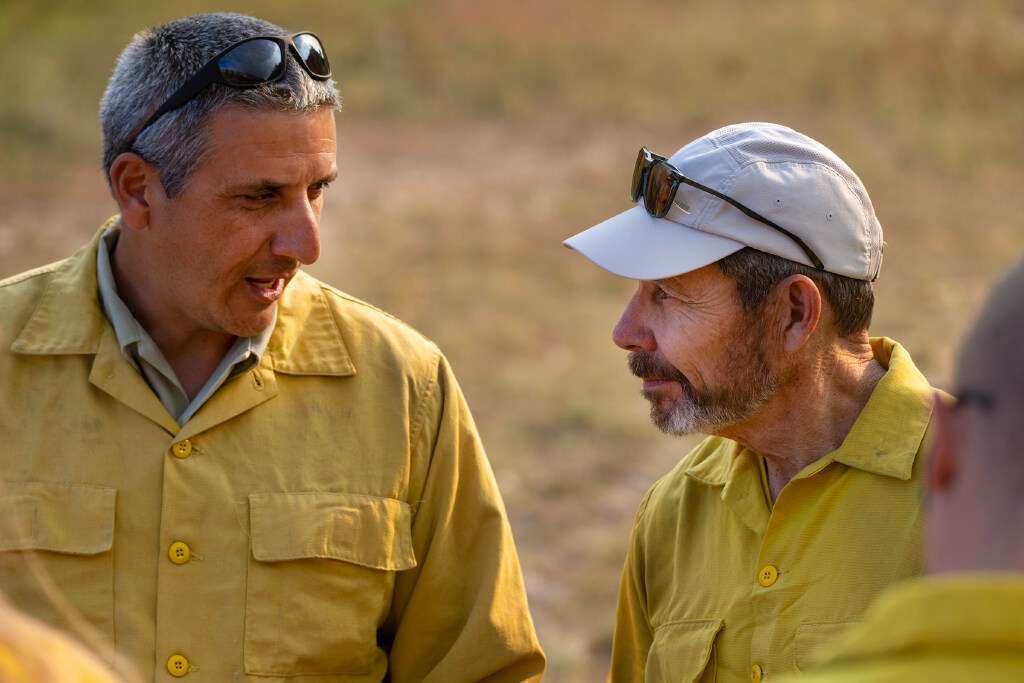
After a lengthy discussion, Curtis placed his hand on the shoulder of Jason Kling, the U.S. Forest Service district ranger for Richfield.
"Count us as a partner," the senator told Kling.
Prescribed burns allow firefighters to burn land in 'a more controlled situation'
For many Utah residents, particularly those familiar with the devastating consequences of large wildfires, the thought of hillside flames brings an immediate sense of dread.
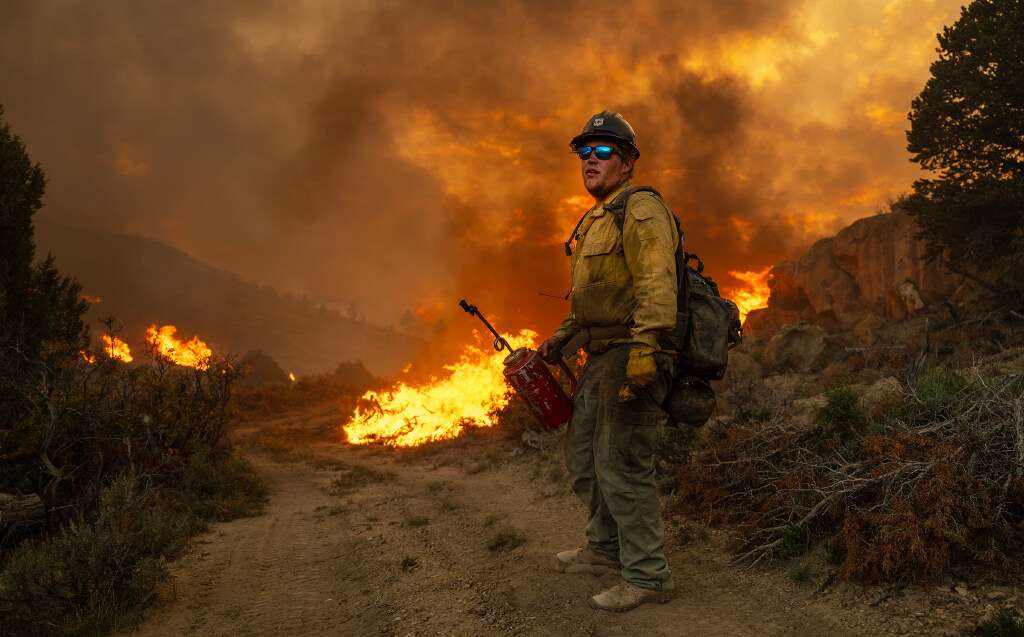
Prescribed burns sport some of the same visual effects of wildfires — glowing orange flames, billowing black smoke, an audible roar — but at their heart, prescribed burns are different from fires associated with disaster. Instead of causing the destruction associated with large wildfires, these blazes function as a solution to the wildfire crisis.
Prescribed burns allow the burning of wildland in "a more controlled situation," Kling told the Deseret News, eliminating dead and dry vegetation that could fuel later wildfires. After a prescribed burn, Kling said, "if we do get a wildfire in that area, it's not going to be nearly as destructive."
One of the most significant benefits Kling pointed to was the "huge difference in cost" between managing a wildfire and a prescribed burn.
Last year's Monroe Canyon fire cost $1,500 per acre to contain, Kling said, presenting data obtained by the Forest Service. Wednesday's prescribed burn cost less than $40 per acre.
Kling said prescribed burns are necessary due to an "uncharacteristically high" amount of fuel in the region that makes the land "much more susceptible to these big catastrophic wildfires."
Removing fuel now prevents disaster later on.
"There's really no option of removing fire from these environments," Mike Elson, the forest supervisor for the Fishlake National Forest, told the Deseret News. "If it doesn't happen naturally or under our control, it's going to happen in a way that we don't want it to."
'It's a big decision to do something like this'
Prescribed burns take place mostly in the fall and spring seasons when conditions allow for a good amount of land to burn without promoting rapid spread of the flames.
The process of performing a prescribed burn is "pretty fine-tuned," Elson said. Though the actual burn takes just a few days, the entire process of outlining and approving a detailed plan can take months.
"We talk about these a lot," Elson said. "We have briefings. We go through maps. We go through the weather forecasts. We have specialists looking at the fuel conditions."
"It's a big decision to do something like this. We work very carefully."
Before any flames spark, every prescribed burn is thoroughly outlined in a burn plan, written by the fire's "Burn Boss," who oversees the implementation of the burn plan.
The plan consists of 21 elements, including the number of people who will be required, ignition strategy, how many engines will be required, who needs to be notified of the burn, what the burn's objectives are, how the process will be affected by the weather and what cautionary measures will be in place in case of injuries or medical emergencies.
When the overall plan is approved, the burn can begin, but conditions are continually monitored throughout the process.
By chopper, by drone, by hand: Strategies for carrying out a prescribed burn
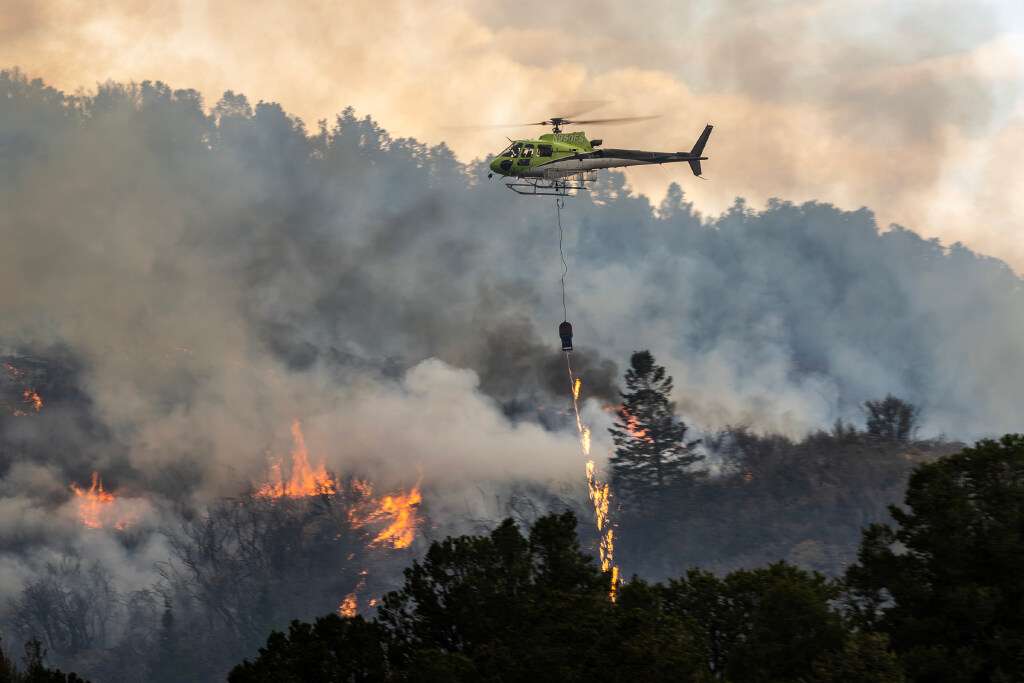
There are several techniques that can be used to carry out a prescribed burn. Some burns employ helicopters carrying a "helitorch", a 55-gallon drum that hangs underneath the helicopter and drops a sticky, inflamed fuel substance designed to ignite whatever it lands on.
In other areas, helicopters aren't the only aerial tool. Drones are increasingly used to drop ping-pong-ball-sized spheres filled with potassium permanganate, a chemical compound that catches on fire when injected with antifreeze.