'%3e%3cpath%20d='M34.1406%205.85938C30.3906%202.10547%2025.3047%200%2020%200C14.6953%200%209.60938%202.10547%205.85938%205.85938C2.10938%209.61328%200%2014.6953%200%2020C0%2025.3047%202.10547%2030.3906%205.85938%2034.1406C9.61328%2037.8906%2014.6953%2040%2020%2040C25.3047%2040%2030.3906%2037.8945%2034.1406%2034.1406C37.8906%2030.3906%2040%2025.3047%2040%2020C40%2014.6953%2037.8945%209.60938%2034.1406%205.85938ZM37.0117%2023.543H31.1602V13.5391H27.6328V19.9414C28.1211%2020.6914%2028.3711%2021.582%2028.3711%2022.5625V22.625C28.3711%2023.668%2028.1172%2024.6055%2027.6328%2025.4297V26.6094H36.082C33.4883%2032.9375%2027.2891%2037.3789%2020.0039%2037.3789C10.3711%2037.3789%202.62109%2029.6289%202.62109%2020C2.62109%2010.3711%2010.3711%202.62109%2020%202.62109C29.6289%202.62109%2037.3789%2010.3711%2037.3789%2020C37.3789%2021.1484%2037.2617%2022.2656%2037.0508%2023.3477C37.0391%2023.4141%2037.0234%2023.4766%2037.0117%2023.543Z'%20fill='white'/%3e%3cpath%20d='M22.3086%2018.5352C20.4336%2018.125%2019.9531%2017.8398%2019.9766%2017.1836V17.1406C19.9766%2016.6992%2020.3477%2016.2148%2021.4023%2016.2148C22.582%2016.2148%2023.8867%2016.6797%2025.0781%2017.4766L26.8516%2015.0195C25.4453%2013.8906%2023.707%2013.3398%2021.5547%2013.3398C18.5195%2013.3398%2016.4375%2015%2016.4063%2017.4766V17.5352C16.3633%2020.2617%2018.5859%2020.9805%2021.293%2021.6016C23.0391%2021.9766%2023.5703%2022.3164%2023.5703%2022.9609L23.5469%2022.9766C23.5469%2023.3906%2023.2578%2023.7031%2022.7852%2023.8359C22.5742%2023.9062%2022.1289%2023.9727%2021.5156%2023.9727C20.7617%2023.9727%2019.7539%2023.8633%2018.6328%2023.4844C18.0898%2023.2891%2017.4727%2023.0039%2016.8047%2022.6133L20.1406%2026.625C20.2813%2026.6602%2021.0977%2026.8516%2021.7734%2026.8516C25.0039%2026.8516%2027.0859%2025.2461%2027.1094%2022.6328V22.5703C27.1602%2020.1133%2025.2148%2019.1719%2022.3086%2018.5352Z'%20fill='white'/%3e%3cpath%20d='M5.24219%2013.5664V26.6133H8.75391V23.7578L10.2969%2021.9531L14.2031%2026.6133H18.3867L12.3555%2019.5195L17.4023%2013.5664H13.4531L8.75391%2019.0586V13.5664H5.24219Z'%20fill='white'/%3e%3c/g%3e%3cdefs%3e%3cclipPath%20id='clip0_97_2430'%3e%3crect%20width='40'%20height='40'%20fill='white'/%3e%3c/clipPath%3e%3c/defs%3e%3c/svg%3e)




- Utah outperforms national averages in educational attainment but gender gaps persist.
- The Utah Women and Leadership Project report highlights progress and areas needing more attention.
- Key policy priorities include expanding education access and addressing gender gaps in graduate education.
LOGAN — The Beehive State generally performs better than the national average in educational attainment, but a new report shows gender differences can still shape women's opportunities when it comes to outcomes and economic returns.
Published Thursday by the Utah State University Utah Women and Leadership Project, the report delves into how Utah women's education levels have changed over time and how they compare to national trends.
"Through our research, we learned that higher levels of educational attainment are consistently linked to improved health and fitness, greater marital satisfaction, enhanced child welfare, stronger mental health, and higher levels of civic engagement," Susan Madsen, founder and director of the Utah Women and Leadership Project, said in a statement. "Yet these benefits are not evenly distributed — and Utah's patterns reveal both progress and areas of concern."
High school
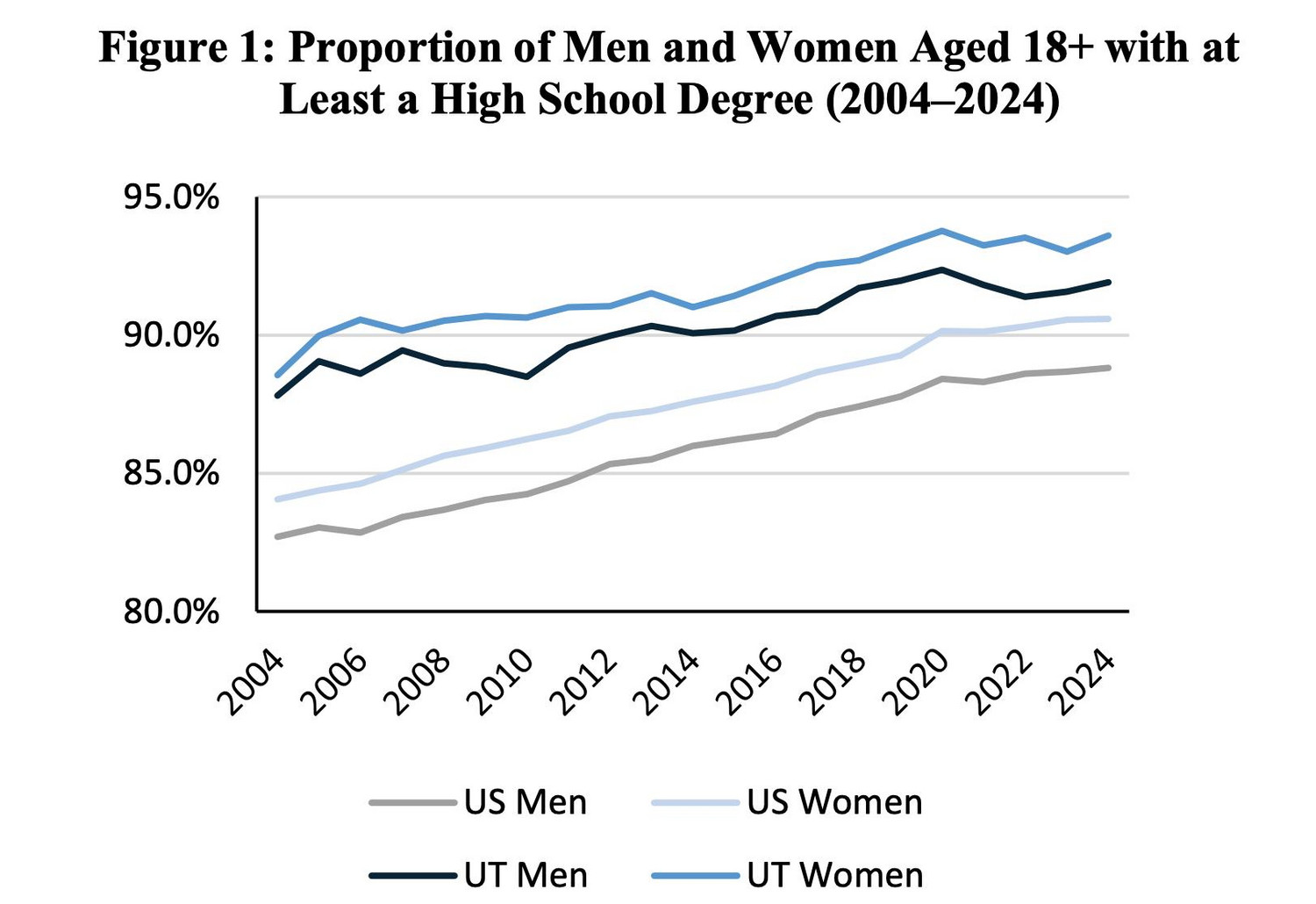
Utah's higher-than-average educational attainment starts with finishing high school, with only 7.3% of adults lacking a diploma compared to 10.3% nationally.
Additionally, more women in Utah have earned high school diplomas than men across the past two decades, though the report noted the gender gap has "remained small to nonexistent over time."
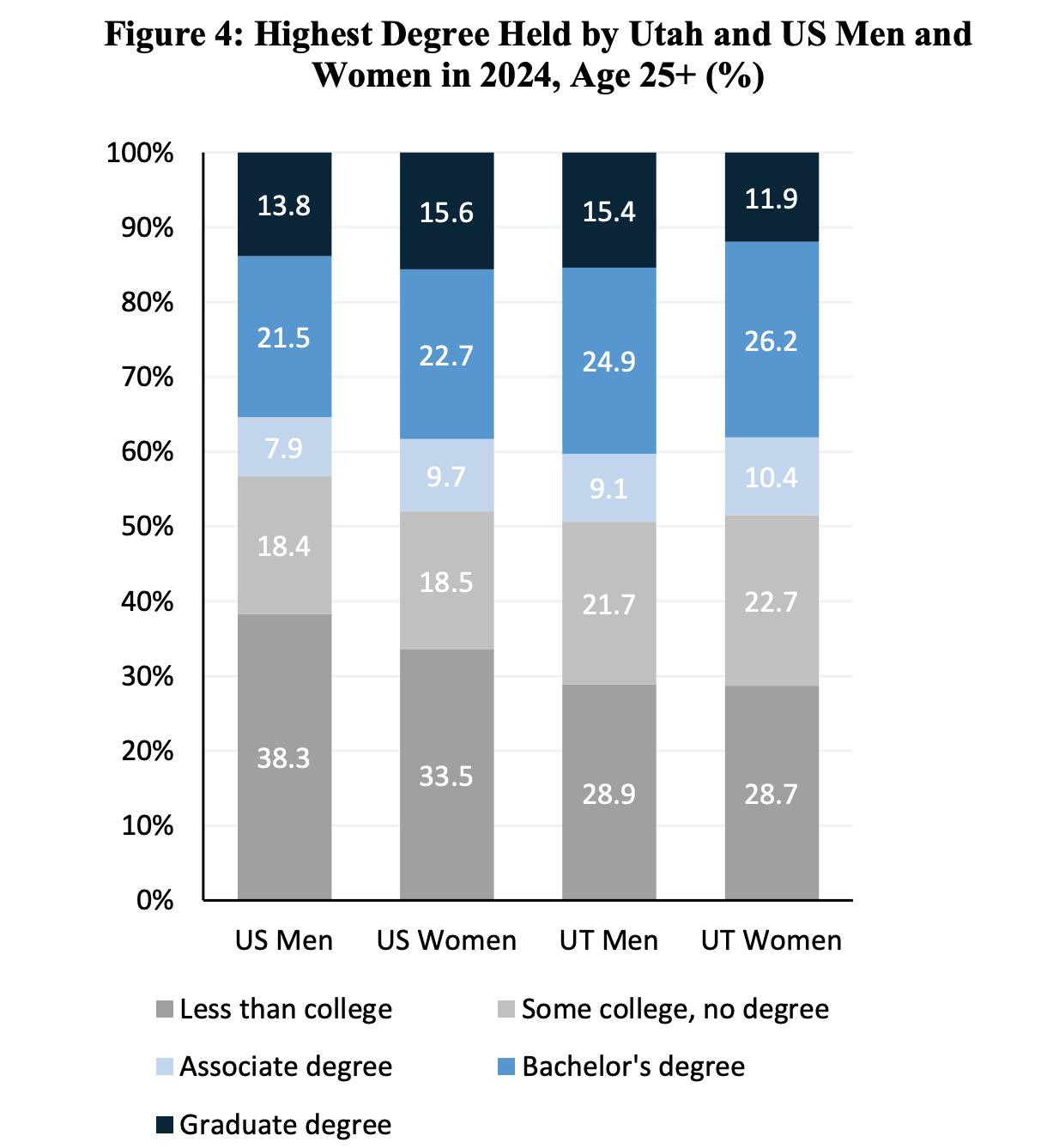
Higher education is a slightly different story, with Utah consistently among states with the highest percentages of people who attend some college but don't graduate.
In 2024, 22.2% of Utah adults aged 25 and older had completed some college but no degree — an improvement from 2014 when Utah had the third-highest percentage of adults 25 and over who had some college, at 27.6%.
College-aged Utah adults (ages 18 to 24) represent the highest percentage of adults who have completed some college but have not completed a degree (36.3%).
The report did explain, however, that Utah has experienced a "college-age bulge in the population's age distribution," signaling that Utah's largest age group may not yet have had time to complete their degree.
Additionally, many college-aged adults who are members of The Church of Jesus Christ of Latter-day Saints serve one-and-a-half- to two-year religious missions, another possible explanation for the high rates of incomplete college degree attainment for this age group.
While at the bachelor's level, Utah women and men earn degrees at similar rates — and Utah outperforms national averages — gender gaps still exist in graduate education, said the report.
While strides have been made in many areas over the last decade, the report still outlines several policy priorities for state lawmakers to examine, aimed at boosting education attainment statewide.
These policies include:
- Expanding access to high-quality secondary and postsecondary education, especially in rural regions.
- Investing in evidence-based strategies to improve college retention and completion.
- Addressing gender gaps in graduate education through targeted recruitment, support and financial pathways.
- Strengthening partnerships among higher education institutions, policymakers, and community organizations to align educational goals with workforce needs.
"As Utah continues to navigate rapid economic change, workforce demands, and persistent gender disparities, these findings highlight both progress and urgency," Madsen said in a statement. "Utah needs to continue to aggressively focus efforts on increasing enrollment and completion rates for both women and men at all degree and certification levels."