'%3e%3cpath%20d='M34.1406%205.85938C30.3906%202.10547%2025.3047%200%2020%200C14.6953%200%209.60938%202.10547%205.85938%205.85938C2.10938%209.61328%200%2014.6953%200%2020C0%2025.3047%202.10547%2030.3906%205.85938%2034.1406C9.61328%2037.8906%2014.6953%2040%2020%2040C25.3047%2040%2030.3906%2037.8945%2034.1406%2034.1406C37.8906%2030.3906%2040%2025.3047%2040%2020C40%2014.6953%2037.8945%209.60938%2034.1406%205.85938ZM37.0117%2023.543H31.1602V13.5391H27.6328V19.9414C28.1211%2020.6914%2028.3711%2021.582%2028.3711%2022.5625V22.625C28.3711%2023.668%2028.1172%2024.6055%2027.6328%2025.4297V26.6094H36.082C33.4883%2032.9375%2027.2891%2037.3789%2020.0039%2037.3789C10.3711%2037.3789%202.62109%2029.6289%202.62109%2020C2.62109%2010.3711%2010.3711%202.62109%2020%202.62109C29.6289%202.62109%2037.3789%2010.3711%2037.3789%2020C37.3789%2021.1484%2037.2617%2022.2656%2037.0508%2023.3477C37.0391%2023.4141%2037.0234%2023.4766%2037.0117%2023.543Z'%20fill='white'/%3e%3cpath%20d='M22.3086%2018.5352C20.4336%2018.125%2019.9531%2017.8398%2019.9766%2017.1836V17.1406C19.9766%2016.6992%2020.3477%2016.2148%2021.4023%2016.2148C22.582%2016.2148%2023.8867%2016.6797%2025.0781%2017.4766L26.8516%2015.0195C25.4453%2013.8906%2023.707%2013.3398%2021.5547%2013.3398C18.5195%2013.3398%2016.4375%2015%2016.4063%2017.4766V17.5352C16.3633%2020.2617%2018.5859%2020.9805%2021.293%2021.6016C23.0391%2021.9766%2023.5703%2022.3164%2023.5703%2022.9609L23.5469%2022.9766C23.5469%2023.3906%2023.2578%2023.7031%2022.7852%2023.8359C22.5742%2023.9062%2022.1289%2023.9727%2021.5156%2023.9727C20.7617%2023.9727%2019.7539%2023.8633%2018.6328%2023.4844C18.0898%2023.2891%2017.4727%2023.0039%2016.8047%2022.6133L20.1406%2026.625C20.2813%2026.6602%2021.0977%2026.8516%2021.7734%2026.8516C25.0039%2026.8516%2027.0859%2025.2461%2027.1094%2022.6328V22.5703C27.1602%2020.1133%2025.2148%2019.1719%2022.3086%2018.5352Z'%20fill='white'/%3e%3cpath%20d='M5.24219%2013.5664V26.6133H8.75391V23.7578L10.2969%2021.9531L14.2031%2026.6133H18.3867L12.3555%2019.5195L17.4023%2013.5664H13.4531L8.75391%2019.0586V13.5664H5.24219Z'%20fill='white'/%3e%3c/g%3e%3cdefs%3e%3cclipPath%20id='clip0_97_2430'%3e%3crect%20width='40'%20height='40'%20fill='white'/%3e%3c/clipPath%3e%3c/defs%3e%3c/svg%3e)



- A proposed high-rise near Salt Lake City's historic church was scrapped.
- The project faced criticism over its impact on St. Mark's Cathedral.
- APWireless Infrastructure Partners acquired the property; future plans remain uncertain.
SALT LAKE CITY — A plan to redevelop an underutilized office building into a mixed-use high-rise east of downtown Salt Lake City received a positive recommendation from the city's planning commission last year.
However, KSL has learned that the plan quietly fizzled after a required rezone faced stiff criticism in front of city leaders earlier this year, partially for its likely impacts on a historic church on the same block. The property that was slated to be redeveloped, located at 265 E. 100 South in the Central City neighborhood, has also been sold.
Salt Lake City closed the project rezoning request. Two Salt Lake City planners confirmed that the project was pulled "recently," although they did not know why the project was scrapped.
County records show that APWireless Infrastructure Partners, a global telecommunications and digital infrastructure company with a U.S. base near San Diego, acquired the property earlier this year in a sale finalized in May. The company did not immediately respond to KSL's request for comment.
A manager for Raven One LLC, which authorized the project, did not disclose why the company sold the property, but said the decision to end the project came sometime after the sale.
Silverado Building Company, a Utah-based developer, had requested a rezone for the site in 2024 on behalf of Raven One, which has ties to the Cumming family that owns Snowbird Resort. Officials pitched a 421-unit high-rise at the site of an existing office building.
It called for a mix of studios to three-bedroom units in size, while a commercial space for a ground-level restaurant and coffee shop was included in the plan. Approximately 20% of the units would be designated as affordable housing.
They requested a central business district (D-1) zoning, which had no building height limits, although they agreed on capping the project at 225 feet.
While it received a positive recommendation from the Salt Lake City Planning Commission through a 7-1 vote last fall, it ran into obstacles after a — at times — thorny meeting with the Salt Lake City Council in January. Residents who attended a February public hearing also blasted the proposal.
The site was recently rezoned to mixed-use 8 (MU-8) as part of the city's widespread zoning changes, allowing heights of approximately 80 feet, and some residents feared the measure would push the downtown core's unlimited heights deeper into the Central City neighborhood.
There were also concerns about seismic impacts to the historic St. Mark's Cathedral, located next to the property, during any potential construction, as well as impacts the height might have on its solar panels that had just been installed in 2021. Some were also skeptical of how affordable it would be even with units set aside for it.
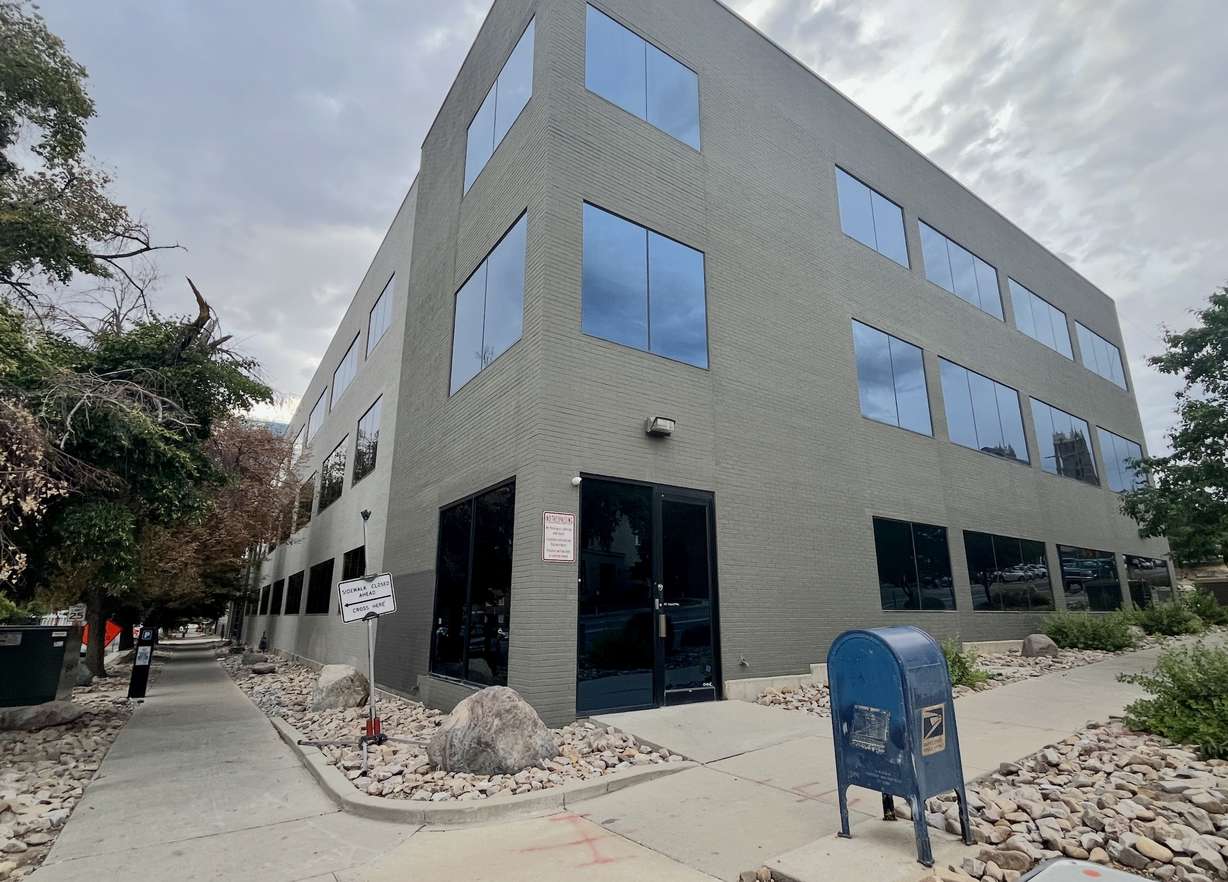
The City Council paused a vote on the rezone request for another date, which is customary for most public hearings, but the subject never came up again on its agenda. While it's unclear what's next for the site, neighborhood leaders say they are happy that the project isn't moving forward.
"We're ecstatic for sure," said Travis Starley, land use lead for the Central City Neighborhood Council. "We're glad they decided to sell the property, and hope that the new owner decides to do something more compatible with the church that's next door."
He'd like it to remain within the MU-8 zoning, with assurances that all construction does not negatively affect the church, which was originally built in 1871 and partially reconstructed after a fire in the 1930s, should the existing office building be redeveloped.
Neighborhood council leaders would also like to see some use out of the space.
"It would be nice if it were utilized as an office building or mixed-use," Starley added. "There are quite a few empty buildings in Salt Lake City, right? ... We'd like to see it occupied and in use."