'%3e%3cpath%20d='M34.1406%205.85938C30.3906%202.10547%2025.3047%200%2020%200C14.6953%200%209.60938%202.10547%205.85938%205.85938C2.10938%209.61328%200%2014.6953%200%2020C0%2025.3047%202.10547%2030.3906%205.85938%2034.1406C9.61328%2037.8906%2014.6953%2040%2020%2040C25.3047%2040%2030.3906%2037.8945%2034.1406%2034.1406C37.8906%2030.3906%2040%2025.3047%2040%2020C40%2014.6953%2037.8945%209.60938%2034.1406%205.85938ZM37.0117%2023.543H31.1602V13.5391H27.6328V19.9414C28.1211%2020.6914%2028.3711%2021.582%2028.3711%2022.5625V22.625C28.3711%2023.668%2028.1172%2024.6055%2027.6328%2025.4297V26.6094H36.082C33.4883%2032.9375%2027.2891%2037.3789%2020.0039%2037.3789C10.3711%2037.3789%202.62109%2029.6289%202.62109%2020C2.62109%2010.3711%2010.3711%202.62109%2020%202.62109C29.6289%202.62109%2037.3789%2010.3711%2037.3789%2020C37.3789%2021.1484%2037.2617%2022.2656%2037.0508%2023.3477C37.0391%2023.4141%2037.0234%2023.4766%2037.0117%2023.543Z'%20fill='white'/%3e%3cpath%20d='M22.3086%2018.5352C20.4336%2018.125%2019.9531%2017.8398%2019.9766%2017.1836V17.1406C19.9766%2016.6992%2020.3477%2016.2148%2021.4023%2016.2148C22.582%2016.2148%2023.8867%2016.6797%2025.0781%2017.4766L26.8516%2015.0195C25.4453%2013.8906%2023.707%2013.3398%2021.5547%2013.3398C18.5195%2013.3398%2016.4375%2015%2016.4063%2017.4766V17.5352C16.3633%2020.2617%2018.5859%2020.9805%2021.293%2021.6016C23.0391%2021.9766%2023.5703%2022.3164%2023.5703%2022.9609L23.5469%2022.9766C23.5469%2023.3906%2023.2578%2023.7031%2022.7852%2023.8359C22.5742%2023.9062%2022.1289%2023.9727%2021.5156%2023.9727C20.7617%2023.9727%2019.7539%2023.8633%2018.6328%2023.4844C18.0898%2023.2891%2017.4727%2023.0039%2016.8047%2022.6133L20.1406%2026.625C20.2813%2026.6602%2021.0977%2026.8516%2021.7734%2026.8516C25.0039%2026.8516%2027.0859%2025.2461%2027.1094%2022.6328V22.5703C27.1602%2020.1133%2025.2148%2019.1719%2022.3086%2018.5352Z'%20fill='white'/%3e%3cpath%20d='M5.24219%2013.5664V26.6133H8.75391V23.7578L10.2969%2021.9531L14.2031%2026.6133H18.3867L12.3555%2019.5195L17.4023%2013.5664H13.4531L8.75391%2019.0586V13.5664H5.24219Z'%20fill='white'/%3e%3c/g%3e%3cdefs%3e%3cclipPath%20id='clip0_97_2430'%3e%3crect%20width='40'%20height='40'%20fill='white'/%3e%3c/clipPath%3e%3c/defs%3e%3c/svg%3e)




- The Cottonwood Fire likely destroyed the iconic "Big Tree" near Beaver.
- The fire burned 94,000 acres, destroying approximately 150 structures.
- Recovery efforts will include reforestation and addressing monsoonal flooding risks, officials said.
BEAVER — A massive ponderosa pine tree that was a fixture of the Tushar Mountains and a tourism attraction near Beaver appears to have been a victim of the Cottonwood Fire.
"Big Tree" was impacted when the blaze cut through a subdivision last week, burning "probably 95% of the ground" by it, said Jared Whitmer, Beaver district ranger for Fishlake National Forest.
"Typically, you have to have the top third for it to live, so I'm not very hopeful that it will make it. It's pretty sad. ... I'm not expecting that to make it," he said. Several residents reacted with a mournful sigh when he delivered the "not so good news" during a community meeting about the fire Monday evening.
The tree was measured at 123 feet tall and 5 feet in width in 2019, making it one of the largest ponderosa pines in the state, St. George News reported in 2022. Located near Mile Marker 11 of state Route 153, it was featured by both Beaver County and Utah tourism officials.
"Deep in the Tushars, you can find an unbelievable tree, that is rightly called the 'Big Tree.' This towering ponderosa pine will shock the whole family, and the trail to get there is a fun walk in the woods," local tourism officials wrote.
It was also a popular field trip stop for elementary school students, Whitmer noted. He added that the fire wiped out over a half-dozen active timber sale sites, and some trees will likely be cut for safety when the area eventually reopens.
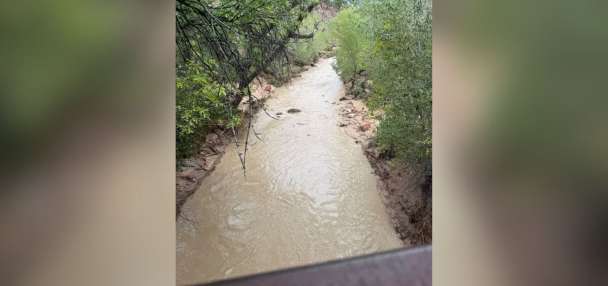
The region likely lost "40 to 50 years" of forest timbering, along with livestock, wildlife and recreational opportunities, Rep. Carl Albrecht, R-Richfield, said last week. Initial planning for post-fire rehabilitation is also underway amid monsoonal flooding risks, said Jamie Barnes, director of the Utah Division of Fire, Forestry and State Lands, and the state's forester.
U.S. Forest Service leaders toured the site on Monday, as the Forest Service begins planning on a multiyear recovery and reforestation process that will begin whenever the fire is out, Whitmer said on Monday. That will include replanting many different species.
It's still unclear what sparked the fire, which has now burned almost 94,000 acres, but he said the fire did start approximately 5 miles into the canyon outside of Beaver. About 150 structures are believed to have been lost in the fire, fire officials also said in Monday's meeting.
Another 130 structures are believed to have survived the fire, based on initial assessments. Gov. Spencer Cox said it will likely be one of the state's costliest fires in terms of damage.
The fire is now 4% contained.