'%3e%3cpath%20d='M34.1406%205.85938C30.3906%202.10547%2025.3047%200%2020%200C14.6953%200%209.60938%202.10547%205.85938%205.85938C2.10938%209.61328%200%2014.6953%200%2020C0%2025.3047%202.10547%2030.3906%205.85938%2034.1406C9.61328%2037.8906%2014.6953%2040%2020%2040C25.3047%2040%2030.3906%2037.8945%2034.1406%2034.1406C37.8906%2030.3906%2040%2025.3047%2040%2020C40%2014.6953%2037.8945%209.60938%2034.1406%205.85938ZM37.0117%2023.543H31.1602V13.5391H27.6328V19.9414C28.1211%2020.6914%2028.3711%2021.582%2028.3711%2022.5625V22.625C28.3711%2023.668%2028.1172%2024.6055%2027.6328%2025.4297V26.6094H36.082C33.4883%2032.9375%2027.2891%2037.3789%2020.0039%2037.3789C10.3711%2037.3789%202.62109%2029.6289%202.62109%2020C2.62109%2010.3711%2010.3711%202.62109%2020%202.62109C29.6289%202.62109%2037.3789%2010.3711%2037.3789%2020C37.3789%2021.1484%2037.2617%2022.2656%2037.0508%2023.3477C37.0391%2023.4141%2037.0234%2023.4766%2037.0117%2023.543Z'%20fill='white'/%3e%3cpath%20d='M22.3086%2018.5352C20.4336%2018.125%2019.9531%2017.8398%2019.9766%2017.1836V17.1406C19.9766%2016.6992%2020.3477%2016.2148%2021.4023%2016.2148C22.582%2016.2148%2023.8867%2016.6797%2025.0781%2017.4766L26.8516%2015.0195C25.4453%2013.8906%2023.707%2013.3398%2021.5547%2013.3398C18.5195%2013.3398%2016.4375%2015%2016.4063%2017.4766V17.5352C16.3633%2020.2617%2018.5859%2020.9805%2021.293%2021.6016C23.0391%2021.9766%2023.5703%2022.3164%2023.5703%2022.9609L23.5469%2022.9766C23.5469%2023.3906%2023.2578%2023.7031%2022.7852%2023.8359C22.5742%2023.9062%2022.1289%2023.9727%2021.5156%2023.9727C20.7617%2023.9727%2019.7539%2023.8633%2018.6328%2023.4844C18.0898%2023.2891%2017.4727%2023.0039%2016.8047%2022.6133L20.1406%2026.625C20.2813%2026.6602%2021.0977%2026.8516%2021.7734%2026.8516C25.0039%2026.8516%2027.0859%2025.2461%2027.1094%2022.6328V22.5703C27.1602%2020.1133%2025.2148%2019.1719%2022.3086%2018.5352Z'%20fill='white'/%3e%3cpath%20d='M5.24219%2013.5664V26.6133H8.75391V23.7578L10.2969%2021.9531L14.2031%2026.6133H18.3867L12.3555%2019.5195L17.4023%2013.5664H13.4531L8.75391%2019.0586V13.5664H5.24219Z'%20fill='white'/%3e%3c/g%3e%3cdefs%3e%3cclipPath%20id='clip0_97_2430'%3e%3crect%20width='40'%20height='40'%20fill='white'/%3e%3c/clipPath%3e%3c/defs%3e%3c/svg%3e)


Estimated read time: 5-6 minutes
This archived news story is available only for your personal, non-commercial use. Information in the story may be outdated or superseded by additional information. Reading or replaying the story in its archived form does not constitute a republication of the story.
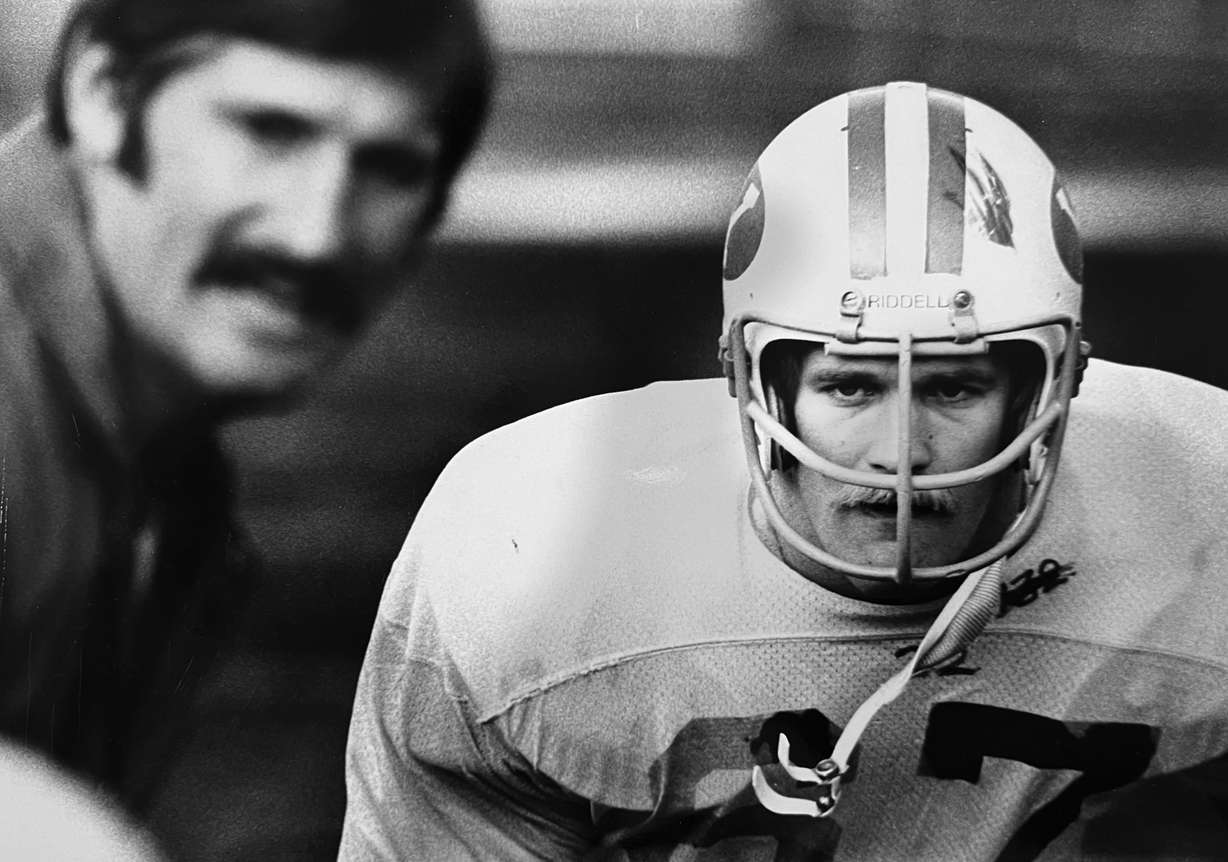
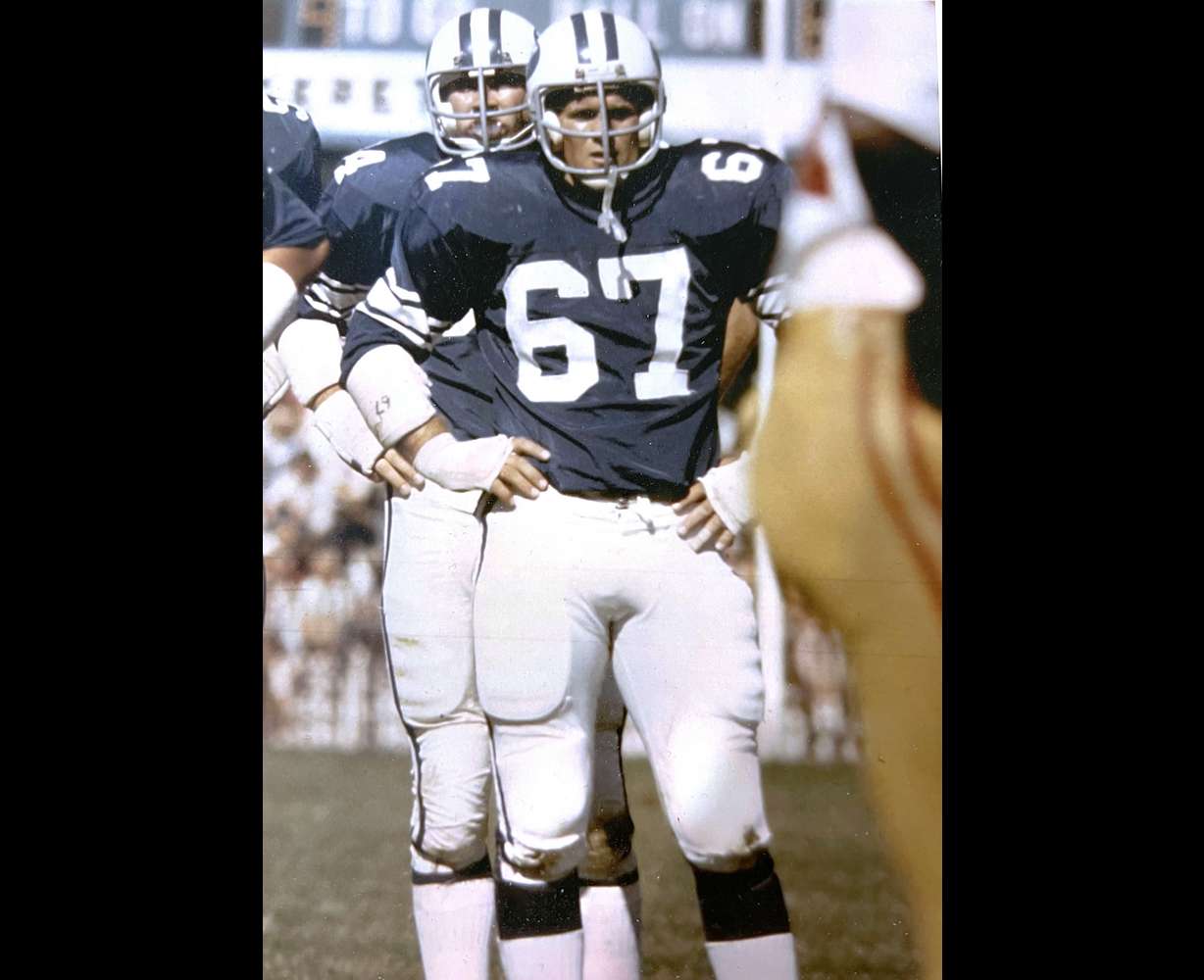
SALT LAKE CITY — It's been awhile since we last checked in on Larry Carr, the Man Who Would Save Football, to see how the crusade is going.
Carr, you may recall, is the former college and pro linebacker who, in his life-after-football, discovered there was a high price to pay for all those tackles leading with his head: Depression, anxiety, mood swings, paranoia, PTSD, suicidal thoughts and other symptoms suggestive of chronic traumatic encephalopathy, the brain disease all too prevalent among collision sport participants.
With no known cure for CTE and at his wits end, Larry reached out to concussion experts in Boston, where he was trying his best to serve a Latter-day Saint senior mission with his wife Laurie Carr, to see if there was ANYTHING he could try. That led quite serendipitously, or miraculously, to a treatment called photobiomodulation, or light therapy.
Three times a week, Larry Carr wrapped his head in a headset that sent infrared light rays to his brain.
From there, everything improved. The quick-trigger temper, the fits of crying, the suicide plots, the days of no one knowing which Larry Carr was going to show up — they all disappeared.
That was five years ago. Ever since, Carr, with the zeal of a born-again human being, has been doing his best to spread the word. He is convinced he has found something to both save the sport he loves and spare fellow sufferers of CTE symptoms from continual and often unspeakable torment.
He's made admirable progress. Most significantly, by attracting the attention of Dr. Elisabeth Wilde at the University of Utah. In the area of concussion and brain injury, Wilde is one of America's most prominent and respected neuropsychologists. Over the past three years she has led infrared light studies involving dozens of participants, including retired and current football players, firefighters and other collision sport athletes, all showing promise that there is solid science behind the therapy.
"We have seen improvements in mood regulation and anxiety reduction, cognition, sleep and physical performance when comparing assessments taken before and after use of the therapy," says Wilde, who is forging ahead with more research and study.
The affirmation from experts is especially gratifying for Carr, who has a Ph.D. in physiology. "I knew this was significant," he says. "I had tried everything. This was different."
But scientific studies — with their peer review and control group hoops to jump through — take time and patience.
And Carr, who is about to turn 72, isn't the most patient of men.
Who knew spreading good news could be so difficult?
Outside of Wilde's lab, he finds that far too often far too many people react to his story with a metaphorical pat on the head.
"They say, 'Oh, that's nice for you,' 'I'm so happy for you,' 'glad you're feeling better,' 'glad that worked for you,'" he laments, "and then they move on to the next conversation."
Far beyond his own, he has many more success stories to tell, if only he could get more people to listen to them.
Just last week he received a letter from a father who had heard through the grapevine about Carr's experience with light therapy and, based on the reported success of Carr and others, talked his son into undergoing the treatments. The son was a star at every level of football, in high school, in a top Division I football program, in the NFL where he was drafted in an early round.
But he retired from the NFL after four seasons because he couldn't concentrate any more, couldn't stop thinking that everyone was spying on him. He went home and shut himself off in his house, in the dark, a 300-pound man afraid to go outside.

Then, skeptical but at his father's urging, he agreed to put on the infrared headset for 20 minutes every other day.
"We have our son back," his father wrote Larry Carr. "His mom and I are shocked at the level of improvement he is gaining. We see remarkable improvements in his attitudes, cognition, moods, interactions, etc."
Such testimonials are anecdotal, of course, not scientific. But in five years of collecting considerable anecdotal evidence, Larry Carr has noticed how close they all are to his own experience.
When he went through the 2018 study in Boston that introduced him to light therapy, in the beginning his PTSD was measured at a dangerously high level, comparable to combat veterans returning from multiple deployments. After eight weeks of therapy he dropped down to a level almost devoid of PTSD symptoms. When they took him off the light for another eight weeks, his PTSD level shot back up. When he returned to the therapy, it again came down to next to nothing.
And there it's stayed.
"You talk about this too much and people don't believe you, they're like 'nothing can do this,'" says Carr. "But really, when you look at (physical) exercise, what does that do? It improves everything. This is the same thing. It heals the brain, makes it better."
In an increasingly anxious, depressed world, "this is ground breaking," says Carr. "To think you can treat PTSD, you can treat depression, without medication, without side effects. This goes way beyond saving football."
Meanwhile, the scientific research continues. At the U. of U., Wilde and her team will be starting up another study in the early part of 2024, this one involving former NFL and college football players. As in previous studies, they will use Vielight machines, manufactured by a Toronto company. To sign up as a participant or to learn more, email Carr (larry.carr@hsc.utah.edu) or text or call him on his cellphone: 805-795-2452. He'll talk your ear off. Trust me. The Man Who Would Save Football — and a lot of other things that ail the brain — won't stop crusading until there's nothing left to tackle.

Related stories
Most recent Utah stories
Related topics
 Lee Benson