'%3e%3cpath%20d='M34.1406%205.85938C30.3906%202.10547%2025.3047%200%2020%200C14.6953%200%209.60938%202.10547%205.85938%205.85938C2.10938%209.61328%200%2014.6953%200%2020C0%2025.3047%202.10547%2030.3906%205.85938%2034.1406C9.61328%2037.8906%2014.6953%2040%2020%2040C25.3047%2040%2030.3906%2037.8945%2034.1406%2034.1406C37.8906%2030.3906%2040%2025.3047%2040%2020C40%2014.6953%2037.8945%209.60938%2034.1406%205.85938ZM37.0117%2023.543H31.1602V13.5391H27.6328V19.9414C28.1211%2020.6914%2028.3711%2021.582%2028.3711%2022.5625V22.625C28.3711%2023.668%2028.1172%2024.6055%2027.6328%2025.4297V26.6094H36.082C33.4883%2032.9375%2027.2891%2037.3789%2020.0039%2037.3789C10.3711%2037.3789%202.62109%2029.6289%202.62109%2020C2.62109%2010.3711%2010.3711%202.62109%2020%202.62109C29.6289%202.62109%2037.3789%2010.3711%2037.3789%2020C37.3789%2021.1484%2037.2617%2022.2656%2037.0508%2023.3477C37.0391%2023.4141%2037.0234%2023.4766%2037.0117%2023.543Z'%20fill='white'/%3e%3cpath%20d='M22.3086%2018.5352C20.4336%2018.125%2019.9531%2017.8398%2019.9766%2017.1836V17.1406C19.9766%2016.6992%2020.3477%2016.2148%2021.4023%2016.2148C22.582%2016.2148%2023.8867%2016.6797%2025.0781%2017.4766L26.8516%2015.0195C25.4453%2013.8906%2023.707%2013.3398%2021.5547%2013.3398C18.5195%2013.3398%2016.4375%2015%2016.4063%2017.4766V17.5352C16.3633%2020.2617%2018.5859%2020.9805%2021.293%2021.6016C23.0391%2021.9766%2023.5703%2022.3164%2023.5703%2022.9609L23.5469%2022.9766C23.5469%2023.3906%2023.2578%2023.7031%2022.7852%2023.8359C22.5742%2023.9062%2022.1289%2023.9727%2021.5156%2023.9727C20.7617%2023.9727%2019.7539%2023.8633%2018.6328%2023.4844C18.0898%2023.2891%2017.4727%2023.0039%2016.8047%2022.6133L20.1406%2026.625C20.2813%2026.6602%2021.0977%2026.8516%2021.7734%2026.8516C25.0039%2026.8516%2027.0859%2025.2461%2027.1094%2022.6328V22.5703C27.1602%2020.1133%2025.2148%2019.1719%2022.3086%2018.5352Z'%20fill='white'/%3e%3cpath%20d='M5.24219%2013.5664V26.6133H8.75391V23.7578L10.2969%2021.9531L14.2031%2026.6133H18.3867L12.3555%2019.5195L17.4023%2013.5664H13.4531L8.75391%2019.0586V13.5664H5.24219Z'%20fill='white'/%3e%3c/g%3e%3cdefs%3e%3cclipPath%20id='clip0_97_2430'%3e%3crect%20width='40'%20height='40'%20fill='white'/%3e%3c/clipPath%3e%3c/defs%3e%3c/svg%3e)


Estimated read time: 3-4 minutes
This archived news story is available only for your personal, non-commercial use. Information in the story may be outdated or superseded by additional information. Reading or replaying the story in its archived form does not constitute a republication of the story.
SALT LAKE CITY — The U.S. Fish and Wildlife Service announced on Wednesday a final ruling to list the distinct population segment of the North American wolverine in the contiguous United States as a threatened species under the Endangered Species Act.
While the protections extend to all lower 48 states, including Utah, the federal government also issued a federal rule that would grant certain exemptions for their protection related to research activities, if they are accidentally caught due to lawful trapping or caught up in Forest Service management to curtail wildfire risk.
"Current and increasing impacts of climate change and associated habitat degradation and fragmentation are imperiling the North American wolverine," said the federal wildlife service's Pacific Regional Director Hugh Morrison. "Based on the best available science, this listing determination will help to stem the long-term impact and enhance the viability of wolverines in the contiguous United States."
The decision was hailed by a coalition of environmental and conservation groups that had petitioned for protections for the animal going back to 1994.
Like the U.S. Fish and Wildlife Service, the groups blamed the perilous impacts of climate change affecting the mammal.
"The science is clear: Snowpack-dependent species like the wolverine are facing an increasingly uncertain future under a warming climate," said Michael Saul, Defenders of Wildlife Rockies and Plains program director. "The protections that come with Endangered Species Act listing increase the chance that our children will continue to share the mountains with these elusive and fascinating carnivores. Now it's time to support the species' future by bringing them back to the mountains of Colorado as well."
Added Timothy Preso, an Earthjustice attorney who represented conservation groups in the long-running legal campaign to protect the wolverine: "There is now hope for this icon of our remaining wilderness."
The Utah Division of Wildlife Resources, which long managed the animal, said it is still reviewing the ruling and what impacts it might have on the state.
Here are five takeaways on the North American wolverine, including its connection to Utah.
Rare in Utah: Wolverine sightings historically occurred in the high mountain areas of Utah, though even historically, they were probably rare. A single wolverine can have a home range as large as 350 square miles, and they can travel long distances.
Numbers are unclear: Because they are so elusive, it is unclear exactly how many are currently in Utah and whether the state has an established population.
Scattered sightings: Since 2005, wolverines have been confirmed in the Bear River, Wasatch and Uinta ranges of northern Utah. During 2021-2022, the Division of Wildlife Resources documented a wolverine in Utah in at least 13 locations. Several observations came from atypical habitat, such as the lakebed of Great Salt Lake and adjacent urban areas, and were presumably of a dispersing/transient individual.
Sheep and wolverines: The state wildlife agency reported it captured and radio-collared an estimated 3-year-old male wolverine in 2022 after it had killed a sheep in Rich County. In all, 18 sheep were found dead. The state said it was unable to determine if those observations were all from one highly visible wolverine or from multiple animals. The most recently confirmed sighting of a wolverine was near Bear Lake in April this year.
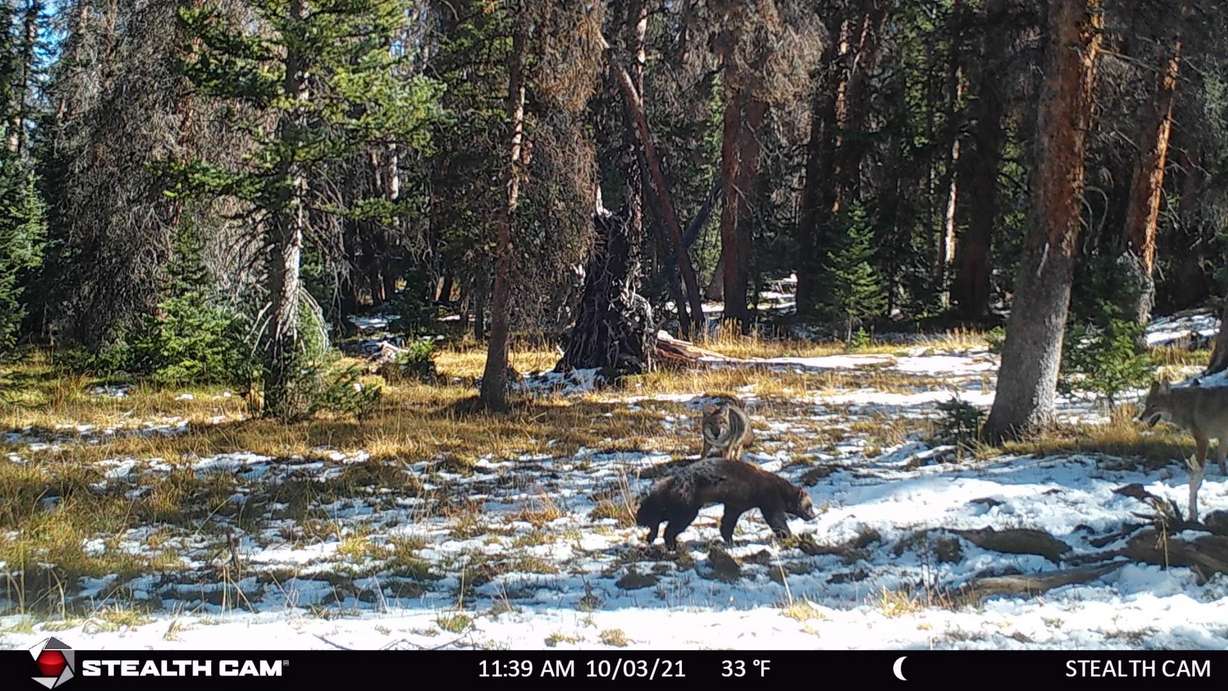
Wolverines in general: The North American wolverine is a medium-sized carnivore found within the Northern Rocky Mountains and North Cascade Mountains in the contiguous U.S. and alpine regions, boreal forests, and tundra of Alaska and Canada. Wolverines are snow-adapted, cold-climate and territorial animals. Pregnant females dig their dens into this snowpack to birth and raise their young. Scientists estimate that no more than 300 wolverines remain in the lower 48 states.