'%3e%3cpath%20d='M34.1406%205.85938C30.3906%202.10547%2025.3047%200%2020%200C14.6953%200%209.60938%202.10547%205.85938%205.85938C2.10938%209.61328%200%2014.6953%200%2020C0%2025.3047%202.10547%2030.3906%205.85938%2034.1406C9.61328%2037.8906%2014.6953%2040%2020%2040C25.3047%2040%2030.3906%2037.8945%2034.1406%2034.1406C37.8906%2030.3906%2040%2025.3047%2040%2020C40%2014.6953%2037.8945%209.60938%2034.1406%205.85938ZM37.0117%2023.543H31.1602V13.5391H27.6328V19.9414C28.1211%2020.6914%2028.3711%2021.582%2028.3711%2022.5625V22.625C28.3711%2023.668%2028.1172%2024.6055%2027.6328%2025.4297V26.6094H36.082C33.4883%2032.9375%2027.2891%2037.3789%2020.0039%2037.3789C10.3711%2037.3789%202.62109%2029.6289%202.62109%2020C2.62109%2010.3711%2010.3711%202.62109%2020%202.62109C29.6289%202.62109%2037.3789%2010.3711%2037.3789%2020C37.3789%2021.1484%2037.2617%2022.2656%2037.0508%2023.3477C37.0391%2023.4141%2037.0234%2023.4766%2037.0117%2023.543Z'%20fill='white'/%3e%3cpath%20d='M22.3086%2018.5352C20.4336%2018.125%2019.9531%2017.8398%2019.9766%2017.1836V17.1406C19.9766%2016.6992%2020.3477%2016.2148%2021.4023%2016.2148C22.582%2016.2148%2023.8867%2016.6797%2025.0781%2017.4766L26.8516%2015.0195C25.4453%2013.8906%2023.707%2013.3398%2021.5547%2013.3398C18.5195%2013.3398%2016.4375%2015%2016.4063%2017.4766V17.5352C16.3633%2020.2617%2018.5859%2020.9805%2021.293%2021.6016C23.0391%2021.9766%2023.5703%2022.3164%2023.5703%2022.9609L23.5469%2022.9766C23.5469%2023.3906%2023.2578%2023.7031%2022.7852%2023.8359C22.5742%2023.9062%2022.1289%2023.9727%2021.5156%2023.9727C20.7617%2023.9727%2019.7539%2023.8633%2018.6328%2023.4844C18.0898%2023.2891%2017.4727%2023.0039%2016.8047%2022.6133L20.1406%2026.625C20.2813%2026.6602%2021.0977%2026.8516%2021.7734%2026.8516C25.0039%2026.8516%2027.0859%2025.2461%2027.1094%2022.6328V22.5703C27.1602%2020.1133%2025.2148%2019.1719%2022.3086%2018.5352Z'%20fill='white'/%3e%3cpath%20d='M5.24219%2013.5664V26.6133H8.75391V23.7578L10.2969%2021.9531L14.2031%2026.6133H18.3867L12.3555%2019.5195L17.4023%2013.5664H13.4531L8.75391%2019.0586V13.5664H5.24219Z'%20fill='white'/%3e%3c/g%3e%3cdefs%3e%3cclipPath%20id='clip0_97_2430'%3e%3crect%20width='40'%20height='40'%20fill='white'/%3e%3c/clipPath%3e%3c/defs%3e%3c/svg%3e)




- The Department of Health and Human Services is reviewing Sen. Mike Lee's request to reclassify islet cells.
- The reclassification aims to simplify Type 1 diabetes treatment via islet transplants.
- Lee's bill is stalled in Congress, though the HHS could expedite the process administratively.
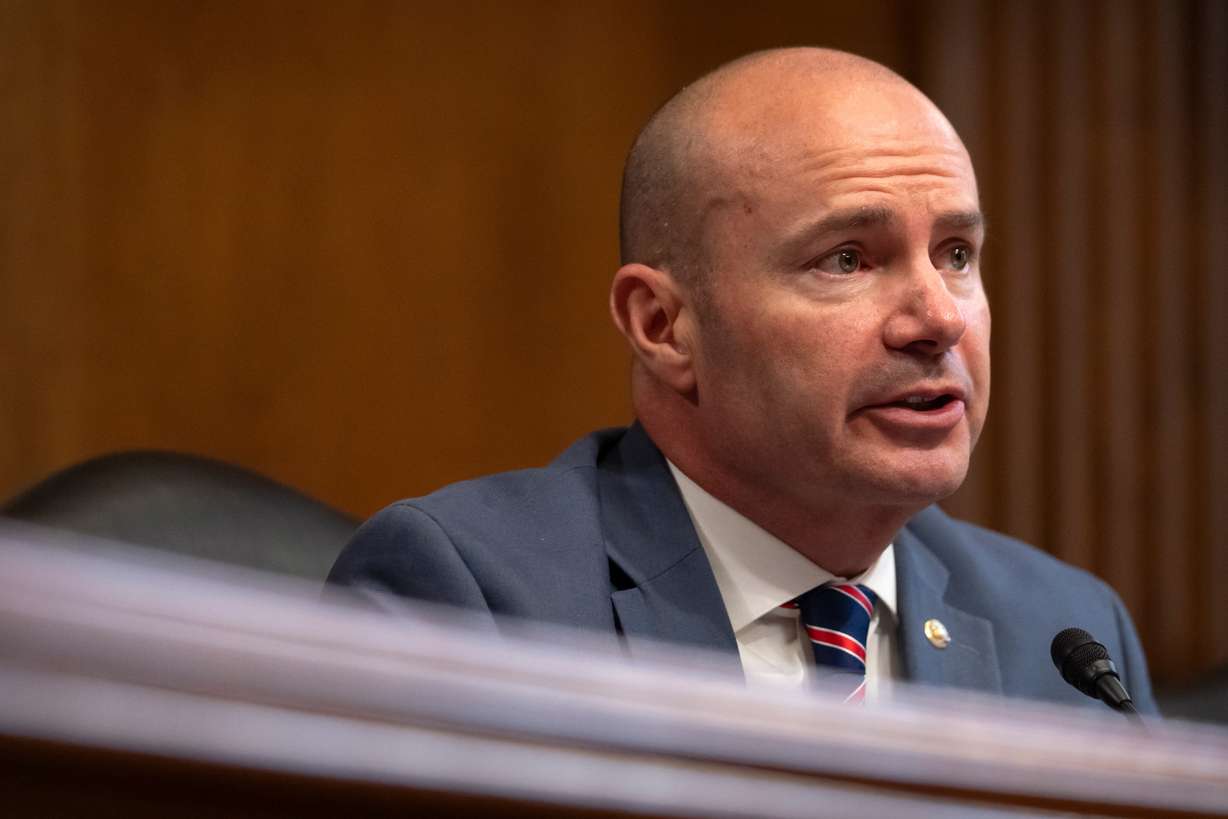
SALT LAKE CITY — The Department of Health and Human Services is "actively reviewing" a request from Sen. Mike Lee to reclassify a set of specialized cells located within the pancreas to be used for the treatment of Type 1 diabetes.
Late last year, Lee introduced the Increase Support for Life-saving Endocrine Transplantation Act that would designate islet cells, which produce insulin, as an organ rather than a drug to streamline the process in which Type 1 diabetes patients can receive treatment. Lee has since pushed Health Secretary Robert F. Kennedy Jr. to reclassify the cells as the legislation remains stalled in the Senate.
"The Department is aware of Sen. Lee's request and is actively reviewing the matter," an HHS spokesperson told the Deseret News in a statement. "We appreciate his continued engagement and advocacy on behalf of Americans living with diabetes."
Lee wrote a letter to Kennedy last month urging him to take administrative action reclassifying islet cells, which are currently regulated as drugs by the Food and Drug Administration. In doing so, the senator said islet cells from deceased donors could be used for organ transplants.
While Lee's bill would formally reclassify the cells, the senator said HHS already has the authority to unilaterally make the change. Doing so would "simplify the transplant process," Lee said, and align oversight.
"While I look forward to fixing islet classification through law, corrective action from a federal agency like HHS can often be faster than getting bills through a frequently deadlocked Congress," Lee told the Deseret News. "As President Truman said, and Ronald Reagan was fond of quoting: 'It is amazing what you can accomplish if you do not care who gets the credit.' I'm glad that Breakthrough T1D, the largest Type 1 diabetes research and advocacy organization, has supported our public outreach to HHS for this policy change."
It's not clear how quickly a designation change could be made by HHS, or if the request will be approved. But action from the department would expedite the process as legislation can take months, or even years, to be approved by Congress.
"Saving lives shouldn't wait for politics," Lee told the Deseret News in a statement. "I'm glad that the ISLET Act is supported by Islets for U.S. Collaborative, The Cure Alliance, and the Diabetes Research Institute Foundation. When we get feedback from Utahns and Americans across the country, the reaction is uniformly positive, if a bit puzzled as to why it's taken so long for Washington to fix this issue. I'm glad to help do so now."
Lee added he has "great faith" in Kennedy and his team, noting the secretary gives him and other legislators frequent updates.
How do islet cell transplants work?
Type 1 diabetes is a chronic autoimmune disease in which the body's immune system mistakenly attacks and destroys beta cells located in the pancreas, which are responsible for making insulin. Once those beta cells are destroyed, the body cannot naturally reproduce them.
As a result, a person living with Type 1 diabetes must continuously monitor insulin levels and manage their blood sugar levels.
For decades, researchers have been studying ways to take islet cells from deceased donors and transplant them into patients with Type 1 diabetes. If successfully placed, the cells can begin to produce insulin naturally — with some patients remaining insulin-dependent for years after the operation, according to Lee's office.
The FDA approved an allogeneic pancreatic islet cell therapy in 2023, marking the first cellular therapy to treat Type 1 diabetes patients with islet cells from deceased organ donors. However, access for patients can be limited, with only 20-30 transplant procedures occurring in the United States per year, according to the Juvenile Diabetes Cure Alliance.
That makes the transplantation more limited in the United States than other developed countries such as Canada and the United Kingdom that regulate islet cells under standard organ transplant procedures.
As a result, Lee says it requires a reclassification of the cells to expand its usage.
"Like many initiatives I tackle in Washington, this came to my attention as yet another example of rigid bureaucratic regulations keeping beneficial treatments, products, or procedures away from Americans — in this case, one that is more readily accessible in other countries," Lee said. "Islet transplants have the proven ability to save lives, and it's nonsensical to keep misclassifying them as drugs rather than organs, making such transplants more difficult to arrange. There is cutting edge research being done right here in Utah using islet therapies that could lead to a cure to Type 1 diabetes itself."
However, some advocacy groups have warned that reclassifying islet cells is not a complete cure. A patient undergoing the transplantation would need to take immunosuppression drugs, which slow down the immune system but prevent the body from rejecting an organ transplant.
Still, advocates for the change have pointed to recent data from the American Diabetes Association showing 12 participants in an islet cell transplant trial successfully weaning off external insulin. Those participants are testing a new drug known as tegoprubart, which researchers hope to use as a less toxic anti-rejection drug.
The drug blocks the body's signals to reject a transplanted tissue or organ rather than broadly suppressing the immune system, which is what standard anti-rejection drugs such as tacrolimus do.
Tegoprubart would be administered to patients by infusion every three weeks. The drug is currently in phase three clinical trials, according to Breakthrough T1D, the leading global Type 1 diabetes research and advocacy organization.