'%3e%3cpath%20d='M34.1406%205.85938C30.3906%202.10547%2025.3047%200%2020%200C14.6953%200%209.60938%202.10547%205.85938%205.85938C2.10938%209.61328%200%2014.6953%200%2020C0%2025.3047%202.10547%2030.3906%205.85938%2034.1406C9.61328%2037.8906%2014.6953%2040%2020%2040C25.3047%2040%2030.3906%2037.8945%2034.1406%2034.1406C37.8906%2030.3906%2040%2025.3047%2040%2020C40%2014.6953%2037.8945%209.60938%2034.1406%205.85938ZM37.0117%2023.543H31.1602V13.5391H27.6328V19.9414C28.1211%2020.6914%2028.3711%2021.582%2028.3711%2022.5625V22.625C28.3711%2023.668%2028.1172%2024.6055%2027.6328%2025.4297V26.6094H36.082C33.4883%2032.9375%2027.2891%2037.3789%2020.0039%2037.3789C10.3711%2037.3789%202.62109%2029.6289%202.62109%2020C2.62109%2010.3711%2010.3711%202.62109%2020%202.62109C29.6289%202.62109%2037.3789%2010.3711%2037.3789%2020C37.3789%2021.1484%2037.2617%2022.2656%2037.0508%2023.3477C37.0391%2023.4141%2037.0234%2023.4766%2037.0117%2023.543Z'%20fill='white'/%3e%3cpath%20d='M22.3086%2018.5352C20.4336%2018.125%2019.9531%2017.8398%2019.9766%2017.1836V17.1406C19.9766%2016.6992%2020.3477%2016.2148%2021.4023%2016.2148C22.582%2016.2148%2023.8867%2016.6797%2025.0781%2017.4766L26.8516%2015.0195C25.4453%2013.8906%2023.707%2013.3398%2021.5547%2013.3398C18.5195%2013.3398%2016.4375%2015%2016.4063%2017.4766V17.5352C16.3633%2020.2617%2018.5859%2020.9805%2021.293%2021.6016C23.0391%2021.9766%2023.5703%2022.3164%2023.5703%2022.9609L23.5469%2022.9766C23.5469%2023.3906%2023.2578%2023.7031%2022.7852%2023.8359C22.5742%2023.9062%2022.1289%2023.9727%2021.5156%2023.9727C20.7617%2023.9727%2019.7539%2023.8633%2018.6328%2023.4844C18.0898%2023.2891%2017.4727%2023.0039%2016.8047%2022.6133L20.1406%2026.625C20.2813%2026.6602%2021.0977%2026.8516%2021.7734%2026.8516C25.0039%2026.8516%2027.0859%2025.2461%2027.1094%2022.6328V22.5703C27.1602%2020.1133%2025.2148%2019.1719%2022.3086%2018.5352Z'%20fill='white'/%3e%3cpath%20d='M5.24219%2013.5664V26.6133H8.75391V23.7578L10.2969%2021.9531L14.2031%2026.6133H18.3867L12.3555%2019.5195L17.4023%2013.5664H13.4531L8.75391%2019.0586V13.5664H5.24219Z'%20fill='white'/%3e%3c/g%3e%3cdefs%3e%3cclipPath%20id='clip0_97_2430'%3e%3crect%20width='40'%20height='40'%20fill='white'/%3e%3c/clipPath%3e%3c/defs%3e%3c/svg%3e)


- Patients in the Wasatch Back will now be able to access cancer care closer to home, after the opening of the Park City Cancer Center.
- The center provides radiation treatment and increases the infusion chairs available at the Park City Hospital from four to 18.
- The Park City Cancer Center will comprehensive and holistic care, along with dedicated caregivers.
PARK CITY — Jim Becker traveled two hours each way, at least, five days a week while receiving cancer treatment at Intermountain Medical Center — a total of 3,500 miles, all while not feeling well.
"It's a very long day, an uncomfortable day, and all you want to do is get home," the Midway native said about his chemotherapy days each week, which would be at least 12 hours long.
A cancer center built as an expansion of the Park City Hospital opened with a ribbon-cutting on Thursday and began seeing its first patients on Friday. It increased the hospital's infusion bays from four to 18, added the technology needed for radiation and added rooms for other services, allowing comprehensive cancer care for patients in Summit and Wasatch County, the Uintah Basin and surrounding states.
Cancer patients like Becker in the Wasatch Back and Uintah Basin now have another option, one that he said would have reduced his drive from two hours to 20 minutes, allowing him to take his breaks back at his home and would have taken a lot of stress out of the long weeks.
"I feel good that this place is here. I hope I personally never need it, but for the people that need it here locally, it will be a huge benefit for them," he said.
'Game changer'
Becker, 66, would spend five and a half hours in a chair receiving chemotherapy, and he would also have other appointments on the same day, including radiation — often with hours between and without the time to travel home; he would need to spend that time walking through Costco or sitting in a library or waiting room.
"All you want to do is go home, get in a dark, cool room, lay down in a fetal position and not move and not hear sounds," he said.
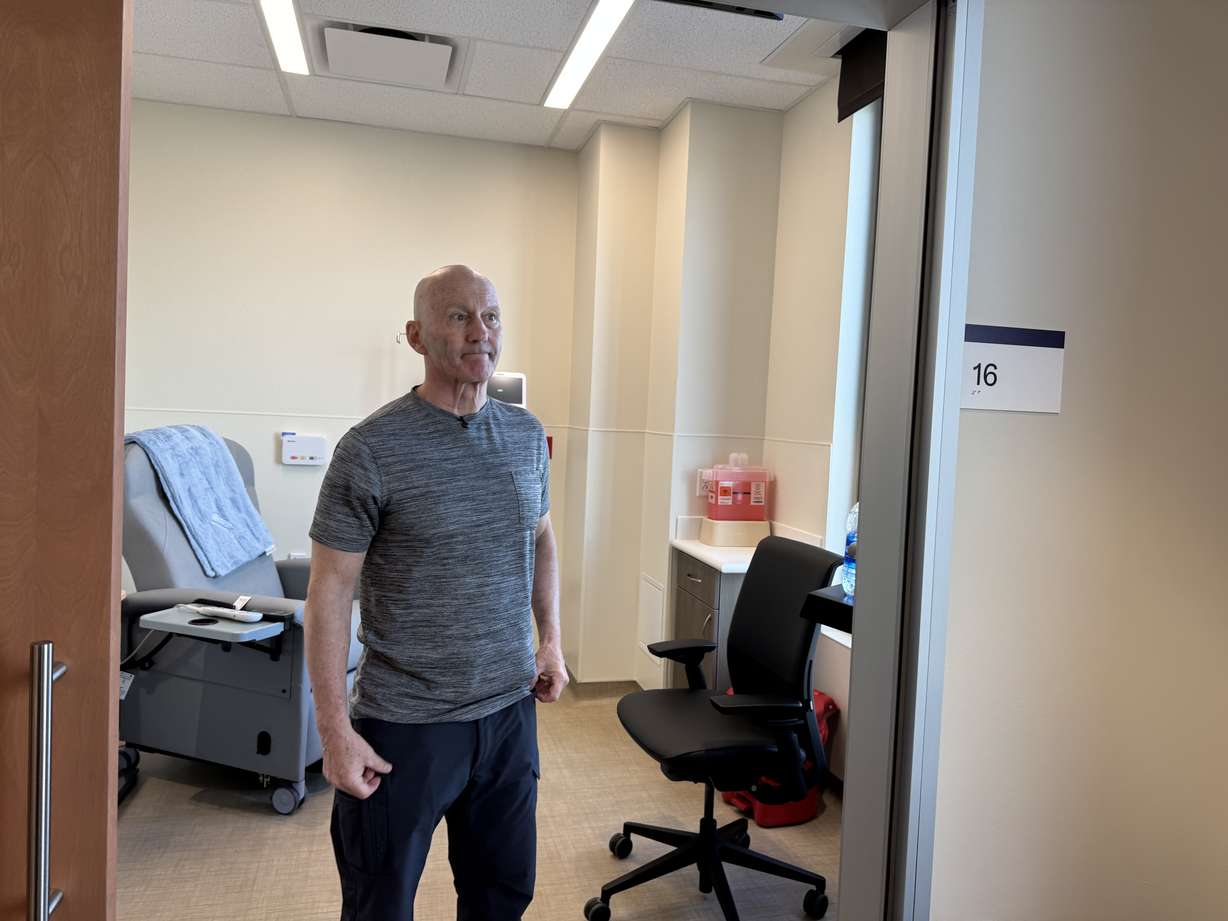
Clarke Low, a medical oncologist at the Park City Hospital, said cancer is never convenient but long drives can make it less convenient.
"Nobody deserves to be diagnosed with cancer, but everybody diagnosed with cancer deserves to receive world-class care close to home," he said.
According to Low, the new facilities are the "best of the best" and allow him and the rest of the team not just to provide medical care, but to treat all of the patients' needs.
Tawnya Bowles, a surgical oncologist with Intermountain Health, said the radiation therapy that is now available at the Park City Cancer Center is a "game changer." Radiation is a daily treatment, often for six weeks, and it needs to be in a cancer center. For some patients, like those in Wyoming, traveling to Park City already takes a full day. Cancer treatments can greatly affect family members who take time off work to help a patient and reducing the drive can help.
"We want rural and urban patients to have the same access to excellent quality of care."
Caregivers
Becker's symptoms began in October 2025 with a sore throat. Before he was diagnosed on April 1, his symptoms got so bad it was hard to eat and sleep, but he said once he was diagnosed, treatment moved quickly and he was immediately given a team to help him.
"It was really surprising how much support you get, and unexpected. And the kindness shown and the genuine empathy and engagement with you was all surprising," he said. "I guess what I'd say, they put the care back in healthcare. It really refreshed my perspective on our healthcare system."
He said radiation, which he did five days a week, was uncomfortable, but he called the chemotherapy "diabolical." He said he would almost fight going into the room for chemotherapy like a cat fights going to the vet, and he would have to take some time before going in.
Becker said he was fortunate his cancer was highly treatable. His final treatment was on July 27, and he is waiting for a scan in late October that will show whether it completely eliminated his cancer. But he can already eat more foods.
"I'm still in the healing phase. I'm very hopeful that I'm in full remission," he said. "I'm happy to have the outcome I've had thus far and feel as good as I feel currently."
Shelby Lofton, KSLDani Kurtz is a nurse and Intermountain Health employee, but in 2025 she became a cancer patient as well, as she and her mom were both diagnosed with breast cancer. She said she was touched walking through the new facility and that it will become part of patients' core memories.
She said she told two caregivers about a night when she was feeling defeated and listened to music on shuffle, and the song "Have Yourself a Merry Little Christmas" helped her realize she would be done with her treatment in time for Christmas. On the last day of her treatment, she said those nurses played that same version of the song for her, remembering that story she had told them months earlier. Kurtz said it was a simple thing, but she will always remember it.
"Ultimately buildings don't heal people, people heal people. And the caregivers who work within these walls will bring this cancer center to life every day," she said.
Holistic care
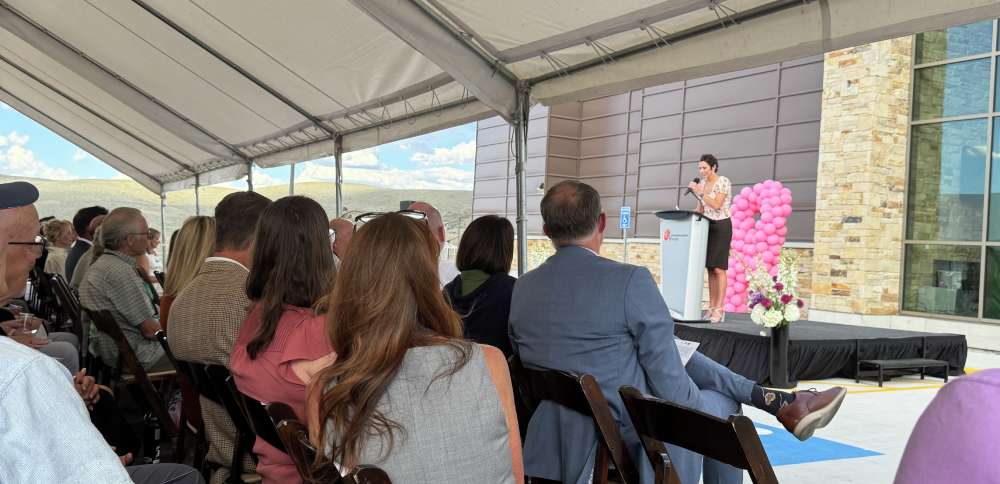
Lori Weston, president of the hospital, said in a ceremony before the ribbon cutting that the hospital is proud to provide high-quality care, expert physicians, and comprehensive support. She said many patients have traveled down the canyon for cancer care while dealing with side effects, poor weather and juggling other responsibilities.
"If patients can receive the same exceptional care, and in some cases an even more coordinated and personalized experience, without leaving their community, why would you go anywhere else?" she said.
She said the vision for the cancer center is to provide the compassion, support and community a patient needs on their cancer journey, along with the medical care.
Weston told the patients and their families, "You are the reason we do this work; your resilience, courage, and hope inspire us every day, and this center was built with you in mind."
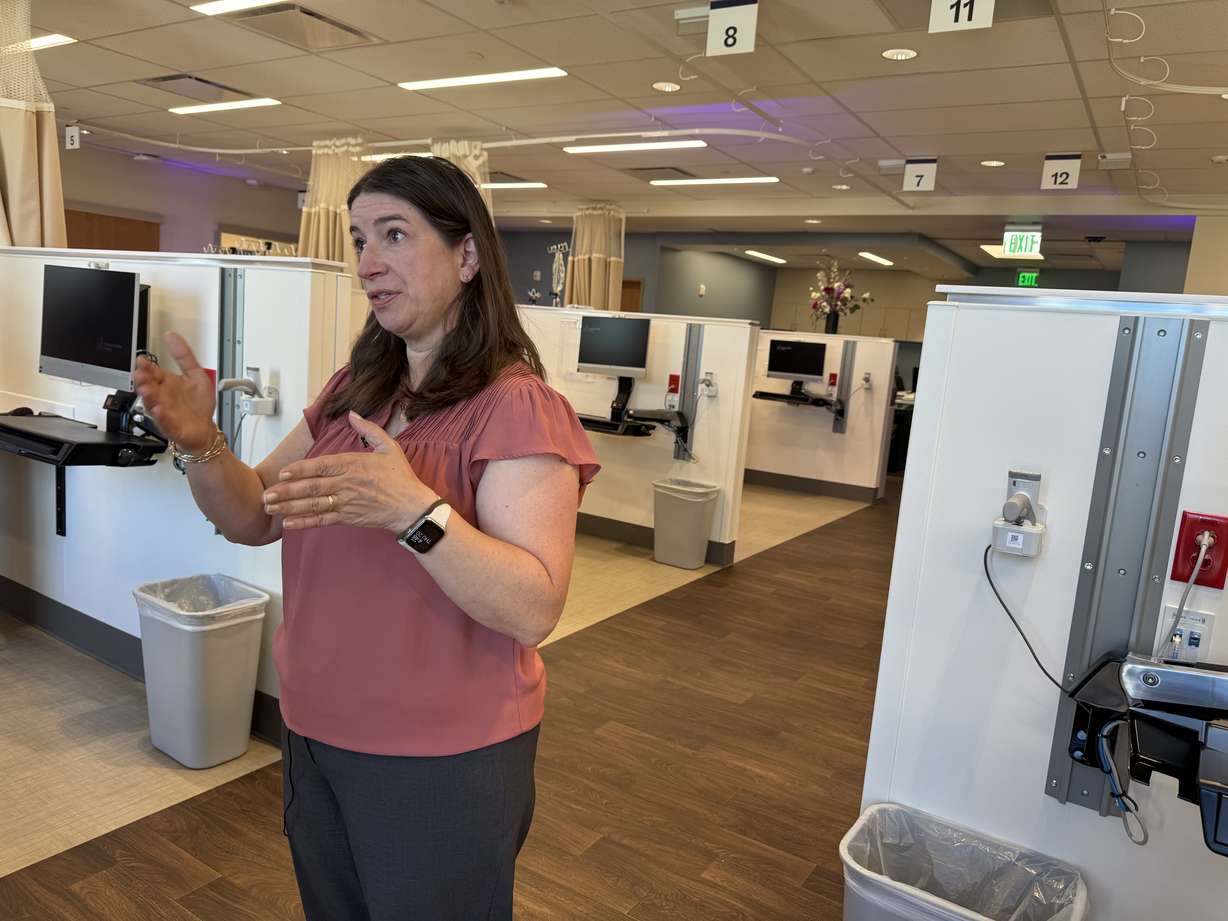
Bowles said the four chairs weren't enough to meet the need, and they expect the 18 chairs to fill quickly. Some of those chairs are in the main area, and some are in private rooms, allowing patients to choose which works best for them, whether they need camaraderie or a quiet place to relax or work.
She said cancer incidence is increasing, especially in people in their 30s and 40s, so despite cancer treatments getting better, there is still a need for increased services. Some cancers, including her specialty, melanoma or skin cancer, are even more prevalent in the Wasatch Back, possibly due to its high elevation.
According to Bowles, the cancer center has been planned for years, and the community has been very engaged. She said they hope to provide more cancer surgeries in the future and coordinate more clinical research, allowing patients to take part in studies available at Intermountain Health's other hospitals.
"Park City is going to be a model for what we call survivorship and supportive care services for patients … focusing on the other needs around cancer treatment, diet, nutrition, mental health, financial, you know, navigation around the complexity of cancer treatment," Bowles said.