'%3e%3cpath%20d='M34.1406%205.85938C30.3906%202.10547%2025.3047%200%2020%200C14.6953%200%209.60938%202.10547%205.85938%205.85938C2.10938%209.61328%200%2014.6953%200%2020C0%2025.3047%202.10547%2030.3906%205.85938%2034.1406C9.61328%2037.8906%2014.6953%2040%2020%2040C25.3047%2040%2030.3906%2037.8945%2034.1406%2034.1406C37.8906%2030.3906%2040%2025.3047%2040%2020C40%2014.6953%2037.8945%209.60938%2034.1406%205.85938ZM37.0117%2023.543H31.1602V13.5391H27.6328V19.9414C28.1211%2020.6914%2028.3711%2021.582%2028.3711%2022.5625V22.625C28.3711%2023.668%2028.1172%2024.6055%2027.6328%2025.4297V26.6094H36.082C33.4883%2032.9375%2027.2891%2037.3789%2020.0039%2037.3789C10.3711%2037.3789%202.62109%2029.6289%202.62109%2020C2.62109%2010.3711%2010.3711%202.62109%2020%202.62109C29.6289%202.62109%2037.3789%2010.3711%2037.3789%2020C37.3789%2021.1484%2037.2617%2022.2656%2037.0508%2023.3477C37.0391%2023.4141%2037.0234%2023.4766%2037.0117%2023.543Z'%20fill='white'/%3e%3cpath%20d='M22.3086%2018.5352C20.4336%2018.125%2019.9531%2017.8398%2019.9766%2017.1836V17.1406C19.9766%2016.6992%2020.3477%2016.2148%2021.4023%2016.2148C22.582%2016.2148%2023.8867%2016.6797%2025.0781%2017.4766L26.8516%2015.0195C25.4453%2013.8906%2023.707%2013.3398%2021.5547%2013.3398C18.5195%2013.3398%2016.4375%2015%2016.4063%2017.4766V17.5352C16.3633%2020.2617%2018.5859%2020.9805%2021.293%2021.6016C23.0391%2021.9766%2023.5703%2022.3164%2023.5703%2022.9609L23.5469%2022.9766C23.5469%2023.3906%2023.2578%2023.7031%2022.7852%2023.8359C22.5742%2023.9062%2022.1289%2023.9727%2021.5156%2023.9727C20.7617%2023.9727%2019.7539%2023.8633%2018.6328%2023.4844C18.0898%2023.2891%2017.4727%2023.0039%2016.8047%2022.6133L20.1406%2026.625C20.2813%2026.6602%2021.0977%2026.8516%2021.7734%2026.8516C25.0039%2026.8516%2027.0859%2025.2461%2027.1094%2022.6328V22.5703C27.1602%2020.1133%2025.2148%2019.1719%2022.3086%2018.5352Z'%20fill='white'/%3e%3cpath%20d='M5.24219%2013.5664V26.6133H8.75391V23.7578L10.2969%2021.9531L14.2031%2026.6133H18.3867L12.3555%2019.5195L17.4023%2013.5664H13.4531L8.75391%2019.0586V13.5664H5.24219Z'%20fill='white'/%3e%3c/g%3e%3cdefs%3e%3cclipPath%20id='clip0_97_2430'%3e%3crect%20width='40'%20height='40'%20fill='white'/%3e%3c/clipPath%3e%3c/defs%3e%3c/svg%3e)


- Summer has started, with 70 major wildfires in the U.S. already burning.
- Utah has reported 335 fires, burning 44,856 acres, mostly human-caused.
- AccuWeather predicts up to 8 million acres will burn nationwide this year thanks to below-average snowpack and above-average temperatures.
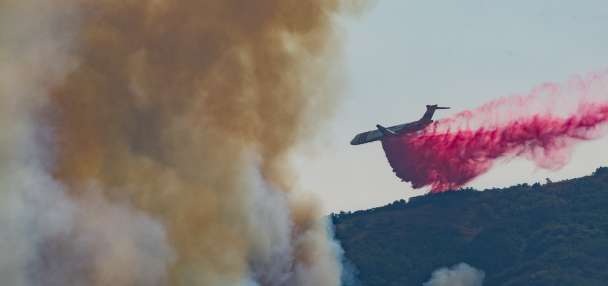
SALT LAKE CITY — Summer has officially started, and with it the threat of wildfire season. As of Monday morning, 70 major wildfires were blazing across the country. In Utah, officials have recorded 335 fires so far in 2026, which have burned a total of 44,856 acres.
Of the Utah fires, 255 were caused by humans, accounting for 10,852 burned acres. Naturally occurring phenomena started 55 of the fires, while the causes of 25 others remain unknown.
Nationwide, 34,038 fires have been reported since Jan. 1. As of June 22, there were eight new wildfires reported nationwide and 31 active large fires, burning a total of 152,399 acres. Seven have been contained, according to the National Interagency Fire Center.

Ten states are currently affected, including Alaska, Utah, Florida, Nevada, Arizona, Idaho, New Mexico, Washington, North Carolina and Nebraska.
Compared to the same period in 2025, the number of fires is similar — 33,013 last year — but nearly 1 million more acres have burned in 2026.
What's next?
With wildfire season underway, AccuWeather forecasts between 5.5 million and 8 million acres will burn across the country this year.
A total of 65,000 to 80,000 wildfires are projected across the U.S. in 2026, compared to the 77,850 fires reported in 2025. Historically, the U.S. experiences an average of 68,707 wildfires annually.
The region most at risk for persistent fire danger includes Arizona, New Mexico, Utah, Nevada, Idaho, western Montana and parts of the Pacific Northwest.

A below-average snowpack combined with above-average temperatures is setting the stage for heightened danger, according to AccuWeather.
The annual monsoon is a blessing and a curse for fire crews; it brings much-needed moisture to suppress flames, but lightning strikes can ignite new fires in dry areas.
"With above-average tropical activity expected in the Eastern Pacific Basin, there can be additional chances for appreciable rain aside from the typical monsoon activity that can aid in reducing the risk later in the summer season," AccuWeather meteorologist Brandon Buckingham said.
While the West Coast faces the highest risk, the East Coast is also vulnerable, especially in regions of Florida and the Southeast, Buckingham said. As thunderstorms and tropical moisture increase later in the season, that wildfire risk is expected to decrease.
How to prevent wildfires

As Smokey Bear famously says, "Only you can prevent wildfires."
Utah Fire Sense provides ways for the public to stay alert while camping, shooting and driving.
- Campfires: Only start a fire in an approved fire pit or cleared ground and never leave your fire unattended. To put it out, douse the flames with water, stir the ashes and check for heat. If it is still warm, repeat the process.
- Vehicles: Check wheel bearings and ensure your vehicle maintenance is up to date. Avoid parking on dry grass; instead, park on pavement, gravel or dirt.
- Target shooting: Keep hot shell casings away from dry ground and vegetation, place targets away from rocks, which could cause ricochets and sparks, and never shoot outside on a hot and windy day.
According to Utah Fire Sense, following these steps could prevent roughly 70% of human-caused wildfires in the state.